
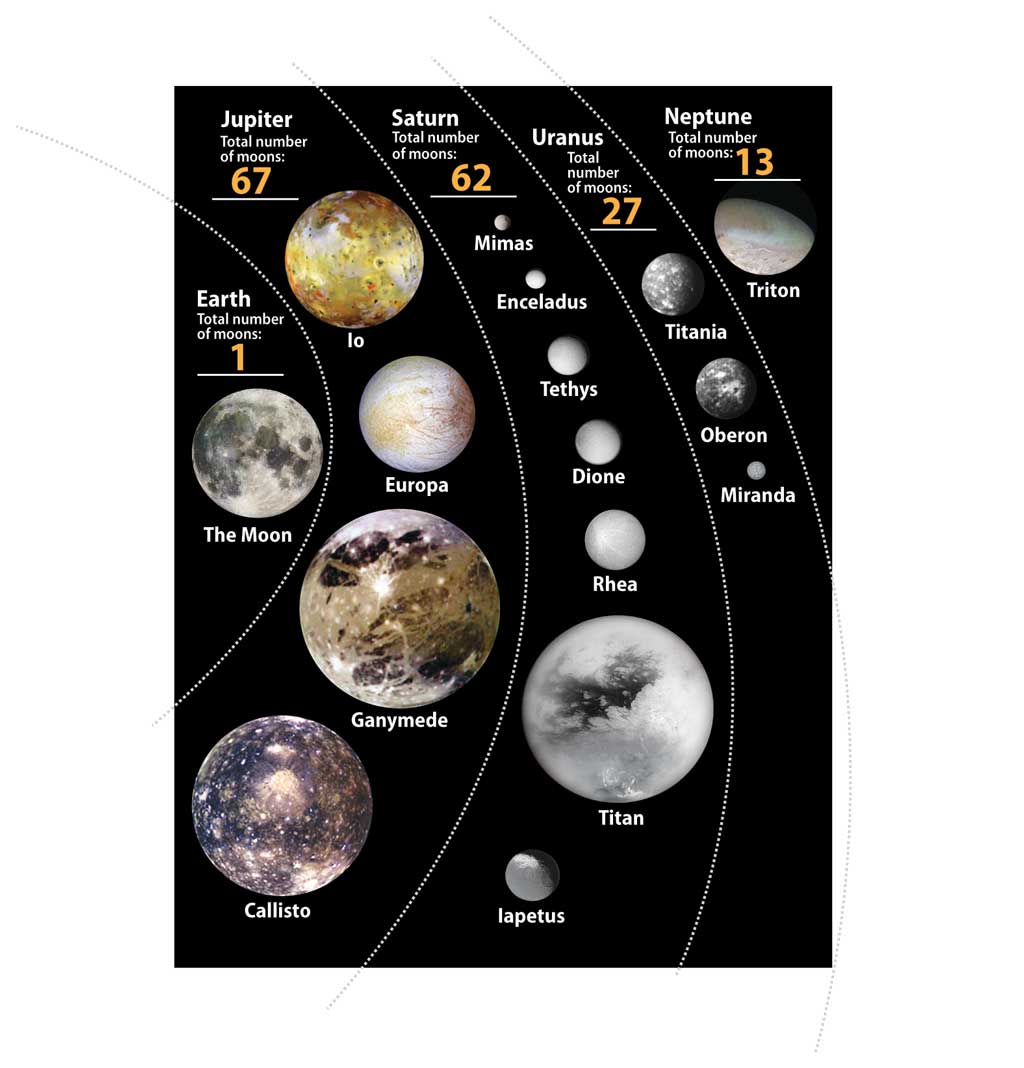
For centuries, humanity has looked to the heavens with wonder, pondering the celestial dance above. One of the most captivating aspects of our solar system is the diverse array of moons orbiting the planets. The question, “Which planet has the most moons?” might seem like a simple factual query, but the answer is dynamic, ever-evolving, and profoundly dependent on the sophisticated technology we deploy to explore the cosmos. As of recent discoveries, Saturn holds the current record, surpassing Jupiter with a confirmed count that fluctuates as new discoveries are made and confirmed through advanced observational techniques. Yet, arriving at this answer, and continually updating it, is a testament to the incredible technological innovation driving modern astronomy.
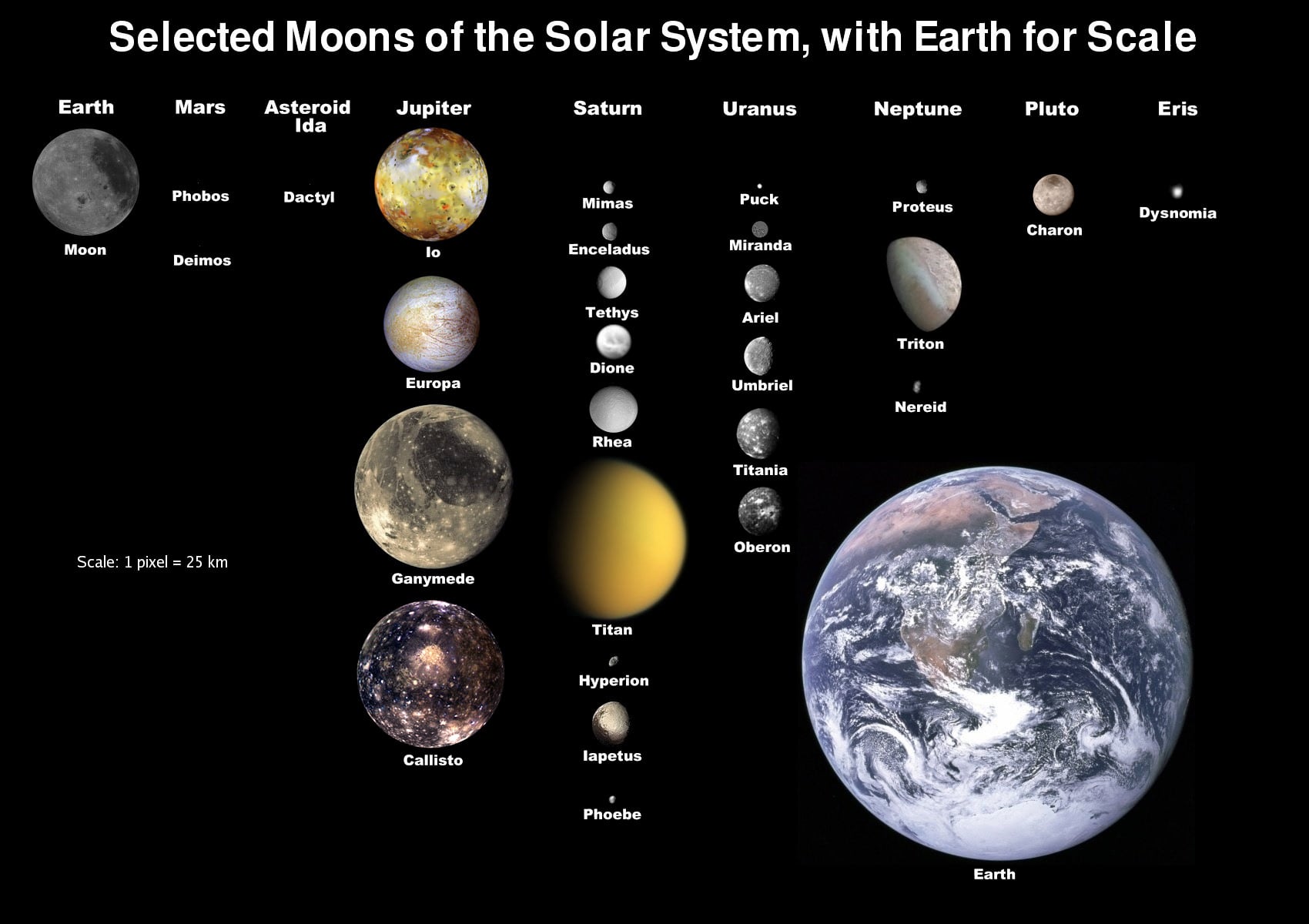
This isn’t merely a count; it’s a testament to the power of human ingenuity and technological prowess. From the powerful lenses that first magnified distant worlds to the intricate space probes that journey millions of miles, and the AI algorithms that sift through colossal datasets, technology is the backbone of our cosmic understanding. This article explores the technological frontiers that enable us to uncover these hidden celestial bodies, revealing how advancements in observation, data processing, and robotic exploration redefine our knowledge of the solar system.
The Technological Frontier of Celestial Discovery
The quest to identify and characterize planetary moons is a monumental undertaking, demanding precision, patience, and unparalleled technological sophistication. Our ability to detect these often-small, distant objects has evolved dramatically, driven by successive generations of astronomical instrumentation.
Advanced Telescopes: Eyes on the Cosmos
The bedrock of moon discovery lies with telescopes, which have grown exponentially in power and capability. Initially, Galileo’s rudimentary telescope revealed Jupiter’s four largest moons, a revolutionary insight that changed our understanding of the solar system. Today, the instruments are vastly more complex, blurring the lines between ground-based and space-based observatories.
- Ground-Based Observatories: Giant optical and radio telescopes on Earth continue to play a crucial role. Facilities like the Keck Observatory in Hawaii, the Very Large Telescope (VLT) in Chile, and the Green Bank Telescope utilize adaptive optics to counteract atmospheric distortion, achieving astonishing clarity. Their large primary mirrors gather immense amounts of light, enabling the detection of faint, small moons that were previously invisible. Sophisticated imaging techniques and spectroscopy further allow scientists to analyze the composition and dynamics of these distant satellites, often requiring custom-built cameras and sensors operating at extreme sensitivities.
- Space-Based Telescopes: Free from the interference of Earth’s atmosphere, space telescopes offer unparalleled views. The Hubble Space Telescope, a venerable workhorse, has contributed significantly to identifying new moons and refining orbital parameters for known ones. Its successor, the James Webb Space Telescope (JWST), operating primarily in the infrared spectrum, promises even more groundbreaking discoveries. JWST’s ability to peer through dust and gas, and detect the faint heat signatures of distant objects, makes it an indispensable tool for uncovering previously undetected moons, especially those that are small, cold, and far from their host planet. These orbital observatories are engineering marvels, requiring advanced materials, precise pointing systems, and robust communication technologies to send data back to Earth.
Unveiling Hidden Worlds: Space Probes and Orbital Missions
While telescopes offer a broad perspective, close-up exploration by robotic space probes provides invaluable, high-resolution data that no Earth-bound or orbital telescope can match. These missions are complex ecosystems of sensors, propulsion systems, and communication hardware.
- Flybys and Orbiters: Missions like Voyager 1 and 2 performed crucial flybys, discovering several moons of Jupiter, Saturn, Uranus, and Neptune, and providing the first close-up images of many. More recently, dedicated orbiters have revolutionized our understanding. NASA’s Cassini probe, which orbited Saturn for 13 years, meticulously mapped its moon system, revealing numerous small “moonlets” embedded within its rings and uncovering new, larger moons like Methone and Anthe. Similarly, Galileo at Jupiter and Juno more recently have provided unprecedented detail on Jupiter’s diverse lunar family, sometimes even detecting signs of new, small companions.
- Instrumentation on Probes: These spacecraft are equipped with an array of sophisticated instruments: high-resolution cameras, spectrometers to analyze light and composition, magnetometers to detect magnetic fields, and radar to penetrate surfaces. Each instrument is a miniature technological marvel, designed to operate in the harsh environment of deep space, collect precise data, and transmit it across vast distances using advanced communication arrays and error-correction protocols. The development of miniaturized, robust, and power-efficient instruments is crucial for mission success.
AI and Data Science: The Brains Behind the Discoveries
Even with the most powerful telescopes and advanced probes, the raw data collected from space is often a chaotic torrent of information. This is where computational technology, particularly artificial intelligence and data science, becomes indispensable in transforming raw signals into meaningful astronomical discoveries.
Processing Astronomical Data: From Raw Signals to Revelations
Modern astronomical instruments generate truly colossal datasets. A single night at a major observatory can produce terabytes of images and spectra. Manually sifting through this volume of data for the faint signature of a new moon is simply unfeasible.
- Automated Image Analysis: Software pipelines are designed to automatically process vast quantities of telescopic images. These pipelines can perform tasks like correcting for instrumental artifacts, stacking multiple images to enhance faint signals, and identifying potential moving objects against a static star field background. Algorithms are trained to distinguish between cosmic rays, asteroids, and the subtle, consistent motion of a planetary moon.
- Pattern Recognition in Light Curves: For transient objects or those with variable brightness, analyzing light curves – plots of brightness over time – is crucial. Automated systems can detect periodic dips or flashes that might indicate an occultation by a moon or variations in its surface characteristics, providing clues about its size, shape, and even atmosphere.
Machine Learning in Moon Detection and Orbit Prediction
Artificial intelligence, particularly machine learning, is rapidly becoming a cornerstone of planetary science. Its ability to learn from data and identify complex patterns makes it ideal for the intricate task of moon discovery and characterization.
- Supervised Learning for Classification: Scientists can train machine learning models using existing datasets of known moons and other celestial objects. These models then learn the characteristic features of moons (e.g., specific orbital parameters, brightness variations, motion patterns) and can apply this knowledge to classify new candidate objects with high accuracy, reducing false positives and speeding up the discovery process.
- Unsupervised Learning for Anomaly Detection: In exploratory observations, unsupervised learning algorithms can be employed to identify unusual patterns or anomalies in data that don’t fit known categories. This can be particularly powerful for discovering unexpected moons or unusual orbital behaviors that might otherwise be overlooked by human observers or rule-based systems.
- Orbital Mechanics and Prediction: Once a candidate moon is identified, precise orbit prediction is critical for confirmation. AI-driven simulations can process vast quantities of observational data to refine orbital parameters with unprecedented accuracy. These systems can account for complex gravitational interactions with the host planet, other moons, and even the sun, allowing for highly accurate predictions of future positions, essential for follow-up observations.
Software Tools for Planetary Scientists and Enthusiasts
Beyond the high-level research, a suite of software tools empowers scientists to analyze, visualize, and communicate their findings, and allows enthusiasts to engage with the marvels of the solar system.
Simulation and Modeling Software: Mapping the Moons’ Dance
Understanding the intricate gravitational ballet of a multi-moon system requires sophisticated simulation and modeling software.
- N-body Simulators: These powerful computational tools allow scientists to model the gravitational interactions of multiple celestial bodies over millions or even billions of years. By inputting known masses, positions, and velocities, researchers can predict orbital stability, identify potential resonances, and even infer the past evolution of a moon system. These simulations often run on supercomputers, requiring efficient algorithms and parallel processing capabilities to handle the immense computational load.
- Visualization Software: Tools like NASA’s Eyes on the Solar System or open-source planetary rendering software allow scientists and the public alike to visualize complex orbital mechanics in 3D. These applications often incorporate real-time data from missions and observations, providing dynamic and interactive models of planets and their moons, enhancing both research and public engagement.
Digital Observatories and Citizen Science Platforms
The digital age has also democratized access to astronomical data and discovery, allowing a broader community to contribute to scientific endeavors.
- Virtual Observatories: Platforms that aggregate data from multiple telescopes and space missions into a single searchable interface provide scientists with unprecedented access to global datasets. These “digital observatories” allow researchers to cross-reference observations, confirm findings, and conduct novel analyses across different wavelengths and timeframes, accelerating the pace of discovery.
- Citizen Science Initiatives: Projects like Zooniverse’s Planet Hunters or specific initiatives to search for exoplanets or small solar system bodies empower citizen scientists to analyze astronomical images and data. While not directly aimed at moon discovery within our solar system, these platforms demonstrate the power of distributed computing and human pattern recognition, a model that could be adapted for specific moon-hunting tasks, especially for identifying faint objects in crowded fields.
The Future of Moon Hunting: Next-Gen Tech on the Horizon
The journey of discovery is far from over. As technology continues its relentless march forward, our ability to identify and characterize even more moons, both in our solar system and potentially beyond, will only increase.
James Webb Space Telescope and Beyond
The James Webb Space Telescope (JWST), with its unparalleled infrared sensitivity, is already making groundbreaking observations. Its ability to detect cooler, fainter objects further from the sun, or those obscured by dust, makes it a prime instrument for discovering new, irregularly shaped moons in the outer solar system, particularly around Uranus and Neptune, which remain less explored. Furthermore, future large ground-based telescopes like the Thirty Meter Telescope (TMT) or the European Extremely Large Telescope (E-ELT) will combine vast light-gathering power with advanced adaptive optics to push the boundaries of Earth-based observation.

Robotics and Autonomous Exploration
The next generation of space exploration will lean heavily into advanced robotics and autonomy. Future missions could include:
- Autonomous Orbiter Swarms: Instead of a single probe, a constellation of smaller, interconnected orbiters could simultaneously survey a planet’s moon system, providing comprehensive data coverage and increasing the chances of detecting new, small objects. These swarms would require advanced AI for navigation, coordination, and data processing.
- Dedicated Moon-Hunting Missions: As our technology matures, missions specifically designed to characterize faint, distant moons could become feasible. These might involve specialized optical instruments, AI-driven onboard detection systems, and long-duration observation campaigns to confirm orbital parameters.
- Sample Return from Icy Moons: While not directly about counting moons, future missions to icy moons like Europa or Enceladus, designed to search for signs of life, will require incredibly sophisticated robotics, drilling technology, and analytical instruments capable of operating in extreme environments. The insights gained from such missions will profoundly deepen our understanding of moon formation and evolution.
In conclusion, while the answer to “what planet in the solar system has the most moons” currently points to Saturn, this answer is a living testament to humanity’s technological ingenuity. Every newly discovered moon, every refined orbital parameter, and every detailed image is a direct outcome of our tireless pursuit of scientific understanding, powered by ever-advancing telescopes, probes, AI, and software. The quest continues, driven by innovation, pushing the boundaries of what we can see, process, and ultimately, comprehend about our cosmic neighborhood.
aViewFromTheCave is a participant in the Amazon Services LLC Associates Program, an affiliate advertising program designed to provide a means for sites to earn advertising fees by advertising and linking to Amazon.com. Amazon, the Amazon logo, AmazonSupply, and the AmazonSupply logo are trademarks of Amazon.com, Inc. or its affiliates. As an Amazon Associate we earn affiliate commissions from qualifying purchases.