
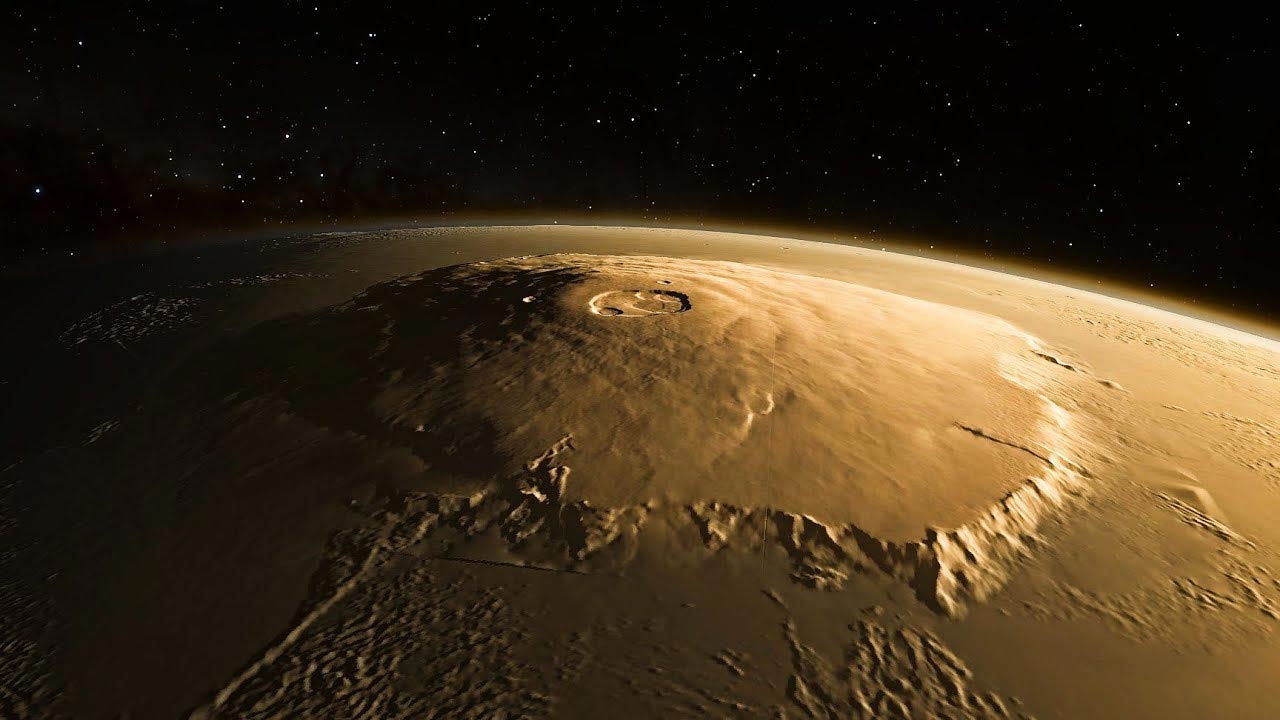
For centuries, the limits of human knowledge were defined by the glass lenses of primitive telescopes. However, as the digital age accelerated, our perspective shifted from the terrestrial to the celestial. Today, when we ask which planet has the largest volcano, the answer—Mars—is not just a trivia point, but a testament to the staggering evolution of aerospace engineering, remote sensing technology, and data science. Olympus Mons, a shield volcano that stands nearly three times the height of Mount Everest, serves as the ultimate case study for the technologies that allow us to map, analyze, and understand worlds millions of miles away.
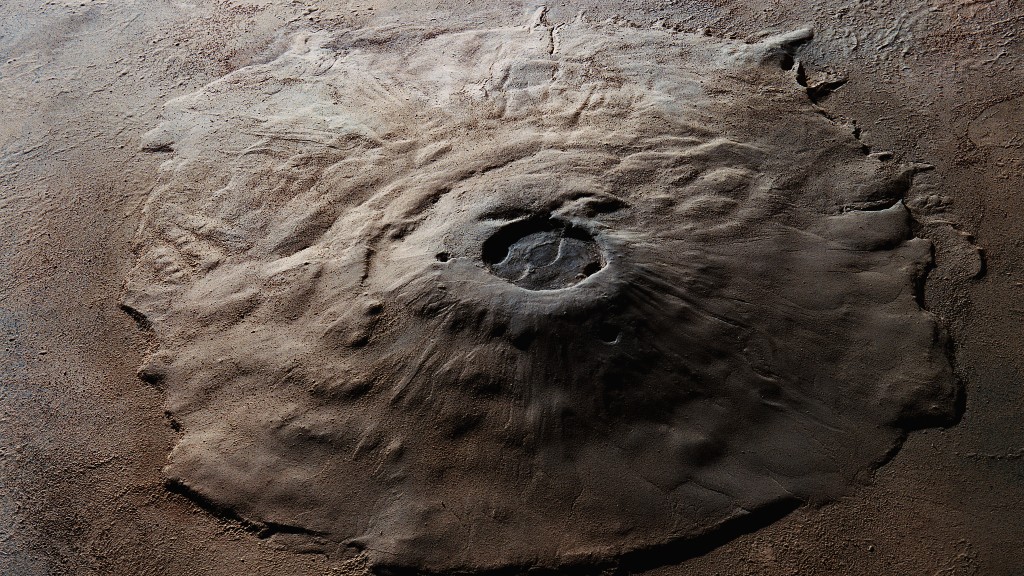
The identification and study of Olympus Mons represent a triumph of the “Tech” niche, bridging the gap between high-end hardware and sophisticated software. To understand this Martian giant is to understand the progression of imaging sensors, autonomous robotics, and the artificial intelligence algorithms that process the vast amounts of telemetry sent back to Earth.
The Optical Revolution: Remote Sensing and High-Resolution Imaging
The journey to discovering the largest volcano in the solar system began not with a landing, but with a lens. The technological leap from the blurred images of the mid-20th century to the 4K-quality topographic maps of today is a narrative of hardware innovation.
The Evolution of Orbital Sensors
In the early 1970s, NASA’s Mariner 9 mission was the first to orbit another planet. It arrived during a global dust storm, but as the dust settled, the peak of Olympus Mons was the first feature to emerge. The technology at the time relied on vidicon camera tubes, essentially television cameras modified for space. Today, we utilize High-Resolution Imaging Science Experiment (HiRISE) cameras onboard the Mars Reconnaissance Orbiter (MRO).
HiRISE is a marvel of optical engineering. It features a 0.5-meter primary mirror, the largest ever flown on a deep-space mission. The sensor technology uses Time Delay Integration (TDI) to build up images line by line, allowing for a resolution of up to 25 centimeters per pixel. This allows scientists to see individual boulders at the base of Olympus Mons, providing the granular data necessary for geological modeling.
Spectrometry and Chemical Mapping
Understanding a volcano requires more than just a photograph; it requires a chemical breakdown. Tech such as the Compact Reconnaissance Imaging Spectrometer for Mars (CRISM) uses infrared and visible light to identify minerals. By analyzing the “fingerprint” of reflected light, CRISM can map the distribution of basaltic lavas across the Olympus Mons caldera. This hardware allows tech-driven geologists to determine the volcano’s age and the history of its eruptions without ever touching the surface.
LiDAR and Laser Altimetry
To accurately measure the 21.9-kilometer height of Olympus Mons, researchers rely on the Mars Orbiter Laser Altimeter (MOLA). This instrument sends laser pulses to the surface and measures the time it takes for them to bounce back. By processing millions of these pulses, software generates a high-precision 3D topographical map. This is the same fundamental technology used in autonomous vehicles (LiDAR) on Earth, proving that the tech developed for planetary exploration often drives terrestrial innovation.
Data Processing and AI: Mapping the Martian Topography
Gathering raw data is only the first half of the equation. The sheer volume of information transmitted from Mars—often at speeds slower than an old dial-up modem—requires cutting-edge software solutions to translate binary code into meaningful insights.
Digital Elevation Models (DEMs) and Photogrammetry
The process of turning flat images into 3D models of Olympus Mons involves sophisticated photogrammetry software. By taking images of the volcano from two different angles in orbit, algorithms can calculate the parallax and generate a Digital Elevation Model (DEM). These software tools must account for the curvature of the planet, atmospheric distortion, and light angles. The result is a high-fidelity virtual environment that allows researchers to “fly” over the volcano’s 600-kilometer-wide base using VR headsets and specialized rendering engines.
Artificial Intelligence in Feature Recognition
With terabytes of imaging data arriving every year, it is impossible for human eyes to categorize every geological feature. Enter Machine Learning (ML). AI models are now trained to identify volcanic vents, lava tubes, and impact craters on the slopes of Olympus Mons. These neural networks can process images in seconds, identifying patterns that might take humans weeks to find.

Specifically, “crater counting” algorithms are used to estimate the age of the volcano’s surface. By identifying the density and size of impact craters, the software can calculate how long it has been since a lava flow refreshed the surface. This intersection of AI and planetary science has accelerated our understanding of Martian volcanism by orders of magnitude.
Data Compression and Telemetry Optimization
One of the greatest tech hurdles in studying Mars is the “Deep Space Network” (DSN) bottleneck. Data can only be sent during specific windows when the planet is aligned with Earth’s receiving stations. To maximize this, engineers use lossless and lossy compression algorithms tailored for scientific data. This ensures that the high-resolution textures of the Olympus Mons summit are transmitted without losing the critical metadata required for scientific validation.
Robotics and Autonomy: Navigating the Slopes of a Giant
While we have not yet landed a rover directly on the slopes of Olympus Mons due to its sheer scale and atmospheric challenges, the technology required to do so is currently in development. The engineering hurdles of traversing a shield volcano the size of Arizona are driving the next generation of robotics.
Autonomous Navigation Systems (AutoNav)
Modern rovers, like Perseverance, utilize “AutoNav” software. This allows the rover to map its surroundings using stereo cameras and plot a path without human intervention. On a structure like Olympus Mons, where the terrain can vary from smooth lava plains to treacherous “aureole” deposits (massive landslides at the base), autonomy is critical. The “Tech” here involves real-time image processing and pathfinding algorithms like A* (A-star) that can operate on low-power, radiation-hardened processors.
Specialized Locomotion and Mobility
Traditional wheels struggle with the fine basaltic dust and sharp volcanic glass found on Mars. Robotics labs are currently testing “scouting” drones and multi-limbed robots designed to climb steeper grades than a standard rover. The Ingenuity Mars Helicopter proved that flight is possible in the thin Martian atmosphere. Future iterations of this tech—larger, more robust drones—could be the only way to explore the 6-kilometer-high scarp (cliff) that surrounds the base of Olympus Mons.
Power Systems for Long-Duration Missions
Because Olympus Mons is so massive, it can actually influence local weather patterns, potentially blocking sunlight for solar-powered tech. To explore these regions, engineers rely on Multi-Mission Radioisotope Thermoelectric Generators (MMRTGs). This hardware converts the heat from decaying plutonium-238 into electricity, providing a steady power source for decades. This “nuclear battery” technology is the backbone of deep-space tech, ensuring that our instruments don’t freeze during the Martian night.
The Next Horizon: Propulsion and Habitat Engineering
The study of the largest volcano in the solar system is not just about looking back at the past; it is about building the tech for the future. Olympus Mons is often cited as a potential site for human exploration and eventual resource extraction.
Heavy-Lift Launch Vehicles and Starship
To reach Mars with the equipment necessary to study Olympus Mons up close, we require a revolution in propulsion. SpaceX’s Starship is the most prominent example of this tech shift. By utilizing liquid methane and oxygen (methalox), Starship is designed for “In-Situ Resource Utilization” (ISRU). The theory is that we can use the carbon dioxide in the Martian atmosphere and ice found in the ground to create fuel for the return journey. This “closed-loop” tech is essential for any mission targeting the Martian highlands.
3D Printing and Volcanic Regolith
If humans are to ever live in the shadow of Olympus Mons, we cannot bring our building materials from Earth. Instead, we must use “Additive Manufacturing” (3D printing) combined with Martian regolith (soil). Engineers are developing robotic printers that can melt or chemically bind volcanic dust into structural components. The basaltic rock found in abundance around Olympus Mons is an ideal material for shielding against radiation and extreme temperature fluctuations.
Seismology and Internal Imaging
The final frontier in the technology of Olympus Mons is looking inside it. NASA’s InSight lander introduced the world to Martian seismology. Future tech deployments will involve “seismic networks”—multiple sensors placed around the volcano to measure “Marsquakes.” By analyzing how seismic waves travel through the planet, software can create a “CT scan” of the volcano’s internal magma chambers. This would reveal whether the largest volcano in the solar system is truly extinct or merely dormant, waiting for the next geological epoch to wake up.
In conclusion, the question of “what planet has the largest volcano” opens a door into the most advanced sectors of modern technology. From the high-resolution optics that first captured its peak to the AI that maps its rugged terrain and the future robotics that will one day climb its slopes, Olympus Mons remains the ultimate milestone for human ingenuity. It is a monument to how far our tech has come, and a compass pointing toward our future as a multi-planetary species.
aViewFromTheCave is a participant in the Amazon Services LLC Associates Program, an affiliate advertising program designed to provide a means for sites to earn advertising fees by advertising and linking to Amazon.com. Amazon, the Amazon logo, AmazonSupply, and the AmazonSupply logo are trademarks of Amazon.com, Inc. or its affiliates. As an Amazon Associate we earn affiliate commissions from qualifying purchases.