
In the hyper-competitive world of commercial aviation, differentiation is the ultimate currency. While most legacy carriers differentiate themselves through tiered cabin classes, sprawling global networks, and diverse fleets ranging from regional turboprops to massive wide-body jets, Southwest Airlines has spent five decades refining a radically different brand identity. At the core of this identity is a singular, unwavering commitment to a specific tool: the Boeing 737.
When asking what planes Southwest Airlines uses, the answer is deceptively simple: they use only the Boeing 737. However, the brand strategy behind this decision is incredibly complex. For Southwest, the aircraft is not merely a vehicle; it is the physical manifestation of their corporate strategy, a cornerstone of their operational efficiency, and a primary driver of their “low-cost, high-value” brand promise. By operating a monotype fleet, Southwest has created a brand moat that is as much about psychological consistency as it is about mechanical uniformity.

The Genesis of a Brand: The All-Boeing Philosophy
The decision to fly exclusively Boeing 737s was not an accident of history; it was a calculated move by founders Herb Kelleher and Rollin King to eliminate the “friction” inherent in traditional airline models. From a brand strategy perspective, this decision established Southwest as a “disruptor” long before the term became a corporate cliché.
By selecting a single aircraft type, Southwest communicated a clear brand message: simplicity. In a market where travel was often perceived as stressful and overly complicated, Southwest presented itself as the streamlined alternative. This “All-Boeing” philosophy allowed the airline to master a specific niche—short-to-medium haul domestic travel—with a level of proficiency that competitors with mixed fleets could not match.
This strategic choice influenced every touchpoint of the brand. Because every plane was essentially the same, the airline could promise a consistent experience regardless of the route. This predictability became a core component of the Southwest brand identity. Customers knew exactly what to expect when they walked through the jet bridge: the same cabin layout, the same overhead bin capacity, and the same reliable performance. In the world of branding, consistency builds trust, and Southwest used the 737 to build that trust at scale.
The Power of Operational Uniformity
From a corporate identity standpoint, the single-fleet model created an internal culture of expertise. Every pilot in the Southwest system is certified to fly every plane in the fleet. Every mechanic is a specialist in one specific airframe. This internal alignment translates to external brand strength. When an airline can swap a plane at the last minute without needing to reassign a different crew or change the seating chart, it minimizes delays. In the airline industry, on-time performance is the ultimate marketing tool, and the Boeing 737 is the engine that drives that performance for Southwest.
Complexity is the Enemy: Operational Brand Consistency
Modern brand strategy often emphasizes the “experience economy.” For Southwest, the experience is defined by the “Southwest Turn”—the ability to land a plane, deplane passengers, clean the cabin, board new passengers, and take off again in a fraction of the time it takes their competitors. The choice of the Boeing 737 is central to this brand pillar.
The 737 is designed for quick turnarounds. Its low-to-the-ground profile allows for faster baggage loading and fueling without the need for complex heavy machinery. By focusing on this single aircraft type, Southwest optimized its entire ground operation to support a high-frequency, point-to-point network. This is where brand strategy meets operational reality: the brand promises low fares, and the 737 provides the cost structure necessary to keep those fares low.
Streamlining the Customer Journey
Brand consistency extends into the cabin. Unlike competitors who must manage the logistics of various seating configurations across Boeings, Airbuses, and Embraers, Southwest’s marketing team can focus on a singular message. There is no “equipment swap” anxiety for the Southwest traveler. If you book a flight, you know the seat pitch, the lack of a first-class cabin, and the open-seating policy will be uniform.
This uniformity has allowed Southwest to own the “egalitarian” space in the market. By removing the physical barriers of class divisions within the aircraft, the brand projects an image of fairness and accessibility. This is a deliberate brand positioning move that separates them from the “elitist” connotations of legacy carriers. The 737, with its single-aisle configuration, serves as the perfect stage for this democratic approach to travel.
Training and Maintenance as Marketing Assets
While maintenance might seem like a backend function, it is a critical component of brand reliability. Southwest’s ability to maintain a massive fleet with a streamlined inventory of parts reduces the likelihood of mechanical cancellations. From a brand perspective, this equates to “Reliability.” By specializing in the 737, Southwest has effectively turned its maintenance department into a brand asset, ensuring that the fleet remains one of the most active and utilized in the sky.

Visual Identity and the “Heart” in the Sky
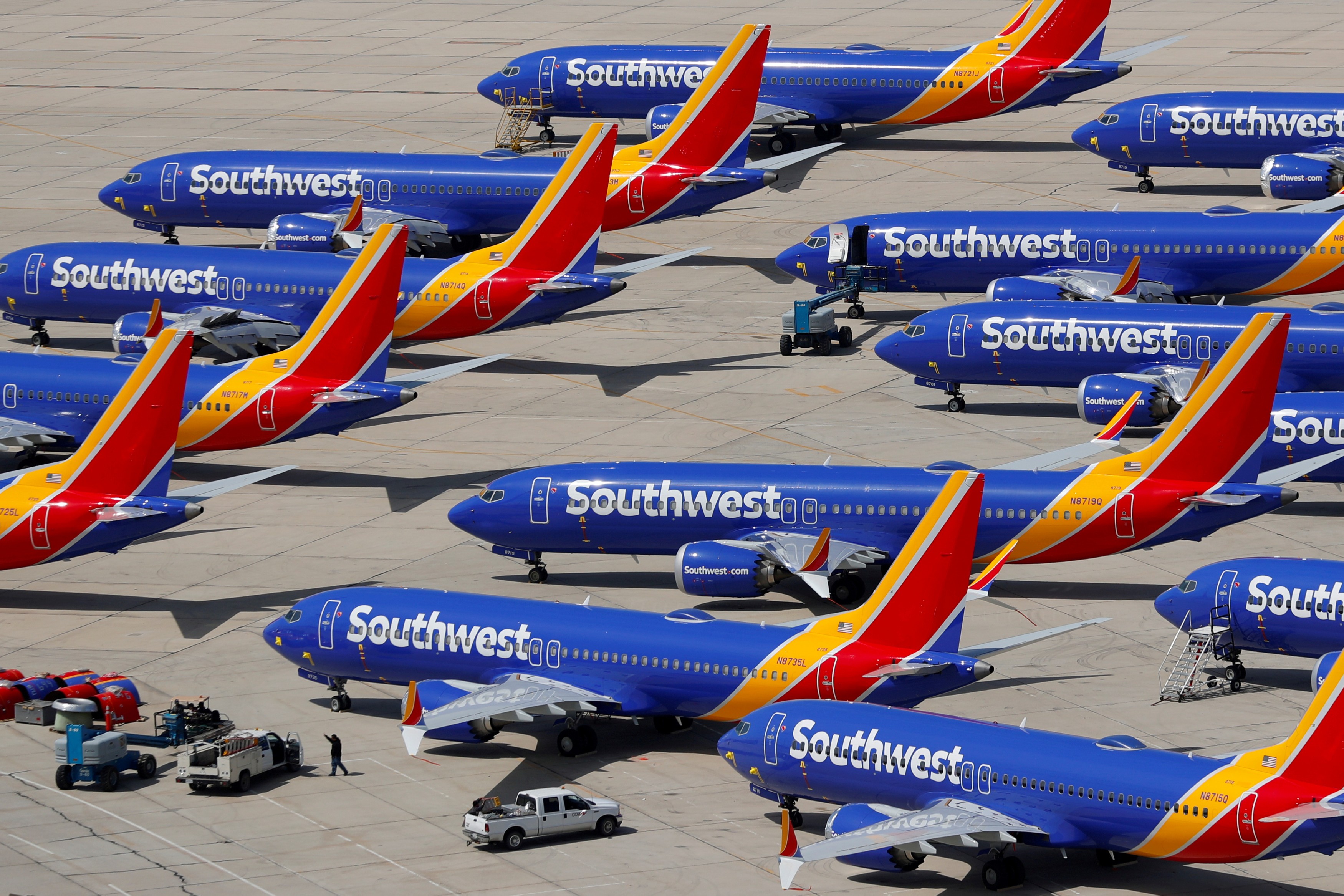
A brand is more than a strategy; it is a visual and emotional connection. Southwest has used the exterior of its Boeing 737s to create one of the most recognizable visual identities in the world. From the original “Desert Gold” livery to the “Canyon Blue” and the current “Heart” livery, the aircraft serves as a flying billboard for the company’s values.
The “Heart” livery, introduced in 2014, was a significant milestone in Southwest’s brand evolution. It placed the heart logo—a symbol of the airline’s commitment to “LUV” (the company’s stock ticker and its internal philosophy)—prominently on the belly of the plane and near the boarding door. This was a strategic move to humanize a massive corporate entity. When a passenger sees that heart, they are meant to associate the 737 with the friendly, humorous, and people-centric service that Southwest employees are famous for.
Specialized Liveries and Brand Partnerships
Southwest frequently uses its 737 fleet for “Special Liveries,” painting entire aircraft to honor states (e.g., California One, Lone Star One) or brand partnerships (e.g., various Disney themes or SeaWorld in the past). These are not just paint jobs; they are high-visibility brand activations. Because the fleet is uniform, these special planes stand out even more, creating “Instagrammable” moments for passengers and generating earned media. This leverages the aircraft itself as a marketing medium, reinforcing the brand’s connection to the communities it serves.
The Cabin as a Brand Sanctuary
Inside the 737, Southwest has worked closely with Boeing to implement the “Sky Interior,” which uses LED lighting and sculpted sidewalls to make the narrow-body cabin feel more spacious. By investing in these upgrades across the fleet, Southwest ensures that even as the brand ages, the physical experience feels modern. This is crucial for maintaining a “lifestyle brand” image in an industry that is often viewed as a commodity service.
Strategic Resilience: Navigating the 737 MAX Crisis
Perhaps the greatest test of Southwest’s “Single-Fleet” brand strategy came with the grounding of the Boeing 737 MAX. For any other brand, being so heavily tied to a single, troubled product line could have been fatal. However, Southwest’s handling of the MAX crisis provides a masterclass in brand resilience and crisis communication.
When the MAX was grounded globally, Southwest faced a dual challenge: a massive logistical hole in their schedule and a potential collapse of consumer trust in their primary asset. The brand’s response was rooted in transparency. They didn’t distance themselves from the 737; instead, they leaned into their role as the world’s foremost experts on the aircraft.
Rebuilding Trust Through Expertise
Southwest’s brand strategy during this period focused on “Safety as a Shared Value.” They leveraged their pilots—the “face” of the brand—to communicate directly with the public about the rigors of the new training protocols. By positioning their pilots as the ultimate advocates for safety, Southwest transferred the trust passengers had in the “Southwest People” back onto the 737 aircraft.
They also remained loyal to Boeing, a move that signaled corporate stability. While other airlines canceled orders or hedged their bets with Airbus, Southwest doubled down on the 737. This loyalty reinforced the brand’s identity as a steady, reliable partner, rather than a fair-weather operator. It was a high-stakes bet that preserved the long-term economic advantages of the single-fleet model while eventually restoring the brand’s reputation for safety.
The Future of the Southwest Brand: Evolving the Fleet
As Southwest moves into its next decade, the question of “what planes” they use is evolving to include the 737 MAX 7 and MAX 8. This evolution is not just about newer engines; it is about the brand’s commitment to sustainability and modernization.
The newer 737 variants are significantly quieter and more fuel-efficient. In an era where “ESG” (Environmental, Social, and Governance) criteria are central to brand valuation, the 737 MAX allows Southwest to market itself as a more eco-conscious choice. The brand is now pivoting to highlight its reduced carbon footprint, using the technological advancements of the 737 to appeal to a younger, more environmentally aware demographic.
Scaling the Brand Globally
The extended range of the 737 MAX 8 has also allowed Southwest to expand its brand into new territories, such as Hawaii and more international destinations in the Caribbean and Central America. This expansion is happening without the need for a new aircraft type, allowing the brand to maintain its core operational DNA while scaling its reach.
By staying the course with the Boeing 737, Southwest Airlines has proven that a brand’s greatest strength often lies in what it chooses not to do. They chose not to diversify, not to add complexity, and not to compromise on the efficiency that allows them to offer low fares. The Boeing 737 is more than just a plane for Southwest; it is the physical skeleton upon which the entire brand is built. It is a testament to the power of a singular focus in an industry that is constantly tempted by the lure of “more.” For Southwest, the 737 is the “Heart” of the brand, and it continues to fly them toward a future of consistent, reliable, and accessible travel.
aViewFromTheCave is a participant in the Amazon Services LLC Associates Program, an affiliate advertising program designed to provide a means for sites to earn advertising fees by advertising and linking to Amazon.com. Amazon, the Amazon logo, AmazonSupply, and the AmazonSupply logo are trademarks of Amazon.com, Inc. or its affiliates. As an Amazon Associate we earn affiliate commissions from qualifying purchases.