
Securing a first job at the age of 14 is more than just a rite of passage; in a high-cost state like California, it is a strategic financial move. For many young Californians, entering the workforce early provides a foundational understanding of personal finance, the value of labor, and the mechanics of the modern economy. However, California maintains some of the strictest labor laws in the United States, designed to balance educational priorities with economic opportunity.
Understanding where to find employment, navigating the legal requirements, and learning how to manage that first influx of capital are essential steps for any 14-year-old looking to jumpstart their financial future. This guide explores the diverse avenues for teen employment in the Golden State, framed through the lens of financial growth and long-term wealth building.

Navigating the Legal and Financial Landscape of California Child Labor Laws
Before a 14-year-old can earn their first dollar in a formal setting, they must navigate the regulatory framework established by the California Department of Industrial Relations. These laws are not just bureaucratic hurdles; they are designed to ensure that a minor’s education remains their primary “job” while allowing them to build a financial cushion.
The Essential Work Permit
In California, almost all minors under the age of 18 must have a permit to work. For a 14-year-old, this process typically begins at their school. The “Statement of Intent to Employ Minor and Request for Work Permit” must be completed by the student, the parent or guardian, and the prospective employer. Once the school district approves it, the minor is legally cleared to earn. From a financial perspective, this permit is the “license to earn,” and maintaining a high GPA is often a prerequisite, linking academic performance directly to earning potential.
Restricted Hours and Earning Caps
Federal and state laws limit the number of hours a 14-year-old can work, which inherently caps their weekly earning potential. During school weeks, 14-year-olds are generally limited to three hours on a school day and a maximum of 18 hours per week. During vacations and summers, this expands to 40 hours per week. Understanding these limitations is vital for financial planning. If a teen is aiming for a specific financial goal—such as buying a car at 16 or funding a college savings account—they must calculate their potential income based on these restricted windows.
Minimum Wage Advantages in California
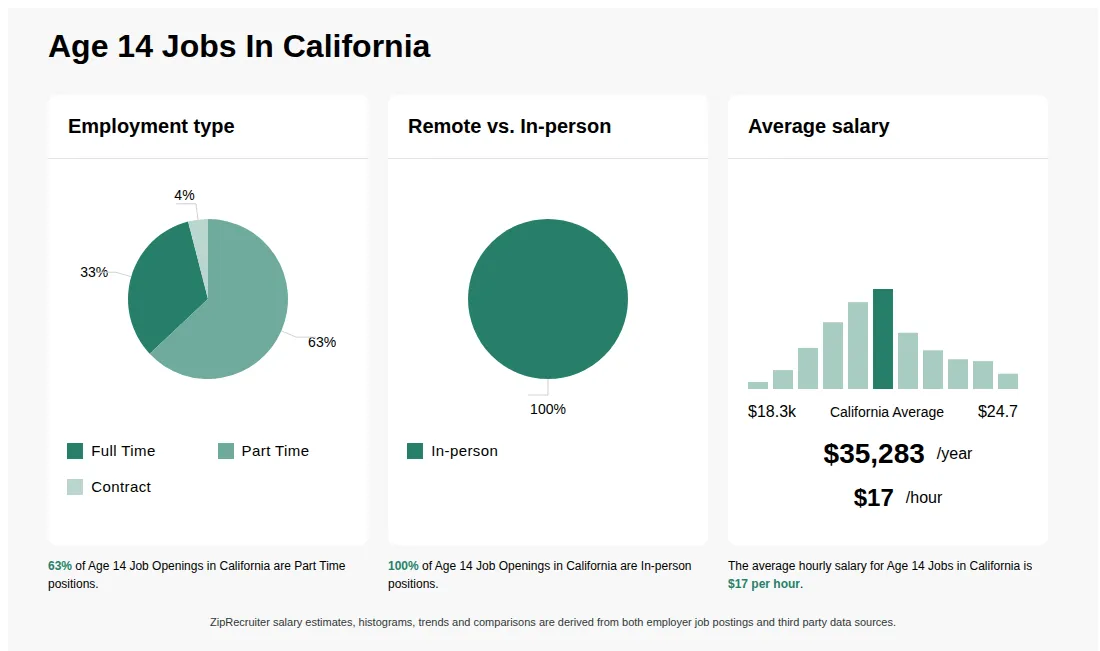
One of the greatest benefits of working in California is the state’s aggressive minimum wage policy. Unlike some states that allow a “sub-minimum wage” for minors or learners, California generally requires that minors be paid the same state minimum wage as adults. For a 14-year-old, earning the California minimum wage (which consistently ranks among the highest in the nation) provides a significant advantage in terms of purchasing power and savings capability compared to peers in other states.
Top Sectors and Specific Places That Hire at 14 in California
While many corporate entities wait until an applicant is 16, several sectors in California are known for welcoming 14-year-olds. These roles often serve as the entry point into the formal economy, providing steady paychecks and taxable income.
The Entertainment and Tourism Industry
California’s status as a global tourism hub creates unique opportunities. Large-scale amusement parks, such as Six Flags Magic Mountain, California’s Great America, and various local boardwalks, frequently hire 14-year-olds for roles in food service, games, and park cleanliness. These positions are often seasonal, making them ideal for high-earning summer “sprints” where the 40-hour work week limit applies.
Food Service and Specialized Retail
While many fast-food giants prefer older staff for kitchen safety reasons, specific franchises and niches are more flexible.
- Baskin-Robbins and Culvers: These establishments often hire at 14 for “front of house” roles, focusing on customer service and transactions.
- Chick-fil-A: Known for its local franchise model, many California locations hire 14 and 15-year-olds to instill a strong work ethic and service-oriented mindset.
- Grocery Stores: Smaller, independent grocers or specific chains like Safeway or Vons sometimes hire minors for bagging and cart retrieval, though this varies strictly by location and local management policy.
Public Sector and Non-Profit Opportunities
Municipalities and local governments are excellent sources of employment for young teens.
- Junior Lifeguards and Swim Instructors: For teens with strong athletic skills, local city pools often hire 14-year-olds as aides or junior instructors.
- Youth Sports Officiating: Local soccer and baseball leagues are almost always in need of referees and umpires. This is often one of the highest-paying hourly “gigs” available to a 14-year-old, sometimes offering flat rates per game that exceed the hourly minimum wage.
Maximizing Income through Entrepreneurship and the Gig Economy
For the ambitious 14-year-old in California, traditional “W-2” employment is only one path to financial growth. The “side hustle” culture is prominent in the state, and many teens find that they can earn significantly more by operating as independent contractors or small business owners.
Digital Content and Tech-Based Income
In the age of AI and digital platforms, 14-year-olds with technical proficiency can monetize their skills. This includes:
- Video Editing for Creators: Many YouTubers and TikTok influencers outsource basic editing. A skilled 14-year-old can charge a premium for these services.
- Coding and Web Design: Local small businesses often need basic website maintenance or social media setup.
- Reselling Platforms: Using apps like Depop or eBay to flip vintage clothing or tech gadgets is a popular way for California teens to learn the basics of “buy low, sell high” retail arbitrage.
Service-Based Micro-Businesses
The classic neighborhood services still hold immense value and offer the highest level of flexibility.
- Pet Sitting and Dog Walking: With California’s high density of pet owners, a reliable teen can build a recurring revenue stream.
- Academic Tutoring: 14-year-olds who excel in math or music can offer tutoring to younger elementary students. The financial benefit here is the lack of overhead and the ability to set one’s own rates, often ranging from $20 to $40 per hour in affluent California suburbs.
Financial Literacy: Managing and Growing Your First Income
Earning money is only half of the equation; the “Money” niche is truly defined by how that capital is managed. For a 14-year-old in California, receiving a first paycheck is the perfect time to implement sophisticated financial strategies that will pay dividends for decades.
Banking and Custodial Accounts
A 14-year-old cannot legally open a bank account alone. They will need a parent to open a Joint Checking Account or a Custodial Account (UTMA/UGMA). This is a critical step in understanding digital banking, debit card usage, and monitoring cash flow. Using fintech apps designed for teens, such as Greenlight or Step, can help track spending and automate savings.
The Power of the Roth IRA for Minors
One of the best-kept secrets in personal finance is the Roth IRA for Minors. If a 14-year-old has “earned income” (reported to the IRS), they can contribute to a Roth IRA. Because they are likely in the lowest possible tax bracket, they pay virtually no taxes on the money now, and the investments grow tax-free forever.
- Example: If a 14-year-old invests $2,000 of their summer earnings into a total stock market index fund and never touches it again, that single summer of work could grow into tens of thousands of dollars by the time they reach retirement age, thanks to the power of compound interest.
Implementing the 50/30/20 Rule
To build healthy financial habits, young workers should adopt a simplified version of the 50/30/20 rule:
- 50% for Long-Term Savings/Investing: Building a “wealth fund” for future needs.
- 30% for Short-Term Goals: Saving for a new laptop, a car, or a trip with friends.
- 20% for Spending: Enjoying the fruits of their labor immediately.

The Long-Term ROI of Working at 14
Entering the workforce at 14 in California offers a Return on Investment (ROI) that goes far beyond a bi-weekly paycheck. From a business and finance perspective, these early workers are gaining “human capital.” They are learning soft skills—punctuality, conflict resolution, and professional communication—that make them more “marketable” for higher-paying internships and roles in their late teens and early twenties.
Furthermore, by starting at 14, a teenager gets a four-year head start on financial literacy compared to those who wait until 18. In the world of compounding, four years is an eternity. A 14-year-old who understands taxes, savings rates, and the California labor market is not just a teen with a job; they are a young investor building the foundation for a lifetime of financial security.
Whether it’s scooping ice cream at a local shop, refereeing a soccer match, or managing a reselling business, the opportunities for 14-year-olds in California are vast. By combining these opportunities with rigorous financial management, California’s youngest workers can turn their first jobs into a powerful engine for future wealth.
aViewFromTheCave is a participant in the Amazon Services LLC Associates Program, an affiliate advertising program designed to provide a means for sites to earn advertising fees by advertising and linking to Amazon.com. Amazon, the Amazon logo, AmazonSupply, and the AmazonSupply logo are trademarks of Amazon.com, Inc. or its affiliates. As an Amazon Associate we earn affiliate commissions from qualifying purchases.