
The United States Marine Corps (USMC) has long been defined by its commitment to precision, reliability, and technical superiority on the battlefield. While the rifle remains the primary tool of the Marine, the sidearm—the pistol—represents a critical component of a warrior’s kit, serving as a secondary weapon system for close-quarters engagement and personal protection. In recent years, the Marine Corps has undergone a significant technological shift, retiring legacy systems in favor of modular, high-tech platforms that offer better ergonomics, increased capacity, and seamless integration with modern tactical accessories.

The transition from the iconic but aging M9 Beretta to the Sig Sauer M18 marks a new era in military hardware. This article explores the sophisticated technology behind the current Marine sidearms, the engineering requirements of the modern battlefield, and the specialized tools used by elite units like MARSOC.
The Engineering Shift: From the M9 to the Modular Handgun System (MHS)
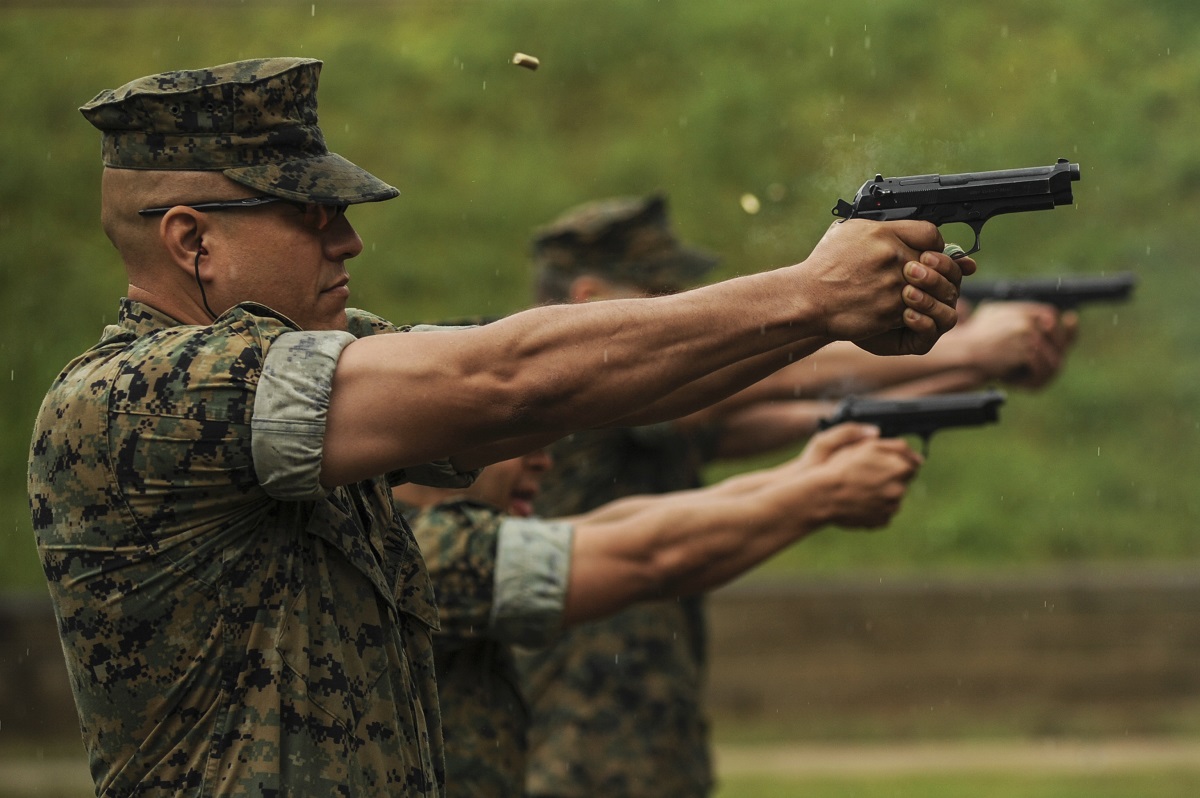
For over three decades, the Beretta M9 was the face of the American military sidearm. While a reliable piece of mechanical engineering, it was a product of the 1980s. Its heavy aluminum frame and fixed configuration limited its adaptability in an era where “one size fits all” no longer meets the diverse needs of modern infantry. The technological push for a replacement was driven by a need for modularity, weight reduction, and the integration of optical sights.
The Rise of Polymer Frames and Striker-Fired Systems
The most significant technological leap in the current Marine sidearm, the Sig Sauer M18, is the move from a hammer-fired, metal-framed system to a polymer-framed, striker-fired design. Unlike the M9, which used a traditional external hammer, the M18 utilizes a striker mechanism. This design reduces the number of external moving parts, creating a more snag-free profile and a more consistent trigger pull for the operator. The use of high-strength, glass-reinforced polymers significantly reduces the overall weight of the weapon, allowing Marines to carry additional mission-essential gear without increasing their physical burden.
Overcoming the Ergonomic Barrier
Legacy pistols often struggled with “human-machine interface” issues. Smaller-handed or larger-handed Marines were forced to adapt to a single grip size. Modern military tech has solved this through modular grip modules. The M18 features interchangeable backstraps and grip shells, allowing the weapon’s physical geometry to be resized to fit the individual user perfectly. This isn’t just a comfort feature; it is a technical optimization that ensures better recoil management and faster follow-up shots.
The Sig Sauer M18: A Deep Dive into Marine Sidearm Tech
The Sig Sauer M18 is the compact variant of the M17 Modular Handgun System (MHS) adopted by the U.S. Army. The Marine Corps opted primarily for the M18 due to its smaller footprint, making it more versatile for various roles, including vehicle crews, aviators, and infantry officers. The M18 is a marvel of modern firearms engineering, designed to function in the most corrosive and abrasive environments on Earth.
The Internal Fire Control Unit (FCU)
The true technological heart of the M18 is the serialized Fire Control Unit (FCU). In traditional pistol design, the frame of the gun is considered the “firearm” and holds the serial number. In the M18, the serial number is stamped on a self-contained stainless-steel chassis that houses the trigger and firing mechanism. This allows the Marine Corps to swap out frames, slides, and barrels while keeping the same internal “brain.” This modular architecture simplifies maintenance and allows for rapid tech upgrades without the need to requisition entirely new weapon systems.
Advanced Safety and Reliability Features
The M18 incorporates a suite of safety technologies designed to prevent accidental discharges in high-stress environments. These include an ambidextrous manual safety, a firing pin block, and a “loaded chamber indicator” that provides both visual and tactile confirmation of a round in the chamber. Furthermore, the M18 utilizes a specialized PVD (Physical Vapor Deposition) coating on its slide and internal components. This tech provides extreme resistance to saltwater corrosion—a non-negotiable requirement for a branch that operates primarily from the sea.
Optic Integration and Tactical Hardware
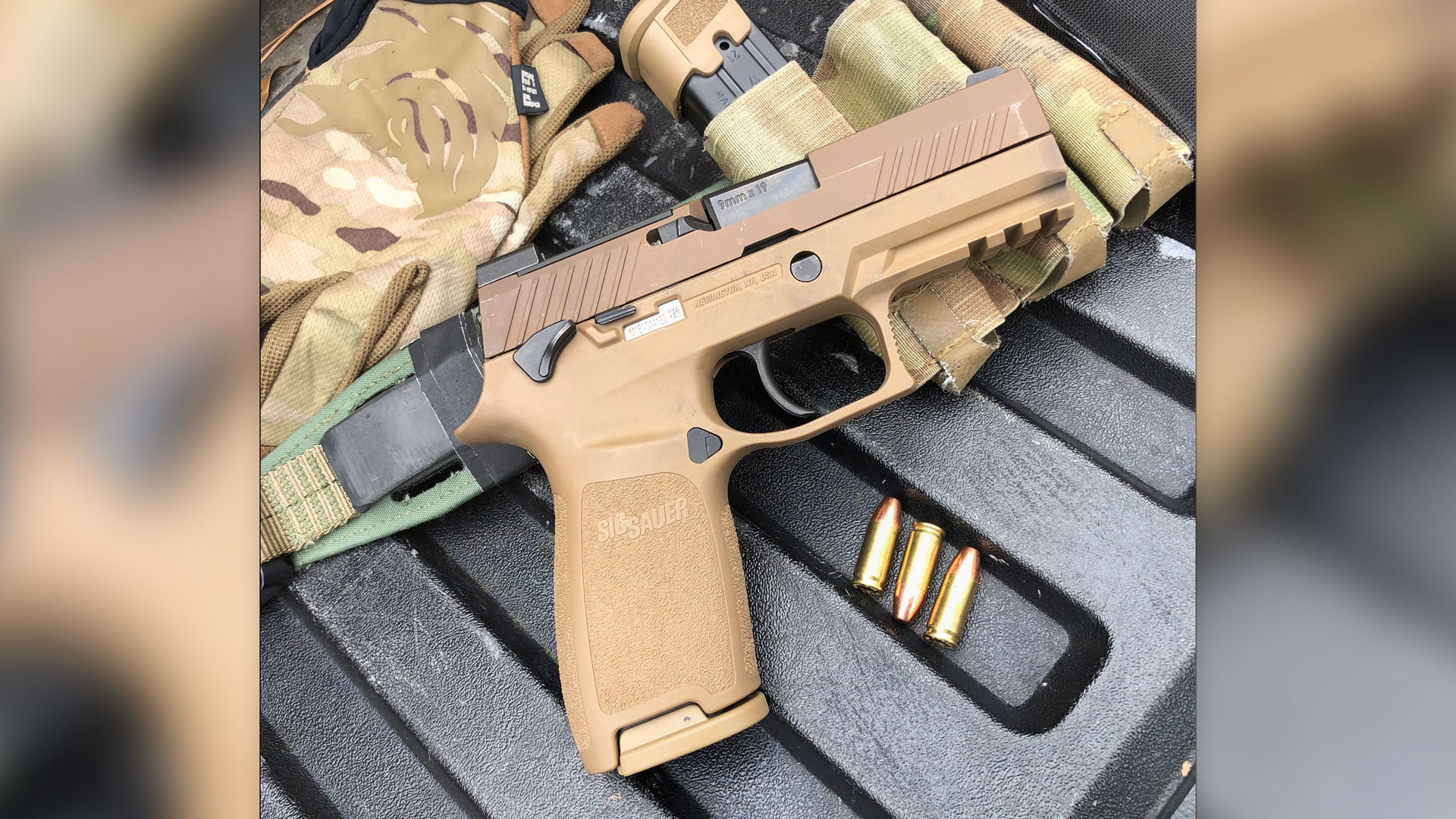
The modern battlefield is increasingly dominated by “smart” technology, and the pistol has not been left behind. The current generation of Marine pistols is designed as a platform for various electronic and optical enhancements, moving the sidearm into the realm of integrated weapon systems.
Red Dot Optics and the “Optic-Ready” Slide
One of the most significant advancements in Marine pistol tech is the inclusion of a removable plate on the M18 slide, which allows for the direct mounting of miniature Red Dot Sights (RDS). Historically, pistol marksmanship relied on aligning front and rear iron sights—a process that is difficult under stress or in low light. With RDS technology, a Marine can keep both eyes open and focused on the target, projecting a glowing dot onto the point of impact. This technological shift drastically increases first-hit probability and situational awareness.
Accessory Rails and Laser Integration
The M18 features an integrated Picatinny rail (MIL-STD-1913) on the dust cover. This allows for the seamless attachment of high-output white lights and infrared (IR) illuminators/lasers. For Marines operating with Night Vision Goggles (NVGs), the ability to project an IR laser from their pistol is a game-changer. It allows for accurate engagement in total darkness without the need to bring the weapon to eye level, utilizing the sidearm as a high-tech tool for night operations.
Specialized Hardware: The M007 and MARSOC Technology
While the M18 is the standard-issue sidearm for the general force, the Marine Corps maintains specialized hardware for specific mission sets. This includes “concealed carry” requirements for investigators and high-end tactical platforms for the Marine Corps Special Operations Command (MARSOC).
The Glock 19M (M007)
The Marine Corps officially adopted the Glock 19M, designated as the M007, for use by Criminal Investigative Division (CID) agents and members of the Marine One executive transport squadron. The M007 represents the pinnacle of Glock’s “Generation 5” technology. It features a “Marksman Barrel” with improved rifling for enhanced accuracy and an nDLC finish for durability. The M007’s tech focus is on compactness and extreme reliability, ensuring that in high-stakes personal protection details, the weapon functions every single time.
The Legend of the .45 ACP: The M45A1 CQBP
For years, the Marine Raiders (MARSOC) and Force Reconnaissance units utilized the M45A1 Close Quarter Battle Pistol. This was a modernized version of the classic 1911, built by Colt. It featured a dual-recoil spring system to reduce felt recoil and a Cerakote finish for environmental protection. While the Corps has largely transitioned these units to the Glock 19 or M18 to align with modern logistical and capacity standards, the M45A1 remains a testament to how the Marines can take 100-year-old mechanical tech and optimize it with modern materials science.
The Future of Marine Corps Small Arms Tech
The evolution of the Marine pistol does not end with the M18. As we look toward the future, the integration of technology into small arms is expected to accelerate, focusing on data, materials, and advanced ballistics.
Smart Sights and Augmented Reality
The next frontier for the Marine sidearm is the integration of augmented reality (AR). Research into “Heads-Up Displays” (HUDs) for infantry could eventually link the pistol’s optic directly to a Marine’s helmet-mounted display. This would allow a Marine to fire accurately from behind cover or around corners, with the pistol’s point of aim being transmitted wirelessly to the operator’s field of vision. This leap in digital-ballistic integration would redefine how sidearms are used in urban environments.
Advanced Materials and Sustainable Engineering
Future iterations of Marine pistols will likely explore the use of carbon fiber composites and 3D-printed titanium components to further reduce weight while increasing structural integrity. Additionally, the development of “lead-free” and higher-velocity 9mm ammunition tech ensures that even as the hardware evolves, the ballistics remain capable of defeating modern body armor. The goal is a weapon system that is lighter, faster, and more lethal, maintained by a digital logistics chain that can predict part failure before it occurs.
In conclusion, the pistols used by the Marines today are far more than simple tools of defense; they are sophisticated technological platforms. From the modular FCU of the Sig Sauer M18 to the infrared lasers and red dot optics of the modern raider, the U.S. Marine Corps ensures that its personnel are equipped with the most advanced, reliable, and adaptable hardware available in the 21st century. As technology continues to advance, the Marine sidearm will remain a critical, high-tech extension of the warrior on the front lines.
aViewFromTheCave is a participant in the Amazon Services LLC Associates Program, an affiliate advertising program designed to provide a means for sites to earn advertising fees by advertising and linking to Amazon.com. Amazon, the Amazon logo, AmazonSupply, and the AmazonSupply logo are trademarks of Amazon.com, Inc. or its affiliates. As an Amazon Associate we earn affiliate commissions from qualifying purchases.