
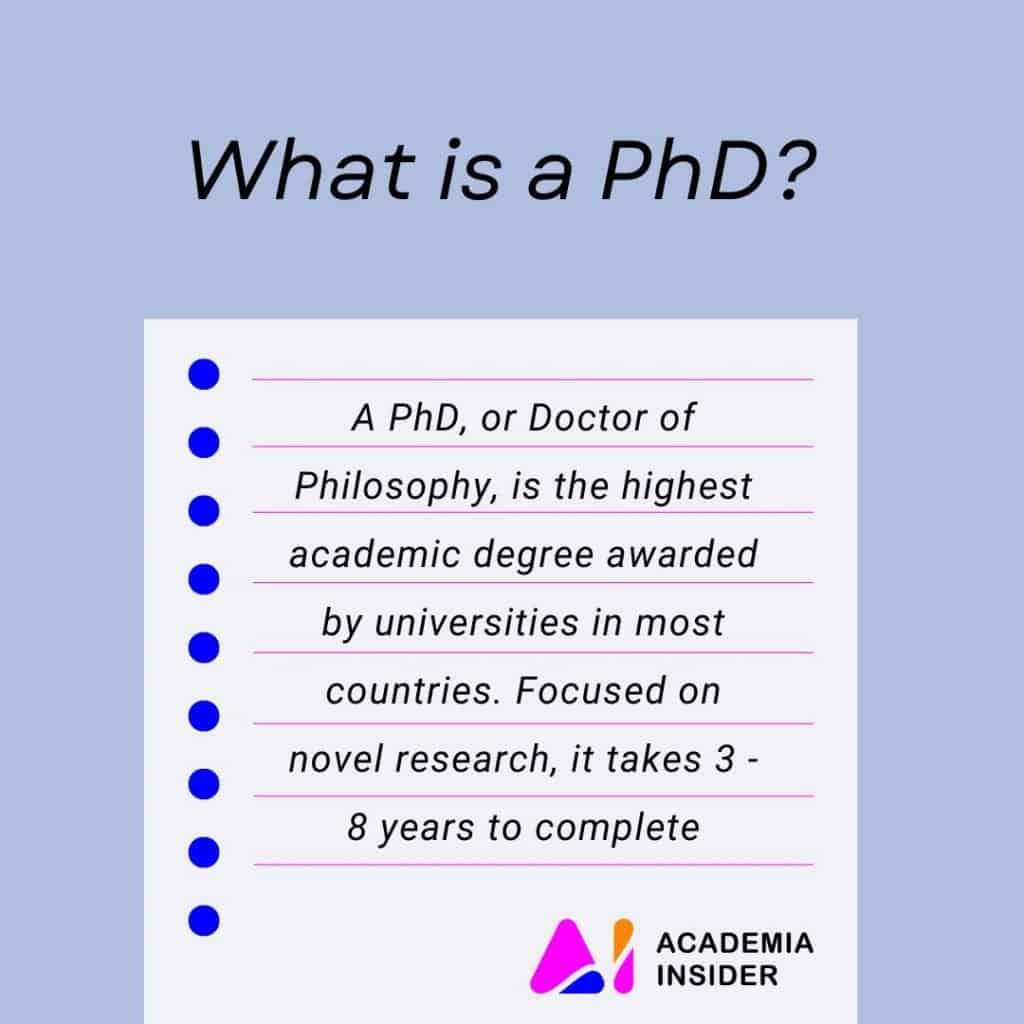
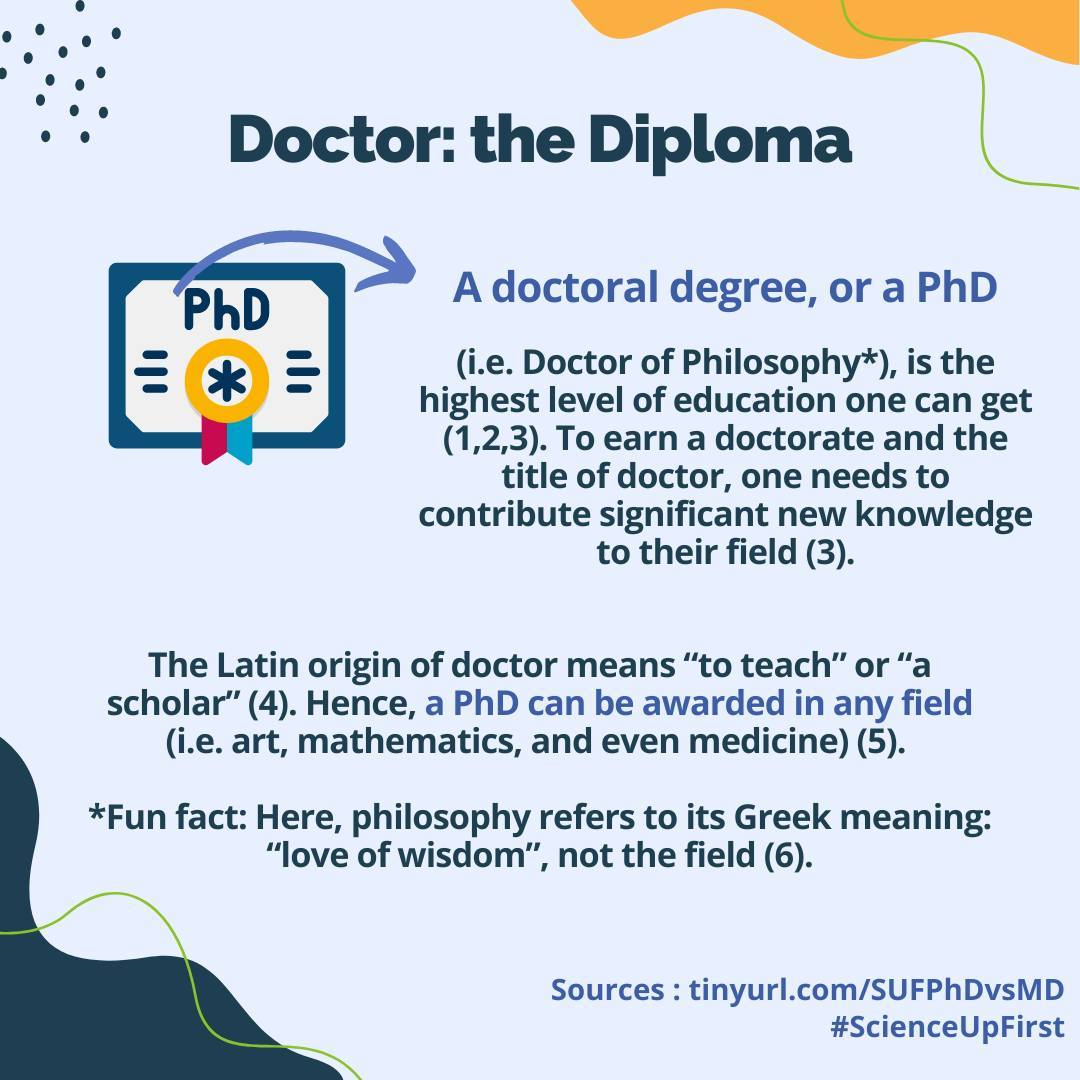
For decades, the acronym “PhD” stood as a symbol of academic isolation—a “Doctor of Philosophy” buried in dusty libraries or sterile laboratories, disconnected from the fast-paced world of consumer technology. However, as we navigate the third decade of the 21st century, the definition of a PhD has undergone a radical transformation. In the context of modern technology, a PhD is no longer just a degree; it is a critical engine of innovation, a signal of specialized technical mastery, and the foundational requirement for the “Deep Tech” era.

As artificial intelligence (AI), quantum computing, and biotechnology move from theoretical concepts to core business drivers, understanding what a PhD means in the tech ecosystem is essential for developers, founders, and industry leaders alike.
The Architectural Blueprint of Innovation: Beyond the Degree
In the tech industry, a PhD represents a specific type of intellectual infrastructure. While a traditional software engineer focuses on the application of tools to solve problems, a PhD is often concerned with the creation of the tools themselves. This distinction is the bedrock of modern technological progress.
Intellectual Depth vs. Breadth
In a typical tech career, professionals are encouraged to be “T-shaped”—possessing a broad understanding of many technologies with deep expertise in one. A PhD, however, represents an “I-shaped” profile taken to its logical extreme. It signifies that an individual has pushed the boundaries of human knowledge in a hyper-specific niche, such as neural network optimization or cryptographic protocols. In an era where “off-the-shelf” AI solutions are becoming commoditized, this depth allows tech companies to move beyond surface-level implementation and innovate at the algorithmic level.
The Scientific Method in Software Engineering
What a PhD truly means in a technical environment is the mastery of the scientific method. Technology is increasingly experimental. When building a large language model (LLM) or a decentralized autonomous organization (DAO), there is no manual. A PhD provides the framework for rigorous testing, hypothesis formation, and peer-validated results. This discipline prevents “voodoo programming” and ensures that tech stacks are built on verifiable data rather than trendy buzzwords.
The PhD as the Engine of the AI Renaissance
The current explosion of generative AI has reframed the PhD as the most valuable credential in Silicon Valley. If code is the new literacy, then those with PhDs in computer science and mathematics are the authors of the world’s most complex literature.
Engineering the “Black Box”
One of the greatest challenges in modern AI is the “black box” problem—the difficulty of understanding why a machine learning model makes a specific decision. This is where the PhD’s meaning becomes clear. While a standard developer can prompt an AI, a PhD researcher understands the underlying calculus and linear algebra that govern the model’s weights and biases. They are the “mechanics” of the mind, capable of opening the hood and fine-tuning the internal architecture to reduce bias and increase transparency.
Solving the Alignment Problem
As AI systems become more autonomous, the tech world faces the “Alignment Problem”—ensuring that AI goals match human values. This is not a simple coding task; it is a multi-disciplinary challenge involving high-level ethics, logic, and technical safety. The PhD represents the level of sophisticated thinking required to bridge the gap between abstract philosophy and hard-coded constraints. In this niche, the “Philosophy” in “Doctor of Philosophy” is finally becoming literal in the tech space.
The Rise of the “Founder-Scientist” in Deep Tech
The startup landscape has shifted. We are moving away from the era of “move fast and break things” toward an era of “research-led disruption.” This has given birth to the “Founder-Scientist,” where the PhD is the new MBA.
Building Moats with Intellectual Property
In the world of software-as-a-service (SaaS), competition is fierce, and “moats” (defensive advantages) are hard to maintain. However, in Deep Tech—areas like fusion energy, silicon photonics, or synthetic biology—the moat is the science itself. A PhD means the founder owns a piece of unique intellectual property that cannot be easily replicated by a competitor with a better marketing budget. The degree acts as a certificate of technical defensibility, signaling to investors that the company’s core technology is rooted in years of validated research.
Bridging the Gap Between Theory and Product
Perhaps the most difficult role for a PhD in tech is translating lab-grown theories into market-ready products. Historically, academia and industry were separate silos. Today, the most successful tech firms are those that can effectively “productize” the PhD. This means taking a complex paper on reinforcement learning and turning it into a feature that helps a logistics app save millions of gallons of fuel. For the modern tech leader, a PhD means the ability to speak two languages: the language of the laboratory and the language of the user interface.
The Digital Career Landscape: Is the Title Still Relevant?
With the rise of coding bootcamps and self-taught developers, some question whether the four-to-six-year commitment of a PhD is still a sound investment in the tech world. The answer lies in the type of technology one wishes to build.
The PhD vs. The Full-Stack Developer
For 90% of web and mobile development, a PhD is unnecessary. A talented developer with a strong portfolio and a few years of experience can build world-class applications. However, for the remaining 10%—the “frontier” tech—a PhD is the entry ticket. If you are building a new programming language, designing a quantum circuit, or developing a new vaccine via computational biology, the self-taught route rarely provides the necessary theoretical foundation.
The Future of High-End Technical Roles
As AI begins to automate basic coding tasks (like writing CSS or standard API integrations), the value of the “generalist” may decrease, while the value of the “specialist” increases. We are entering an era where AI will do the “labor” of tech, leaving humans to do the “research.” In this future, having a PhD means you are positioned at the top of the value chain. You are the one directing the AI, validating its outputs, and dreaming up the next leap in architecture that the AI isn’t yet capable of imagining.
Conclusion: The Evolving Meaning of Mastery
Ultimately, what a PhD means in the tech industry has evolved from a badge of academic endurance into a critical tool for survival in a high-complexity world. It signifies a person who is not afraid of the “unsolved,” someone who can sit with a problem for years rather than hours, and someone who possesses the technical rigor to turn science fiction into software.
For the individual, it is a journey of extreme specialization. For the tech industry, it is the lifeblood of the next generation of breakthroughs. As we look toward a future defined by the limits of our computation and the depth of our algorithms, the PhD remains the most reliable indicator of who will be leading the charge. Whether it’s in a research lab at Google or a three-person startup in a garage, the “Doctor” in the room is no longer just studying the world—they are building the digital foundations upon which the rest of us will live.
aViewFromTheCave is a participant in the Amazon Services LLC Associates Program, an affiliate advertising program designed to provide a means for sites to earn advertising fees by advertising and linking to Amazon.com. Amazon, the Amazon logo, AmazonSupply, and the AmazonSupply logo are trademarks of Amazon.com, Inc. or its affiliates. As an Amazon Associate we earn affiliate commissions from qualifying purchases.