
The celestial ballet of the Moon has captivated humanity for millennia, influencing everything from tides and animal behavior to ancient calendars and modern navigation. While we often marvel at its ever-changing appearance in the night sky, the underlying science of these transformations – the lunar phases – is a fundamental concept in astronomy. Understanding what phases of the Moon occur, and more importantly, why they occur, offers a profound glimpse into the mechanics of our solar system and our place within it. This article will delve into the cyclical nature of lunar phases, exploring their scientific basis, observable characteristics, and their surprising relevance in various technological applications.
The Dance of Light and Shadow: Understanding the Lunar Cycle
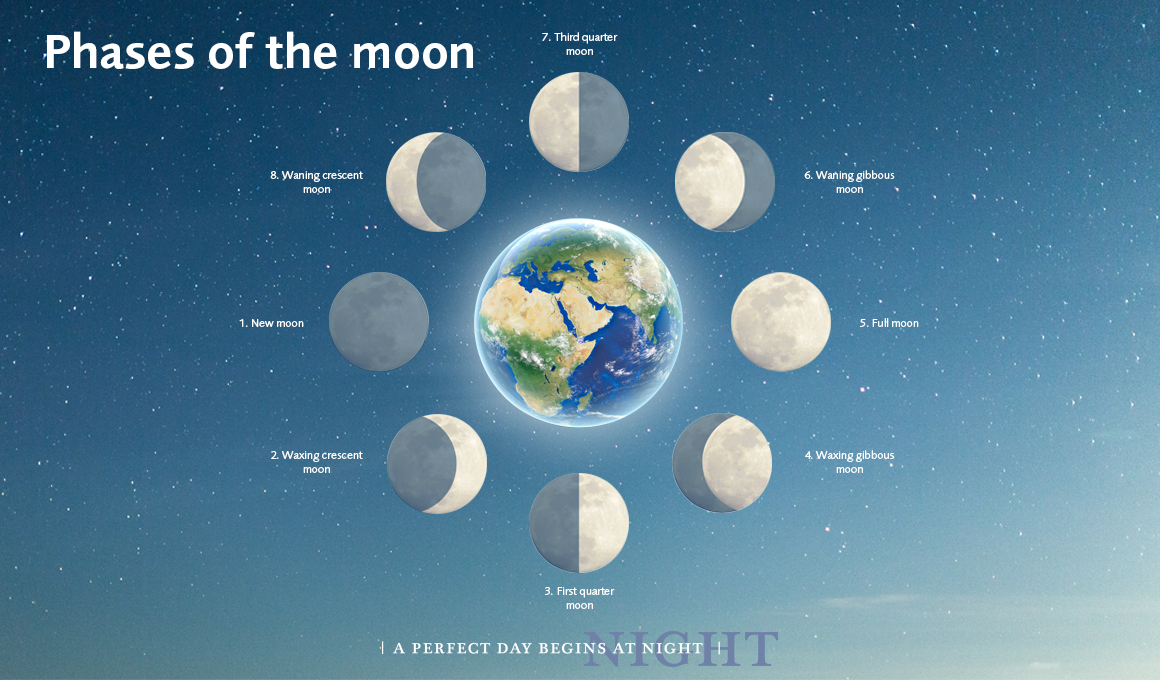
The Moon itself does not generate light. Instead, we see it because its surface reflects sunlight. The phases of the Moon are a direct consequence of the changing angles at which we observe the Sun-illuminated portion of the Moon as it orbits the Earth. This orbit takes approximately 29.5 days to complete, a period known as a synodic month, which forms the basis of our calendar months. During this orbital journey, different amounts of the Moon’s sunlit hemisphere become visible from Earth, creating the familiar progression of shapes we call phases.
The New Moon: An Invisible Beginning
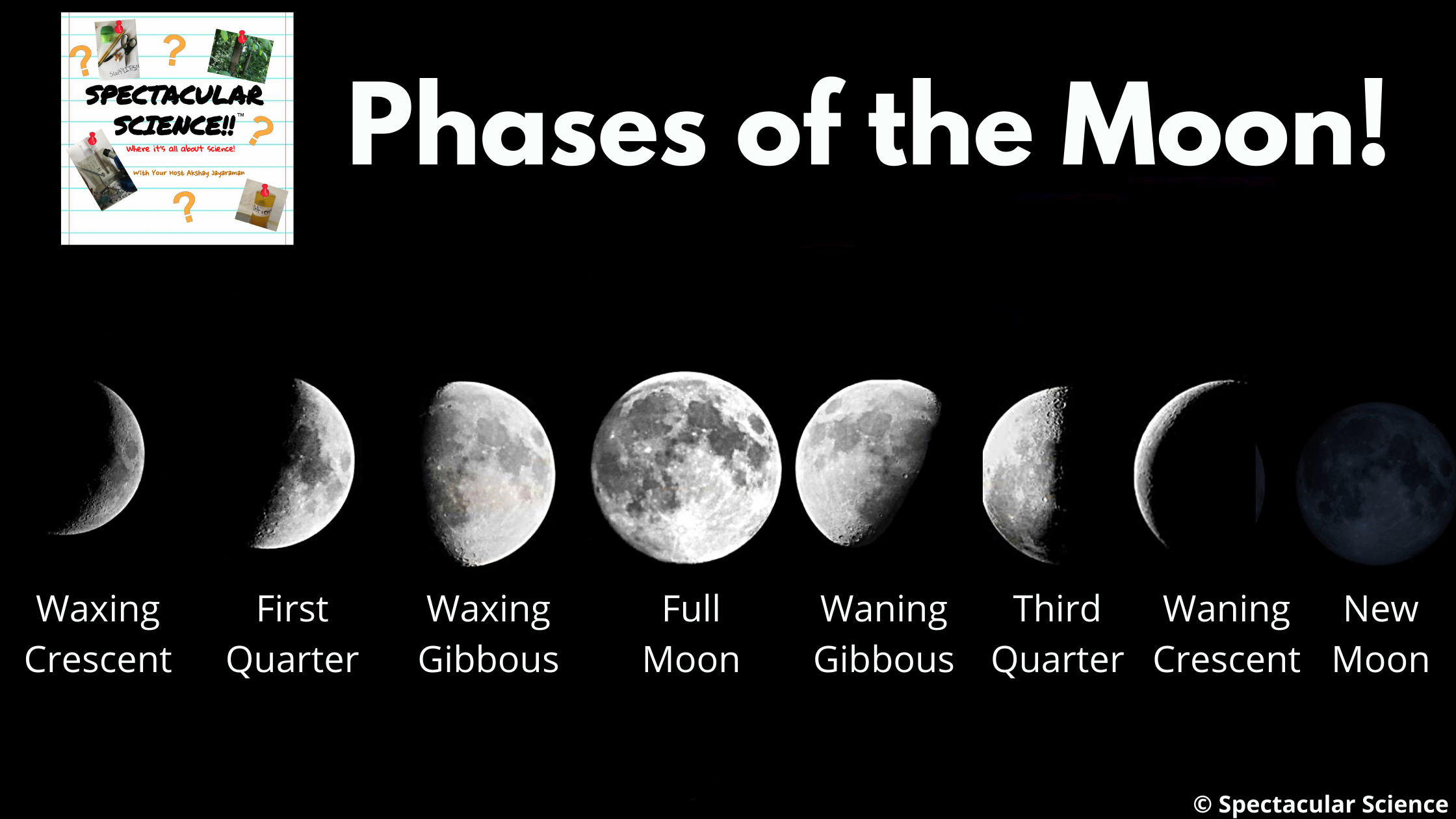
The lunar cycle begins with the New Moon. This phase occurs when the Moon is positioned between the Earth and the Sun. From our perspective on Earth, the side of the Moon facing us is not illuminated by the Sun. Therefore, the New Moon is effectively invisible in the night sky, often lost in the glare of the Sun. While seemingly absent, this is a crucial starting point for the lunar cycle, marking the moment when the Moon’s illuminated face is turned away from us. Astronomers often refer to this point as the beginning of the new lunar month.
The Waxing Crescent: A Subtle Emergence
Following the New Moon, a sliver of the Moon’s illuminated surface begins to become visible. This is the Waxing Crescent phase. “Waxing” signifies that the illuminated portion is growing larger. As the Moon moves in its orbit, a small crescent shape, typically appearing in the western sky shortly after sunset, becomes apparent. The illuminated portion appears as a delicate curve, gradually increasing in size each night. This phase is characterized by its ephemeral beauty, a subtle reminder of the Moon’s ongoing journey.
The First Quarter: A Half-Lit World
Approximately a week after the New Moon, the Moon reaches its First Quarter phase. At this point, the Moon has completed about a quarter of its orbit around the Earth. From Earth, we see exactly half of the Moon illuminated – the right half in the Northern Hemisphere and the left half in the Southern Hemisphere. This phase is significant because it clearly demonstrates the spherical nature of the Moon and the geometry of the Earth-Moon-Sun alignment. The First Quarter Moon typically rises around noon and sets around midnight, making it visible for a significant portion of the evening.
The Waxing Gibbous: Growing Towards Fullness
As the Moon continues its orbit, the illuminated portion grows beyond half, entering the Waxing Gibbous phase. “Gibbous” refers to a shape that is more than half but less than fully illuminated. During this phase, a significant majority of the Moon’s disk is lit, and the illuminated area continues to expand each night. The Waxing Gibbous Moon is a prominent and beautiful sight in the night sky, often rising in the afternoon and setting after midnight. It’s a prelude to the most dramatic phase of the lunar cycle.
The Full Moon: A Radiant Spectacle
The climax of the lunar cycle is the Full Moon. This occurs when the Earth is positioned between the Sun and the Moon. From our vantage point, the entire face of the Moon visible to us is illuminated by the Sun, presenting a brilliant, disc-like appearance. The Full Moon rises around sunset and sets around sunrise, dominating the night sky. This phase is not only visually striking but also has significant cultural and historical importance, often associated with festivals, myths, and even biological rhythms in some species. However, it’s important to note that a “total lunar eclipse” only occurs when the Earth’s shadow completely obscures the Full Moon, a rarer event that requires precise alignment.
The Waning Gibbous: A Gradual Retreat
After the Full Moon, the illuminated portion of the Moon begins to shrink, marking the Waning Gibbous phase. “Waning” signifies that the illuminated area is decreasing. Similar to the Waxing Gibbous, more than half of the Moon is still illuminated, but the amount of light is diminishing each night. The Waning Gibbous Moon typically rises in the evening and sets around sunrise, appearing in the eastern sky after sunset.
The Third Quarter: The Other Half Revealed
Approximately three weeks after the New Moon, the Moon reaches its Third Quarter (or Last Quarter) phase. Similar to the First Quarter, only half of the Moon is illuminated, but this time it’s the opposite half. In the Northern Hemisphere, the left half is illuminated, and in the Southern Hemisphere, the right half. The Third Quarter Moon typically rises around midnight and sets around noon, making it more visible in the pre-dawn sky. This phase signifies the Moon has completed three-quarters of its orbit.

The Waning Crescent: Fading Towards the New
In the final phase of the lunar cycle, the illuminated portion continues to shrink, entering the Waning Crescent phase. Only a small sliver of the Moon is visible, often appearing in the eastern sky just before sunrise. This crescent is a mirror image of the waxing crescent, gradually diminishing in size each day until it eventually becomes indistinguishable from the New Moon, ready to begin the cycle anew.
Technological Implications of Lunar Understanding
While the phases of the Moon might seem like a purely astronomical curiosity, a deep understanding of this celestial phenomenon has surprisingly significant implications across various technological domains. From the foundational principles of timekeeping to the sophisticated systems of modern navigation and even the development of advanced imaging technologies, the study of lunar phases has played and continues to play a crucial role.
Precise Timekeeping and Calendrical Systems
The consistent and predictable cycle of lunar phases has been the bedrock of calendrical systems for millennia. Ancient civilizations meticulously observed the Moon to create lunisolar calendars, which track both the Moon’s phases and the Sun’s position in the sky. These calendars were essential for agricultural planning, religious observances, and social organization. Even today, some religious and cultural calendars, such as the Islamic calendar, are purely lunar, with their months dictated entirely by the phases of the Moon.
The International System of Units (SI) definition of the second, the fundamental unit of time, is based on the properties of atoms, but the historical development and practical application of timekeeping were deeply intertwined with celestial observations, including the Moon’s cycles. The concept of the month itself, a fundamental division of time, is directly derived from the lunar synodic period. Modern atomic clocks provide unparalleled accuracy, but the underlying human understanding of temporal measurement was significantly shaped by observing the predictable rhythm of the Moon’s phases. The ongoing pursuit of ever-increasing temporal precision in scientific experiments and technological systems owes a historical debt to the early astronomers who painstakingly tracked celestial movements, including the lunar cycle.
Navigation and Astrogation
Historically, the Moon served as a crucial celestial marker for navigation. Sailors and explorers relied on the Moon’s position and phase, along with the stars, to determine their location and chart their courses. The predictable rise and set times of the Moon, and its distinctive phases, provided reference points in the absence of sophisticated instruments.
In modern times, while Global Navigation Satellite Systems (GNSS) like GPS have largely superseded traditional celestial navigation, the underlying principles of understanding precise positional information derived from celestial bodies remain relevant. Furthermore, understanding lunar cycles is still important in some niche applications. For instance, certain maritime activities, such as deep-sea fishing or managing tidal energy systems, require precise knowledge of lunar influences on tides, which are directly linked to the Moon’s position and phase. The development of advanced algorithms for satellite orbit prediction and space mission planning also relies on a thorough understanding of celestial mechanics, including the gravitational interactions between the Earth, Moon, and Sun that govern the lunar phases.
Astronomical Observation and Space Exploration
The study of lunar phases is fundamental to observational astronomy. Understanding the Moon’s illumination cycle is essential for planning astronomical observations, as the bright light of a Full Moon can interfere with the detection of faint celestial objects. Astronomers often schedule observations to avoid the Full Moon or utilize specialized equipment that can mitigate its effects.
Beyond terrestrial observations, the Moon itself has been a focal point of space exploration. Understanding its phases is critical for designing and operating lunar missions. For example, the amount of sunlight reaching the lunar surface varies significantly with the phase, impacting power generation for solar-powered landers and rovers. Communication with lunar assets also needs to consider the relative positions of the Earth and Moon during different phases. The historical Apollo missions, which successfully landed humans on the Moon, involved intricate planning that accounted for the lunar phases and the resulting illumination conditions on the lunar surface. Future crewed and uncrewed missions to the Moon, including the Artemis program, will continue to rely on a deep understanding of lunar geometry and illumination patterns. The development of technologies for lunar surface operations, such as habitat construction and resource utilization, will be further enhanced by our comprehensive knowledge of the Moon’s environmental conditions as influenced by its phases.
Lunar Imaging and Remote Sensing
The changing illumination of the Moon during its phases creates unique opportunities and challenges for lunar imaging and remote sensing. Scientists use these variations to study the Moon’s topography, surface composition, and geological features. By capturing images of the same area at different lunar phases, researchers can enhance the visibility of subtle surface details, shadows, and textural variations that might be obscured under constant illumination.
For instance, observing crater rims and ejecta blankets is often easier during the crescent or gibbous phases when the low-angle sunlight casts long shadows, highlighting topographic relief. Remote sensing instruments deployed on lunar orbiters or landers utilize this principle to map lunar features with unprecedented detail. The development of advanced imaging algorithms and data processing techniques further leverages the information contained within images taken across various lunar phases to create comprehensive 3D models and detailed surface analyses. This detailed understanding of lunar morphology is crucial for future scientific research and the potential utilization of lunar resources.
Conclusion: A Continuous Cosmic Connection
The phases of the Moon, a seemingly simple astronomical phenomenon, represent a profound and continuous cosmic connection. From the ancient past, where they dictated the rhythm of life and the construction of calendars, to the present day, where they underpin sophisticated technological applications, the lunar cycle remains a testament to the intricate and elegant workings of our solar system. As we continue to push the boundaries of scientific understanding and technological innovation, the humble Moon, with its ever-changing face, will undoubtedly continue to inspire and inform our endeavors, reminding us of our place within the grand celestial dance.
aViewFromTheCave is a participant in the Amazon Services LLC Associates Program, an affiliate advertising program designed to provide a means for sites to earn advertising fees by advertising and linking to Amazon.com. Amazon, the Amazon logo, AmazonSupply, and the AmazonSupply logo are trademarks of Amazon.com, Inc. or its affiliates. As an Amazon Associate we earn affiliate commissions from qualifying purchases.