
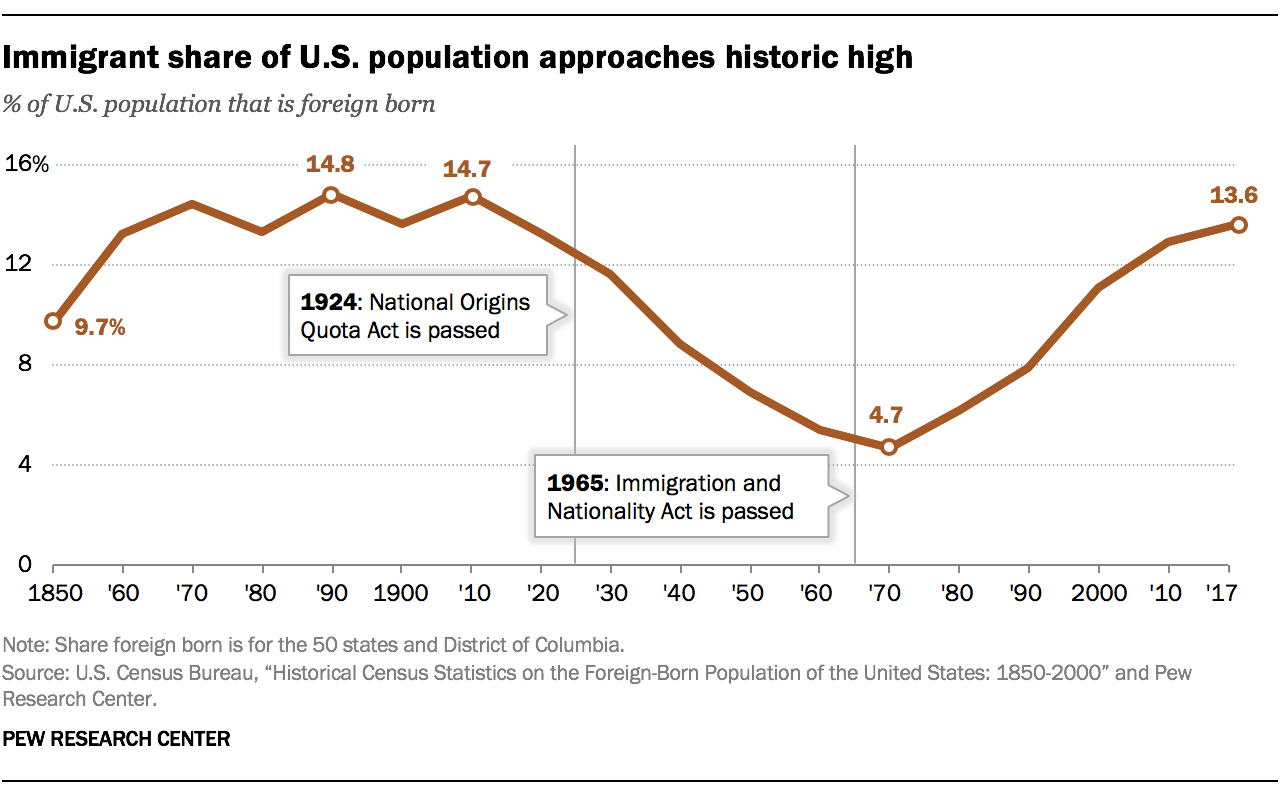
Understanding the demographic composition of a nation is not merely an exercise for sociologists or policymakers; it is a fundamental requirement for savvy investors, business owners, and financial strategists. As of the latest data from the U.S. Census Bureau and the Pew Research Center, the foreign-born population in the United States stands at approximately 13.9% to 14.6%. This figure represents nearly 50 million people, a demographic weight that has not been seen since the late 19th and early 20th centuries.
For the financial community, this percentage is more than a statistic. It represents a massive consumer market, a vital source of labor in a period of domestic demographic decline, and a primary engine for entrepreneurial innovation. To ignore the economic implications of a population that is nearly 15% foreign-born is to overlook one of the most significant drivers of U.S. GDP growth and market vitality.
Decoding the Demographic Data: A Foundation for Financial Strategy
The percentage of the US population that is immigrants has seen a steady trajectory of growth since the 1970s. After hitting a historic low of approximately 4.7% in 1970, the share has more than tripled. For those looking at long-term investment horizons, this trend is critical. Population growth is a primary component of economic expansion. With domestic birth rates falling below replacement levels, immigration has become the primary driver of population growth in the United States.
The Geography of Economic Opportunity
While the national average sits around 14%, the distribution is highly concentrated in economic hubs. In states like California, New York, New Jersey, and Florida, the immigrant population exceeds 20%. For real estate investors and retail business owners, these concentrations signify robust demand for housing and consumer goods. These regions often experience higher liquidity in the real estate market and a more diverse range of small business activity, providing a buffer against localized economic downturns.
Workforce Participation and the Labor Market
From a business finance perspective, the immigrant population provides a crucial hedge against labor shortages. Immigrants and their children are projected to account for the vast majority of the growth in the U.S. working-age population through 2035. For companies in sectors ranging from high-tech software development to industrial manufacturing, this demographic represents the backbone of the labor supply. Investors analyzing the scalability of American companies must consider the availability of this workforce as a key metric for future performance.
The Entrepreneurial Multiplier: How Immigrant Business Ownership Fuels Growth
One of the most compelling reasons to monitor the percentage of the immigrant population is the disproportionate role this group plays in business creation. Data consistently shows that immigrants are more likely to start businesses than native-born citizens. This entrepreneurial spirit is a cornerstone of the American “Money” ecosystem, driving innovation, creating jobs, and offering lucrative opportunities for venture capital and private equity.
From Main Street to Silicon Valley
Immigrant entrepreneurship is not limited to a single sector. On “Main Street,” immigrants own a significant percentage of retail shops, restaurants, and service-based businesses, which provide essential stability to local economies. These businesses are often funded through personal savings or community-based lending, representing a unique niche in the personal finance and micro-lending space.
At the other end of the spectrum, the impact on high-growth tech and business finance is staggering. Over 50% of U.S. “unicorns”—privately held startup companies valued at over $1 billion—were founded or co-founded by immigrants. For investors, this highlights a critical trend: the immigrant population is a primary source of high-yield investment opportunities. The ability to identify and back these founders early in their journey is a proven strategy for significant capital appreciation.
Intellectual Capital and Patents
The financial value of a nation is often tied to its intellectual property. Immigrants contribute to U.S. innovation at a rate that far exceeds their share of the population. Studies have shown that immigrants are responsible for roughly one-third of all U.S. patents. In an economy increasingly driven by intangible assets and proprietary technology, the immigrant population represents a vital reservoir of intellectual capital that sustains the competitive edge of American corporations on the global stage.

Impact on Consumer Markets and the Housing Sector
The financial health of the U.S. economy is inextricably linked to consumer spending, which accounts for roughly two-thirds of GDP. With the immigrant population nearing 15%, their collective purchasing power is a force that cannot be ignored. Estimates suggest that the total household income of immigrant-led households exceeds $1.3 trillion annually, with hundreds of billions paid in federal, state, and local taxes.
The $1.3 Trillion Consumer Block
For brands and marketing strategists, this demographic represents a massive, multi-faceted market. This isn’t a monolithic group; it includes high-earning professionals in the H-1B visa category, established families with significant home equity, and young strivers entering the workforce. Business finance models that account for the specific needs and preferences of this group—ranging from specialized financial products to targeted retail offerings—are seeing superior returns on investment.
Real Estate and Wealth Accumulation
In the realm of personal finance, homeownership remains the primary vehicle for wealth building in the United States. Immigrants play a pivotal role in the housing market, particularly in urban and suburban revitalization. As they move from renting to owning, they drive demand in the mortgage industry and the broader construction sector. For real estate investors, areas with high immigrant growth often see faster appreciation in property values and lower vacancy rates. This demographic shift provides a long-term “floor” for the housing market, ensuring continued demand even as other demographic segments may be contracting.
Fintech Innovation and the Financial Integration of New Americans
As the percentage of immigrants in the US population continues to hold steady or grow, a new sector of “Money” has emerged: immigrant-focused financial technology (Fintech). Traditional banking systems often struggle to serve individuals who may have thin credit files in the U.S. but possess significant assets or earning potential. This gap has created a massive opportunity for financial tools and platforms designed to facilitate the unique financial lives of immigrants.
Solving the Credit Gap
One of the biggest hurdles in personal finance for newcomers is the lack of a domestic credit history. Innovative fintech companies are now leveraging alternative data—such as rent payments, utility bills, and international credit histories—to provide loans and credit cards to this population. This not only empowers the individual but also opens up a new stream of interest-bearing assets for institutional investors. By bringing 15% of the population more fully into the credit ecosystem, these tools are expanding the total addressable market for all financial services.
The Remittance Economy and Cross-Border Payments
The immigrant population is also at the center of the global remittance market. Billions of dollars are sent from the U.S. to family members abroad every year. Historically, this was a high-fee, inefficient process. Today, digital payment platforms and blockchain-based tools are disrupting this space, reducing costs and increasing the speed of capital flow. For those interested in online income and digital finance, the development of these platforms represents one of the most active and profitable areas of the modern financial landscape.
Future Outlook: Investing in a Diverse Economy
Looking forward, the financial trajectory of the United States is deeply intertwined with its immigrant population. As the “Baby Boomer” generation retires, the influx of younger, working-age immigrants is essential for maintaining the solvency of social safety nets like Social Security and Medicare. From a macro-fiscal perspective, the taxes paid by the immigrant population are a key component of national debt management and public infrastructure funding.
Long-Term Portfolio Considerations
For individual investors, the “immigrant factor” should be a consideration in portfolio construction. Companies that successfully tap into immigrant talent, serve immigrant consumers, or provide the infrastructure for their financial integration are well-positioned for long-term growth. This includes everything from multinational banks to specialized consumer goods companies.
The Stability of the American Economy
Ultimately, the fact that nearly 15% of the US population is immigrants is a sign of economic health and attractiveness. Capital flows to where there is opportunity, and people do the same. The continued arrival of individuals seeking to build businesses, purchase homes, and invest in their children’s future provides a constant infusion of “new money” and energy into the system.
In conclusion, the percentage of immigrants in the US population is not just a census figure; it is a leading economic indicator. It signals a robust labor market, a vibrant entrepreneurial culture, and a growing consumer base. For anyone focused on the intersection of money, business, and investing, understanding and embracing this demographic reality is not optional—it is a prerequisite for financial success in the 21st century. By analyzing the data through a financial lens, we see a picture of an economy that is evolving, resilient, and full of untapped potential.
aViewFromTheCave is a participant in the Amazon Services LLC Associates Program, an affiliate advertising program designed to provide a means for sites to earn advertising fees by advertising and linking to Amazon.com. Amazon, the Amazon logo, AmazonSupply, and the AmazonSupply logo are trademarks of Amazon.com, Inc. or its affiliates. As an Amazon Associate we earn affiliate commissions from qualifying purchases.