
In the realm of global institutions, few entities possess the enduring recognition, operational scale, or demographic reach of the Roman Catholic Church. When analyzing the question of what percentage of the world population is Roman Catholic, we are not merely looking at a religious statistic; we are examining the ultimate case study in long-term brand strategy, institutional identity, and global market penetration. As of the most recent data provided by the Vatican’s Annuarium Statisticum Ecclesiae and supplemented by independent demographic research from the Pew Research Center, approximately 17.7% of the world’s population identifies as Roman Catholic.
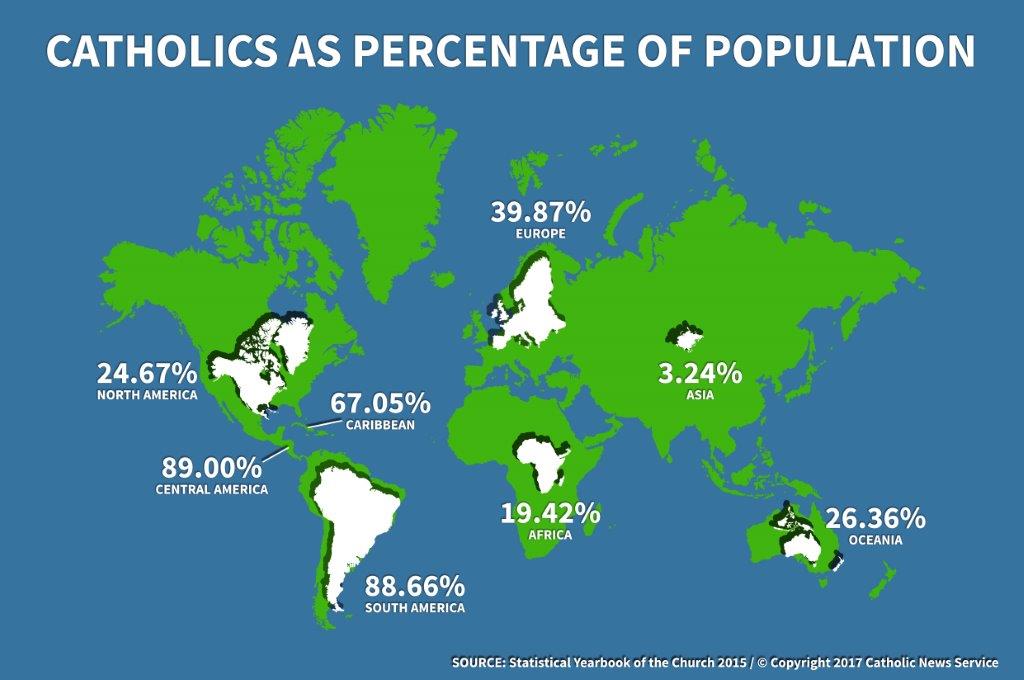
This figure represents roughly 1.38 billion people out of a global population of 8 billion. From a brand perspective, this 17.7% “market share” is staggering. It signifies a presence in nearly every sovereign nation on Earth, maintained through a consistent visual identity, a centralized leadership structure, and a messaging framework that has survived for over two millennia. Understanding how this percentage is distributed and maintained offers profound insights into how legacy brands navigate cultural shifts, geographic migrations, and the challenges of the digital age.
The Geography of Market Share: Analyzing Regional Density
While the global average sits just under 18%, the “brand density” of Roman Catholicism varies dramatically by region. This uneven distribution is the result of centuries of historical expansion, colonial legacies, and modern demographic trends. To understand the strength of the Catholic identity, one must look at where the “user base” is most concentrated and where it is facing the most significant competition.
The Latin American Stronghold
Latin America remains the most significant demographic pillar for the Catholic Church. For decades, this region accounted for the highest concentration of the global Catholic population. Even today, roughly 40% of the world’s Catholics live in Latin America. In countries like Brazil, Mexico, and Colombia, the Catholic identity is deeply woven into the national “corporate identity.” However, this market is no longer a monopoly. The rise of Pentecostalism and secularism has forced the Catholic brand to pivot from a passive institutional presence to an active, engagement-focused strategy.
The Shift to the Global South
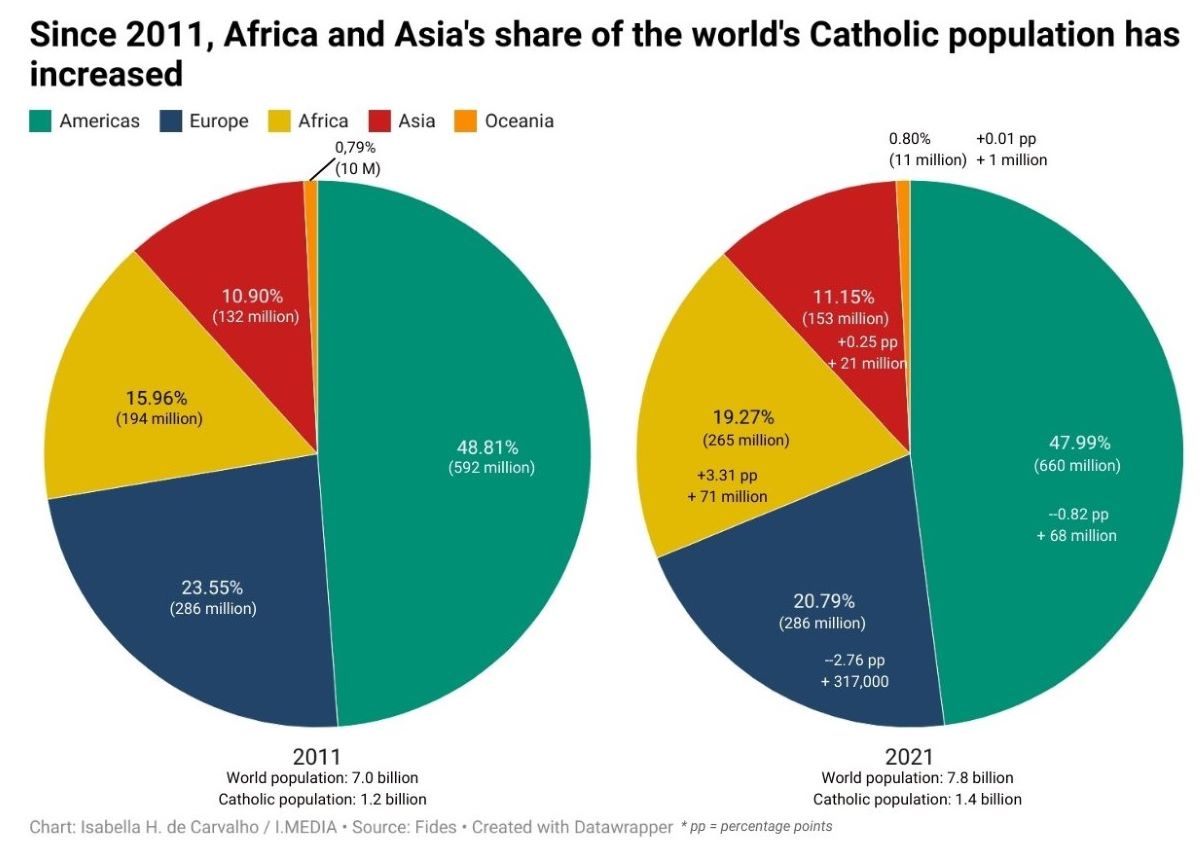
Perhaps the most significant “growth market” for the Catholic brand is Sub-Saharan Africa and Southeast Asia. In 1910, only about 1% of the world’s Catholics lived in Africa; today, that number has surged to approximately 18% and continues to climb. This represents a massive shift in the brand’s demographic center of gravity. As the “legacy markets” of Europe see a decline in active participation, the growth in countries like Nigeria, the Democratic Republic of Congo, and the Philippines ensures the brand’s numerical stability. From a strategic standpoint, this requires the institution to balance its traditional “European” heritage with a more diverse, multicultural expression of its core identity.
Brand Consistency: The Architecture of Institutional Identity
One of the reasons the Roman Catholic Church has maintained a double-digit percentage of the world’s population is its unwavering commitment to brand consistency. In the corporate world, brand equity is built on the consumer’s ability to recognize and trust a product regardless of where they encounter it. The Catholic Church mastered this “Franchise Model” centuries before the advent of modern marketing.
Visual Identity and Symbolism
The Catholic Church possesses one of the most recognizable “logos” in human history: the Cross. Beyond that, the visual language of the brand—the architecture of its cathedrals, the specific vestments of its leadership, and the standardized liturgy—creates a seamless user experience. Whether a member attends a Mass in Warsaw, Nairobi, or New York City, the core elements of the “service” remain identical. This consistency provides a sense of stability and belonging that is essential for maintaining long-term loyalty in a fragmented global market.
The Centralized Leadership Model
From a brand strategy perspective, the Papacy serves as the ultimate “Chief Executive” role. The Pope is not just a spiritual leader; he is the face of the global brand. The transition from Pope Benedict XVI to Pope Francis represented a significant “rebranding” effort. While the core “product” (the theology) remained consistent, the “marketing” shifted toward themes of social justice, environmentalism, and mercy. This shift was designed to broaden the brand’s appeal to younger demographics and those disillusioned by the perceived rigidity of the previous era.
The Challenges of Retention in a Secular Market
Despite holding 17.7% of the global population, the Catholic brand faces significant “churn” in traditional markets. In Western Europe and North America, the rise of the “Nones”—individuals who claim no religious affiliation—poses a direct threat to the institution’s market share. Understanding why this percentage is under pressure is crucial for any legacy brand looking to survive a cultural sea change.
Addressing the “Value Proposition”
In the 21st century, institutional loyalty is no longer a given. Modern consumers of ideas and community demand a clear “value proposition.” For the Catholic Church, this means proving its relevance in a world dominated by secular technology and individualistic philosophy. The brand’s challenge is to maintain its “Ancient and Eternal” identity while simultaneously addressing contemporary issues like digital ethics, mental health, and social inequality. When the institution fails to communicate its value effectively, it sees a decline in “active users,” even if the “nominal membership” remains high.
Crisis Management and Brand Equity
No discussion of the Catholic Church’s brand identity is complete without addressing the impact of various scandals that have rocked the institution over the last two decades. In brand management terms, these events represent a massive breach of trust. The percentage of the population identifying as Catholic in countries like Ireland or the United States has seen a correlation with how effectively the local and global leadership handled these crises. Recovering brand equity after a systemic failure requires radical transparency and a long-term commitment to “re-earning” the consumer’s trust—a process that is currently ongoing within the Church’s various global departments.
The Digital Transformation of the Papal Brand
As the world moves toward a digital-first reality, the Catholic Church has had to adapt its “outreach strategy” to maintain its 1.38 billion-strong membership. The “Digital Pulpit” has become as important as the physical one. This transition is a masterclass in how a multi-generational brand can utilize modern tools to maintain engagement.
Social Media as an Engagement Tool
Pope Francis was one of the first major religious leaders to fully embrace social media, with millions of followers across platforms like X (formerly Twitter) and Instagram. This is not just about posting quotes; it is about “Brand Presence.” By appearing in the feeds of young people alongside celebrities and influencers, the Church asserts its relevance in the “attention economy.” This digital strategy is essential for maintaining the 17.7% market share, as it allows the brand to bypass traditional media gatekeepers and speak directly to its “audience.”
Data and Demographics in the Information Age
The Vatican’s sophisticated data-gathering operations allow it to track growth and decline with corporate precision. This data-driven approach informs where to invest resources—such as building new schools in growth markets like Africa or launching “evangelization” initiatives in secularized European cities. By treating its global membership as a complex, data-rich demographic, the institution can make strategic pivots to ensure its percentage of the world population remains stable even as global trends shift.

Conclusion: The Endurance of a Global Icon
The fact that nearly 18% of the world’s population identifies with a single institution is a testament to the power of a cohesive brand strategy. The Roman Catholic Church has survived empires, revolutions, and technological shifts by balancing a rigid core identity with a flexible outreach strategy.
As we look toward the future, the percentage of the world population that is Roman Catholic will likely remain a key indicator of the institution’s ability to adapt. Whether it is through the “rebranding” of the Papacy, the strategic focus on the Global South, or the embrace of digital communication, the Church continues to operate with a level of brand awareness that most modern corporations can only envy. For marketers, brand strategists, and institutional leaders, the 1.38 billion members of the Catholic Church represent more than just a religious group—they represent the most successful, long-term global community-building effort in human history. Maintaining that 17.7% share will require a constant negotiation between tradition and innovation, ensuring that the brand remains as recognizable in the 21st century as it was in the 1st.
aViewFromTheCave is a participant in the Amazon Services LLC Associates Program, an affiliate advertising program designed to provide a means for sites to earn advertising fees by advertising and linking to Amazon.com. Amazon, the Amazon logo, AmazonSupply, and the AmazonSupply logo are trademarks of Amazon.com, Inc. or its affiliates. As an Amazon Associate we earn affiliate commissions from qualifying purchases.