
The question, “What percentage of the population is blind?” is more than a mere statistic. It delves into the lived experiences of millions, highlighting a significant global health challenge with profound social, economic, and technological implications. While seemingly straightforward, the answer is complex, varying by region, age, and the specific definition of blindness used. Furthermore, understanding this prevalence is crucial for driving advancements in assistive technologies, shaping inclusive branding strategies, and exploring the economic realities faced by individuals with visual impairments.
The modern world, driven by rapid technological innovation, presents both significant hurdles and unprecedented opportunities for the blind population. From the rise of AI-powered tools to the evolution of digital security, the tech landscape is constantly being reshaped. Simultaneously, the way brands connect with consumers and the financial tools available to individuals are also undergoing transformations. This article will explore the global statistics surrounding blindness, delve into the technological landscape as it impacts visual impairments, and consider the evolving roles of branding and financial considerations for this segment of the population.

Understanding the Scope of Visual Impairment
Defining blindness is the first step in quantifying its prevalence. Legally, blindness is often defined by a specific level of visual acuity (the sharpness of vision) and/or a limited field of vision. However, the World Health Organization (WHO) provides a broader classification, distinguishing between “visual impairment” and “blindness.” Visual impairment encompasses a range of vision loss, from moderate to severe, while blindness is the most severe form of vision impairment.
Global Prevalence: A Shifting Landscape
Globally, the figures for visual impairment and blindness are substantial. The WHO estimates that at least 2.2 billion people globally have a vision impairment, with around half of these cases being preventable or treatable. Among these, a significant portion experiences severe visual impairment or blindness.
The prevalence of blindness is not uniform across the globe. Several factors contribute to these disparities:
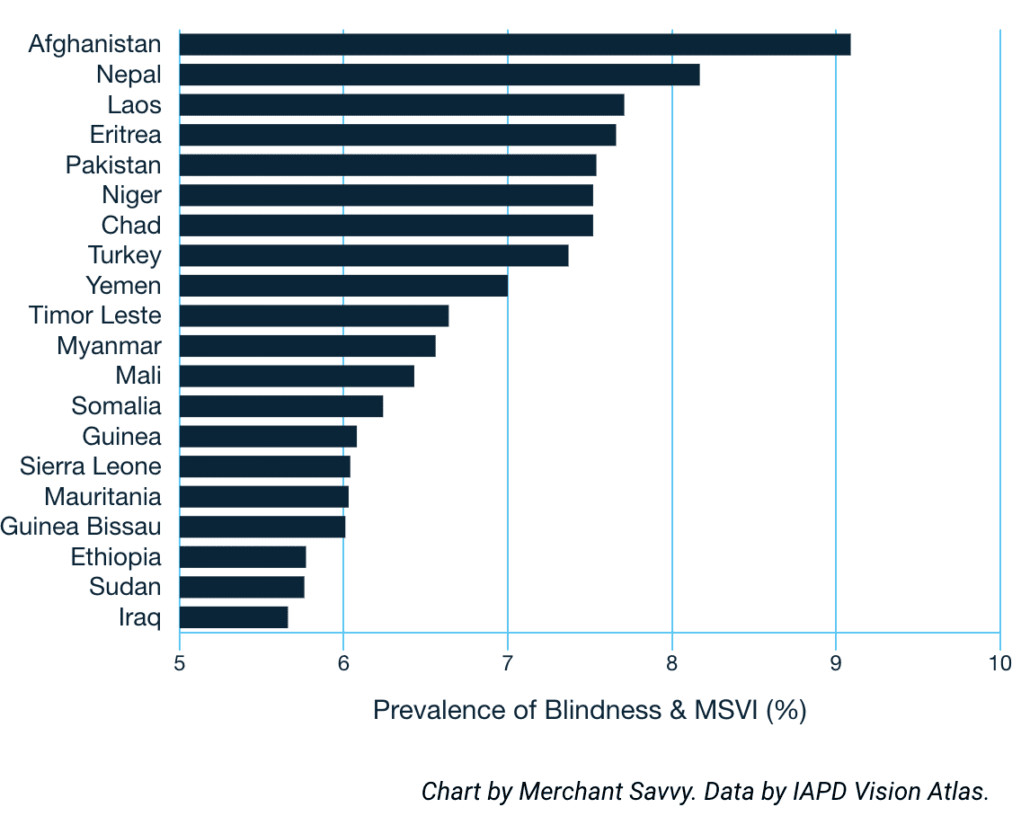
- Geographic Location: Higher rates of blindness are often found in low-income and middle-income countries. This is frequently linked to limited access to eye care services, including preventative measures, early diagnosis, and treatment for conditions like cataracts, glaucoma, and diabetic retinopathy.
- Age: The risk of vision loss, including blindness, increases significantly with age. Age-related macular degeneration (AMD), cataracts, and glaucoma are common causes of blindness in older adults.
- Underlying Causes: The leading causes of blindness vary by region but commonly include uncorrected refractive errors, cataracts, age-related macular degeneration, diabetic retinopathy, glaucoma, and trachoma. Infectious diseases can also play a role, particularly in certain parts of the world.
- Socioeconomic Factors: Poverty, lack of education, and limited access to healthcare infrastructure are all interconnected factors that exacerbate the burden of visual impairment.
While precise, up-to-the-minute global percentages are challenging to pin down due to ongoing data collection and regional variations, estimates consistently place the number of blind individuals in the tens of millions. The focus, therefore, shifts from a single static number to understanding the dynamic nature of this issue and the ongoing efforts to mitigate its impact.
The Economic and Social Dimensions of Blindness
The impact of blindness extends far beyond individual vision loss. It has significant socioeconomic consequences:
- Economic Productivity: Vision impairment can limit an individual’s ability to participate fully in the workforce, leading to reduced economic productivity. This impacts not only the individual but also the broader economy.
- Healthcare Costs: The direct and indirect healthcare costs associated with managing visual impairments and their consequences can be substantial for individuals and healthcare systems.
- Social Inclusion and Independence: Living with blindness can present challenges to social inclusion, independence, and overall quality of life. Access to education, employment, and community participation can be hindered without appropriate support and accommodations.
- Caregiver Burden: For individuals with severe visual impairments, caregivers may be required, adding another layer of economic and emotional burden.
Addressing these dimensions requires a multi-faceted approach, leveraging technological advancements, strategic branding, and robust financial planning and support systems.
Technology’s Role in Enhancing Lives and Overcoming Barriers
The technological revolution has opened up new avenues for individuals with visual impairments, offering tools and solutions that enhance independence, productivity, and overall quality of life. From sophisticated AI-powered applications to intuitive gadgetry, the tech landscape is increasingly becoming more inclusive.
AI and Accessibility: A Transformative Force
Artificial Intelligence (AI) is at the forefront of creating more accessible digital and physical environments. AI-powered tools are transforming how blind individuals interact with the world around them:
- Object and Scene Recognition: Apps utilizing AI can now identify objects, read text from signs and documents, recognize faces, and even describe scenes in real-time. This empowers users to navigate their surroundings with greater confidence and understand their environment more comprehensively.
- Improved Navigation: AI-driven navigation apps offer more detailed and context-aware directions, often incorporating object recognition to alert users to potential obstacles or points of interest.
- Personalized Assistance: AI chatbots and virtual assistants can provide support for a myriad of tasks, from managing schedules and sending messages to answering questions and controlling smart home devices, all through voice commands.
- Content Accessibility: AI is being used to generate alt-text for images automatically, making online content more accessible to screen reader users. It can also assist in summarizing lengthy texts or translating content, breaking down information barriers.
Empowering Through Innovative Gadgets and Software
Beyond AI, a range of specialized gadgets and software solutions cater to the needs of the visually impaired:
- Screen Readers and Magnifiers: These foundational technologies remain critical. Screen readers convert text displayed on a computer or smartphone screen into synthesized speech, while screen magnifiers enlarge portions of the screen. Advances in these tools are leading to faster processing speeds, more natural-sounding voices, and greater customization options.
- Braille Displays and Notetakers: Electronic braille displays provide tactile output of digital text, allowing for fluent reading and writing. Braille notetakers are portable devices that combine a braille keyboard with a small display and processing capabilities.
- Smart Canes and Wearable Devices: Emerging technologies include smart canes that use sensors to detect obstacles beyond the immediate vicinity and provide haptic feedback. Wearable devices with cameras and AI integration are also being developed to offer real-time environmental descriptions.
- Assistive Apps for Daily Living: A growing ecosystem of apps assists with everyday tasks, such as identifying currency, reading medication labels, categorizing mail, and even selecting clothing colors.
- Digital Security Considerations: As technology becomes more integrated into daily life, digital security is paramount for all users, including those with visual impairments. Developers are increasingly focusing on building accessible security features, such as two-factor authentication methods that don’t rely solely on visual cues. Educational resources on online safety are also crucial to empower this population to navigate the digital world securely.

The continuous innovation in the tech sector, driven by a growing awareness of accessibility needs, holds immense promise for further reducing the barriers faced by individuals with visual impairments and fostering greater participation in all aspects of life.
Brand Strategies and Inclusivity: Reaching and Resonating
In today’s diverse marketplace, brands are increasingly recognizing the importance of inclusivity in their strategies. This extends to how they communicate, design their products and services, and engage with all segments of the population, including those with visual impairments.
Designing for All: Embracing Universal Design Principles
The concept of universal design is central to creating products, services, and environments that are usable by all people, to the greatest extent possible, without the need for adaptation or specialized design. For brands, this means:
- Accessible Digital Platforms: Websites, mobile applications, and software must be designed with accessibility in mind from the outset. This includes adhering to Web Content Accessibility Guidelines (WCAG), ensuring compatibility with screen readers, providing sufficient color contrast, and offering keyboard navigability.
- Inclusive Marketing Materials: Marketing campaigns should consider how visually impaired individuals will access and understand them. This can involve providing audio descriptions for video content, ensuring that print materials are available in alternative formats (e.g., braille or large print), and using descriptive language in all communications.
- Product Design and Packaging: Products and their packaging should be designed with sensory considerations. This might include tactile markings, clear and concise labeling in accessible formats, and intuitive interfaces that can be operated without relying solely on visual cues.
Building Reputation Through Empathy and Action
A brand’s reputation is significantly influenced by its commitment to inclusivity. This goes beyond mere compliance; it involves genuine empathy and proactive engagement.
- Understanding the Target Audience: Brands that seek to connect with the blind population must first understand their unique needs, preferences, and challenges. This involves listening to their feedback, collaborating with advocacy groups, and conducting user research.
- Authentic Representation: When featuring individuals with visual impairments in marketing, authenticity is key. Avoid tokenism and ensure that representation is genuine and reflects the diversity within the community.
- Case Studies in Inclusivity: Successful brands often highlight their efforts in creating accessible products and services. These case studies demonstrate a commitment to social responsibility and can resonate deeply with consumers who value ethical business practices.
- Corporate Identity and Values: A brand’s core identity and values should reflect a commitment to inclusivity. This should be embedded in the company culture and communicated transparently to stakeholders.
By actively embracing inclusive design principles and demonstrating genuine empathy, brands can not only expand their market reach but also build stronger, more meaningful connections with a broader audience, fostering a positive and lasting reputation.
Financial Considerations: Navigating Personal and Business Landscapes
The financial landscape presents unique considerations for individuals with visual impairments, impacting personal finance, investment strategies, and even entrepreneurial endeavors. Understanding these aspects is crucial for empowerment and economic well-being.
Personal Finance and Empowerment
Managing personal finances can be more complex for individuals with visual impairments, but a range of tools and strategies can facilitate financial independence:
- Accessible Banking and Financial Tools: Financial institutions are increasingly offering accessible online banking platforms, mobile apps with screen reader compatibility, and customer service options that cater to visually impaired users. Tools like accessible ATMs and voice-activated banking services are also becoming more common.
- Budgeting and Money Management Apps: Numerous budgeting apps are designed with accessibility features, allowing users to track expenses, manage bills, and set financial goals using voice commands or simplified interfaces.
- Investment Strategies: Investing requires access to information and the ability to analyze market trends. Accessible brokerage platforms, financial news sources that offer audio versions, and specialized financial advisory services can support visually impaired investors. The use of AI-powered investment tools that can explain complex financial concepts in an understandable manner is also a growing area of interest.
- Online Income and Side Hustles: The digital economy offers numerous opportunities for earning income. Individuals with visual impairments can pursue remote work, freelance opportunities, and online businesses, provided the platforms and tools they use are accessible. This might include online tutoring, writing, customer service roles, or developing accessible digital products.
Business Finance and Entrepreneurship
For entrepreneurs with visual impairments, navigating the business world requires careful planning and leveraging available resources:
- Accessible Business Software and Tools: Just as with personal finance, business management software, accounting tools, and communication platforms must be accessible. Investing in accessible technology is a crucial step for any visually impaired entrepreneur.
- Financial Planning for Business Growth: Developing a solid business plan that accounts for accessibility needs in operations, marketing, and customer service is essential. Seeking financial advice from professionals who understand these specific requirements can be invaluable.
- Securing Funding and Loans: When seeking business loans or investment, entrepreneurs must be able to present their business proposals clearly and accessibly. This might involve preparing materials in multiple formats and ensuring that any presentations are inclusive.
- Building an Inclusive Workforce: For businesses owned by sighted individuals, creating an inclusive environment for employees with visual impairments requires thoughtful consideration of workplace accommodations, assistive technologies, and accessible training programs. This can lead to a more diverse and innovative workforce.
By addressing these financial considerations proactively, individuals and businesses affected by visual impairment can enhance their economic security, foster independence, and contribute more fully to the economy.
Conclusion: A Future Forged by Inclusion
The question of “what percentage of the population is blind” serves as a vital starting point for a broader conversation. While statistics offer a glimpse into the scale of visual impairment, the real impact lies in understanding the lived experiences and the collective potential of millions. The technological advancements, strategic brand initiatives, and financial planning solutions discussed herein are not merely supportive measures; they are fundamental components of a future where inclusivity is not an afterthought but an ingrained principle.
As technology continues its relentless march forward, the focus on accessibility will become even more critical. AI and innovative gadgets are breaking down long-standing barriers, opening up new possibilities for education, employment, and everyday life. Brands that embrace universal design principles and genuinely connect with the visually impaired will not only build stronger reputations but also foster deeper customer loyalty. Similarly, ensuring accessible financial tools and resources empowers individuals with visual impairments to achieve greater economic independence and contribute to society.
Ultimately, creating a truly inclusive society requires a collective effort. By continuing to innovate, collaborate, and prioritize the needs of all individuals, we can move towards a future where visual impairment is not a limitation, but simply another aspect of human diversity, met with understanding, support, and equal opportunity. The ongoing pursuit of accessibility across technology, branding, and finance is a testament to this commitment, paving the way for a more equitable and prosperous world for everyone.
aViewFromTheCave is a participant in the Amazon Services LLC Associates Program, an affiliate advertising program designed to provide a means for sites to earn advertising fees by advertising and linking to Amazon.com. Amazon, the Amazon logo, AmazonSupply, and the AmazonSupply logo are trademarks of Amazon.com, Inc. or its affiliates. As an Amazon Associate we earn affiliate commissions from qualifying purchases.