
In the world of personal finance, we often talk about “the number”—that elusive sum of money required to retire comfortably. However, the most critical variable in the retirement equation isn’t just how much you save, but how long that money needs to last. To answer the question “what percentage of people live to 80?” is to unlock a vital data point for modern wealth management.
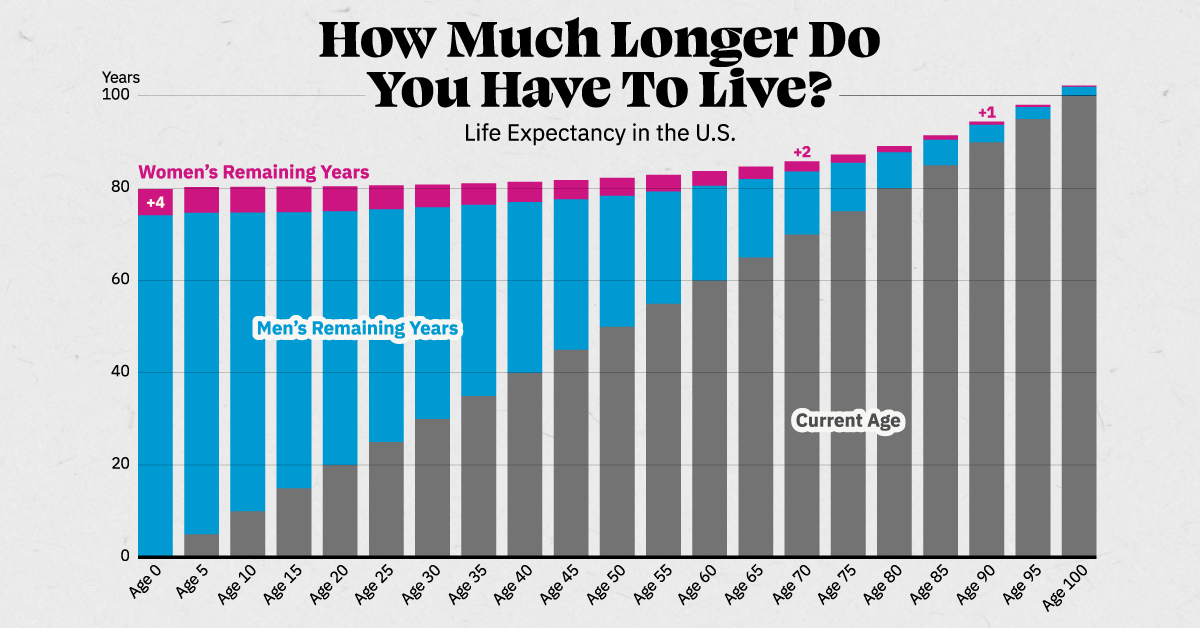
In developed nations, the probability of reaching age 80 has climbed significantly over the last half-century. According to data from the Social Security Administration and the OECD, a man who is 65 today has a roughly 55% to 65% chance of living to age 80, while a woman of the same age has a 65% to 75% chance. When we look at the broader population from birth, roughly 50% to 60% of individuals are expected to cross the 80-year threshold, depending on socio-economic factors and access to healthcare.
From a financial perspective, these aren’t just biological milestones; they are structural risks. Living to 80 and beyond introduces “longevity risk”—the danger of outliving your assets. As we redefine what it means to age, our approach to investing, insurance, and income must evolve to meet a reality where an 80-year lifespan is the standard, not the exception.
Understanding Longevity Risk in Personal Finance
Longevity risk is often cited by financial planners as the “multiplier” of all other financial risks. If you live longer than expected, every other threat—inflation, market volatility, and rising healthcare costs—is magnified. Understanding the statistical likelihood of reaching age 80 is the first step in constructing a resilient financial plan.
The Statistical Probability of Reaching 80
While aggregate statistics give us a baseline, personal finance requires a more granular view. If you have already reached age 65, your “conditional life expectancy” increases. You have already survived the risks of youth and middle age, making it statistically likely that you will not only reach 80 but perhaps see 90.
For a married couple both aged 65, there is a nearly 50% chance that at least one spouse will live to age 90. This means that a financial plan designed only to reach age 80 has a high probability of failure. Wealth management today must account for a “third act” that is longer and more active than that of previous generations.
Why Gender and Geography Matter in Financial Forecasting
The percentage of people living to 80 varies significantly based on demographics. Women, on average, live longer than men, which necessitates a different financial strategy—often involving higher equity allocations to combat the long-term effects of inflation over a longer lifespan.
Furthermore, “zip code” is often a stronger predictor of longevity than “genetic code.” Access to high-quality healthcare and a lower-stress environment contributes to higher survival rates into the 80s. When building a personal financial model, one must look at these personalized factors rather than relying on national averages. If your demographic profile suggests a 70% chance of reaching age 80, your withdrawal rate from your portfolio must be more conservative than someone with a lower statistical probability.
Investing for a Century: Portfolio Management Beyond Age 80
Traditionally, the “Rule of 100” suggested that investors should subtract their age from 100 to determine the percentage of their portfolio that should be in stocks. If you were 80, you would hold only 20% in equities. However, as the percentage of people living into their 80s and 90s grows, this traditional wisdom is being replaced by more dynamic strategies.
Moving Past the “Rule of 100”
In an era where you might live 25 or 30 years past retirement, a portfolio heavily weighted toward bonds or cash may actually be “risky” because it lacks growth. If a significant percentage of the population is living to 80, the portfolio needs to maintain a growth engine well into the late stages of life.
Modern wealth managers now suggest the “Rule of 120” or even keeping a “rising equity glide path.” This approach involves maintaining a 40% to 50% equity exposure even at age 80 to ensure the principal keeps pace with the rising costs of goods and services. The goal is to ensure that the “purchasing power” of your dollar at 85 is the same as it was at 65.
Guarding Against Inflation over Decades
Inflation is the silent killer of the 80-year-old’s budget. At a modest 3% annual inflation rate, the cost of living doubles roughly every 24 years. If you retire at 60 and live to 84, your expenses could effectively double while your fixed income stays stagnant.
To mitigate this, financial tools like Treasury Inflation-Protected Securities (TIPS), dividend-growth stocks, and certain types of annuities with cost-of-living adjustments (COLA) become essential. When you recognize that living to 80 is a high-probability event, you stop investing for a “finish line” and start investing for a “marathon.”
Health as Wealth: The Impact of Longevity on Insurance and Estate Planning
As the percentage of people reaching 80 increases, the nature of “end-of-life” planning changes. It is no longer just about passing on an inheritance; it is about funding a decade or more of potential frailty or specialized care.
Long-Term Care Insurance and the 80+ Bracket
Statistics show that roughly 70% of people who reach age 65 will require some form of long-term care services during their lives. For those living to 80 and beyond, the likelihood of needing assistance with activities of daily living (ADLs) increases exponentially.
From a money management perspective, this makes Long-Term Care (LTC) insurance or “hybrid” life insurance policies (which allow for accelerated death benefits for care) a cornerstone of a sound plan. Relying on self-funding for a five-year stay in an assisted living facility at age 82 can wipe out a legacy intended for heirs. By planning for the high statistical probability of reaching 80, you can lock in premiums earlier or structure your assets to protect against “Medicaid spend-down” scenarios.
Structuring Trusts and Inheritances for Late-Life Stability
Longevity also impacts estate planning. If you live to 90, your children may be 60 or 65 when they receive their inheritance. At that point, they may be retired themselves.
This shift has led to the rise of “intergenerational wealth transfer” strategies where assets are moved to heirs while the benefactor is still alive (utilizing gift tax exclusions) or placed into Dynasty Trusts. Furthermore, for the individual living to 80, “Power of Attorney” and “Revocable Living Trusts” become critical to ensure that if cognitive decline occurs in the mid-80s, the financial machinery continues to operate smoothly without court intervention.
Side Hustles and Passive Income for the “New Old Age”
The realization that over 60% of retirees may live to 80 has sparked a revolution in how we view “retirement” itself. The concept of total leisure from age 65 to 90 is often financially and mentally unsustainable.
Monetizing Expertise in Your 70s and 80s
Many individuals are now opting for “phased retirement.” Because they know they have a high probability of living another 20 years past 60, they leverage their professional expertise into consulting, coaching, or board positions.
This “Longevity Income” serves two purposes: it reduces the “burn rate” of the principal investment portfolio and keeps the individual mentally engaged. In the digital economy, the barriers to entry for knowledge-based side hustles are low. An 80-year-old with 50 years of experience in supply chain management or corporate law can command high hourly rates for remote consulting, providing a financial cushion that social security cannot match.
The Role of Dividend Growth Investing
For those who prefer a more passive approach to income in their 80s, dividend growth investing is the gold standard. By focusing on “Dividend Aristocrats”—companies that have increased their dividends for 25 consecutive years or more—investors create a “self-raising” pension.
As the percentage of people living to 80 rises, the demand for these “yield-producing” assets increases. A well-constructed dividend portfolio can provide a cash flow that grows independently of market price fluctuations, providing the psychological and financial security needed when one is no longer in the workforce.
Conclusion: The Financial Blueprint for an 80-Year Life
The statistic that a majority of people in modern economies will live to 80 is one of the greatest achievements of the modern era, but it is also a significant financial challenge. Wealth is no longer just about the “accumulation phase”; it is about the “sustainability phase.”
To thrive in a world where living to 80 is common, you must:
- Acknowledge the data: Use longevity calculators to get a realistic view of your personal timeline.
- Adjust your risk profile: Don’t abandon equities too early; you need growth to fight 20+ years of inflation.
- Insure against the outliers: Protect your portfolio from the catastrophic costs of long-term care.
- Redefine work: Consider part-time income or consulting to keep your nest egg intact for longer.
Living to 80 is no longer a matter of “luck”—it is a matter of statistical probability. By aligning your financial strategy with this reality, you ensure that your wealth lasts as long as you do, providing dignity and security through every decade of life.
aViewFromTheCave is a participant in the Amazon Services LLC Associates Program, an affiliate advertising program designed to provide a means for sites to earn advertising fees by advertising and linking to Amazon.com. Amazon, the Amazon logo, AmazonSupply, and the AmazonSupply logo are trademarks of Amazon.com, Inc. or its affiliates. As an Amazon Associate we earn affiliate commissions from qualifying purchases.