
In the intricate world of finance, the concept of a percentage is not merely a mathematical curiosity; it is a fundamental pillar that underpins virtually every aspect of personal finance, investing, business operations, and online income generation. From calculating discounts and understanding interest rates to assessing investment returns and optimizing profit margins, the ability to discern “what percentage of one number is another” is an indispensable skill. It transforms raw data into actionable insights, allowing individuals and businesses to make informed decisions that directly impact their financial well-being and growth.
The Foundation of Financial Literacy: Understanding Percentages
At its core, a percentage is a way of expressing a number as a fraction of 100. It provides a standardized method for comparing proportions, rates, and changes across different scales. While the calculation itself is straightforward, its implications in financial contexts are profound and far-reaching.
Basic Calculation: The Formula
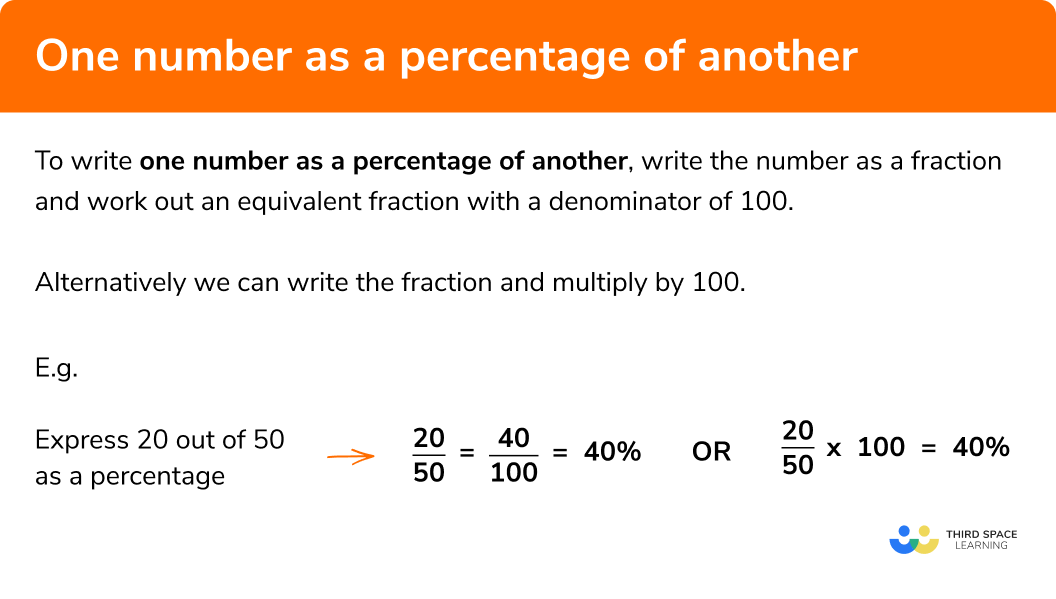
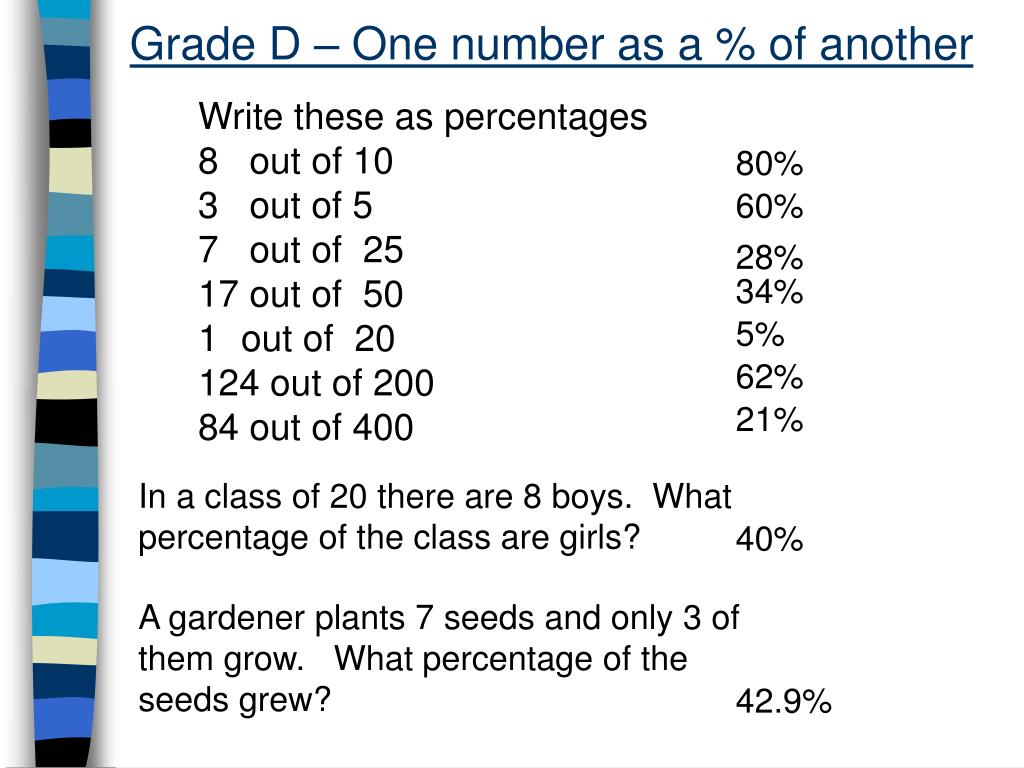
To determine what percentage one number (the part) is of another number (the whole), the formula is simple:
(Part / Whole) * 100 = Percentage
For instance, if you want to know what percentage $20 is of $100, you would calculate ($20 / $100) * 100 = 20%. This fundamental equation is the gateway to understanding a myriad of financial scenarios.
Practical Example: Discounts and Sales
One of the most common applications of percentages in daily finance is encountered during shopping. A store advertises “30% off” an item. If an item originally costs $80, understanding percentages allows you to immediately calculate the savings and the final price.
-
Discount amount: 30% of $80 = (30/100) * $80 = $24
-
Final price: $80 – $24 = $56
Conversely, if you paid $56 for an item that was originally $80, you can determine the discount percentage:
-
Amount saved: $80 – $56 = $24
-
Percentage discount: ($24 / $80) * 100 = 30%
This simple example highlights how percentages empower consumers to quickly assess value and make financially savvy purchasing decisions.
Leveraging Percentages in Personal Finance
Personal finance is replete with situations where percentages are the primary language for conveying information and guiding decisions. Mastering this concept is key to effective money management.
Budgeting and Expense Management
Creating and sticking to a budget relies heavily on understanding percentages. Many financial experts recommend allocating specific percentages of your net income to various categories, such as the popular 50/30/20 rule (50% for needs, 30% for wants, 20% for savings/debt repayment).
Consider an individual earning $4,000 per month after taxes:
-
Housing (Need): If rent is $1,200, this is ($1,200 / $4,000) * 100 = 30% of their income.
-
Dining Out (Want): If they spend $400 on restaurants, this is ($400 / $4,000) * 100 = 10% of their income.
-
Savings: If they save $800, this represents ($800 / $4,000) * 100 = 20% of their income.
By breaking down their spending into percentages, they can quickly identify areas where they might be overspending or falling short of their savings goals, allowing for timely adjustments.
Savings Goals and Growth
Setting financial goals, such as saving for a down payment or retirement, involves understanding how current contributions relate to the total goal and how those savings can grow over time. If you aim to save $20,000 for a down payment and have already saved $5,000, you are ($5,000 / $20,000) * 100 = 25% of the way there.
Furthermore, savings accounts and investments often offer interest or returns expressed as a percentage. A savings account with a 2% annual interest rate means your money grows by 2% each year.
Debt Management and Interest
Debt is often quantified by an Annual Percentage Rate (APR). A credit card with a 20% APR means that, over a year, you will accrue interest equal to 20% of your outstanding balance if you don’t pay it off. Understanding this allows you to calculate the cost of borrowing and prioritize high-interest debts. If you have a $1,000 credit card balance at 20% APR, you’re effectively paying $200 in interest per year if the balance remains constant. This insight can motivate quicker repayment to minimize the percentage cost of borrowing.
Percentages in Investing and Wealth Building
For investors, percentages are the lingua franca for evaluating performance, managing risk, and making strategic allocation decisions.
Return on Investment (ROI)
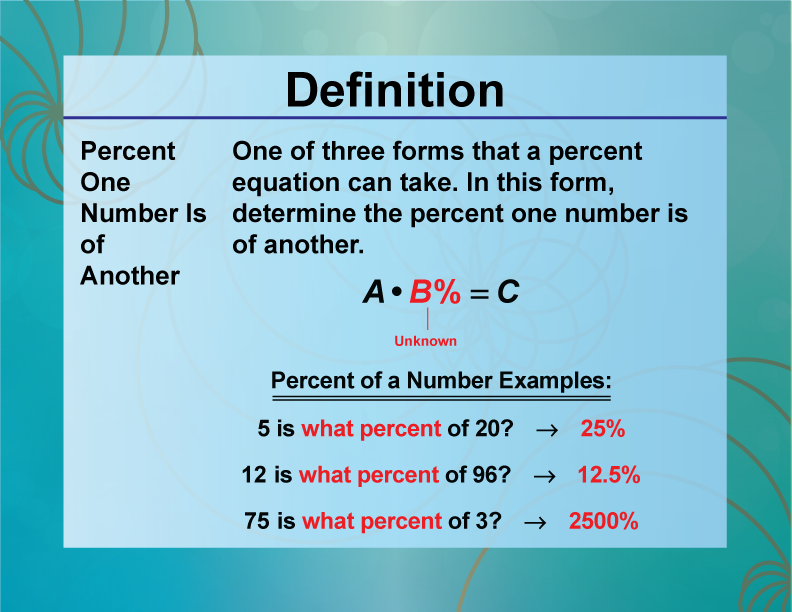
ROI is a critical metric for assessing the profitability of an investment. It is calculated as:
((Current Value of Investment – Original Cost of Investment) / Original Cost of Investment) * 100 = ROI %
If you invested $10,000 in stocks and they are now worth $12,000, your ROI is (($12,000 – $10,000) / $10,000) * 100 = 20%. This percentage provides a clear, standardized measure of how well your investment has performed, allowing for comparisons across different assets or timeframes.
Portfolio Allocation
Diversification, a cornerstone of sound investing, involves allocating your capital across various asset classes (e.g., stocks, bonds, real estate, cash) based on percentages. A common strategy might be 60% stocks, 30% bonds, and 10% cash, reflecting your risk tolerance and financial goals. As markets fluctuate, these percentages will shift, requiring periodic rebalancing to maintain the desired allocation. Understanding these percentages helps manage risk and optimize potential returns.
Understanding Market Changes
Daily financial news frequently reports market movements in percentages. “The S&P 500 closed up 1.5% today” or “Tech stocks dropped 3%.” These percentages offer an immediate snapshot of market health and sector performance, enabling investors to gauge the impact on their portfolios and potentially adjust their strategies. A 1.5% gain on a $100,000 portfolio translates to a $1,500 increase in value, a concrete understanding gained directly from the percentage.
Business Applications and Online Income
Businesses, regardless of their size or sector, rely on percentages to measure profitability, assess operational efficiency, and drive growth. Entrepreneurs and online income generators use them extensively to track performance and make strategic choices.
Profit Margins and Break-Even Analysis
Profitability is often expressed as a percentage, specifically through metrics like gross profit margin and net profit margin.
-
Gross Profit Margin: (Gross Profit / Revenue) * 100. This indicates the percentage of revenue left after deducting the cost of goods sold. A high gross margin suggests efficient production or strong pricing power.
-
Net Profit Margin: (Net Profit / Revenue) * 100. This reveals the percentage of revenue remaining after all expenses (including taxes) have been deducted. It’s a key indicator of overall business health.
For example, if an online store generates $50,000 in sales and has a gross profit of $25,000, its gross profit margin is ($25,000 / $50,000) * 100 = 50%. This percentage is crucial for pricing strategies and inventory management.
Break-even analysis also uses percentages to determine what percentage of capacity or sales volume is needed to cover all costs.
Commission and Royalty Structures
Many online income models, such as affiliate marketing, content creation, or sales roles, involve commissions or royalties paid as a percentage of sales or revenue. An affiliate marketer earning a 10% commission on a $50 product sale knows they will receive $5. Similarly, a musician might receive a 15% royalty on album sales. Clearly understanding these percentages is vital for calculating potential earnings and evaluating income streams.
Analyzing Marketing Performance
In the digital landscape, marketing efforts are rigorously measured using percentages.
-
Conversion Rate: (Number of Conversions / Number of Visitors) * 100. If 100 out of 1,000 website visitors make a purchase, the conversion rate is (100 / 1,000) * 100 = 10%. This percentage indicates the effectiveness of a marketing campaign or website design.
-
Click-Through Rate (CTR): (Number of Clicks / Number of Impressions) * 100. A CTR of 2% on an advertisement means that for every 100 times the ad was shown, 2 people clicked on it. These percentages guide decisions on ad spend optimization and content strategy.
Common Pitfalls and Advanced Considerations
While the basic percentage calculation is simple, financial contexts often introduce nuances that require a deeper understanding to avoid misinterpretation.
Percentage Points vs. Percentage Change
A common area of confusion is the distinction between “percentage points” and “percentage change” (or relative change).
-
Percentage Points: This refers to the absolute difference between two percentages. If an interest rate increases from 5% to 6%, it’s a 1 percentage point increase.
-
Percentage Change: This refers to the relative change. An increase from 5% to 6% is a ((6-5)/5) * 100 = 20% increase in the interest rate itself.
Confusing these can lead to significant miscalculations, especially when discussing market volatility or economic indicators.
The Power of Compounding (and its inverse)
The concept of compounding, often hailed as the “eighth wonder of the world” by Albert Einstein, is entirely built on percentages. It’s the process where an asset’s earnings are reinvested to generate additional earnings over time. A 7% annual return compounded over decades can turn modest savings into substantial wealth. For example, $1,000 invested at 7% yields $70 in the first year. In the second year, the 7% is applied to $1,070, yielding $74.90, and so on.
Conversely, compounding can work against you in the form of debt interest, especially with high-APR credit cards where interest accrues on both the principal and previously unpaid interest, rapidly escalating the total amount owed. Understanding these compounding percentages is critical for long-term financial planning and debt elimination strategies.
In conclusion, the simple question “what percentage of one number is another” unlocks a vast array of financial insights. It is a tool for transparency, comparison, and strategic decision-making across personal budgets, investment portfolios, and business operations. Mastering this fundamental mathematical concept is not just an academic exercise; it is a vital step toward achieving financial literacy and securing a more prosperous future.
aViewFromTheCave is a participant in the Amazon Services LLC Associates Program, an affiliate advertising program designed to provide a means for sites to earn advertising fees by advertising and linking to Amazon.com. Amazon, the Amazon logo, AmazonSupply, and the AmazonSupply logo are trademarks of Amazon.com, Inc. or its affiliates. As an Amazon Associate we earn affiliate commissions from qualifying purchases.