
The vastness of our planet is often conceptualized through its striking dichotomy: land and sea. From the depths of the Mariana Trench to the peaks of Mount Everest, Earth presents a spectacular array of environments. Yet, when we ponder the most dominant feature, one statistic unequivocally stands out: approximately 71% of Earth’s surface is covered with water. This seemingly simple figure belies a profound complexity, influencing everything from global climate patterns and biodiversity to human civilization, technological advancement, corporate strategy, and economic prosperity.
Our “Blue Planet” moniker is not merely poetic; it’s a scientific reality visible even from space. This overwhelming aquatic presence, primarily in the form of oceans, defines our world. But understanding this percentage goes far beyond a geographical factoid. It opens up critical discussions about resource management, environmental sustainability, and the intricate web of human endeavor. In an era where data-driven decisions, strategic branding, and robust financial planning are paramount, the implications of Earth’s water coverage resonate across technology, business, and personal finance alike. Delving into this fundamental aspect of our planet reveals how deeply intertwined it is with our future, driving innovation, shaping markets, and influencing our very way of life.

The Blue Planet: A Fundamental Overview
Earth’s distinctive blue hue is a testament to the immense volume of water that blankets its surface. This predominant feature is not just aesthetically pleasing; it is the cornerstone of life as we know it, regulating temperatures, shaping geological formations, and providing habitats for countless species. Understanding the exact distribution and characteristics of this water is crucial for appreciating its role in the global ecosystem and human society.
The 71% Statistic: What It Means
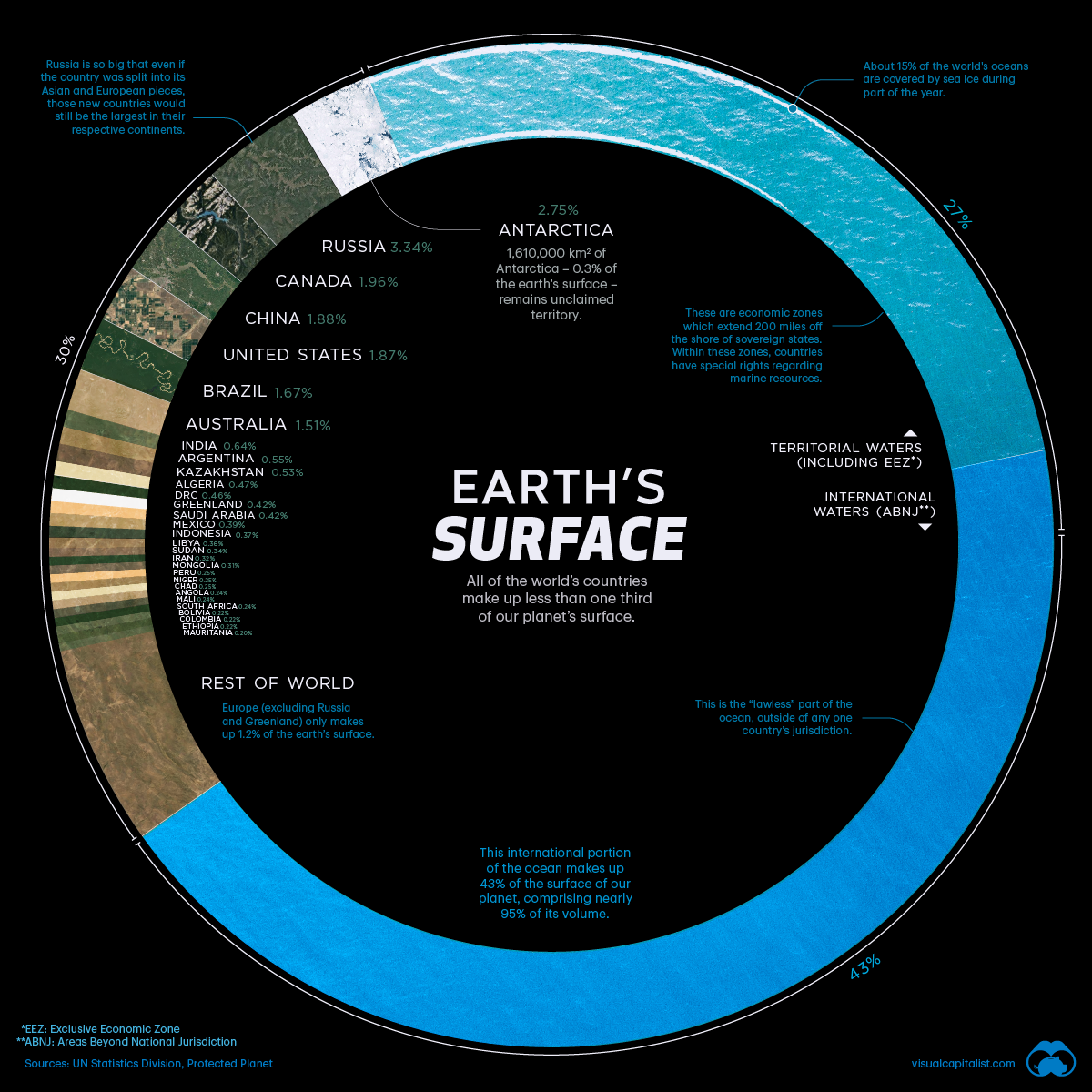
When we state that 71% of Earth’s surface is covered with water, we are primarily referring to its oceans. These five vast bodies—the Pacific, Atlantic, Indian, Southern (Antarctic), and Arctic—are interconnected, forming a single global ocean that holds about 96.5% of all Earth’s water. The remaining 29% of the surface is occupied by landmasses, including continents and islands. This uneven distribution has profound consequences. The sheer thermal inertia of the oceans, for instance, plays a critical role in moderating global temperatures, absorbing vast amounts of solar radiation and distributing heat around the globe via ocean currents. This acts as a giant thermostat, preventing extreme temperature fluctuations that would otherwise make life impossible for many species. Furthermore, the oceans are colossal carbon sinks, absorbing a significant portion of the carbon dioxide released into the atmosphere, which helps regulate the planet’s climate and mitigate the effects of greenhouse gas emissions.
The Distribution of Earth’s Water: Saltwater vs. Freshwater
While 71% of the surface is covered with water, it’s vital to distinguish between saltwater and freshwater. The vast majority, as mentioned, is saltwater contained within the oceans. Only a small fraction, approximately 2.5%, is freshwater. And of that freshwater, an even smaller percentage is readily available for human use. Most freshwater is locked away in glaciers and ice caps (about 68.7%), followed by groundwater (about 30.1%). Rivers, lakes, and swamps, which are often the most visible freshwater sources, account for a mere 1.2% of the total freshwater.
This scarcity of accessible freshwater, despite the planet’s abundance of water overall, is a critical global challenge. It underscores the importance of efficient water management and conservation, especially as climate change alters precipitation patterns and melts ice reserves. Understanding this precise distribution—how much water there is, where it is, and its quality—is not just an academic exercise. It’s foundational to informed decision-making in every sector, from agricultural planning and urban development to industrial production and environmental protection. The implications of this fundamental overview cascade into technological innovations, brand strategies, and financial investments aimed at sustaining our watery world.
Leveraging Technology to Understand and Manage Our Water World
The sheer scale and dynamic nature of Earth’s water systems necessitate sophisticated tools for observation, analysis, and intervention. Technology has become an indispensable ally in understanding the 71% water coverage, managing its resources, and addressing the myriad challenges it presents. From the deepest ocean trenches to the vast atmospheric water vapor cycle, technological advancements provide the eyes, ears, and hands needed to interact intelligently with our blue planet.
Advanced Mapping and Data Collection: The Eyes in the Sky and Under the Waves
Our knowledge of the Earth’s water coverage, its depths, and its characteristics is continuously refined through cutting-edge technology. Satellite remote sensing, for example, plays a pivotal role. Orbiting satellites equipped with various sensors can measure sea surface temperatures, ocean currents, sea-level rise, ice sheet changes, and even the salinity of surface waters across vast areas, providing real-time and historical data crucial for climate modeling and resource assessment. Geographic Information Systems (GIS) software integrates this satellite data with other spatial information, allowing scientists, urban planners, and businesses to create detailed maps and models of water bodies, watersheds, and coastal zones. This helps in identifying areas prone to flooding, mapping marine habitats, and planning infrastructure development.
Beneath the waves, Autonomous Underwater Vehicles (AUVs) and Remotely Operated Vehicles (ROVs) are transforming ocean exploration. Equipped with high-definition cameras, sonar, and environmental sensors, these robotic submersibles can plumb the ocean’s deepest parts, mapping the seafloor, discovering new species, monitoring pollution, and assessing underwater geological formations. The vast datasets generated by these technologies are then processed and analyzed using Artificial Intelligence (AI) and machine learning algorithms. AI can detect subtle patterns in satellite imagery, predict oceanic events like El Niño, or even identify anomalies in water quality data far more efficiently than human analysts, providing actionable insights for environmental protection and resource management. These technological capabilities are fundamental to precisely quantifying and constantly monitoring our planet’s water.
Innovating Water Management and Conservation
Beyond understanding, technology is critical for actively managing and conserving water resources. Facing increasing demands and climate variability, societies are turning to advanced solutions. Desalination technologies, though energy-intensive, are becoming more efficient, offering a viable option for freshwater production in water-scarce coastal regions. Innovations in smart water grids utilize networks of sensors and meters to monitor water flow, detect leaks in real-time, and optimize distribution, significantly reducing water waste in urban areas. In agriculture, precision irrigation systems use sensors to measure soil moisture and weather data, delivering water directly to plant roots only when and where it’s needed, drastically cutting down water consumption compared to traditional methods.
Furthermore, water quality monitoring sensors provide continuous data on chemical composition, pathogen presence, and other vital parameters, ensuring safe drinking water and alerting authorities to potential pollution events. AI-driven climate modeling offers increasingly accurate predictions of precipitation patterns, drought occurrences, and sea-level rise, enabling proactive planning for water resource allocation and disaster preparedness. These technologies are not just tools; they are essential components of a sustainable future, allowing us to stretch our finite freshwater supplies and protect our marine environments.
Digital Security and Productivity in Water Infrastructure
As water infrastructure becomes more digitized and interconnected, the importance of digital security grows exponentially. Control systems for water treatment plants, dams, and distribution networks are critical national infrastructure and potential targets for cyberattacks. Protecting these systems from malicious intrusion is paramount to ensure public safety and continuous service. Implementing robust cybersecurity protocols, including intrusion detection systems, encryption, and regular vulnerability assessments, is crucial.
Moreover, technology enhances productivity in water utilities. Advanced software platforms for enterprise resource planning (ERP) and asset management streamline operations, optimize maintenance schedules, and improve logistical efficiency. Cloud-based collaboration tools facilitate information sharing among teams and stakeholders, leading to more responsive and effective water management. From safeguarding vital data to maximizing operational output, technology ensures that the systems governing our planet’s most critical resource function securely and effectively, protecting both the resource itself and the communities that depend on it.
Branding and Reputation in a Water-Conscious World
In an era of heightened environmental awareness, how businesses and individuals relate to the planet’s most abundant yet precious resource—water—significantly impacts their brand and reputation. With 71% of Earth covered by water, the health of our oceans, rivers, and freshwater systems is a visible and tangible indicator of global sustainability. This creates both challenges and opportunities for branding, influencing consumer perception, corporate social responsibility, and personal credibility.
Corporate Social Responsibility and Green Branding
Companies today understand that their brand image is inextricably linked to their environmental footprint. For businesses, adopting Corporate Social Responsibility (CSR) initiatives related to water is no longer optional but a strategic imperative. Brands that actively engage in water conservation, pollution reduction, or provide access to clean water in underserved communities can significantly enhance their reputation. This might involve investing in water-efficient manufacturing processes, funding ocean cleanup projects, or partnering with NGOs dedicated to freshwater protection. Such efforts are then communicated through green branding campaigns, showcasing the company’s commitment to sustainability.

For instance, a beverage company might highlight its efforts to replenish water in the communities where it operates, or a fashion brand might emphasize its use of dyes that require less water. These initiatives are designed to resonate with environmentally conscious consumers, fostering brand loyalty and attracting talent who seek purpose-driven employers. A strong water-related CSR strategy can differentiate a brand in a crowded market, signaling authenticity and a commitment beyond profit margins, ultimately contributing to a more resilient and respected brand identity.
Marketing the “Blue” Economy: From Tourism to Sustainable Products
The “Blue Economy,” encompassing all economic activities related to oceans, seas, and coasts, offers fertile ground for innovative marketing and design. Tourism brands, for example, heavily rely on the pristine beauty of coastal areas and healthy marine ecosystems. Their marketing campaigns often feature crystal-clear waters, vibrant coral reefs, and responsible marine wildlife encounters, emphasizing the importance of preserving these natural assets. This requires a delicate balance: promoting enjoyment while simultaneously advocating for sustainable practices that protect the very environments tourists come to see.
Beyond tourism, the marketing of sustainable products increasingly highlights their water-saving attributes. Brands might design packaging that emphasizes reduced water usage in production, or feature certifications from organizations that audit water stewardship. This extends to product design itself, from low-flow showerheads and efficient washing machines to innovative materials that require less water to manufacture. Effective marketing in this space requires transparent communication about water footprint, clear labeling, and engaging storytelling that educates consumers on the positive impact of their choices. By aligning brand messaging and product design with water sustainability, companies can tap into growing market segments that prioritize environmental responsibility.
Personal Branding for Water Advocates and Experts
In the digital age, individual expertise and advocacy play a significant role in shaping public discourse and driving change. For scientists, environmentalists, policy makers, or innovators focused on water issues, personal branding is essential for amplifying their message and influence. Experts in oceanography, hydrology, climate science, or sustainable water management can leverage platforms like LinkedIn, Twitter, and professional conferences to establish themselves as thought leaders. This involves consistently sharing research findings, insights, and solutions related to water challenges.
A strong personal brand for a water advocate might manifest through compelling articles about freshwater scarcity, engaging presentations on marine conservation, or consulting for organizations seeking sustainable water strategies. By building a reputation for knowledge, integrity, and passion for water-related causes, these individuals can attract collaborators, secure funding for projects, and influence policy decisions. Their personal brand becomes a beacon for change, helping to educate the public, inspire action, and guide investments towards a more water-secure future. In a world where information overload is common, a well-curated personal brand ensures that critical voices on water issues are heard and heeded.
The Financial Currents: Investing in Our Water Future
The fact that 71% of our planet is covered by water carries profound financial implications. From direct investment opportunities in water-related industries to managing risks associated with scarcity and climate change, water influences global markets, personal finance decisions, and long-term economic stability. Understanding these financial currents is crucial for investors, businesses, and individuals aiming to secure their financial future in a water-dependent world.
The “Blue Economy” and Investment Opportunities
The concept of the “Blue Economy” describes the sustainable use of ocean resources for economic growth, improved livelihoods, and ocean ecosystem health. This vast sector presents numerous investment opportunities. Shipping and logistics remain a cornerstone, facilitating global trade across the oceans. Fisheries and aquaculture (fish farming) are vital for global food security, attracting investment in sustainable practices and technological advancements to boost yields while minimizing environmental impact. Offshore energy, including oil, gas, and increasingly renewable sources like wind and wave power, represents another significant component. Companies involved in building and maintaining offshore wind farms, for example, are seeing substantial growth.
Beyond these traditional areas, emerging sectors within the Blue Economy offer exciting prospects. Water technology startups focusing on advanced desalination, smart water grids, leak detection, and water purification are attracting venture capital. Investments in marine biotechnology, sustainable tourism, and even deep-sea mining (with appropriate environmental safeguards) also fall under this umbrella. For investors, understanding the trends and challenges in these sectors can unlock opportunities for robust returns while contributing to environmental sustainability. This shift towards a sustainable Blue Economy reflects a broader recognition that healthy oceans are integral to long-term economic prosperity.
Mitigating Financial Risks from Water Scarcity and Climate Change
While water presents opportunities, it also poses significant financial risks, particularly related to freshwater scarcity and climate change. Rising sea levels directly impact coastal real estate, threatening properties and infrastructure with increased flooding and erosion. Insurance companies are already adjusting premiums and coverage in vulnerable areas, reflecting the growing financial exposure. Businesses with complex supply chains face risks from water scarcity, as production facilities or agricultural inputs in water-stressed regions become unreliable. This can lead to increased operational costs, production delays, and potential reputational damage.
Furthermore, industries heavily reliant on water, such as agriculture, manufacturing, and energy production, face regulatory risks, including potential restrictions on water usage and increased costs for water rights or treatment. Financial institutions are increasingly incorporating these water-related risks into their lending and investment decisions, viewing water security as a key factor in assessing corporate creditworthiness and sovereign debt. Proactive risk mitigation strategies, such as investing in water-efficient technologies, diversifying supply chains, and purchasing specialized insurance, are becoming essential for businesses and individuals to protect their assets and financial stability.
Sustainable Finance and Water-Focused Investments
The growing awareness of water’s critical role and associated risks has spurred the expansion of sustainable finance. Investors are increasingly looking to ESG (Environmental, Social, Governance) investing strategies, where water stewardship is a key ‘E’ factor. This involves evaluating companies not just on financial performance but also on their water usage efficiency, pollution prevention, and efforts to address water scarcity in their operations and supply chains.
Dedicated water-focused investment funds and green bonds are also gaining traction. These financial instruments specifically channel capital towards companies and projects that aim to improve water infrastructure, develop innovative water technologies, or implement sustainable water management practices. For personal finance, this means individuals can choose to align their investments with their values, supporting companies that are part of the solution to global water challenges. Investing in water can offer both financial returns and a positive societal impact, making it an attractive option for conscientious investors seeking long-term growth in a resource-constrained world.
Online Income and Side Hustles in the Water Sector
The burgeoning water sector also offers opportunities for online income and side hustles. Individuals with expertise in water treatment, hydrology, environmental engineering, or sustainability can offer consulting services remotely to businesses or municipalities seeking to optimize their water management strategies. The demand for specialized knowledge in areas like regulatory compliance, water footprint assessment, or smart irrigation system design is growing.
Furthermore, the need for public education and awareness creates opportunities for content creation. Developing engaging online courses, YouTube channels, blogs, or podcasts focused on water conservation, climate change impacts on water, or sustainable living practices can generate income through advertising, sponsorships, or direct sales of educational materials. Entrepreneurs can also develop and market innovative water solutions or gadgets online, from smart home devices that monitor water usage to eco-friendly filters or water-saving garden tools. The digital marketplace provides a platform for connecting these water-centric products and services with a global audience, allowing individuals to monetize their passion and expertise while contributing to a more water-resilient future.
Conclusion
The statistic that approximately 71% of Earth’s surface is covered with water is far more than a geographical curiosity; it is a profound indicator of our planet’s very essence and a powerful lens through which to view human progress and challenges. This vast aquatic domain is the engine of our climate, the cradle of biodiversity, and an indispensable resource for human civilization. As we have explored, its influence permeates every facet of our modern world, from the cutting-edge technologies that allow us to observe and manage it, to the strategic branding decisions of global corporations, and the intricate financial currents that shape our economies.
Technology empowers us with unprecedented insights into the oceans’ depths and the dynamics of freshwater systems, enabling us to monitor, conserve, and innovate in ways previously unimaginable. Simultaneously, the imperative to protect this vital resource has become a cornerstone of brand identity and reputation, driving corporate social responsibility and influencing marketing strategies across the “Blue Economy.” Financially, water represents both significant investment opportunities and critical risks, shaping everything from real estate valuations and supply chain resilience to the burgeoning field of sustainable finance and even new avenues for online income.
Ultimately, understanding the percentage of Earth covered by water means recognizing our profound interdependence with it. It compels us to act as responsible stewards, harnessing technological advancements, fostering ethical brand practices, and making informed financial decisions that ensure the health and availability of this irreplaceable resource for generations to come. Our future, in every sense, is inextricably linked to the stewardship of our blue planet.
aViewFromTheCave is a participant in the Amazon Services LLC Associates Program, an affiliate advertising program designed to provide a means for sites to earn advertising fees by advertising and linking to Amazon.com. Amazon, the Amazon logo, AmazonSupply, and the AmazonSupply logo are trademarks of Amazon.com, Inc. or its affiliates. As an Amazon Associate we earn affiliate commissions from qualifying purchases.