
In a world increasingly driven by data and numerical insights, the seemingly simple question, “what percentage of a number is another number?” underpins nearly every financial decision we make, every investment we consider, and every budget we meticulously craft. Far from being a mere academic exercise, understanding percentages is the bedrock of financial literacy. From calculating interest on a loan to deciphering investment returns, from optimizing a budget to evaluating a business’s health, percentages provide the universal language through which we quantify relationships and make informed choices about our money.
Without a firm grasp of percentage calculations, individuals are left vulnerable to misinterpretations, unable to accurately assess risks, identify opportunities, or even understand the true cost of everyday transactions. This article will delve into the profound importance of mastering percentage calculations, exploring their pervasive presence across personal finance, investing, and business, and equipping you with the practical knowledge to navigate your financial landscape with confidence and clarity.
The Ubiquity of Percentages in Personal Finance
Personal finance is perhaps where percentages play their most direct and impactful role in our daily lives. They are the invisible threads woven into the fabric of our spending, saving, and debt management strategies, dictating the real value of our money.
Budgeting and Expense Management
At the heart of sound personal finance lies budgeting, and percentages are indispensable here. When you allocate 30% of your income to housing, 15% to food, and 10% to savings, you’re using percentages to define your financial priorities and control your cash flow. Without this framework, it’s difficult to visualize where your money goes or identify areas for potential savings. For instance, if your discretionary spending consistently exceeds 20% of your income, understanding this percentage helps you pinpoint overspending and make necessary adjustments to stay on track. Similarly, tracking “what percentage of my income am I saving?” provides a clear, concise metric for financial progress.
Understanding Discounts and Sales
From Black Friday deals to everyday promotions, discounts are ubiquitous. A savvy consumer needs to quickly calculate “what percentage off” a product truly represents. Is a 20% discount on a $100 item truly better than a $15 flat discount? Without understanding how to apply the percentage, such comparisons become difficult, leading to potentially less optimal purchasing decisions. Knowing that a 30% off sale means saving 30 cents on every dollar spent empowers you to seize genuine value and avoid overpaying.
Interest Rates and Debt Management
Perhaps no area in personal finance is more critical for percentage comprehension than interest rates. Whether it’s the annual percentage rate (APR) on a credit card, the interest charged on a mortgage, or the yield on a savings account, percentages dictate the cost of borrowing and the returns on saving. A 1.5% interest rate on a savings account compared to a 24% APR on a credit card paints a stark picture of how percentages can either grow your wealth or erode it. Understanding the total interest paid as a percentage of the principal loan amount, for example, highlights the true cost of debt over time, motivating quicker repayment strategies.
Saving for the Future: Contributions and Goals
Setting financial goals, like a down payment for a house or retirement, often involves regular contributions. Saving “X percentage” of each paycheck is a common strategy. This approach automatically adjusts as your income changes, maintaining a consistent savings discipline. Furthermore, understanding your progress towards a savings goal often involves percentages: “I have saved 25% of my target amount for a new car,” provides a clear, measurable metric of progress and motivation.
Percentages in the World of Investing and Wealth Building
Beyond day-to-day spending, percentages are the fundamental language of investing. They are crucial for evaluating performance, managing risk, and making strategic decisions that impact long-term wealth accumulation.
Gauging Investment Returns (ROI)
The most direct application of percentages in investing is in calculating Return on Investment (ROI). “What percentage has my stock portfolio grown?” is a question every investor asks. Whether it’s a 7% annual return on a mutual fund or a 15% gain on a single stock, percentages allow for apples-to-apples comparisons across different investments, regardless of their initial cost. A 10% return on a $1,000 investment is easily comparable to a 10% return on a $10,000 investment, showing proportional growth. Understanding both positive and negative percentage returns is essential for assessing investment health and making timely adjustments.
Analyzing Portfolio Allocation
Diversification is key to managing investment risk, and percentages guide portfolio allocation. Financial advisors often recommend allocating a certain percentage to stocks, bonds, and other assets based on age, risk tolerance, and financial goals. For example, a common rule of thumb might suggest allocating 60% to equities and 40% to fixed income. As market values fluctuate, these percentages shift, necessitating rebalancing to maintain the desired risk profile. Calculating “what percentage of my portfolio is currently in tech stocks?” is a vital check for overexposure to a single sector.
Understanding Fees and Expense Ratios
Fees, often expressed as percentages, can significantly erode investment returns over time. An expense ratio of 0.5% on a mutual fund might seem small, but over decades, it can amount to tens of thousands of dollars in lost earnings due to the power of compounding. Similarly, advisor fees or transaction costs are usually percentage-based. Being able to calculate the cumulative impact of these small percentages is crucial for maximizing net returns.
Inflation and Purchasing Power
Inflation, the rate at which the general level of prices for goods and services is rising, and consequently, the purchasing power of currency is falling, is always expressed as a percentage. A 3% annual inflation rate means that what cost $100 last year now costs $103. Understanding inflation’s impact on your money’s value is critical for financial planning, especially when considering long-term savings and retirement funds. Your investments need to grow by a percentage greater than inflation just to maintain their purchasing power.
Business Acumen: Percentages for Entrepreneurs and Side Hustlers
For entrepreneurs, small business owners, and even those engaged in side hustles, percentages are the critical metrics for assessing performance, profitability, and growth. They provide a clear, concise snapshot of a business’s health and trajectory.
Calculating Profit Margins
Profitability is the lifeblood of any business, and profit margins are expressed as percentages. Gross profit margin (“what percentage of my revenue is left after covering direct costs?”) and net profit margin (“what percentage of my revenue is left after all expenses, including taxes?”) are fundamental indicators of a business’s efficiency and financial viability. A consistently low profit margin, for example, could signal a need to raise prices, reduce costs, or improve operational efficiency.
Sales Growth and Market Share
Businesses constantly monitor sales growth, typically expressed as a percentage increase or decrease over a given period. A 15% year-over-year sales growth is a strong indicator of market traction. Similarly, market share—”what percentage of the total market do my sales represent?”—is a key competitive metric, helping businesses understand their position relative to competitors and identify opportunities for expansion.
Commission Structures and Payouts
Many sales roles and affiliate marketing programs operate on commission structures, where earnings are a percentage of sales generated. Understanding how these percentages translate into actual income is vital for forecasting earnings and setting sales targets. If you’re selling a product for $100 with a 10% commission, you know you earn $10 per sale. This simple calculation underpins the entire incentive structure.
Understanding Business Metrics and Performance
Beyond profits and sales, businesses rely on a host of percentage-based metrics: customer retention rates, conversion rates (what percentage of website visitors make a purchase?), employee turnover rates, and debt-to-equity ratios. Each of these provides critical insights into different facets of business operations and financial health, guiding strategic decisions and performance improvements.
Practical Application: How to Calculate “What Percentage of a Number is Another Number”
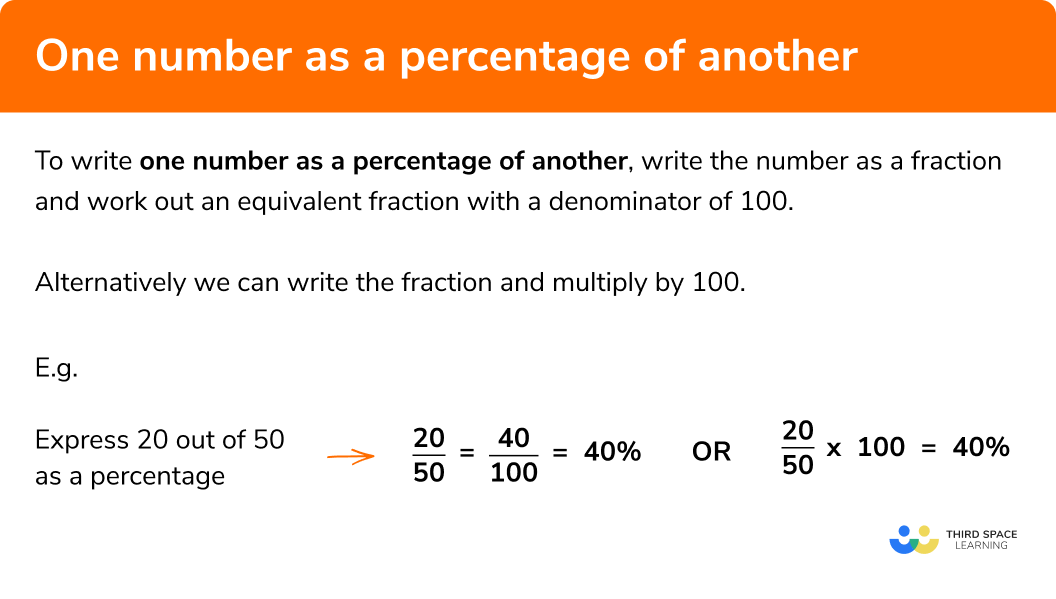
Despite their widespread use, the core calculation of percentages is straightforward. At its heart, a percentage is simply a fraction where the denominator is 100. The phrase “what percentage of a number is another number” can be directly translated into a simple algebraic formula.
The Fundamental Formula Explained
Let’s break down the core concept:
You want to know what percentage of a “whole” amount, another “part” amount represents.
The formula is:
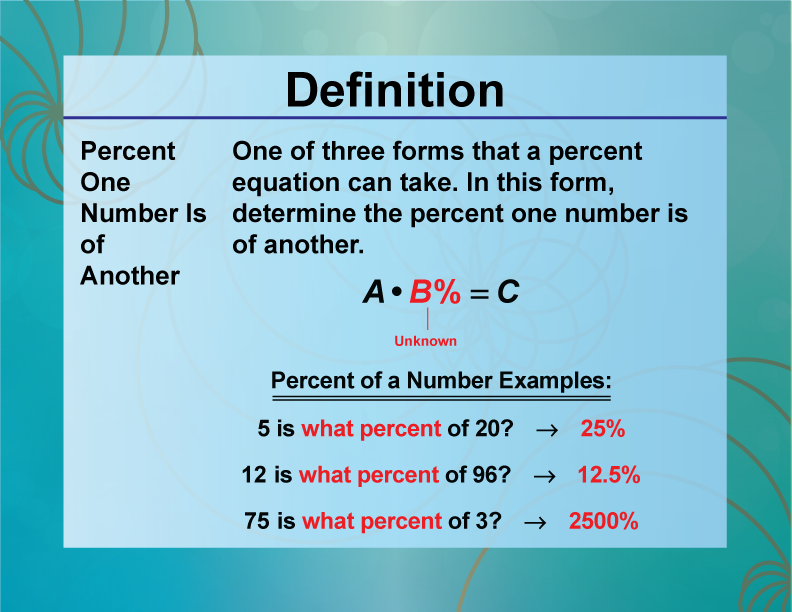
Percentage = (Part / Whole) × 100
Where:
-
Part: The specific amount or value you want to express as a percentage.
-
Whole: The total amount, the base number, or the reference value.
-
100: Multiplied by 100 to convert the decimal fraction into a percentage.
Alternatively, if you’re trying to find a “part” when you know the “whole” and the “percentage”:
Part = (Percentage / 100) × Whole
And if you’re trying to find the “whole” when you know the “part” and the “percentage”:
Whole = Part / (Percentage / 100)
Real-World Financial Examples Step-by-Step
Let’s apply the core formula to common financial scenarios:
1. Finding a Discount Percentage:
-
Scenario: A shirt originally costs $50, and it’s on sale for $40. What is the percentage discount?
-
Part (Discount Amount): $50 (original price) – $40 (sale price) = $10
-
Whole (Original Price): $50
-
Calculation: ($10 / $50) × 100 = 0.20 × 100 = 20%
-
Answer: The shirt is 20% off.
2. Calculating Interest Rate:
-
Scenario: You earned $50 in interest on a $1,000 savings account in one year. What was the annual interest rate?
-
Part (Interest Earned): $50
-
Whole (Principal Amount): $1,000
-
Calculation: ($50 / $1,000) × 100 = 0.05 × 100 = 5%
-
Answer: The annual interest rate was 5%.
3. Determining Investment Return (ROI):
-
Scenario: You invested $5,000 in a stock, and it grew to $5,800. What is your percentage return?
-
Part (Profit): $5,800 (final value) – $5,000 (initial investment) = $800
-
Whole (Initial Investment): $5,000
-
Calculation: ($800 / $5,000) × 100 = 0.16 × 100 = 16%
-
Answer: Your investment yielded a 16% return.
Leveraging Financial Tools and Calculators
While understanding the manual calculation is crucial, modern financial life is greatly aided by tools. Most smartphones have built-in calculators that handle percentages. Spreadsheets like Microsoft Excel or Google Sheets offer powerful percentage functions, making it easy to analyze large datasets. Numerous online financial calculators specifically designed for mortgages, loans, investments, and budgeting also automate these calculations, allowing you to quickly model different scenarios and understand their percentage implications. The key is to know what numbers to input and what the output percentage truly represents.
Beyond the Basics: Advanced Percentage Concepts in Finance
While the fundamental percentage calculation is simple, finance often introduces nuances that require a deeper understanding.
Percentage Change vs. Percentage Point Change
It’s crucial to distinguish between a percentage change and a percentage point change.
-
Percentage Point Change: If an interest rate increases from 4% to 5%, that’s a 1 percentage point increase.
-
Percentage Change: However, the increase from 4% to 5% is actually a (1/4) * 100 = 25% percentage change in the interest rate itself. This distinction is vital in financial reporting to avoid misleading interpretations.
Compounding and Exponential Growth
The magic of compound interest, often called the eighth wonder of the world, relies entirely on percentages. Earning interest not only on your initial principal but also on the accumulated interest leads to exponential growth. Understanding how small percentage returns compound over long periods is fundamental to long-term wealth creation. Conversely, compounding debt, like credit card interest, can quickly spiral out of control.
Understanding Financial Ratios
Many advanced financial analyses involve ratios, which are essentially percentages or comparisons that can be converted into percentages. For instance, the Debt-to-Equity Ratio compares a company’s total liabilities to its shareholder equity. While often presented as a decimal (e.g., 0.5), it implicitly means 50% debt relative to equity. These ratios offer critical insights into a company’s financial health, efficiency, and leverage.

Conclusion
The question “what percentage of a number is another number?” may seem basic, but its answer holds the key to unlocking profound financial understanding. From the moment we earn our first dollar to planning for retirement, percentages are the universal language that quantifies our financial world. They empower us to make intelligent spending decisions, evaluate investment opportunities with a discerning eye, and manage debt responsibly. For entrepreneurs, they are the vital signs of business health and growth.
In an era where financial data is abundant, the ability to correctly interpret and calculate percentages is not just a useful skill; it is an essential competency for anyone seeking to achieve financial empowerment and security. By mastering these calculations, you transform from a passive observer of your finances into an active, informed participant, capable of navigating the complexities of money with confidence and precision.
aViewFromTheCave is a participant in the Amazon Services LLC Associates Program, an affiliate advertising program designed to provide a means for sites to earn advertising fees by advertising and linking to Amazon.com. Amazon, the Amazon logo, AmazonSupply, and the AmazonSupply logo are trademarks of Amazon.com, Inc. or its affiliates. As an Amazon Associate we earn affiliate commissions from qualifying purchases.