
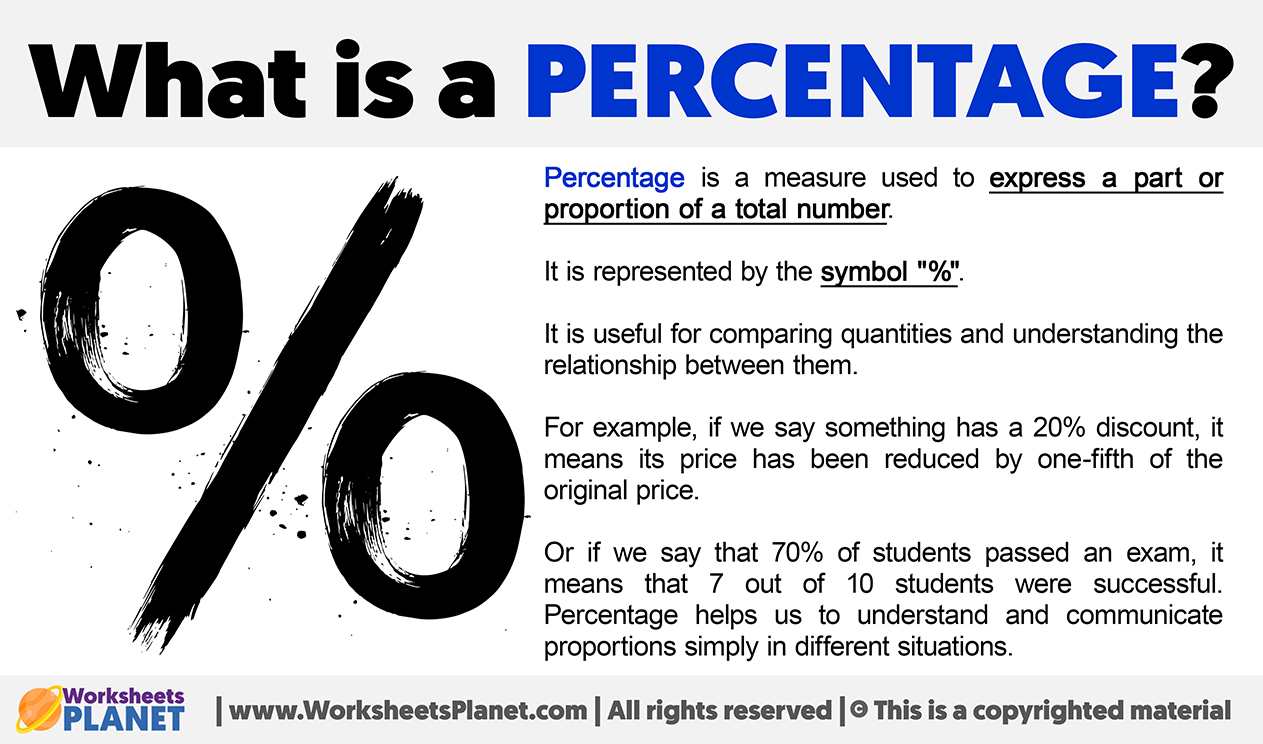
In the intricate world of finance, few concepts are as ubiquitous and indispensable as the percentage. From personal budgets to global market analyses, understanding “what percentage is a” is not merely an academic exercise; it is a fundamental skill for making informed financial decisions, gauging progress, and comprehending the forces that shape economic landscapes. A percentage, at its core, represents a part of a whole expressed as a fraction of 100. It’s a standardized way to compare proportions, measure changes, and communicate financial information with precision and clarity, transcending the complexities of raw numbers.
This article delves into the profound significance of percentages within the money category, exploring their foundational role, practical applications across personal and business finance, and crucial insights into how to interpret them correctly to foster financial growth and security. Whether you’re tracking investment returns, dissecting a loan agreement, evaluating a company’s performance, or simply planning your monthly expenses, percentages provide the essential framework for financial literacy and empowerment.
The Foundational Role of Percentages in Finance
Percentages act as the universal language of financial comparison and measurement. They allow us to translate absolute values into relative terms, making it easier to grasp the magnitude of a change or the proportion of one quantity to another, irrespective of the initial sums involved. This foundational understanding is the bedrock upon which all sophisticated financial analysis is built.
Defining Percentages: More Than Just a Number
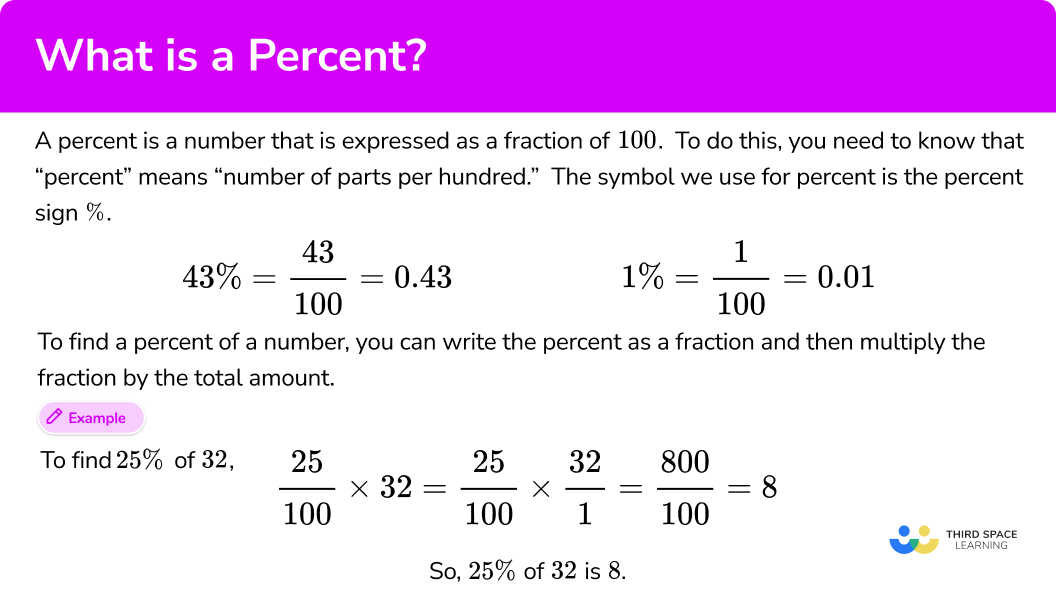
Conceptually, “X percent” (X%) means X per hundred, or X/100. For instance, 25% represents 25 out of 100, which can also be expressed as a decimal (0.25) or a fraction (1/4). This simple mathematical convention holds immense power because it standardizes comparisons. Instead of saying your portfolio grew by $1,000 and your neighbor’s by $10,000, percentages allow for a fair comparison: if yours grew from $10,000 to $11,000 (10% growth) and your neighbor’s from $100,000 to $110,000 (also 10% growth), you both achieved the same rate of return, despite different absolute dollar figures. This relative measure is often more insightful for performance evaluation.
The calculation of percentages typically involves three components: the part, the whole, and the percentage itself. The most common formula is (Part / Whole) * 100% = Percentage. However, understanding how to manipulate this formula to find any of the three components is crucial. For example, if you know the whole and the percentage, you can find the part (Whole * (Percentage / 100) = Part). This flexibility makes percentages an adaptable tool for a myriad of financial questions.
Why Percentages Matter in Your Financial Life
From the moment you earn your first paycheck to planning for retirement, percentages permeate every aspect of financial management. They are essential for:
- Understanding Growth and Decline: Whether it’s the annual growth rate of your investments, the inflation rate eroding purchasing power, or a percentage drop in stock prices, percentages quantify these critical changes.
- Comparing Performance: Benchmarking your investment returns against market averages, comparing interest rates on different loans, or evaluating the effectiveness of a marketing campaign all rely on percentage-based comparisons.
- Allocating Resources: Budgeting involves allocating a percentage of income to different categories (housing, food, savings). Investment strategies often define asset allocation in percentages (e.g., 60% stocks, 40% bonds).
- Calculating Costs and Earnings: Interest on loans and savings accounts, discounts on purchases, profit margins for businesses, and tax rates are all expressed as percentages, directly impacting your financial outcomes.
Without a firm grasp of percentages, navigating the financial world would be akin to sailing without a compass, leaving you vulnerable to misinterpretations and poor decision-making.
Percentages in Personal Finance: Mastering Your Money
For individuals, percentages are not just theoretical constructs; they are practical tools that empower better daily financial decisions and long-term planning. From managing income to building wealth, percentages provide clarity and control.
Budgeting and Spending: Allocating Your Income
One of the most immediate and impactful applications of percentages in personal finance is budgeting. Common budgeting frameworks, like the 50/30/20 rule, are entirely percentage-based:
- 50% for Needs: Housing, utilities, groceries, transportation.
- 30% for Wants: Entertainment, dining out, hobbies, vacations.
- 20% for Savings & Debt Repayment: Building an emergency fund, investing, paying down high-interest debt.
This rule provides a flexible yet structured approach to managing your income, helping you ensure that essential expenses are covered, lifestyle choices are balanced, and future financial goals are actively pursued. By tracking your spending as a percentage of your income, you can quickly identify areas where you might be overspending or where adjustments could free up more funds for savings or debt reduction. Understanding your debt-to-income ratio (DTI), another percentage-based metric, is also crucial for loan approvals and assessing your financial health.
Saving and Debt: Understanding Growth and Cost
Percentages are at the heart of both saving and debt. When you save or invest, you look for interest rates or returns expressed as percentages. A 5% annual return on your savings account means your money grows by 5% each year. Over time, thanks to the magic of compounding, these percentages can lead to significant wealth accumulation. For example, understanding the “Rule of 72” (a simple way to estimate the number of years required to double your money at a given annual rate of return, by dividing 72 by the percentage interest rate) is a direct application of percentage thinking.
Conversely, percentages define the cost of borrowing. Mortgage interest rates, credit card APRs (Annual Percentage Rates), and personal loan rates are all percentages that dictate how much extra you’ll pay for the privilege of using borrowed money. A credit card with a 20% APR can quickly spiral into significant debt if balances are not paid off in full, illustrating the critical importance of understanding these percentages. The difference between a 5% and a 7% interest rate on a large loan might seem small, but over decades, it can amount to tens or even hundreds of thousands of dollars.
Investing with Percentages: Measuring Returns and Risk
In the investment world, percentages are the lingua franca for evaluating opportunities, measuring performance, and managing risk. Investors constantly analyze percentage changes, returns, and allocations to make strategic decisions.
Calculating Investment Returns and Yields
When you invest, your primary goal is typically to achieve a positive return on your capital. This return is almost universally expressed as a percentage.
- Simple Return:
((Current Value - Initial Investment) / Initial Investment) * 100%. This tells you the total percentage gain or loss over a period. - Annualized Return: For investments held for more than a year, annualizing the return allows for comparisons across different investment horizons. This involves converting the total return into an equivalent annual rate.
- Yields: For income-generating assets like bonds or dividend stocks, yields (e.g., dividend yield, bond yield) are expressed as percentages, indicating the income generated relative to the asset’s price. A dividend yield of 3% means a stock pays out 3% of its share price in dividends annually.
Understanding these different percentage-based metrics is crucial for assessing how well your investments are performing and comparing them against benchmarks or alternative opportunities.
Portfolio Allocation and Diversification
Smart investing isn’t just about picking winning assets; it’s also about strategic asset allocation, which is inherently percentage-driven. Investors decide what percentage of their portfolio should be allocated to different asset classes (stocks, bonds, real estate, cash) based on their risk tolerance, investment horizon, and financial goals. A common aggressive portfolio might be 80% stocks and 20% bonds, while a more conservative one might lean towards 40% stocks and 60% bonds.
Diversification, a key risk management strategy, also relies on percentages. By spreading investments across various sectors, geographies, and asset types, you reduce the impact of any single poor-performing asset on your overall portfolio. This percentage-based distribution helps mitigate risk without necessarily sacrificing potential returns. Rebalancing a portfolio means adjusting these percentages periodically to maintain the desired asset allocation.
Business and Economic Applications: Beyond Personal Wallets
Beyond individual financial management, percentages are indispensable tools for businesses, economists, and policymakers in understanding market dynamics, evaluating performance, and formulating strategies.
Profit Margins, Discounts, and Growth Rates
For businesses, percentages are vital for operational analysis and strategic planning:
- Profit Margins: Gross profit margin (
(Gross Profit / Revenue) * 100%) and net profit margin ((Net Income / Revenue) * 100%) reveal how much profit a company makes for every dollar of sales. These percentages are critical indicators of efficiency and profitability. - Discounts: Sales and promotions are almost always expressed as percentages (e.g., “20% off”). Businesses use these to stimulate demand, while consumers use them to save money.
- Growth Rates: Companies track sales growth, revenue growth, and market share growth—all expressed as percentages—to measure their expansion and competitiveness. A 15% year-over-year revenue growth indicates strong business performance.
- Cost of Goods Sold (COGS) as a percentage of revenue and Operating Expenses as a percentage of revenue provide insights into a company’s cost structure and operational efficiency.
These percentage metrics provide a concise snapshot of a company’s financial health and trajectory, enabling stakeholders to make informed decisions.
Economic Indicators and Market Analysis
At a macroeconomic level, percentages are the language of economic indicators and market analysis:
- Inflation Rate: The percentage increase in the price of goods and services over a period, directly impacting purchasing power and economic policy.
- Unemployment Rate: The percentage of the labor force that is unemployed, a key indicator of economic health.
- GDP Growth Rate: The percentage change in a country’s Gross Domestic Product, representing economic expansion or contraction.
- Interest Rates (e.g., Federal Funds Rate): Set by central banks, these percentages influence borrowing costs and investment decisions across the entire economy.
- Market Share: The percentage of total sales in an industry generated by a particular company, indicating its competitive position.
Economists and analysts use these percentage-based indicators to diagnose economic trends, forecast future conditions, and advise on policy adjustments that affect everyone’s financial well-being.
Avoiding Percentage Pitfalls: Common Misinterpretations
While percentages are powerful, they can also be misleading if not interpreted with care and context. Misunderstanding how percentages work can lead to poor financial judgments.
The Base Effect: Context Is King
One of the most common pitfalls is neglecting the “base effect.” A 10% increase might sound impressive, but its significance depends heavily on the starting base. A company growing revenue from $1 million to $1.1 million (a 10% increase) is different from a company growing from $1 billion to $1.1 billion (also a 10% increase). The absolute change is vastly different.
Similarly, a stock that drops 50% from $100 to $50 needs to increase by 100% (from $50 back to $100) to recover its original value. The percentage required for recovery is disproportionately larger than the initial percentage loss because the base for calculation has shrunk. Always consider the absolute numbers and the starting point when evaluating percentage changes.

Compound vs. Simple: Understanding Long-Term Impact
Another crucial distinction is between simple and compound interest. Simple interest is calculated only on the principal amount, whereas compound interest is calculated on the principal plus the accumulated interest from previous periods. While both are expressed as percentages, the long-term impact of compounding is dramatically higher.
An investment earning a “simple” 5% per year will grow linearly, but an investment earning a “compound” 5% per year will grow exponentially, with your earnings themselves earning interest. This difference is fundamental to understanding long-term wealth accumulation and debt accumulation. Missing this nuance can lead to underestimating the power of saving or overestimating the ease of paying off high-interest debt.
In conclusion, “what percentage is a” is not just a mathematical query; it is an entry point into a sophisticated understanding of financial dynamics. From the most mundane personal transaction to the most complex global market analysis, percentages provide the precision, comparability, and insight necessary to navigate the financial world effectively. Mastering their interpretation and application is not merely a quantitative skill but a fundamental component of financial literacy, empowering individuals and businesses alike to make smarter decisions, manage risks, and unlock pathways to growth and prosperity.
aViewFromTheCave is a participant in the Amazon Services LLC Associates Program, an affiliate advertising program designed to provide a means for sites to earn advertising fees by advertising and linking to Amazon.com. Amazon, the Amazon logo, AmazonSupply, and the AmazonSupply logo are trademarks of Amazon.com, Inc. or its affiliates. As an Amazon Associate we earn affiliate commissions from qualifying purchases.