
Understanding “what percentage increase is” forms the bedrock of sound financial literacy, empowering individuals and businesses alike to interpret data, evaluate performance, and make informed decisions. Far from being a mere mathematical exercise, calculating and comprehending percentage increases is an indispensable skill in navigating the complexities of personal finance, investment strategies, and corporate financial health. It provides a standardized, comparative metric that transcends the absolute value of raw numbers, offering a clear lens through which to gauge growth, assess value appreciation, and anticipate future trends.
The Foundation of Financial Growth: Understanding Percentage Increase
At its core, a percentage increase quantifies the relative change in a value over time or between two different points. It translates absolute numerical growth into a digestible, comparable ratio expressed as a portion of the original amount. This transformation from raw figures to a percentage allows for meaningful comparisons across vastly different scales, industries, or timeframes, making it a universal language in the financial world.
Basic Calculation: From Raw Numbers to Meaningful Metrics
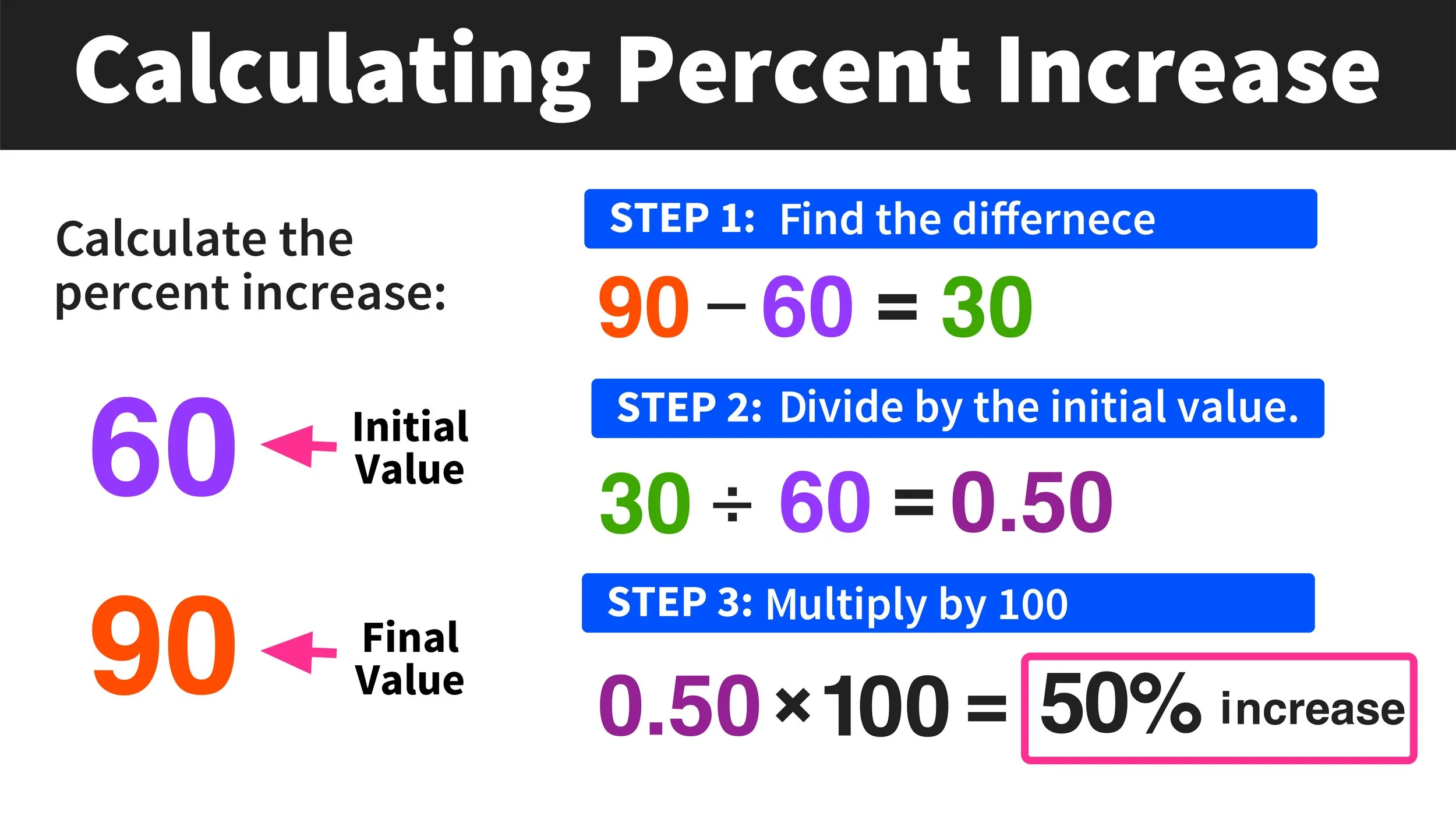
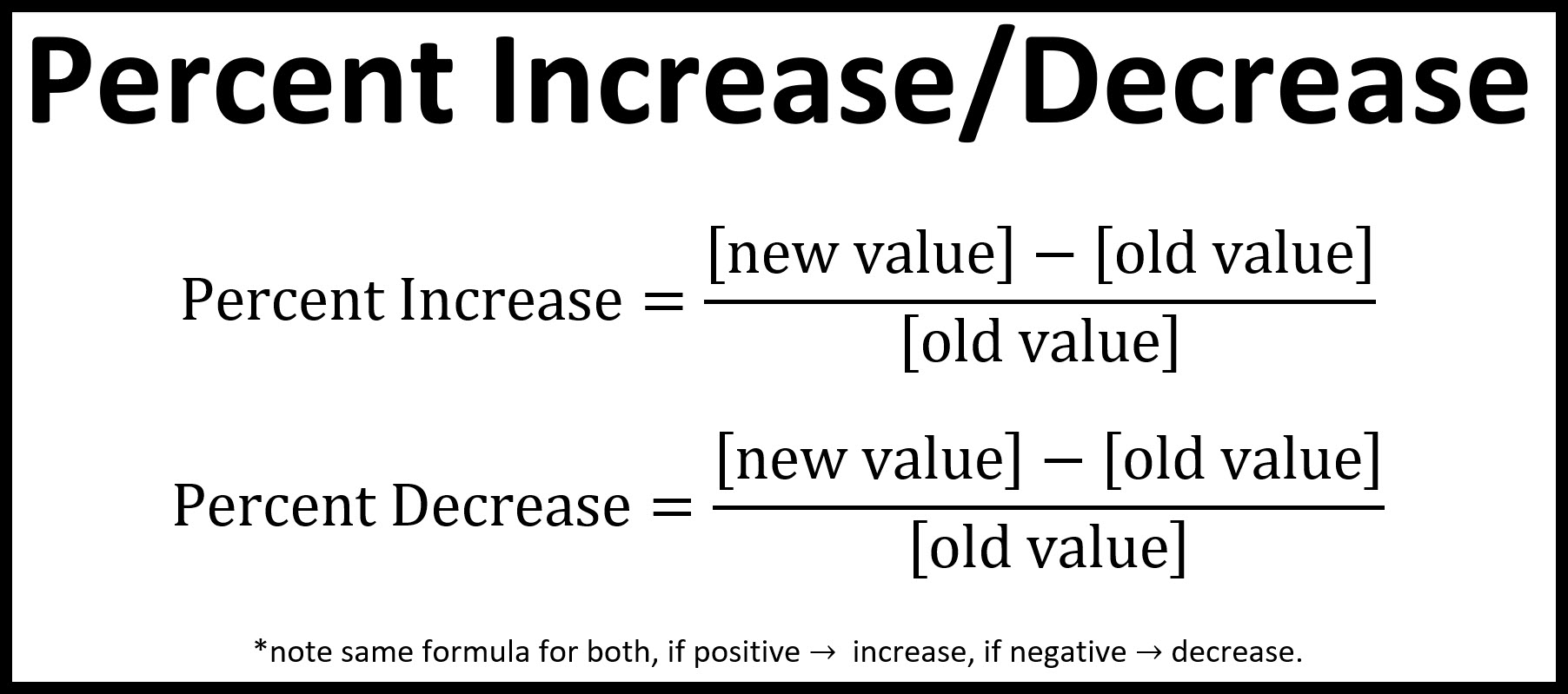
The formula for calculating a percentage increase is straightforward yet powerful:
Percentage Increase = [(New Value - Original Value) / Original Value] * 100
Let’s break this down with a simple example. If an investment portfolio grew from $10,000 (Original Value) to $12,000 (New Value) over a year:
-
Find the absolute increase: $12,000 – $10,000 = $2,000
-
Divide by the original value: $2,000 / $10,000 = 0.20
-
Multiply by 100 to get the percentage: 0.20 * 100 = 20%
This 20% increase signifies that for every dollar initially invested, an additional 20 cents was gained. This metric is far more intuitive and universally applicable than simply stating “I gained $2,000,” especially when comparing different investment amounts.
Why Percentages Matter More Than Absolute Numbers
While an absolute increase tells you the raw dollar amount of change, a percentage increase provides crucial context. A $1,000 increase means very different things if your starting point was $5,000 versus $100,000.
-
Relative Performance: Percentages standardize performance. A small business growing its revenue by $50,000 might be experiencing phenomenal growth if its original revenue was $100,000 (a 50% increase). For a multi-billion-dollar corporation, a $50,000 increase is negligible.
-
Comparison: They facilitate apple-to-apple comparisons. You can compare the growth rate of two different stocks, even if one trades at $50 and the other at $500, by looking at their percentage appreciation.
-
Trend Analysis: Over time, consistent percentage increases or decreases reveal underlying trends more clearly than fluctuating absolute figures, helping to forecast future performance or identify critical junctures.
Applications Across Personal Finance
In personal finance, the concept of percentage increase is pervasive, influencing daily decisions and long-term planning. From evaluating investment returns to understanding the erosion of purchasing power due to inflation, it’s a critical analytical tool.
Tracking Investment Returns and Portfolio Performance
For investors, percentage increase is the primary metric for gauging success. Return on Investment (ROI) is almost always expressed as a percentage, indicating the profitability of an investment relative to its cost. Whether it’s the annual growth of a stock portfolio, the yield from a real estate venture, or the appreciation of a cryptocurrency, percentage returns enable investors to:
-
Compare investment vehicles: Decide between a mutual fund showing a 15% annual return and a bond yielding 5%.
-
Assess risk vs. reward: A higher percentage return often comes with higher risk, guiding diversification strategies.
-
Monitor progress towards financial goals: Track if portfolio growth is on pace to meet retirement targets or other financial milestones.
Navigating Salary Negotiations and Income Growth
When discussing career advancement and compensation, percentage increase is the benchmark. A salary raise of $5,000 sounds good, but if your current salary is $150,000, it’s a 3.33% increase. If your current salary is $50,000, it’s a 10% increase, which carries significantly more impact. Understanding your percentage increase in income relative to inflation and industry averages helps you:
-
Negotiate effectively: Benchmark your raise against cost-of-living increases and market rates for your position.
-
Evaluate job offers: Compare total compensation packages, not just base salaries, by looking at the potential for percentage-based bonuses and long-term incentives.
-
Plan for future expenses: Project how your income growth will impact your ability to save, invest, and manage debt.
Deciphering the Impact of Inflation and Cost of Living
Inflation is, by definition, the percentage increase in the general price level of goods and services over a period. It directly impacts your purchasing power. If your salary increases by 3% but inflation is 5%, your “real” income has effectively decreased by 2%. Understanding this relationship is crucial for:
-
Maintaining living standards: Ensuring your income growth outpaces inflation to maintain or improve your quality of life.
-
Retirement planning: Adjusting retirement savings targets to account for the future erosion of purchasing power.
-
Budgeting: Anticipating how rising costs will affect household expenses and adjusting spending accordingly.
Maximizing Savings and Compound Interest
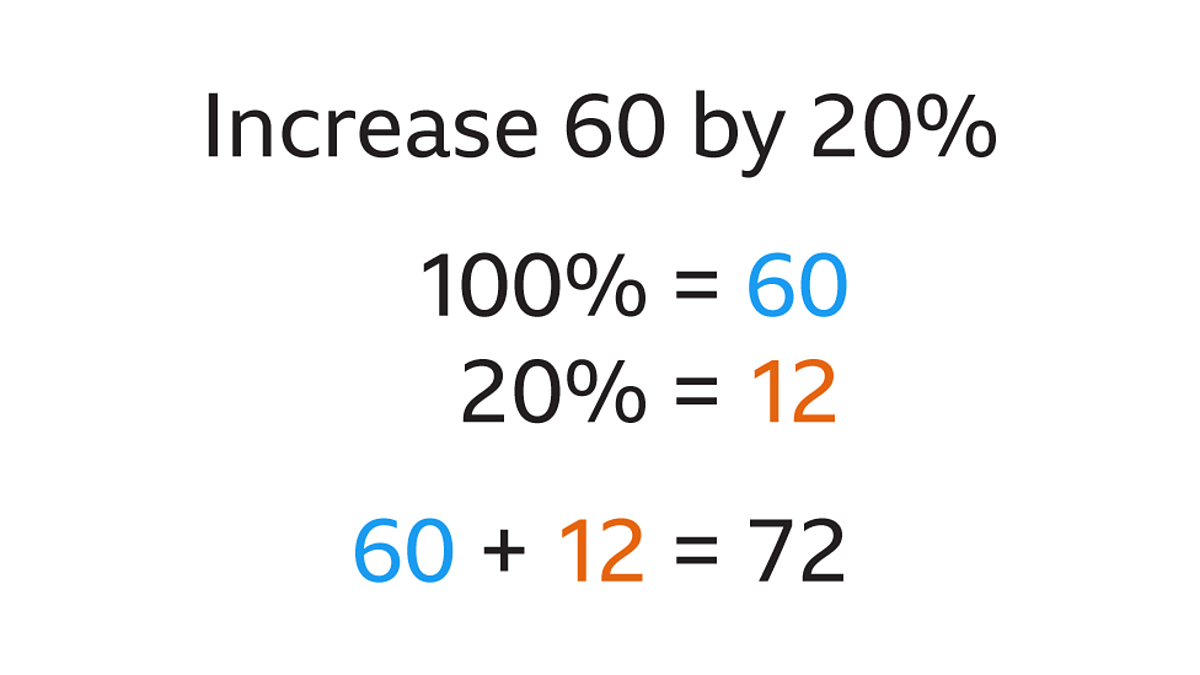
The magic of compound interest is fundamentally a story of percentage increase applied repeatedly. When your savings or investments earn a return, and that return itself starts earning returns, the growth accelerates exponentially. This is a percentage increase on top of a percentage increase. Even a modest annual percentage yield (APY) can lead to substantial wealth accumulation over time, especially when contributions are consistent. Understanding the power of compound interest motivates individuals to start saving early and consistently, appreciating that every percentage point of return makes a significant difference over decades.
Business Finance and Strategic Insights
For businesses, percentage increase is the pulse of performance, dictating strategy, investment, and market positioning. It informs stakeholders, guides operational adjustments, and underscores competitive analysis.
Analyzing Revenue Growth and Profitability
Businesses meticulously track revenue growth as a percentage year-over-year (YoY) or quarter-over-quarter (QoQ). This figure indicates market demand, sales effectiveness, and overall business expansion. Similarly, an increase in profit margins (profit as a percentage of revenue) signals operational efficiency and pricing power. These percentage metrics are vital for:
-
Investor relations: Publicly traded companies report these figures to shareholders as indicators of financial health and future potential.
-
Strategic planning: Identifying which products or services contribute most to growth and where to allocate resources.
-
Competitive benchmarking: Comparing growth rates against industry peers to assess market position and identify areas for improvement.
Evaluating Market Share and Customer Acquisition
The percentage increase in market share reveals a company’s success in expanding its footprint within an industry. This isn’t just about total sales; it’s about sales relative to the overall market size. Similarly, the percentage increase in new customer acquisition highlights the effectiveness of marketing and sales efforts. These metrics directly impact:
-
Marketing strategy: Adjusting campaigns to capture more market share or improve customer acquisition rates.
-
Product development: Tailoring offerings to attract new customer segments or retain existing ones more effectively.
-
Valuation: Higher market share and robust customer growth often translate to higher company valuations.
Understanding Cost Efficiencies and Operational Improvements
An increase in operational efficiency often translates to a percentage decrease in costs relative to revenue or output. For example, reducing manufacturing costs per unit by 10% or decreasing customer service response times by 15% directly impacts the bottom line and improves profitability. Businesses use percentage changes to:
-
Identify areas for optimization: Pinpoint departments or processes where cost reductions are most impactful.
-
Measure project success: Quantify the financial benefits of efficiency initiatives.
-
Improve resource allocation: Ensure that investments in technology or process improvements yield demonstrable financial returns.
Avoiding Common Pitfalls and Misinterpretations
While powerful, percentage increases can be misleading if not interpreted with care. Context, base values, and timeframes are crucial.
The Importance of the Base Value: Starting Points Matter
A common trap is to overlook the “original value” in the calculation. A 100% increase sounds impressive, but if it’s from $1 to $2, it’s not as impactful as a 100% increase from $1 million to $2 million. Always consider the magnitude of the starting point. Conversely, a small percentage increase on a very large base can represent a substantial absolute gain.
Annualized vs. Cumulative Increases
It’s vital to distinguish between annualized percentage increases and cumulative (or total) increases over multiple periods. An investment might show a 50% cumulative return over five years, which sounds significant. However, its annualized return (the average percentage increase per year) would be much lower, about 8.45% per year (using compound annual growth rate formula). Misinterpreting these can lead to unrealistic expectations or flawed comparisons.
Distinguishing Between Real and Nominal Increases
A “nominal” percentage increase refers to the raw percentage change without accounting for inflation. A “real” percentage increase adjusts for inflation, providing a truer picture of growth in purchasing power. For example, a 5% nominal salary increase with 3% inflation is only a 2% real increase. Focusing solely on nominal figures can create a false sense of financial progress.
Leveraging Percentage Increase for Informed Decision-Making
Mastering the calculation and interpretation of percentage increase is not just an academic exercise; it’s a practical skill that underpins sound financial decision-making for every individual and enterprise.
Setting Realistic Financial Goals
Whether planning for retirement, saving for a down payment, or setting business growth targets, expressing goals in terms of percentage increases (e.g., “I want my investment portfolio to grow by an average of 8% annually”) provides concrete, measurable targets. This allows for clear tracking and adjustment of strategies if actual performance deviates from desired percentage growth rates.
Comparing Opportunities and Risks
Every financial decision involves a trade-off. By quantifying potential gains and losses as percentage increases or decreases, individuals and businesses can objectively compare different investment opportunities, evaluate the risk-reward profiles of various ventures, and allocate capital more strategically. A higher percentage return often implies a higher percentage of risk, necessitating a balanced approach.
Communicating Financial Performance Effectively
Clear and concise communication of financial data is paramount. Using percentage increases allows for the effective presentation of performance to stakeholders, investors, employees, or family members. It simplifies complex financial narratives into understandable growth metrics, fostering transparency and building confidence in financial management and strategic direction. Ultimately, understanding “what percentage increase is” transforms raw numbers into actionable intelligence, guiding the path to greater financial prosperity and stability.
aViewFromTheCave is a participant in the Amazon Services LLC Associates Program, an affiliate advertising program designed to provide a means for sites to earn advertising fees by advertising and linking to Amazon.com. Amazon, the Amazon logo, AmazonSupply, and the AmazonSupply logo are trademarks of Amazon.com, Inc. or its affiliates. As an Amazon Associate we earn affiliate commissions from qualifying purchases.