
In the complex world of personal and business finance, the ability to interpret numbers is the foundation of success. Among all mathematical concepts, the percentage is perhaps the most ubiquitous and vital. Whether you are calculating the interest on a mortgage, determining the profit margin of a new startup, or evaluating the impact of inflation on your savings, percentages provide a universal language for comparison and growth. The “percentage calculator” is more than just a digital utility; it is a fundamental financial tool that translates raw data into actionable insights. Mastering its use is a prerequisite for anyone looking to achieve financial independence and professional efficiency.
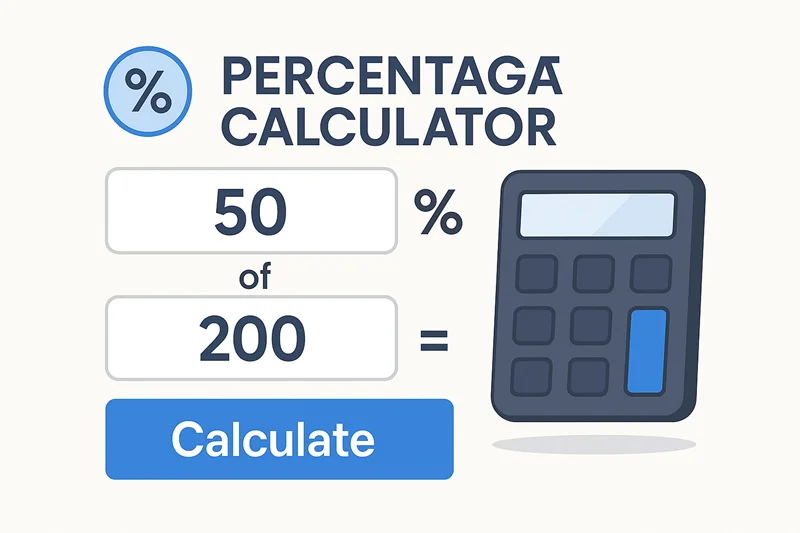
The Role of Percentage Calculations in Personal Finance
Personal finance is often a game of ratios. Understanding how your money moves requires looking past the raw dollar amounts to see the percentages that govern your wealth. A percentage calculator allows individuals to move from reactive spending to proactive wealth management.
Budgeting with the 50/30/20 Rule
One of the most effective ways to use a percentage calculator in daily life is through the lens of the 50/30/20 budgeting rule. This framework suggests that 50% of your after-tax income should go to needs, 30% to wants, and 20% to savings or debt repayment. Without a reliable way to calculate these percentages, many people find themselves “income rich but cash poor.” By inputting your monthly net pay into a percentage calculator, you can instantly see the ceiling for your lifestyle expenses. For instance, if you earn $5,000 a month, the calculator quickly tells you that your “wants” budget is strictly $1,500. This clarity prevents the common “lifestyle creep” that sabotages long-term financial goals.
Calculating Discounts and Sales Tax
The psychological allure of a sale often clouds rational judgment. Retailers use percentages to make deals look more attractive than they might be. A “35% off” tag on a $200 item requires a quick calculation to understand the true cost. Using a percentage calculator—or understanding the formula behind it—allows a consumer to see that the item still costs $130 before tax. Furthermore, in regions where sales tax is added at the register, knowing the percentage allows for accurate “landed cost” estimations. This helps in maintaining a strict budget during shopping trips, ensuring that “deals” do not result in overspending.
Managing Debt and Interest Rates
Perhaps the most critical application of percentages in personal finance is the management of debt. Credit cards, student loans, and mortgages are all defined by their Annual Percentage Rate (APR). A small difference in percentage can result in thousands of dollars in interest over the life of a loan. For example, using a percentage calculator to compare a 4.5% mortgage versus a 5.2% mortgage reveals a massive discrepancy in total interest paid over 30 years. Understanding the percentage allows borrowers to prioritize high-interest debt—often referred to as the “debt avalanche” method—which mathematically minimizes the amount of money lost to lenders.
Business Finance and Profitability Metrics
For entrepreneurs and corporate managers, the percentage calculator is a daily necessity. In business, raw revenue is a “vanity metric,” while percentages represent “sanity metrics.” Understanding the relationship between costs, prices, and profits is the only way to ensure a business remains sustainable.
Gross vs. Net Profit Margins
The health of a business is often measured by its margins. The gross profit margin (calculated as [Revenue – Cost of Goods Sold] / Revenue) tells a business owner how efficiently they are producing their product. However, the net profit margin is the ultimate truth-teller, as it accounts for all operating expenses, taxes, and interest. A percentage calculator helps a business owner realize that while they may have $1 million in sales, a 5% net profit margin means they only took home $50,000. This realization often leads to better cost-cutting strategies and more aggressive pricing models.
Markup vs. Margin: Avoiding Costly Pricing Errors
A common mistake in business finance is confusing markup with margin. Markup is the percentage added to the cost to reach a selling price, while margin is the percentage of the selling price that is profit. If an item costs $80 and you want a 20% profit margin, you cannot simply add a 20% markup. A 20% markup on $80 leads to a $96 sale price, which results in only a 16.6% margin. Using a dedicated percentage calculator for pricing ensures that businesses do not accidentally underprice their services, which is a leading cause of small business failure.
Return on Investment (ROI) Analysis
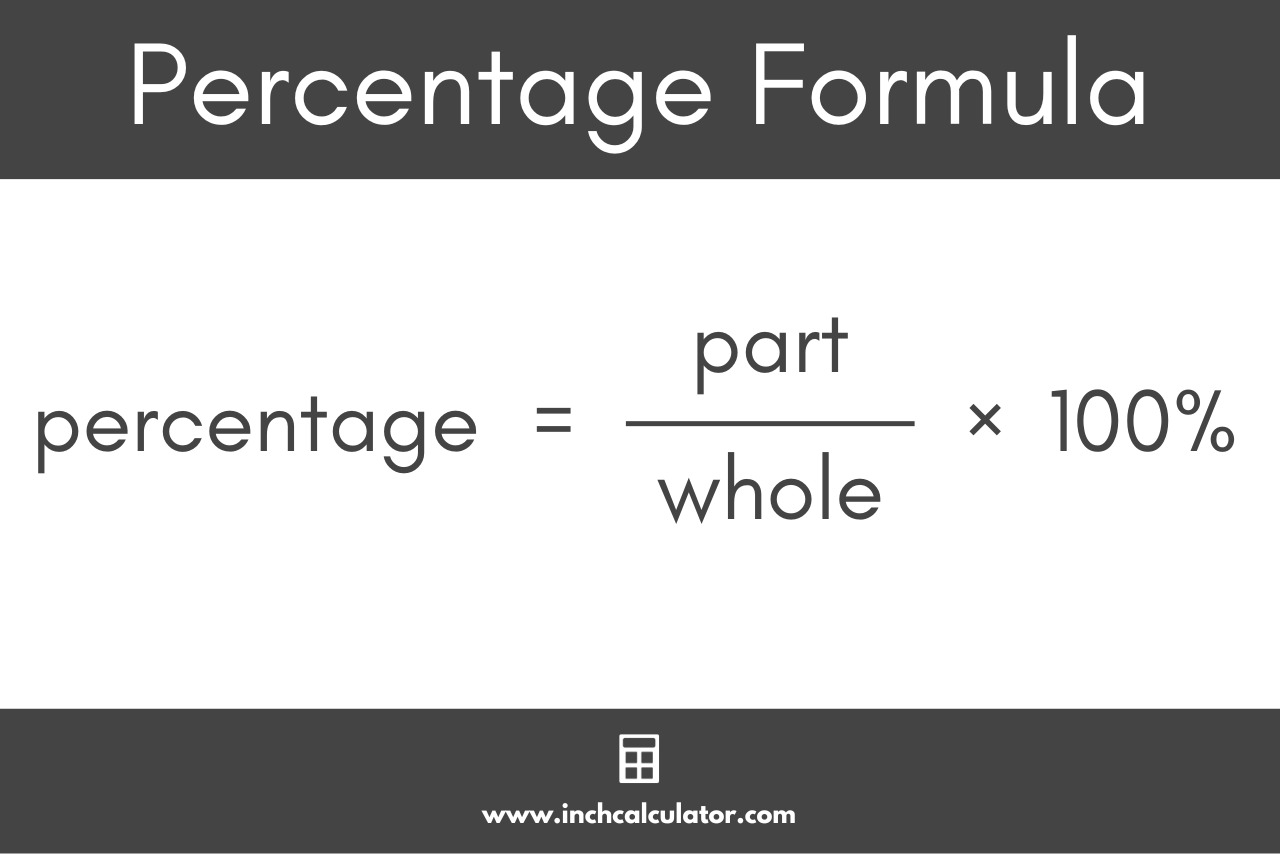
Every dollar spent in a business should be viewed as an investment. Whether it is a marketing campaign, a new piece of equipment, or hiring a new employee, the ROI percentage is the standard for success. The formula (Net Profit / Cost of Investment x 100) is easily handled by a percentage calculator. If a $1,000 ad campaign brings in $1,500 in profit, the 50% ROI indicates a successful venture. Comparing the ROI percentages of different departments allows leadership to allocate capital to the most efficient areas of the company, maximizing overall growth.
Investment Strategies and Growth Tracking
In the realm of investing, percentages are the primary tool for measuring performance and managing risk. Whether you are a retail investor with a small brokerage account or a professional fund manager, the percentage calculator is your most used instrument.
Compound Interest and Yield Percentages
Albert Einstein famously called compound interest the “eighth wonder of the world.” The power of compounding is entirely dependent on the percentage rate of return and the frequency of compounding. An investor using a percentage calculator can project the future value of their portfolio. For instance, understanding the difference between a 7% average annual return and a 10% return over 30 years is staggering; on a $10,000 investment, the 3% difference results in a gap of over $100,000 in the final balance. Yield percentages, such as dividend yields on stocks or coupon rates on bonds, also provide a way to compare the income-generating potential of different assets regardless of their share price.
Portfolio Diversification and Asset Allocation
Modern Portfolio Theory suggests that risk can be mitigated through diversification. This is expressed through percentages. An investor might decide on an allocation of 60% stocks, 30% bonds, and 10% cash. As the market moves, these percentages shift. If stocks perform well, they might grow to represent 70% of the portfolio. A percentage calculator is used during the “rebalancing” process to determine exactly how much of an asset must be sold or bought to return to the original target allocation. This disciplined, percentage-based approach removes emotion from investing and forces the investor to “buy low and sell high.”
Analyzing Market Volatility
Percentages provide necessary context during market fluctuations. A 500-point drop in the Dow Jones Industrial Average sounds catastrophic, but if the index is at 35,000 points, that is only a 1.4% decrease—a normal day of trading. Conversely, a 500-point drop when the index is at 10,000 would be a 5% crash. By converting points into percentages using a calculator, investors can maintain a level head and avoid panic-selling. Furthermore, understanding the “asymmetric nature of loss” is vital: if a stock drops 50% in value, it requires a 100% gain just to get back to the original price. This mathematical reality highlights the importance of risk management and stop-loss percentages.
Maximizing Efficiency with Digital Financial Tools
While the formulas for percentages are relatively simple, the volume of calculations required in modern finance makes manual math impractical and prone to error. Digital percentage calculators and integrated financial tools have become the standard for ensuring accuracy and speed.
Automating Calculations for Error Reduction
In financial reporting, a single decimal error can lead to disastrous consequences. Digital percentage calculators eliminate human error in repetitive tasks. For accountants and financial analysts, using software that automatically computes percentage changes between fiscal quarters ensures that the data presented to stakeholders is reliable. These tools often include specialized functions, such as “percentage increase/decrease” buttons, which simplify the process of comparing year-over-year growth.
Integration with Spreadsheets and Accounting Software
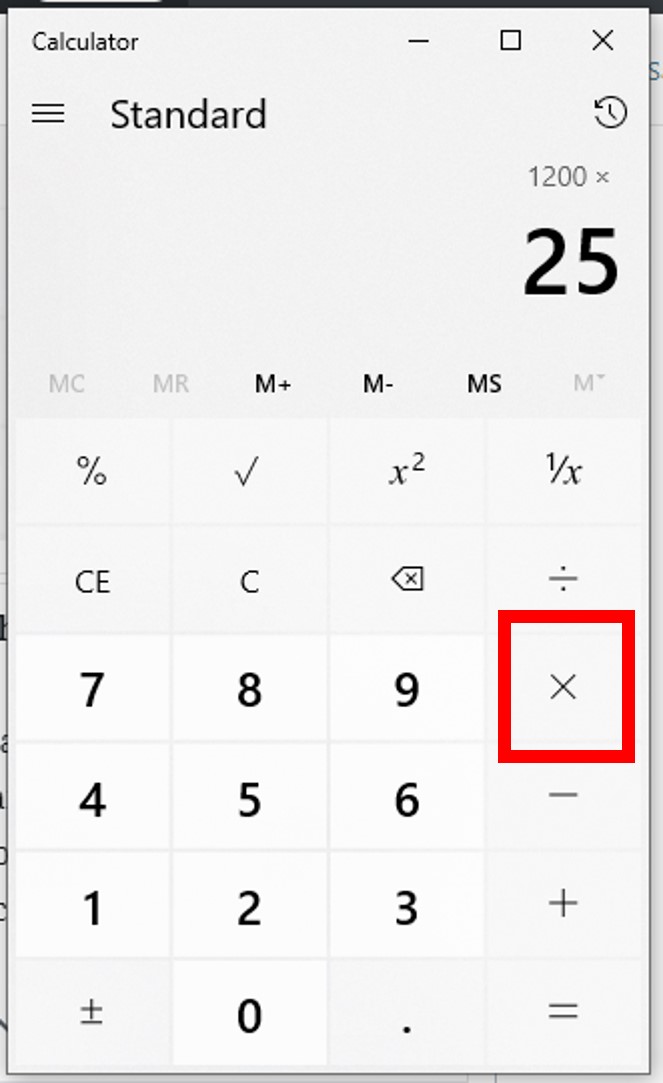
For most professionals, the “percentage calculator” isn’t just a standalone app; it is integrated into platforms like Microsoft Excel, Google Sheets, or QuickBooks. Learning to use percentage formulas within these platforms allows for the analysis of massive datasets. For example, a business can instantly calculate the percentage of total revenue contributed by each of its 1,000 products. This macro-level view, powered by automated percentage calculations, is what allows modern corporations to pivot quickly in response to market trends.
The Value of “What-If” Scenarios
Digital tools allow users to run “what-if” simulations by adjusting percentages. A homeowner can use a mortgage calculator to see how an extra 2% in principal payment each month affects the total length of the loan. A business owner can see how a 3% increase in labor costs will impact their bottom line. The ability to visualize these percentage-based outcomes instantly provides a competitive advantage in both life and business, turning the percentage calculator into a tool for strategic foresight.
In conclusion, the percentage calculator is an indispensable ally in the pursuit of financial mastery. It strips away the noise of large numbers and reveals the underlying trends and truths of our financial lives. By mastering percentage calculations in the contexts of personal budgeting, business operations, and investment strategy, individuals and organizations can make more informed, data-driven decisions that lead to long-term prosperity. In the world of money, those who understand the percentages are the ones who ultimately control the math.
aViewFromTheCave is a participant in the Amazon Services LLC Associates Program, an affiliate advertising program designed to provide a means for sites to earn advertising fees by advertising and linking to Amazon.com. Amazon, the Amazon logo, AmazonSupply, and the AmazonSupply logo are trademarks of Amazon.com, Inc. or its affiliates. As an Amazon Associate we earn affiliate commissions from qualifying purchases.