
The relationship between the United States military and the broader population is a subject often discussed in terms of national defense, civic duty, and geopolitical influence. However, when viewed through the lens of personal finance, human capital, and the broader economic landscape, the statistics paint a compelling picture of a specialized, highly integrated workforce. Understanding the numerical reality of military service is essential for anyone analyzing federal budget allocation, the stability of the labor market, and the financial ecosystem surrounding veteran benefits and public sector employment.
The Statistical Reality of Military Service
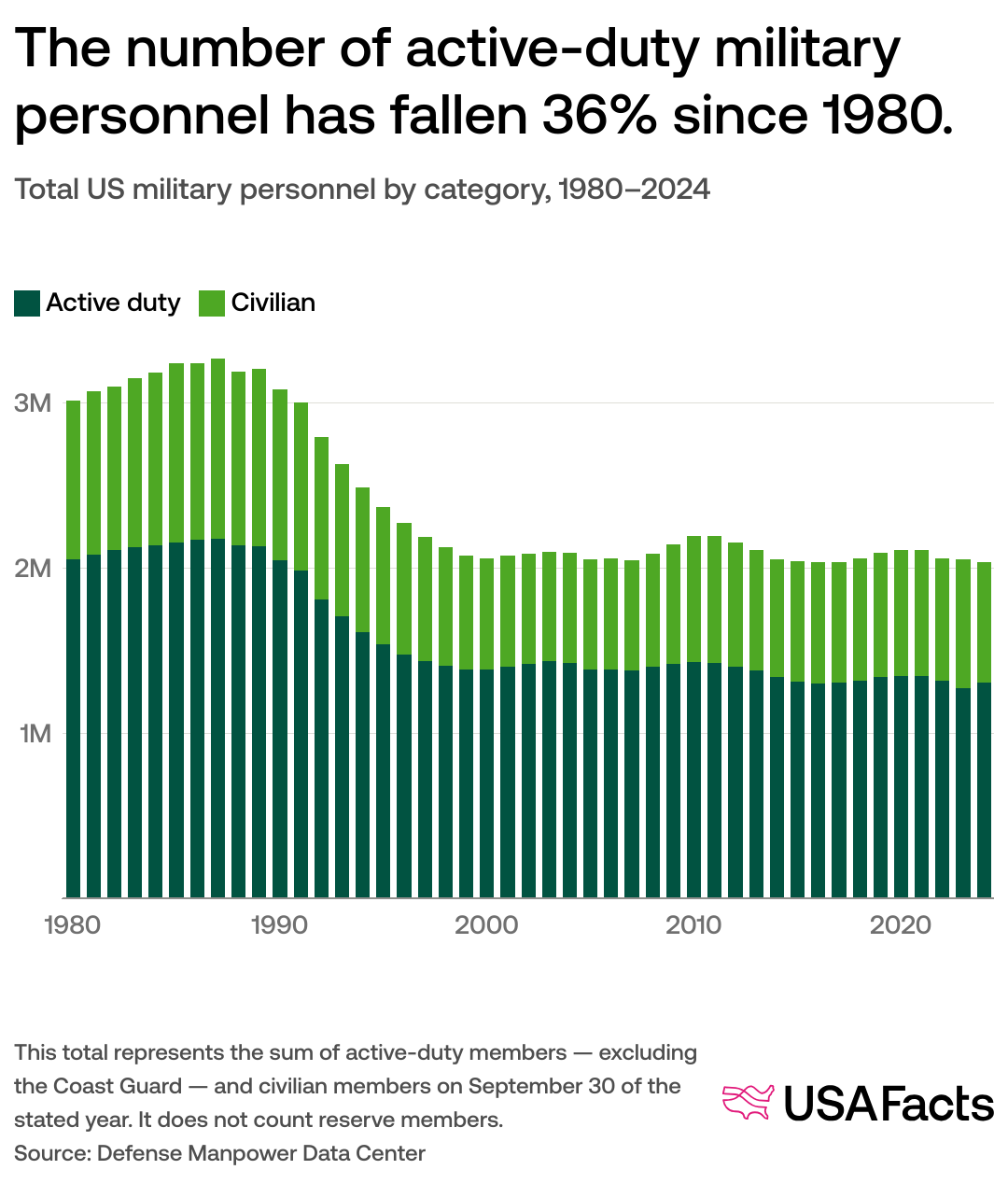
To grasp the magnitude of the U.S. military, one must first look at the raw data provided by the Department of Defense and the U.S. Census Bureau. As of recent fiscal reporting, the active-duty military force consists of approximately 1.3 million service members. When you add the nearly 800,000 members of the Guard and Reserve components, the total military force approaches 2.1 million individuals.

Comparing Service to the General Population
With a total U.S. population hovering around 335 million, the active-duty force accounts for less than 0.5% of the total citizenry. Even when including the National Guard and Reserve forces, the total military footprint remains approximately 0.6% to 0.7% of the total population. This figure is historically low compared to the World War II era, where the military-to-population ratio was significantly higher. From a financial perspective, this small fraction represents a highly concentrated segment of the federal budget. The sheer cost of maintaining this force—including payroll, training, advanced technology, and logistics—drives a significant portion of federal discretionary spending.
The Shrinking Professional Footprint
The transition to an all-volunteer force in the 1970s fundamentally shifted the financial model of the military. It moved from a low-pay, high-conscription model to a competitive compensation model designed to attract professional talent. Today, the “cost per service member” has risen dramatically, as the military competes with the private sector for engineers, cyber-security experts, and medical professionals. Consequently, the relatively small percentage of the population currently serving is supported by a significant per-capita investment, making the military a massive employer that influences national income trends and career pathing.
Financial Implications of a Professional Force
The military does not exist in a vacuum; it is a massive economic engine. For the individual, military service is often a primary vehicle for wealth accumulation, especially for those from lower-income backgrounds. The financial benefits—ranging from the Basic Allowance for Housing (BAH) and tax-advantaged pay to the Post-9/11 GI Bill—create a unique financial planning profile that differs significantly from civilian wealth-building strategies.
Compensation and the “Hidden” Paycheck
When analyzing the financial statistics of military service, one must look beyond the base salary. Military compensation includes non-taxable allowances for food and housing, which can increase the effective salary significantly. For financial planners, military personnel represent a unique demographic. The stability of a government salary, coupled with robust retirement options like the Blended Retirement System (BRS), provides a floor for financial security that is rare in the private sector. The 0.6% of the population serving in the military effectively acts as a protected class within the national economy, largely insulated from the boom-and-bust cycles that impact private sector labor markets.
The Lifetime Value of Veteran Status
The financial benefits of service extend well beyond the years in uniform. The Department of Veterans Affairs (VA) manages a vast portfolio of financial services, including VA home loans—which require no down payment—and disability compensation for those injured during service. These financial instruments represent a long-term liability for the federal government, but a significant asset for the individual. For a significant portion of that 0.6%, military service is the cornerstone of a multi-generational wealth strategy, providing education funding and preferential access to the mortgage market that serves as the foundation for the American middle-class experience.
The Economic Impact of the Military Workforce
Beyond personal finance, the military’s presence in the economy creates a massive ripple effect. Because the percentage of the population serving is so small, the military relies heavily on the “Industrial Base”—a network of private corporations that support the defense sector. This creates an interesting dynamic where the tiny fraction of the population in uniform generates outsized revenue for the civilian workforce.
The Defense-Industry Talent Pipeline
The military acts as a massive training ground for the private sector. Every year, thousands of service members transition out of the military and into the civilian labor market. These individuals possess specialized skills in logistics, project management, telecommunications, and aviation. From an economic standpoint, the military serves as a massive investment vehicle for human capital. By training a small percentage of the population in high-demand, high-tech skills, the federal government inadvertently subsidizes the labor costs of the private tech and manufacturing sectors.
Budgetary Allocation and Public Debt
The cost of maintaining a military force of this size is one of the largest line items in the federal budget. With defense spending often exceeding $800 billion annually, the financial burden placed on the remaining 99.4% of the population is substantial. Understanding this ratio helps explain the intense political debate regarding the “Military-Industrial Complex.” When such a small percentage of the population is responsible for the defense of such a vast nation, the pressure on the budget to prioritize high-tech automation over sheer troop volume increases. This shift toward high-cost, high-tech platforms—like the F-35 program or autonomous naval drones—is a direct result of trying to maximize the effectiveness of a force that makes up less than 1% of the total citizenry.
Future Trends in Military Recruitment and Spending
The demographic reality of the U.S. means that the percentage of the population serving in the military is unlikely to grow significantly in the near future. Challenges in recruitment, coupled with a shrinking pool of eligible candidates due to health and educational requirements, are forcing a rethink of how the military is staffed and financed.
The Shift Toward Automation
As the military finds it harder to recruit that 0.6%, the financial focus is shifting from “heads” to “hardware.” We are seeing an increase in investment toward AI-driven software, cyber-warfare capabilities, and remote-operated systems. This is a deliberate strategy to maintain military superiority without needing to expand the active-duty headcount. For investors, this represents a pivot in the defense sector. The focus is moving away from traditional defense contractors toward software, data analytics, and cloud computing firms that can facilitate a smaller, more lethal force.
The Financial Future of the All-Volunteer Force
The financial sustainability of the current model is a point of contention for many economists. As the cost of recruiting and retaining high-skill personnel rises, the military is increasingly adopting “retention bonuses” and “lateral entry” programs to compete with private-sector wages. The days of relying on patriotic fervor alone to fill the ranks are fading; today’s military is increasingly forced to compete as a professional employer in a tight labor market. The 0.6% of the population in uniform are no longer just soldiers; they are high-value human assets in a globalized competition for top-tier technical talent.
In conclusion, while the percentage of the U.S. population in the military remains below 1%, its influence on the national economy, federal budget, and personal wealth development is profound. By understanding the intersection of military service, professional development, and financial benefit, one gains a clearer view of the internal mechanics that allow the U.S. to maintain its defense posture while navigating the complexities of a modern, technology-driven global economy. The military remains a small, highly disciplined segment of the population that functions as both a guardian of the nation and an engine of economic mobility.
aViewFromTheCave is a participant in the Amazon Services LLC Associates Program, an affiliate advertising program designed to provide a means for sites to earn advertising fees by advertising and linking to Amazon.com. Amazon, the Amazon logo, AmazonSupply, and the AmazonSupply logo are trademarks of Amazon.com, Inc. or its affiliates. As an Amazon Associate we earn affiliate commissions from qualifying purchases.