
Elon Musk’s name is inextricably linked with Tesla, the pioneering electric vehicle and clean energy company. As CEO, product architect, and the public face of the company, his vision has driven its incredible growth and market valuation. However, the exact financial stake a founder retains in a company, particularly one as dynamic and publicly scrutinized as Tesla, is a complex and ever-evolving metric. It’s not merely a static number; it reflects compensation structures, strategic financial decisions, tax implications, and the delicate balance of personal wealth versus corporate control. Understanding Elon Musk’s ownership percentage in Tesla offers crucial insights into both his personal financial landscape and the company’s governance and future trajectory.
This exploration delves into the financial mechanics of founder equity, examining how Musk’s ownership has fluctuated, the enormous financial leverage it represents, and the strategic considerations that underpin his decisions to buy, hold, or sell shares. From incentive-laden compensation packages to the liquidity needs of an entrepreneur funding multiple ambitious ventures, the story of Elon’s Tesla stake is a masterclass in modern business finance and personal wealth management on an unprecedented scale.
The Shifting Sands of Founder Equity: Elon Musk’s Tesla Stake
The question of “what percent of Tesla does Elon own?” is far from a simple query with a single, unchanging answer. Founder equity, particularly in high-growth, publicly traded companies, is dynamic, influenced by stock options, grants, share sales, and the issuance of new shares. Elon Musk’s ownership journey at Tesla is a prime example of this complex financial evolution, reflecting both his enormous contribution to the company and the intricate financial engineering required to manage such a vast holding.
The Current Snapshot: Unpacking the Latest Figures
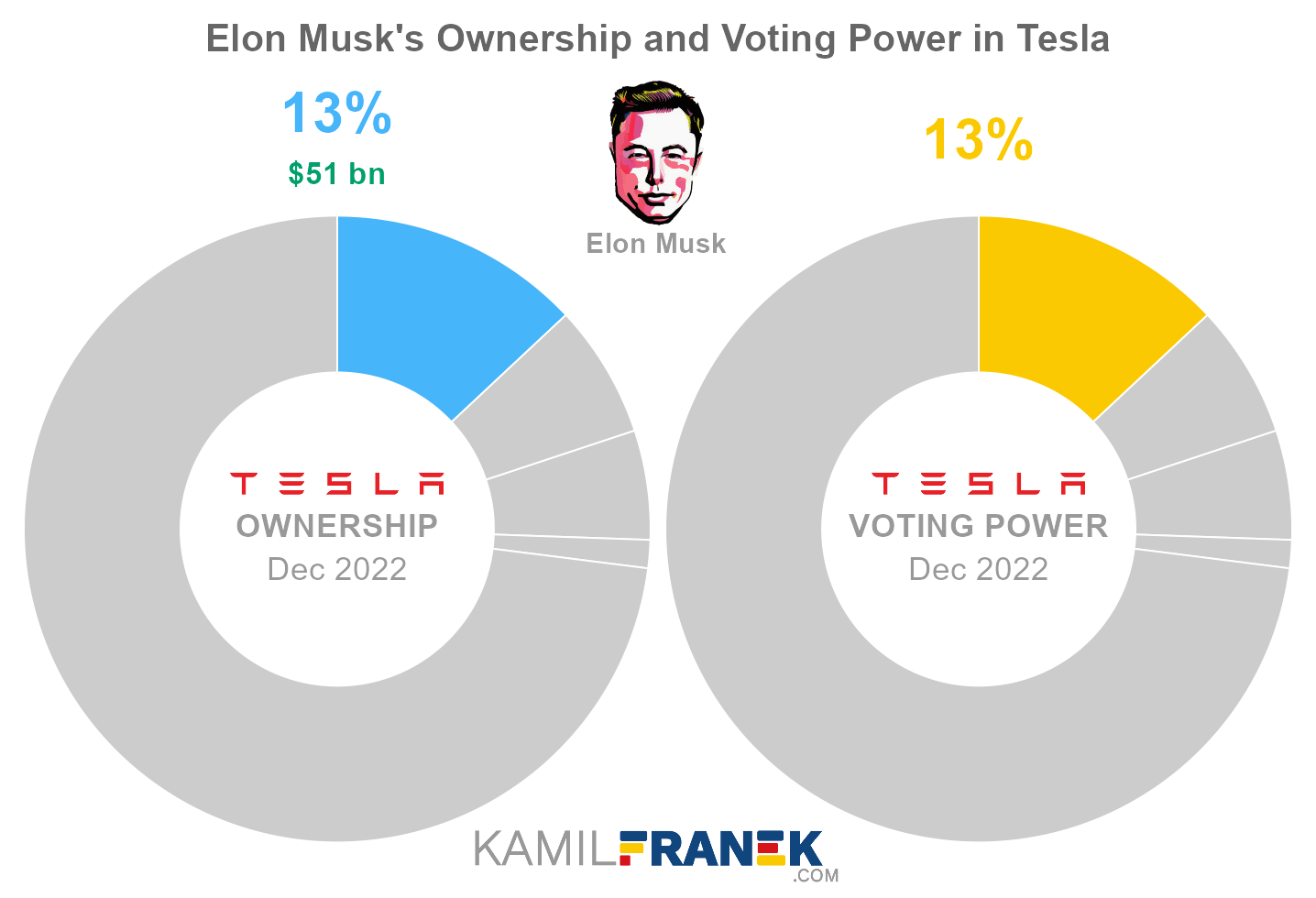
As of early 2024, after a period of significant sales in 2021 and 2022 and subsequent acquisitions of shares through performance-based options, Elon Musk’s direct ownership in Tesla hovers around 13% to 14% of the company’s outstanding shares. This figure includes both the common stock he holds outright and shares he has acquired through the exercise of stock options. It’s important to note that this percentage can vary slightly based on the specific date of reporting, company filings, and the timing of any recent transactions or option exercises. For instance, following the approval of his 2018 performance award compensation package, which faced initial legal challenges, there was an anticipation that he could potentially own over 20% of the company if all tranches were fully vested and exercised. The most accurate real-time data is typically found in Tesla’s quarterly and annual filings with the U.S. Securities and Exchange Commission (SEC), such as Form 10-K and Form 10-Q, specifically looking at the proxy statements (DEF 14A) which detail executive compensation and beneficial ownership.
A Historical Perspective: Evolution of Ownership
Musk’s ownership percentage has seen significant shifts since Tesla’s IPO in 2010. At the time of the IPO, he held a much larger percentage, albeit of a much smaller company valuation. Over the years, as Tesla grew and issued more shares to raise capital or compensate employees, his percentage naturally saw some dilution. However, this dilution was often offset by the exercise of substantial stock options awarded as part of his compensation packages. The most notable shifts occurred during periods of immense stock price appreciation, which allowed him to exercise deeply in-the-money options. For example, his 2012 compensation package and the subsequent 2018 package were designed to be highly incentivizing, rewarding him with massive tranches of stock options upon the achievement of ambitious market capitalization and operational milestones. These awards, once vested and exercised, significantly increased his absolute number of shares, even as the total outstanding share count of Tesla also grew. Conversely, his share percentage saw a notable dip in late 2021 and throughout 2022 when he sold billions of dollars worth of Tesla stock, primarily to fund his acquisition of Twitter (now X) and to cover significant tax liabilities associated with exercising stock options. These sales were strategic financial moves that reduced his direct percentage ownership but unlocked substantial liquidity.
The Vesting Schedule: Options, Awards, and Dilution
A key financial mechanism influencing Elon’s ownership is the vesting schedule of his stock options and performance awards. Unlike a traditional salary, a significant portion of Musk’s compensation from Tesla has been structured around long-term, performance-based stock option grants. The most famous example is the 2018 compensation plan, which awarded him twelve tranches of options, each vesting upon Tesla achieving specific market capitalization milestones (e.g., $100 billion increases in market cap) and operational targets (e.g., revenue and adjusted EBITDA). Each tranche allowed him to purchase a significant number of Tesla shares at a deeply discounted strike price. This structure tied his personal wealth directly to the creation of immense shareholder value, aligning his financial interests with those of long-term investors.
While these grants increase his absolute share count and potential ownership percentage, the ongoing issuance of shares for employee stock options and general capital raises can lead to “dilution.” Dilution occurs when a company issues new shares, effectively reducing the ownership percentage of existing shareholders if they do not purchase additional shares to maintain their stake. Tesla, being a growth company that has historically relied on equity-based compensation and capital raises, has experienced share dilution over time. Musk’s challenge, and achievement, has been to increase his number of shares at a rate that either mitigates or even outpaces this general dilution, primarily through the successful vesting and exercise of his colossal performance awards.
Beyond Percentage: The Financial Clout of Elon’s Holdings
While the percentage of ownership provides a snapshot, the true financial power and influence stemming from Elon Musk’s Tesla stake extends far beyond a simple numerical value. It encompasses the sheer market valuation of his holdings, the strategic decisions behind share sales, and the profound impact on corporate governance. His ownership is not just a personal asset; it’s a dynamic tool that shapes capital allocation, market perception, and the company’s strategic direction.
Valuing the Visionary’s Wealth: Billions in Tesla Stock
Elon Musk’s wealth is predominantly tied to his equity holdings in Tesla. Even at 13-14% ownership, given Tesla’s multi-hundred-billion-dollar market capitalization, his stake is worth tens of billions of dollars. This makes him one of the wealthiest individuals globally. The value of his holdings fluctuates daily with Tesla’s stock price, creating immense personal wealth swings. For investors, understanding this concentration of wealth is key. It means that Musk’s personal financial fortunes are heavily correlated with Tesla’s performance, providing a strong incentive for him to drive the company to ever greater success. This direct alignment of personal net worth with company performance is a powerful signal to the market, often interpreted as a vote of confidence in Tesla’s future. The scale of this wealth also means that any major financial decision by Musk regarding his Tesla shares has ripple effects across global financial markets.
Strategic Sales and Tax Implications: Funding Other Ventures
Musk has famously sold large blocks of Tesla stock on several occasions. These sales are not typically driven by a lack of confidence in Tesla, but rather by strategic financial necessities and opportunities. A significant portion of these sales, particularly after exercising stock options, are mandated to cover income tax liabilities. When executive stock options are exercised, the difference between the strike price and the market price of the stock is considered taxable income, often at the highest marginal tax rates. To cover these immense tax bills—often running into billions of dollars—executives like Musk frequently sell a portion of the newly acquired shares.
Beyond tax obligations, Musk’s stock sales have also served to fund his other ambitious ventures, most notably the acquisition of Twitter (now X). This was a multi-billion dollar undertaking that required substantial personal capital contributions, necessitating large-scale liquidations of his Tesla holdings. These sales, while providing Musk with critical liquidity for his other entrepreneurial pursuits, sometimes led to temporary downward pressure on Tesla’s stock price due to the sheer volume of shares hitting the market. For financial analysts, tracking these sales provides insight into Musk’s capital allocation strategies across his portfolio of companies and his personal financial planning.
Shareholder Influence: Voting Power and Control
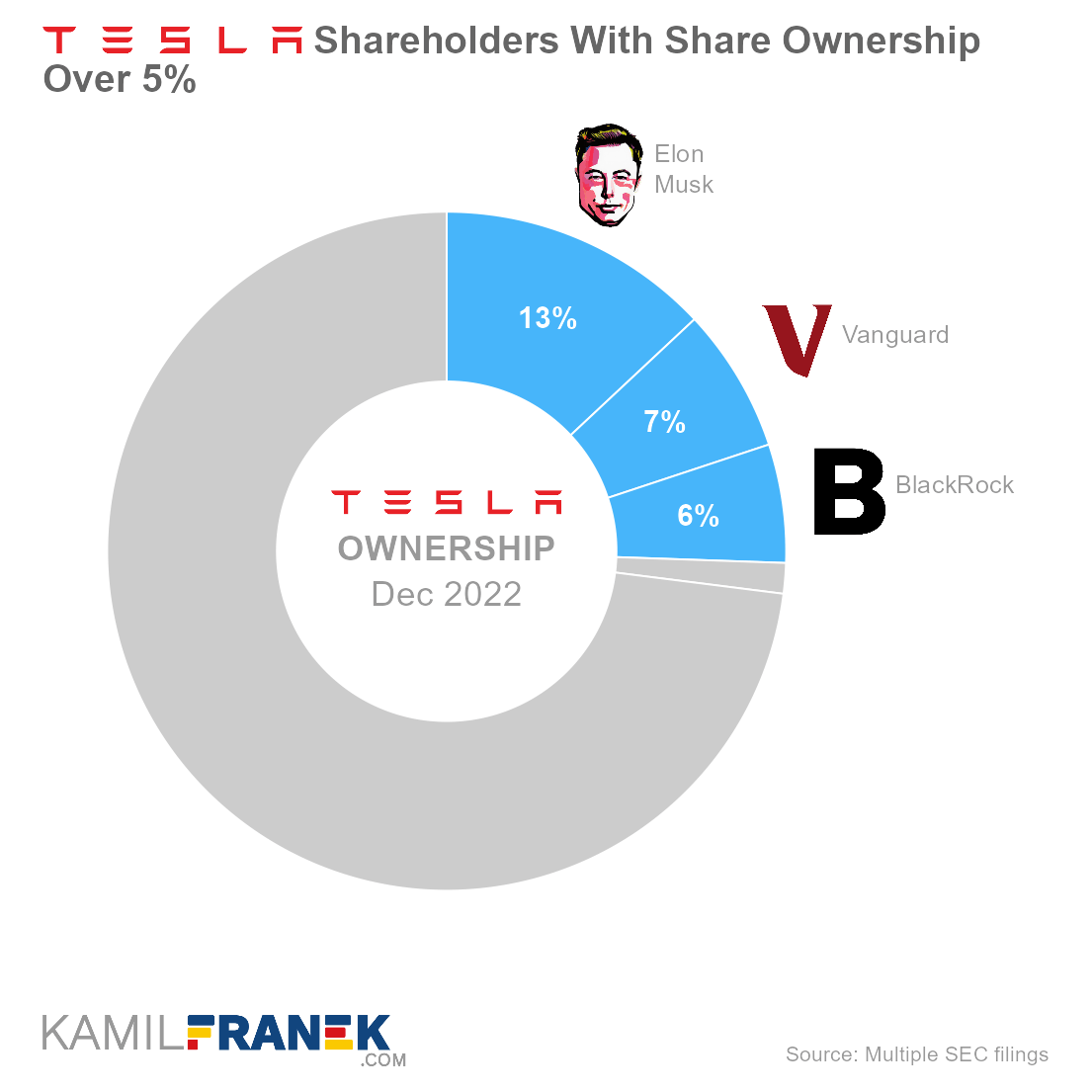
While his current direct ownership percentage (around 13-14%) is not a majority stake, Elon Musk’s influence over Tesla is absolute. This is due to a combination of factors: his unparalleled leadership role as CEO and product visionary, his substantial voting power, and the broad support he enjoys from retail investors and many institutional shareholders who believe in his long-term vision. His stock ownership represents significant voting rights, allowing him to heavily influence board elections and major corporate decisions that require shareholder approval. While he doesn’t own 51% or more of the company, his leadership, coupled with his significant stake, makes him the de facto controlling shareholder. Moreover, his public persona and direct communication channels (like X) give him a unique platform to sway investor sentiment and strategic direction, effectively extending his influence beyond mere voting percentage. This level of founder control, even without outright majority ownership, is a critical element in understanding Tesla’s governance structure and strategic agility.
The Financial Mechanics Behind Elon’s Ownership Decisions
Elon Musk’s decisions regarding his Tesla shares are rooted in a sophisticated understanding of financial mechanics, balancing personal wealth growth with corporate incentives and market realities. His approach offers a compelling case study in how founders manage their most significant asset within a public company context.
Compensation Structures: Incentivizing Long-Term Growth
Musk’s compensation at Tesla, particularly the 2018 performance award, is a financial marvel designed to radically align his personal financial success with Tesla’s market capitalization growth. Instead of a salary or traditional bonuses, this structure awarded him options to buy Tesla stock at a fixed price, vesting only if Tesla achieved extraordinarily aggressive market cap milestones, along with equally ambitious revenue and profitability targets. This “all or nothing” approach created an unprecedented incentive to drive long-term shareholder value. From a financial perspective, this meant Musk literally had to increase Tesla’s market cap by hundreds of billions of dollars to unlock each tranche of his compensation. This model is often cited as a blueprint for executive compensation in high-growth, innovation-driven companies, ensuring that the CEO’s personal financial rewards are directly proportional to the wealth created for all shareholders. The success of this package highlights a financial strategy that moves beyond short-term metrics to foster enduring, transformational growth.
Market Dynamics and Personal Liquidity Needs
Musk’s decisions to sell Tesla stock are often influenced by prevailing market dynamics and his personal liquidity requirements. For example, when Tesla’s stock price experienced parabolic surges, it presented opportune moments to exercise options and sell shares at highly favorable prices. These periods allowed him to maximize the financial benefit from his compensation packages. As mentioned earlier, significant liquidity is required not only for personal investment (like the X acquisition) but also for the substantial tax obligations associated with exercising stock options. Managing such immense tax burdens often necessitates selling a portion of the exercised shares, a common practice among executives. This interplay between market highs, tax events, and external investment opportunities dictates the timing and volume of his share transactions, making them a fascinating subject for financial analysis.
The Interplay with Other Investments (e.g., SpaceX, XAI)
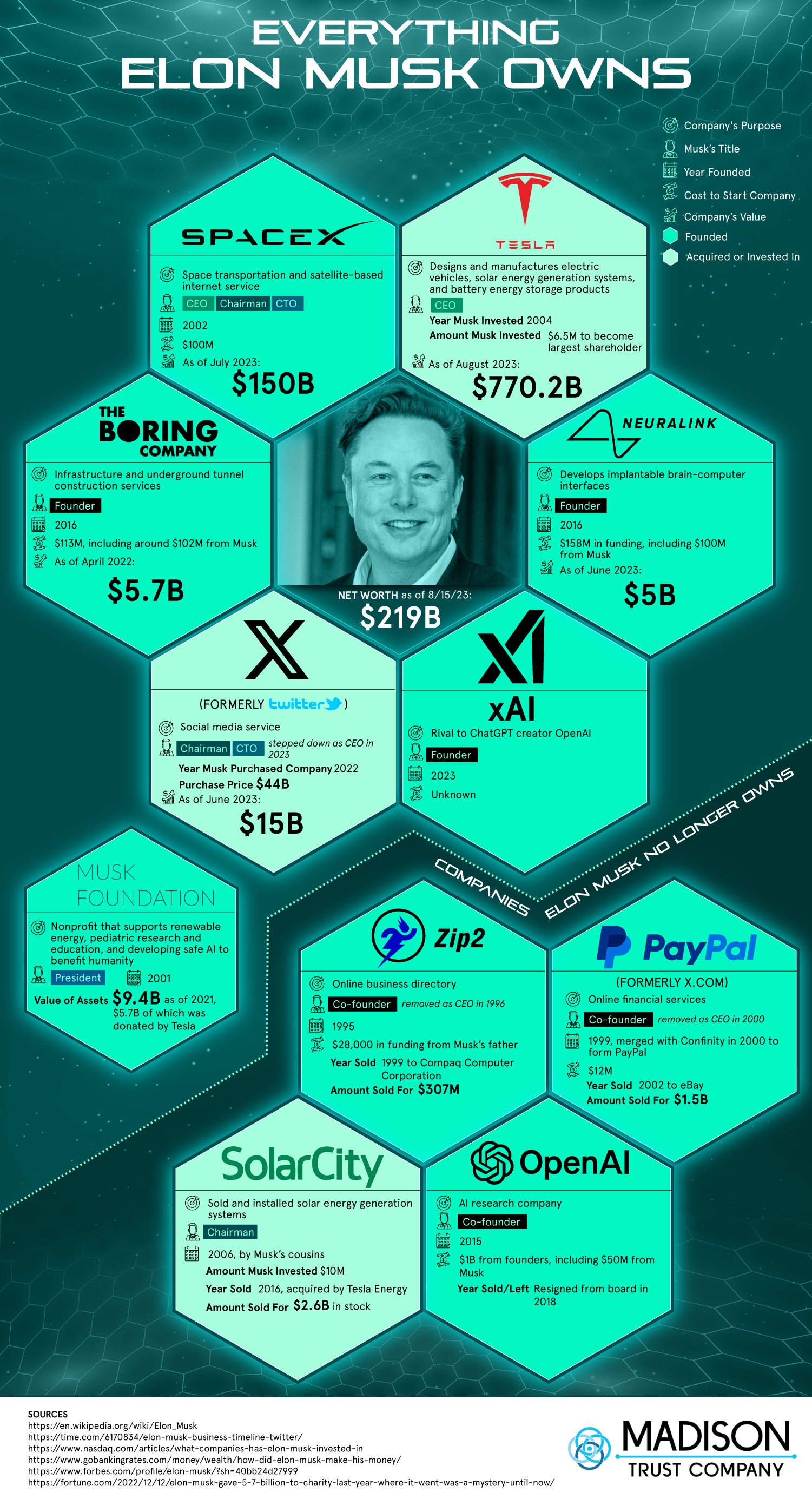
Elon Musk’s financial strategy is not confined to Tesla. He is a serial entrepreneur with significant stakes in other multi-billion dollar ventures, including SpaceX, The Boring Company, Neuralink, and xAI. His Tesla holdings represent his most liquid and largest asset, often serving as a financial engine or collateral for his other endeavors. For instance, funding the development of rockets at SpaceX or artificial intelligence at xAI sometimes requires vast sums of capital, which can be sourced by leveraging or selling Tesla stock. This interconnected financial ecosystem means that decisions made regarding his Tesla ownership can have implications for the funding and strategic direction of his entire portfolio of companies. From a financial perspective, it highlights a founder who strategically uses the wealth generated from one successful venture to seed and grow others, fostering a broader impact across various high-tech industries.
What His Ownership Means for Tesla’s Financial Future
Elon Musk’s significant, though not majority, ownership in Tesla is a critical factor influencing the company’s financial future, market perception, and strategic direction. His financial stake acts as a powerful anchor, signaling confidence and guiding corporate governance.
Investor Confidence and Market Perception
Musk’s substantial financial skin in the game is a potent driver of investor confidence. Shareholders and potential investors often view his large stake as a strong indicator of his belief in Tesla’s long-term prospects. His continued ownership, despite opportunities to divest more significantly, reinforces the narrative that the founder remains deeply committed to the company’s success. This confidence can translate into higher stock valuations, as investors are often willing to pay a premium for companies led by visionary founders with significant equity interests. Conversely, any major reduction in his stake, unless clearly communicated and understood (e.g., for specific acquisitions or tax purposes), can trigger concerns about his commitment and potentially lead to negative market reactions. For many, investing in Tesla is, in part, an investment in Elon Musk’s leadership and vision, making his ownership a crucial psychological and financial signal.
Governance Implications and Strategic Direction
While Musk does not own a controlling majority, his financial stake grants him significant voting power, allowing him to exert strong influence over Tesla’s governance. He plays a dominant role in selecting board members, approving major corporate actions, and shaping the company’s strategic direction. This concentration of influence, underpinned by his equity, means that Tesla’s trajectory largely mirrors Musk’s vision. For example, bold capital allocation decisions, aggressive expansion plans, or highly ambitious technological pursuits often stem directly from his strategic directives. This founder-led model, supported by significant equity ownership, provides Tesla with a distinct advantage in terms of agility and long-term vision execution, free from some of the short-term pressures that might afflict companies with more dispersed leadership and ownership. However, it also concentrates risk, as the company’s fate is heavily reliant on a single individual’s judgment and health.
The Long-Term Financial Vision of a Founder
Musk’s ownership percentage also reflects his long-term financial vision for Tesla. His past compensation packages were designed to reward unprecedented growth over a multi-year horizon, underscoring a commitment to building a company of immense and enduring value. His retention of a significant stake, even after achieving extraordinary personal wealth, suggests a continued belief in Tesla’s potential for further expansion into new markets, technologies, and revenue streams. This long-term perspective, financially backed by his vast holdings, encourages strategic investments in R&D, manufacturing capabilities, and global infrastructure that might not yield immediate returns but are essential for sustainable, long-term financial success. His financial stake isn’t just about his current wealth; it’s a testament to his belief in Tesla’s eventual realization of a world powered by sustainable energy.
Conclusion: The Enduring Financial Impact of a Founder’s Stake
Elon Musk’s ownership percentage in Tesla is more than a simple number; it is a profound financial indicator reflecting the intricate dance between founder vision, corporate strategy, personal wealth management, and market dynamics. Hovering around 13% to 14% after various strategic sales and option exercises, this stake represents tens of billions of dollars, making him one of the world’s wealthiest individuals and cementing his profound financial alignment with Tesla’s fortunes.
This deep dive into the financial aspects of his ownership reveals a carefully constructed compensation architecture designed to incentivize unprecedented growth, strategic share sales driven by tax obligations and capital needs for other ventures, and an enduring level of control that shapes Tesla’s governance and strategic path. For investors, his substantial skin in the game reinforces confidence, while for financial analysts, it offers a fascinating case study in managing founder equity in a highly scrutinized, high-growth public company. Ultimately, Elon Musk’s significant financial interest remains a pivotal element in understanding Tesla’s past successes and charting its ambitious future. It underscores the powerful, often symbiotic, relationship between a visionary founder and the multi-trillion-dollar enterprise they helped bring to life.
aViewFromTheCave is a participant in the Amazon Services LLC Associates Program, an affiliate advertising program designed to provide a means for sites to earn advertising fees by advertising and linking to Amazon.com. Amazon, the Amazon logo, AmazonSupply, and the AmazonSupply logo are trademarks of Amazon.com, Inc. or its affiliates. As an Amazon Associate we earn affiliate commissions from qualifying purchases.