
Understanding growth is fundamental to sound financial management, whether you’re navigating personal investments, evaluating a salary offer, or charting the trajectory of a business. A “percent increase calculator” is not merely a mathematical utility; it’s an indispensable financial tool that translates raw numbers into actionable insights, revealing the true magnitude of change over time. It allows individuals and businesses to quantify positive shifts, identify trends, and make informed decisions that drive progress and wealth accumulation.
Understanding the Power of Percentage Growth
At its core, financial analysis is about understanding change. Absolute changes tell you how much something has changed, but percentage changes tell you how significant that change is relative to its starting point. This distinction is crucial for accurate financial interpretation.
The Core Concept: Why Percentages Matter
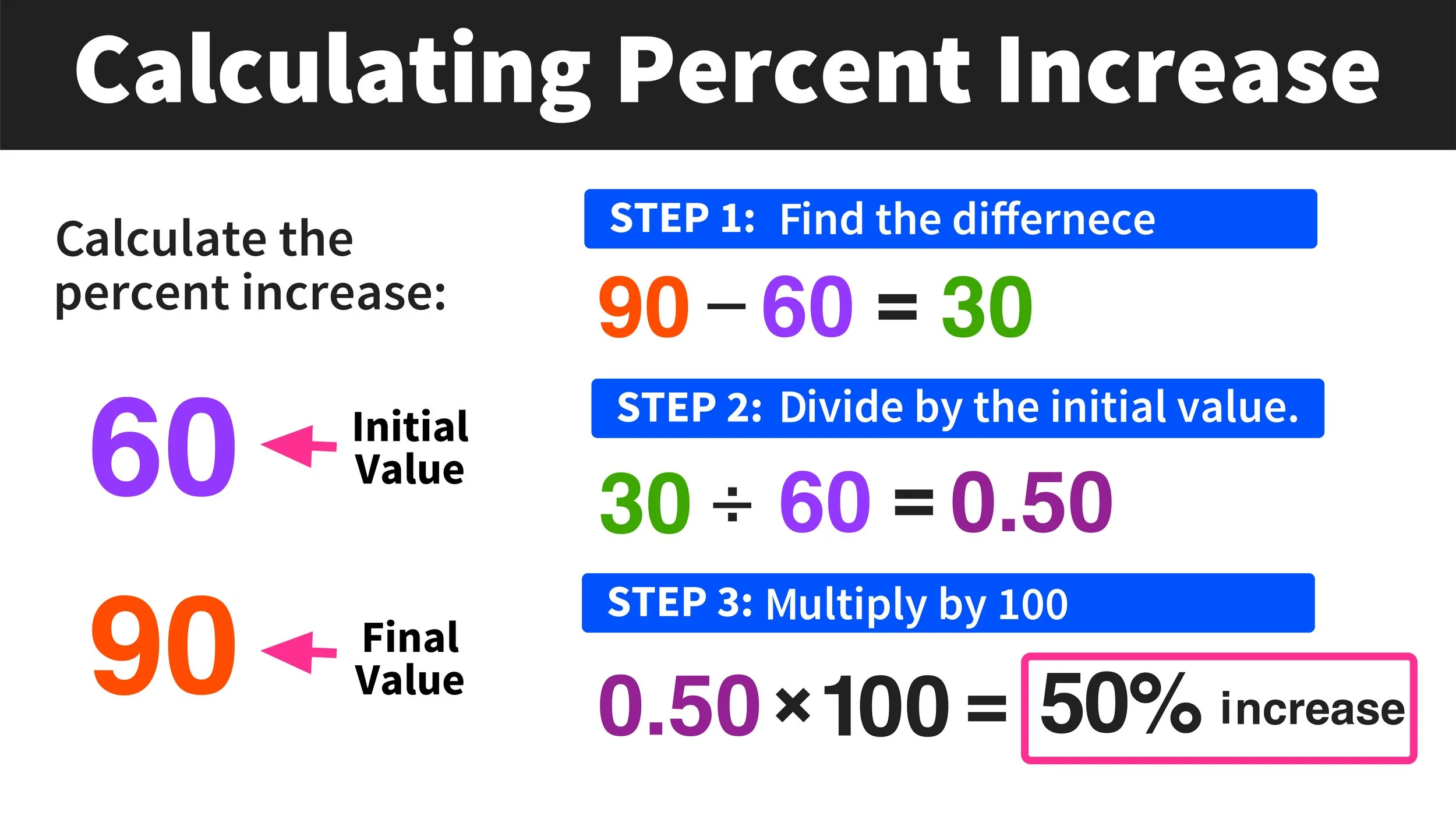
A percentage increase quantifies the relative growth of a value. It expresses the new value as a percentage greater than the old value. For instance, an investment growing from $100 to $110 represents a $10 absolute increase. However, a percent increase calculator would show a 10% increase. This percentage provides context that a raw dollar amount cannot. If your portfolio grew by $1,000, that’s impressive. But if it grew from $10,000 to $11,000, it’s a 10% increase, whereas if it grew from $100,000 to $101,000, it’s only a 1% increase. The percentage tells you the efficiency or rate of growth, which is often far more important than the absolute number when comparing different opportunities or evaluating performance.
Differentiating Percent Increase from Absolute Change
While absolute change is straightforward (new value minus old value), it can be misleading on its own. Imagine two startups: Company A increases its revenue by $50,000, and Company B increases its revenue by $500,000. On the surface, Company B seems to have had a better year. However, if Company A’s revenue started at $10,000 and Company B’s started at $10,000,000, the picture changes dramatically.
-
Company A: ($60,000 – $10,000) / $10,000 = 500% increase
-
Company B: ($10,500,000 – $10,000,000) / $10,000,000 = 5% increase
Here, the percent increase calculator reveals that Company A experienced monumental growth relative to its size, while Company B’s growth, though larger in absolute terms, was relatively modest. This simple example underscores why financial professionals and astute individuals consistently rely on percentage changes to gauge true performance and potential.
Key Applications in Personal Finance
For personal financial management, a percent increase calculator is an invaluable tool, offering clarity on various aspects of income, expenses, and asset growth.
Tracking Investment Returns and Portfolio Growth
One of the most common applications is in evaluating investment performance. Whether it’s stocks, bonds, mutual funds, or real estate, knowing the percentage increase allows you to compare the effectiveness of different investments over varying periods. If Stock A grew from $50 to $55 over a year and Stock B grew from $100 to $108 over the same period, a percent increase calculator quickly reveals Stock A’s 10% growth outperformed Stock B’s 8% growth. This metric is critical for assessing portfolio health, rebalancing strategies, and making informed decisions about future allocations.
Analyzing Salary Raises and Income Growth
When you receive a salary raise, the absolute dollar amount is only one part of the story. A percent increase calculation helps you understand the actual impact on your purchasing power and standard of living. For instance, a $3,000 raise on a $50,000 salary is a 6% increase, which might feel substantial. The same $3,000 raise on a $100,000 salary is only a 3% increase, which might barely keep pace with inflation. This tool provides clarity on how your earning potential is evolving and whether you’re progressing financially relative to your prior income.
Understanding Inflation’s Impact on Purchasing Power
Inflation erodes the value of money over time. By using a percent increase calculator in reverse, or to compare your income growth against the rate of inflation, you can determine if your real income is actually increasing. If your salary increases by 3% but inflation is 4%, your purchasing power has actually decreased by 1%. This critical insight helps in advocating for appropriate raises and making wise spending and saving decisions.
Budgeting and Expense Management
Even in budgeting, percentage increases can highlight trends. Are your housing costs increasing faster than your income? What was the percentage jump in your grocery bill last year? By tracking the percentage increase of various expense categories, you can identify areas where costs are escalating unexpectedly and take proactive measures to manage your budget more effectively. This analytical approach helps maintain financial discipline and prevent budget overruns.
Strategic Uses in Business Finance and Entrepreneurship
For businesses, the ability to accurately measure and interpret percentage increases is a cornerstone of strategic planning, performance evaluation, and investor communication.
Measuring Revenue and Profit Growth

Businesses live and die by their revenue and profit figures. A percent increase calculator is indispensable for tracking growth quarter-over-quarter, year-over-year, or against specific benchmarks. Comparing a 15% revenue increase this year to a 10% increase last year provides a clear picture of acceleration or deceleration, guiding sales strategies and resource allocation. Similarly, analyzing the percentage increase in profit margins helps gauge operational efficiency and pricing effectiveness.
Assessing Marketing Campaign Effectiveness (ROI)
Marketing departments constantly strive to demonstrate return on investment (ROI). If a marketing campaign costs $10,000 and leads to a sales increase from $100,000 to $120,000, the percent increase calculator shows a 20% sales growth. The net gain from this growth can then be compared to the campaign cost to determine its profitability. This allows businesses to optimize their marketing spend, allocating resources to channels and campaigns that deliver the highest percentage returns.
Evaluating Operational Efficiency and Cost Reductions
Efficiency improvements often manifest as reduced costs or increased output per unit of input. If production costs decreased from $500,000 to $450,000 after implementing new processes, the calculator quickly quantifies a 10% reduction. Such percentage metrics are vital for justifying investments in new technology, training, or process improvements, demonstrating their tangible financial benefits.
Projecting Future Growth and Forecasting
When pitching to investors, securing loans, or setting internal targets, businesses rely on realistic growth projections. Using historical percentage increases as a baseline, a percent increase calculator helps in creating informed forecasts for future revenue, profit, and market share. While future performance is never guaranteed, a structured approach using past growth rates provides a credible foundation for strategic planning and financial modeling.
How a Percent Increase Calculator Simplifies Financial Analysis
Before the advent of readily available digital tools, calculating percentage increases involved manual arithmetic, which was prone to error and time-consuming. Today, a percent increase calculator streamlines this process, making sophisticated analysis accessible to everyone.
Beyond Manual Calculations: Speed and Accuracy
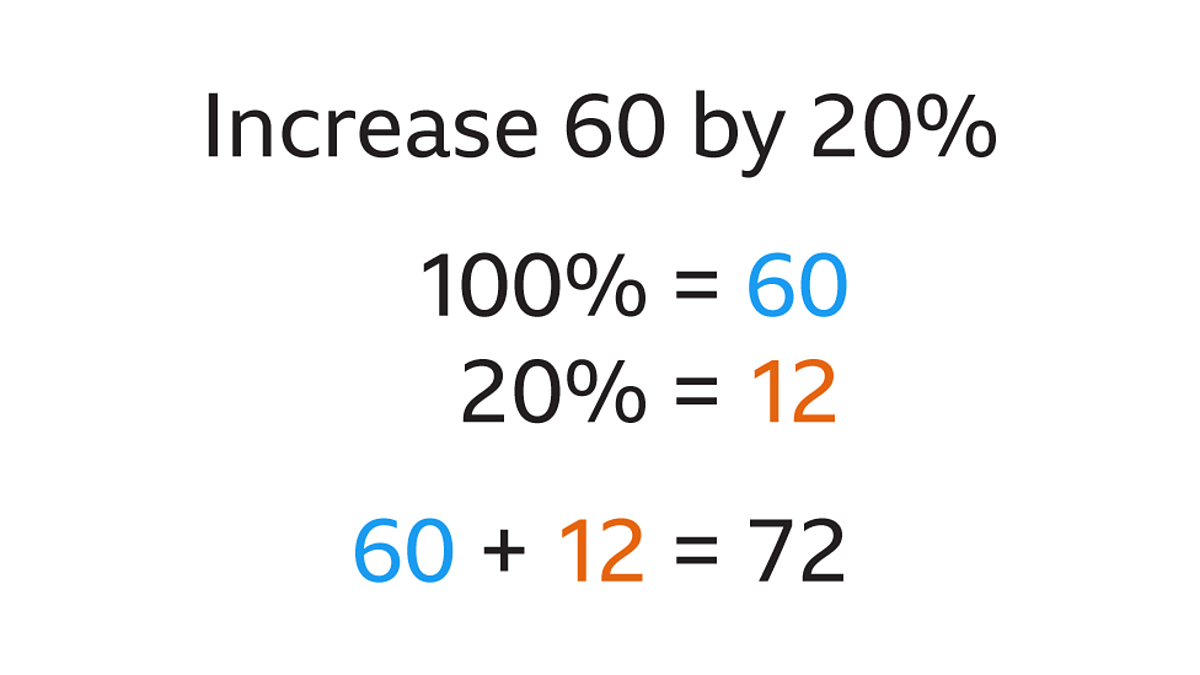
The formula for percent increase is: ((New Value - Old Value) / Old Value) * 100. While seemingly simple, performing this calculation repeatedly, especially with large or decimal numbers, can be tedious. A digital percent increase calculator automates this, providing instant, accurate results. This speed allows for rapid analysis of multiple scenarios, comparisons across various data points, and iterative adjustments without the burden of manual computation. It liberates users to focus on interpretation rather than arithmetic.
Inputting Data and Interpreting Results
Most percent increase calculators are user-friendly, requiring only two inputs: the original value and the new value. The output typically presents both the absolute difference and the calculated percentage increase. Understanding these results is key. A positive percentage indicates growth, while a negative percentage indicates a decrease (often referred to as a percent decrease). Interpreting these figures involves comparing them to benchmarks, historical data, or expected rates. For example, knowing your investment grew by 7% is useful, but it’s even more powerful if you know the market average was 5% for the same period, indicating outperformance.
The Role of Financial Tools in Informed Decision-Making
A percent increase calculator, like many specialized financial tools, empowers users by demystifying complex calculations. It transforms raw data into understandable metrics that are crucial for making informed decisions. From deciding whether a particular investment aligns with your growth goals to evaluating a supplier’s price hike, these tools provide the clarity needed to navigate financial landscapes confidently. They are essential for strategic planning, performance monitoring, and ensuring that financial choices are grounded in solid quantitative analysis.
Maximizing Your Financial Potential with Growth Metrics
Leveraging the insights provided by a percent increase calculator extends beyond mere number crunching; it becomes a cornerstone of proactive financial management and goal setting.
Setting Realistic Financial Goals
Understanding historical growth rates, whether for your personal income, investments, or business metrics, allows you to set more realistic and achievable financial goals. If your income has consistently grown by an average of 3% per year, projecting a 15% increase next year might be overly ambitious without a significant change in circumstances. Conversely, if your business has a track record of 20% year-over-year revenue growth, aiming for 25% might be a stretch but within the realm of possibility with targeted strategies. These calculators provide the data foundation for establishing SMART (Specific, Measurable, Achievable, Relevant, Time-bound) goals.
Identifying Trends and Making Proactive Adjustments
Consistently tracking percentage increases reveals trends that might otherwise go unnoticed. Is the growth rate of your investment portfolio slowing down? Are your operating costs increasing at an unsustainable rate? By identifying these trends early, you can make proactive adjustments rather than reactive corrections. For individuals, this might mean re-evaluating investment strategies or seeking additional income streams. For businesses, it could involve streamlining operations, adjusting pricing, or pivoting marketing efforts. The percent increase calculator is not just a reporting tool; it’s a predictive and prescriptive instrument that empowers users to steer their financial journey toward sustained success.
aViewFromTheCave is a participant in the Amazon Services LLC Associates Program, an affiliate advertising program designed to provide a means for sites to earn advertising fees by advertising and linking to Amazon.com. Amazon, the Amazon logo, AmazonSupply, and the AmazonSupply logo are trademarks of Amazon.com, Inc. or its affiliates. As an Amazon Associate we earn affiliate commissions from qualifying purchases.