
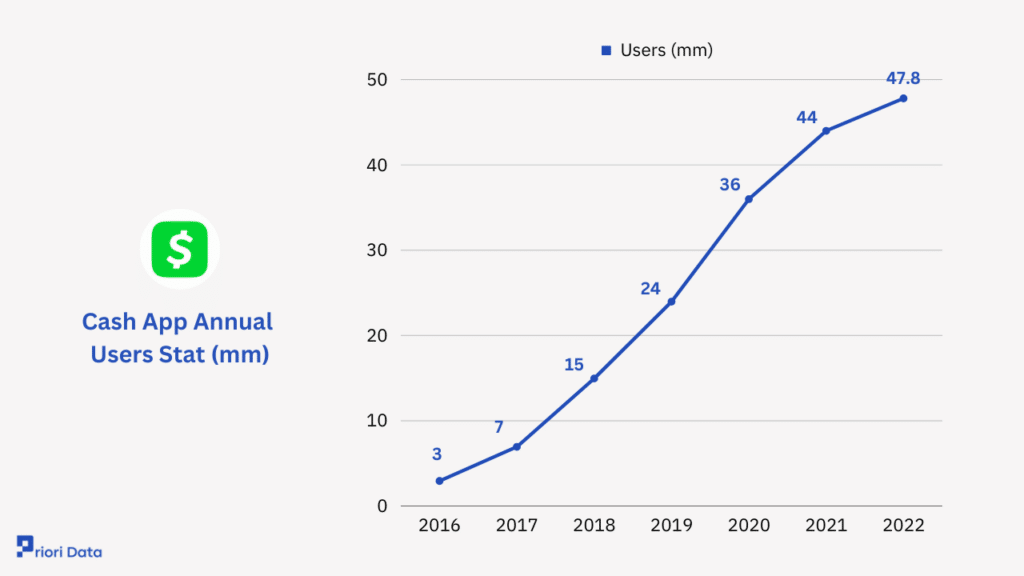
In an increasingly digital financial landscape, peer-to-peer payment apps like Cash App have become indispensable tools for managing personal funds, splitting bills, and even dabbling in investments. With millions of active users, Cash App offers unparalleled convenience, allowing instant transfers and access to various financial services right from your smartphone. However, convenience often comes with a cost, and for the financially savvy user, understanding the fee structure of any financial tool is paramount. This article delves into the specifics of “what percent Cash App takes,” breaking down the various fees associated with its diverse offerings and providing insights into how you can manage your money more effectively on the platform.
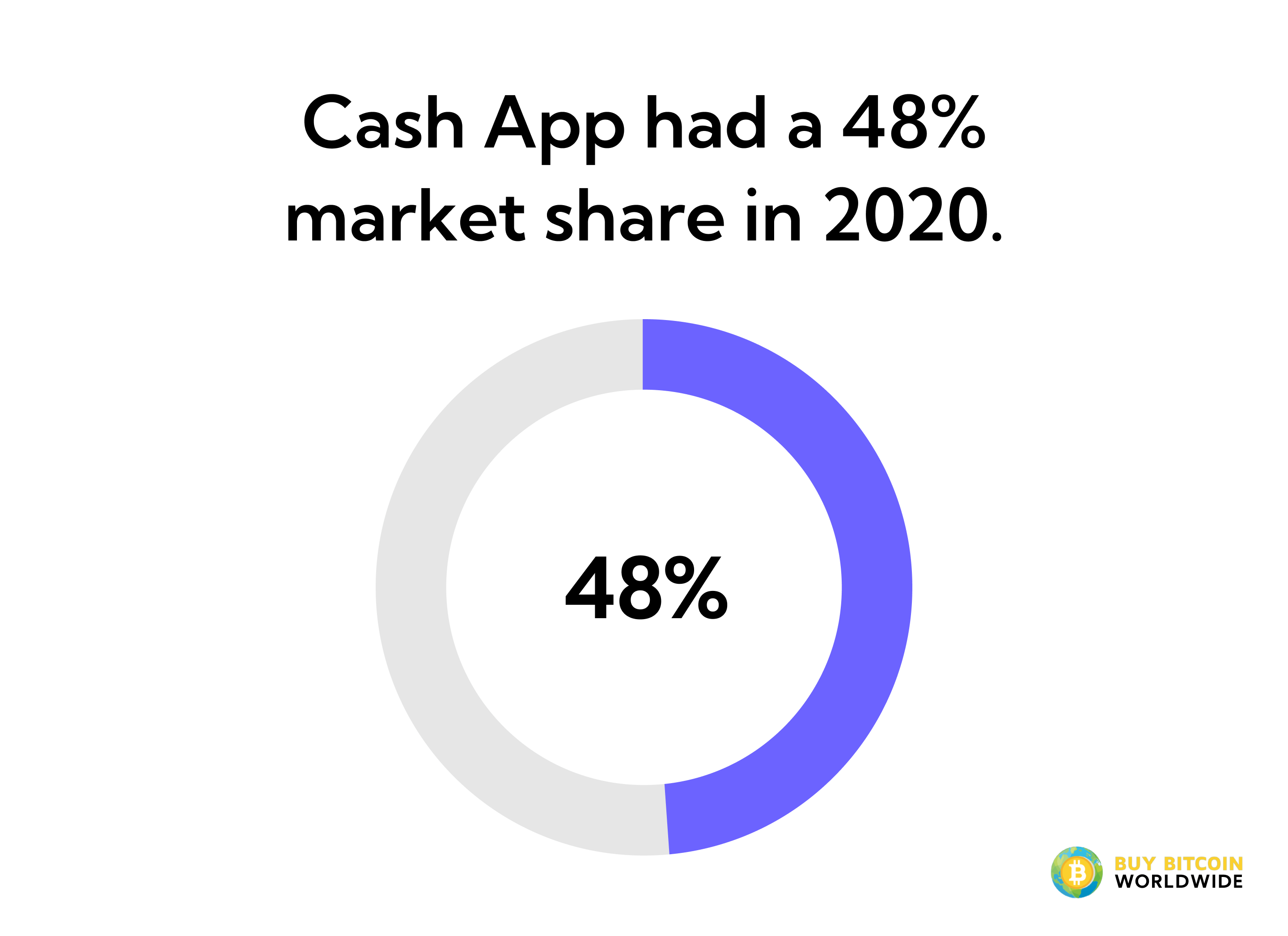
Navigating the world of digital payments requires a clear grasp of transaction costs. While Cash App is lauded for many free services, certain actions do incur charges that can impact your financial bottom line if not understood. From instant deposits to business transactions and even cryptocurrency investments, each facet of the app has its own set of rules. For those committed to smart personal finance and astute business management, a comprehensive understanding of these fees is not just beneficial—it’s essential for maximizing value and avoiding unexpected deductions.
Navigating Cash App’s Core Services and Their Associated Fees
Cash App provides a suite of services designed to simplify everyday financial interactions. While many of its core functionalities are free, it’s crucial to distinguish between them to avoid incurring unforeseen charges. Being aware of these distinctions is the first step toward effective financial planning within the app.
Standard Peer-to-Peer Transactions: The Free Baseline
At its heart, Cash App thrives on facilitating easy money transfers between individuals. One of its most attractive features is the absence of fees for standard peer-to-peer (P2P) transactions. This means that sending money to friends, family, or colleagues directly from your Cash App balance, or a linked debit card, is completely free of charge. Similarly, receiving money from other Cash App users and having it deposited into your Cash App balance incurs no cost. This foundational free service is a primary reason for its widespread adoption, making it a go-to choice for splitting dinner bills, sharing rent, or gifting money without worrying about transaction percentages diminishing the amount. The free nature of these standard transfers reinforces Cash App’s position as a convenient and cost-effective solution for everyday personal money management.
Instant Deposits: When Speed Comes at a Cost
While standard P2P transfers are free, the desire for immediate access to funds often comes with a premium. When you receive money into your Cash App balance, you have two primary options for transferring it to your linked bank account: standard deposit or instant deposit.
- Standard Deposit: This option is free and typically processes within 1 to 3 business days. It’s the cost-effective choice for those who are not in a hurry to access their funds.
- Instant Deposit: For immediate access to your funds, Cash App charges a fee. This fee is typically 0.5% to 1.75% of the transfer amount, with a minimum fee often applying (e.g., $0.25). The exact percentage can vary based on factors like your account history or specific promotions, but it is always clearly displayed before you confirm the instant transfer. For example, if you instantly deposit $100, you might pay a fee of $1.75, resulting in $98.25 landing in your bank account almost instantly. This fee represents the cost of convenience and liquidity, a trade-off many users are willing to make for urgent financial needs. Understanding this percentage is crucial for budgeting and knowing the true value of funds transferred.
Cash App Card and ATM Withdrawals: Accessing Your Funds
The Cash Card, a free, customizable debit card linked to your Cash App balance, allows you to make purchases anywhere Visa is accepted. Using the Cash Card for point-of-sale transactions or online purchases incurs no fees from Cash App. It functions like any other debit card, drawing directly from your Cash App balance.
However, accessing physical cash through ATM withdrawals is where fees can apply:
- ATM Withdrawal Fees: If you use your Cash Card at an ATM, Cash App charges a $2.50 fee per withdrawal. This is in addition to any fees levied by the ATM operator (which can range from $2.00 to $5.00 or more). This means a single ATM withdrawal could cost you upwards of $4.50 to $7.50.
- Waiver for Direct Deposit Users: Cash App offers a significant benefit for users who set up direct deposit of at least $300 per month into their Cash App account. These users are eligible for free ATM withdrawals, with Cash App refunding both its $2.50 fee and any third-party ATM fees. This incentive encourages consistent use of Cash App as a primary banking solution and represents a substantial saving for those who frequently need cash.
Business Accounts and Seller Fees on Cash App
Cash App isn’t just for personal use; it also provides functionalities for small businesses and independent sellers. Understanding the distinction between personal and business transactions, and their respective fee structures, is vital for proper financial management and tax compliance.
Accepting Payments as a Business: The Processing Charge
When you use Cash App to accept payments for goods or services, rather than for personal P2P transfers, you should operate as a business account. Businesses utilizing Cash App for sales or services incur a transaction fee. Typically, this fee is around 2.75% per transaction. This percentage is comparable to what many other payment processors charge for credit card transactions. For example, if you sell an item for $50, Cash App would take $1.375, and you would receive $48.625.
It is critical for businesses to correctly classify their transactions. Attempting to use a personal account for business transactions can lead to several issues, including account suspension, difficulty tracking income, and potential tax reporting discrepancies. Cash App’s algorithms are designed to detect business-like patterns (e.g., frequent, higher-value inbound payments), prompting users to convert to a business account or imposing business fees on transactions regardless. From a financial perspective, integrating these fees into pricing strategies and revenue projections is a fundamental aspect of operating with Cash App.
Cash App Pay for Merchants: Expanding Payment Options
Beyond direct business account transactions, Cash App is also expanding its “Cash App Pay” feature, allowing merchants to accept payments from Cash App users at checkout, similar to other digital wallets. While the specific fee structures for larger integrated merchants can be subject to individual agreements, they generally align with standard payment processing fees, often in the range of 2.5% to 2.75% per transaction. For businesses, offering Cash App Pay can broaden their customer base and provide a seamless checkout experience for the app’s millions of users. However, financial managers must factor these processing percentages into their operational costs, understanding that the benefits of expanded payment options come with a standard transactional fee. This reinforces the principle that while digital convenience is valuable, its facilitation involves a cost to the service provider, which is then passed on to the business user.
Investing on Cash App: Fees for Stocks and Bitcoin
Cash App has broadened its appeal by integrating investment features, allowing users to buy and sell fractional shares of stocks and Bitcoin directly within the app. These features democratize investing, but like any brokerage or crypto exchange, there are associated costs that investors must understand to accurately assess their returns.
Stock Investing: Commission-Free Trading (with Nuances)
One of Cash App’s attractive features for stock investors is its claim of commission-free stock trading. This means Cash App does not charge a direct fee when you buy or sell stocks through its platform. This aligns with a growing trend among online brokerages to eliminate traditional trading commissions.
However, “commission-free” does not always mean entirely “free.” There are subtle nuances:
- Regulatory Fees: Very small regulatory fees (e.g., SEC fees and FINRA TAF fees) are charged on sales of stocks by all brokers, passed on to the investor. These amounts are typically negligible, usually a few cents on large transactions.
- Spread: While not a direct fee from Cash App, when you buy or sell stocks, you are subject to the “bid-ask spread.” This is the difference between the highest price a buyer is willing to pay (bid) and the lowest price a seller is willing to accept (ask). Market makers profit from this spread, which indirectly affects the price you get. For fractional shares, Cash App might aggregate orders, and the effective price could include a slight premium or discount.
- Instant Settlements: If you engage in instant settlements after selling stocks (i.e., requesting immediate access to funds before the standard settlement period), you may incur a fee similar to instant deposits, typically 0.5% to 1.75%. Standard settlements, usually T+2 (trade date plus two business days), are free.
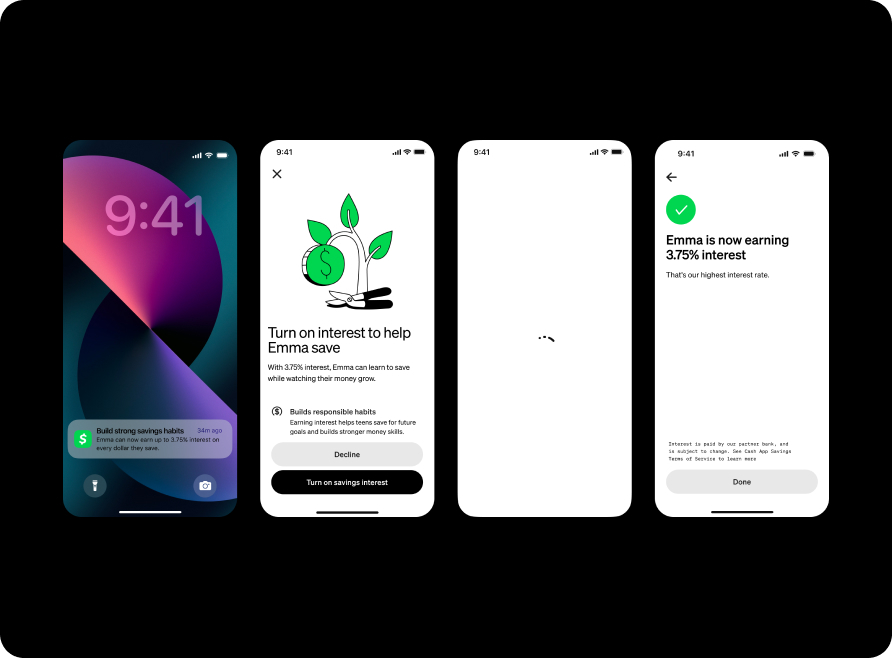
For personal finance management, understanding that while Cash App doesn’t levy explicit commissions, other market-driven or convenience-based costs can exist is crucial for calculating true investment performance.
Bitcoin Purchases: Understanding the Spread and Service Fee
Investing in Bitcoin through Cash App is subject to a more explicit fee structure compared to stocks. When you buy or sell Bitcoin on Cash App, you will typically encounter two types of charges:
- The Spread: Similar to stocks, there is an inherent “spread” in the Bitcoin price. Cash App incorporates this spread into the buy and sell prices it displays. The price you see for buying Bitcoin will be slightly higher than the actual market price, and the price for selling will be slightly lower. This difference accounts for the profit Cash App makes on the transaction.
- Service Fee: In addition to the spread, Cash App also charges a service fee for each Bitcoin transaction. This fee can vary, often ranging from 1.5% to 2.0% of the transaction amount, though it can fluctuate based on market volatility and order size. The exact fee is always disclosed before you confirm your purchase or sale. For example, if you buy $100 worth of Bitcoin, you might see a $1.75 service fee on top of the spread.
Given the inherent volatility of cryptocurrency, these fees can quickly add up and significantly impact your break-even point and overall returns. Savvy investors carefully factor these percentages into their trading strategies, recognizing that frequent smaller trades can be disproportionately affected by fixed or percentage-based fees. For anyone managing their money through crypto, transparently understanding these costs is vital for accurate financial performance tracking.
Strategies for Minimizing Cash App Fees and Maximizing Value
For anyone aiming to optimize their personal finance and maximize the utility of Cash App, understanding how to navigate and minimize fees is key. Smart choices can lead to significant savings over time.
Opting for Standard Deposits: Patience Pays Off
The most straightforward way to avoid Cash App’s instant deposit fee is simply to choose the standard deposit option. While it requires waiting 1 to 3 business days for funds to reflect in your bank account, it comes at no cost. For planned transfers or non-urgent financial needs, this small exercise in patience can save you the 0.5% to 1.75% instant deposit fee, which can accumulate significantly over many transactions. Incorporating this habit into your financial routine is a simple yet effective strategy for cost avoidance.
Utilizing the Cash Card for Purchases: Avoid ATM Fees
To circumvent ATM withdrawal fees, prioritize using your Cash Card for direct purchases. Whether online or in brick-and-mortar stores, using the Cash Card incurs no direct fees from Cash App. This strategy not only helps you avoid the $2.50 Cash App ATM fee but also any additional fees imposed by third-party ATM operators. By maximizing card usage, you keep more of your money in your pocket, making your Cash App balance work harder for you.
Leveraging Direct Deposit: Unlocking Free ATM Access
As mentioned earlier, setting up direct deposit of at least $300 per month into your Cash App account can unlock a valuable perk: free ATM withdrawals. Cash App will reimburse both its own fee and any fees charged by the ATM operator. This makes Cash App a much more attractive option for those who regularly receive income and occasionally need physical cash. By consolidating your direct deposits with Cash App, you transform a potentially costly service into a free one, significantly enhancing the app’s financial utility. This is a prime example of how understanding and engaging with a platform’s incentives can lead to substantial personal financial benefits.
Distinguishing Personal vs. Business Transactions: The Right Account Type
For entrepreneurs, freelancers, or anyone receiving payments for goods and services, it’s paramount to use a Cash App business account. While business accounts incur a 2.75% transaction fee, this is the correct and compliant way to operate. Using a personal account for business activities can lead to account suspension, difficulty separating personal and business finances, and complications during tax season. Properly classifying your transactions ensures transparent financial tracking, compliance with terms of service, and allows you to accurately account for transaction costs in your business’s financial statements. It’s a fundamental aspect of sound business finance.
Financial Implications and Broader Context
Understanding Cash App’s fee structure extends beyond mere percentages; it involves comprehending the broader financial implications and positioning the app within your overall financial ecosystem.
The Cost of Convenience: Weighing Benefits Against Fees
Cash App, like many modern financial tools, thrives on offering unparalleled convenience. The ability to send money instantly, access funds immediately, or make quick investments all contribute to a seamless financial experience. However, this convenience often comes at a cost, predominantly in the form of fees for expedited services (like instant deposits or Bitcoin transactions). For individuals and businesses alike, the decision to incur these fees boils down to a financial trade-off: is the speed and ease worth the percentage taken?
From a personal finance perspective, evaluating this means assessing urgency versus cost. If a payment can wait a few days, opting for a free standard deposit is a financially prudent choice. For businesses, the ability to accept quick payments via Cash App Pay might justify the processing fee by enabling more sales. Insightful financial management requires users to consciously weigh the tangible benefits of convenience against the cumulative impact of associated fees on their bottom line.
Comparison with Other Financial Tools: A Holistic View
When deciding how to manage your money digitally, it’s wise to compare Cash App’s fee structure with other available financial tools.
- Traditional Banks: While often offering free checking accounts and standard transfers, banks may charge for wire transfers, overdrafts, or out-of-network ATM withdrawals, potentially at higher rates than Cash App’s for similar services.
- Other P2P Apps (e.g., Venmo, PayPal): Many competitors have similar fee structures for instant transfers and business transactions. For example, Venmo typically charges 1.75% for instant transfers, and PayPal charges varying percentages for business transactions.
- Investment Platforms: Traditional brokerage accounts might have higher minimums or different fee schedules for certain types of investments, though many also offer commission-free stock trading. Cryptocurrency exchanges also have their own fee models, often involving maker/taker fees, spreads, and withdrawal fees.
Adopting a holistic view allows users to choose the most cost-effective platform for specific transactions. For instance, while Cash App is excellent for free P2P transfers, a dedicated brokerage might offer more advanced investing tools, and a traditional bank might be better for large-scale bill payments without fees. Informed financial decisions are made by understanding where each tool shines and where its costs may outweigh its benefits.
The Importance of Reading Terms and Conditions: Staying Informed
Finally, and perhaps most crucially for sound financial management, is the ongoing responsibility to read and understand Cash App’s (or any financial service’s) terms and conditions. Fee structures are not static; they can change over time due to market conditions, regulatory updates, or internal policy shifts. Cash App typically notifies users of significant changes, but it is ultimately the user’s responsibility to stay informed. Regularly reviewing the latest fee schedules, especially before making large or frequent transactions, can prevent unwelcome surprises and ensure that your financial planning remains accurate. Staying informed is a cornerstone of responsible and effective personal and business finance in the digital age.
By understanding “what percent Cash App takes” for various services, and by applying strategic approaches to transactions and account management, users can effectively leverage this powerful financial tool while minimizing costs. This knowledge empowers a more controlled and cost-efficient financial journey.
aViewFromTheCave is a participant in the Amazon Services LLC Associates Program, an affiliate advertising program designed to provide a means for sites to earn advertising fees by advertising and linking to Amazon.com. Amazon, the Amazon logo, AmazonSupply, and the AmazonSupply logo are trademarks of Amazon.com, Inc. or its affiliates. As an Amazon Associate we earn affiliate commissions from qualifying purchases.