
The emergence of Cursor, an AI-first code editor, has undeniably shifted the conversation around software development tools. By deeply integrating artificial intelligence directly into the coding workflow, Cursor offers a glimpse into a future where developers are augmented by intelligent assistants, capable of understanding context, generating code, debugging, and even explaining complex logic. However, Cursor isn’t an isolated phenomenon; it represents a broader, rapidly evolving trend of AI-powered tools entering the developer ecosystem. For those intrigued by Cursor’s capabilities and seeking similar or complementary solutions, understanding the landscape of AI-assisted coding software is crucial. This exploration delves into other software that shares Cursor’s spirit, focusing on how they leverage AI to enhance developer productivity, streamline workflows, and redefine the art of writing code.
The AI-Augmented Developer Workflow: Beyond Basic Autocompletion
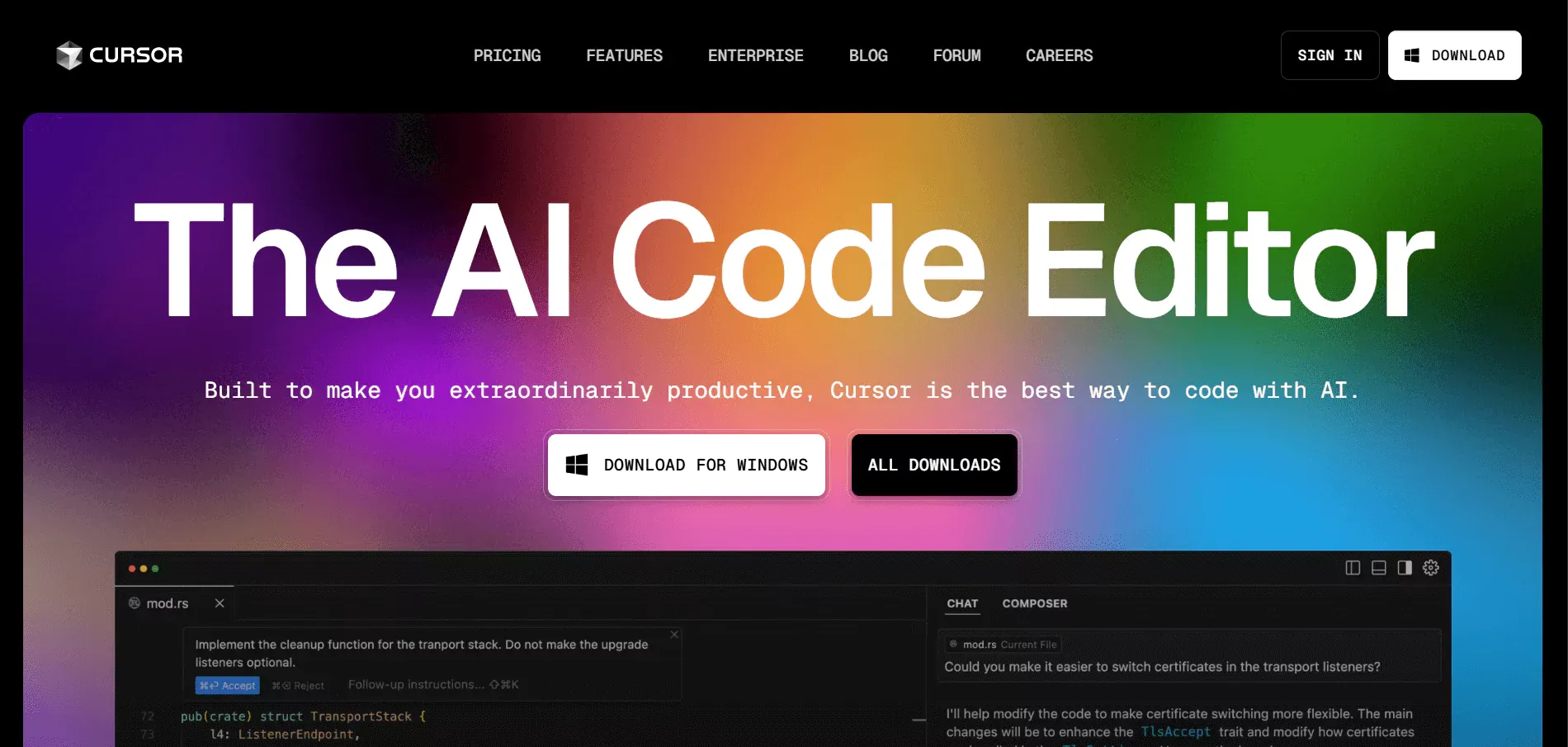
Cursor’s core proposition lies in its seamless integration of AI into every facet of the coding process. It’s not just about suggesting the next line of code; it’s about conversational AI for understanding and refactoring, AI-powered code generation from natural language prompts, and intelligent debugging assistance. This paradigm shift moves beyond traditional IDEs that offer static code completion. The trend is towards dynamic, context-aware, and generative AI capabilities that actively participate in the development cycle.
Generative AI for Code Creation and Completion
The most prominent area where AI is transforming coding is in the generation of code. Tools that can translate natural language descriptions into functional code snippets or even entire functions are becoming increasingly sophisticated. This goes beyond the predictive text of older autocompletion systems.
AI Code Assistants and Copilots
GitHub Copilot, powered by OpenAI’s Codex, was an early pioneer in this space, offering real-time code suggestions as developers type. It learns from a vast repository of public code, providing contextually relevant completions and even entire code blocks. Unlike Cursor, which aims for a more conversational and integrated experience, Copilot primarily acts as an intelligent autocomplete engine within existing IDEs like Visual Studio Code. Its strength lies in its ability to accelerate repetitive coding tasks and suggest implementations for known patterns.
Beyond Copilot, numerous other AI code assistants are emerging, each with their unique strengths. Some focus on specific programming languages or frameworks, while others offer more advanced features like test case generation or code explanation. The underlying principle remains the same: leveraging AI to reduce the cognitive load on developers and speed up the writing process.
Natural Language to Code Generation
Cursor’s ability to generate code from natural language prompts is a significant differentiator. This feature allows developers to describe what they want the code to do in plain English, and the AI translates it into actual code. This democratizes coding to some extent and empowers developers to quickly prototype ideas or implement functionality without needing to recall specific syntax or library calls.
While Cursor excels here, other platforms are also exploring this avenue. Some emerging tools are building dedicated interfaces for natural language to code conversion, allowing users to specify requirements and receive generated code. These often integrate with other development tools or offer standalone solutions for rapid prototyping and exploration.
AI for Code Understanding, Refactoring, and Debugging
The impact of AI extends beyond mere code creation. Understanding existing code, especially in large or legacy projects, can be a time-consuming and challenging task. AI can significantly alleviate this burden.
AI-Powered Code Explanation and Documentation
Tools that can analyze code and provide clear, concise explanations are invaluable for onboarding new team members, understanding unfamiliar codebases, or simply refreshing one’s memory. Cursor’s conversational AI can answer questions about specific code segments, explain their purpose, and even suggest improvements.
Similar functionalities are being developed by other AI tool providers. Some plugins and standalone applications can parse code and generate natural language summaries, highlight potential issues, and offer insights into the code’s logic. This is particularly helpful for complex algorithms or intricate class structures.
Intelligent Code Refactoring and Optimization
Refactoring code is a critical part of software development, ensuring code quality, maintainability, and performance. AI can assist in identifying areas for improvement, suggesting refactoring strategies, and even automating the refactoring process to a certain extent.
While many IDEs offer basic refactoring tools, AI-powered solutions are moving towards more intelligent suggestions. They can analyze code for potential bugs, performance bottlenecks, or stylistic inconsistencies, then propose precise refactoring steps to address these issues. This proactive approach to code improvement can save developers significant time and prevent future problems.
AI-Assisted Debugging
Debugging is often the most frustrating and time-consuming part of the development process. AI is starting to play a role in making this more efficient. By analyzing error messages, stack traces, and code execution patterns, AI can help pinpoint the root cause of bugs and suggest potential solutions.
Cursor’s integrated debugging capabilities are a prime example. However, other AI tools are also being developed to assist in this area. Some tools can predict potential bugs based on code patterns, while others can analyze runtime behavior to identify anomalies that might indicate a problem. The goal is to reduce the time spent hunting for bugs and increase the time spent building features.
The Integrated Development Environment (IDE) Evolution: Embracing AI
The rise of AI-powered coding tools is not just about individual plugins or standalone assistants; it’s about the fundamental evolution of the Integrated Development Environment (IDE) itself. IDEs are becoming smarter, more context-aware, and more deeply integrated with AI capabilities. Cursor can be seen as a new breed of IDE, designed from the ground up with AI at its core.
AI-Native IDEs vs. AI-Enhanced IDEs
The distinction lies in the foundational architecture. AI-native IDEs, like Cursor, are built with AI as an intrinsic part of their design. This allows for a more profound and seamless integration of AI features, where the AI understands the entire project context and can act as a true collaborator.
AI-enhanced IDEs, on the other hand, are traditional IDEs that have incorporated AI functionalities through plugins, extensions, or direct integrations. While these can be very powerful, the AI might operate somewhat independently of the core IDE logic, leading to a less unified experience.
The Case for AI-Native IDEs
Cursor represents the AI-native approach. Its architecture is designed to leverage AI for code generation, explanation, debugging, and even understanding project-wide context. This allows for features like AI-powered code generation directly within the editor, conversational AI for code queries, and intelligent assistance that understands the nuances of your project. The benefit is a more cohesive and intuitive AI experience.
Augmenting Existing IDEs with AI Power
Major IDEs like Visual Studio Code, IntelliJ IDEA, and PyCharm are rapidly integrating AI capabilities. Through extensions and plugins, developers can bring powerful AI features into their familiar development environments. This approach offers a lower barrier to entry for many, as they can continue using the tools they already know and trust, while still benefiting from AI advancements. The key is the quality and integration of these AI extensions.
The Future of IDEs: A Symbiotic Relationship with AI
The trend suggests that the future of IDEs will involve a deep, symbiotic relationship with AI. AI won’t just be an add-on; it will be an integral part of how we write, understand, and maintain code. This means IDEs will become more proactive, offering intelligent suggestions, anticipating needs, and even automating complex tasks.
The goal is to create an environment where developers can focus more on the creative and problem-solving aspects of their work, leaving the more mundane and repetitive tasks to their AI counterparts. This could lead to significantly accelerated development cycles, improved code quality, and a more enjoyable development experience overall.
Beyond Code Editors: AI in the Broader Developer Toolchain
While AI-powered code editors like Cursor and its counterparts are at the forefront, the influence of AI on the developer toolchain is far more pervasive. AI is impacting various stages of the software development lifecycle, from project planning and management to testing and deployment.
AI for Project Management and Planning
The initial stages of software development involve defining requirements, planning sprints, and estimating timelines. AI is beginning to offer assistance in these areas, helping teams to better understand project scope, identify potential risks, and optimize resource allocation. Tools that analyze past project data can provide more accurate estimations and suggest more efficient workflows.
AI-Driven Requirements Analysis and User Story Generation
AI can analyze user feedback, market trends, and existing documentation to help generate more comprehensive and well-defined user stories. By identifying patterns and potential ambiguities, AI can contribute to a clearer understanding of project requirements from the outset, reducing the likelihood of costly changes later in the development cycle.
Predictive Project Management and Risk Assessment
By analyzing historical project data, team performance, and external factors, AI can offer predictive insights into project timelines, potential bottlenecks, and risks. This allows project managers to proactively address issues before they derail the project, leading to more predictable outcomes and improved delivery success rates.
AI in Software Testing and Quality Assurance
Testing is a crucial but often labor-intensive part of software development. AI is being leveraged to automate and optimize various aspects of the testing process, from test case generation to bug detection.
Automated Test Case Generation and Optimization
AI algorithms can analyze code and requirements to automatically generate relevant test cases, covering various scenarios and edge cases that human testers might overlook. Furthermore, AI can optimize existing test suites by identifying redundant tests or prioritizing tests that are most likely to uncover defects.
AI-Powered Bug Detection and Anomaly Identification
Beyond static code analysis, AI can analyze runtime behavior to detect anomalies that might indicate bugs or performance issues. By learning normal system behavior, AI can flag deviations and alert developers to potential problems, even before explicit error messages are generated. This proactive approach to bug detection can significantly improve software reliability.
AI in DevOps and Deployment
The integration of AI into DevOps practices is aimed at streamlining the entire software delivery pipeline, from continuous integration to continuous deployment and beyond.
Intelligent CI/CD Pipeline Optimization
AI can analyze the performance of CI/CD pipelines, identifying bottlenecks and suggesting optimizations to reduce build and deployment times. This can include intelligently scheduling builds, optimizing resource allocation, and even predicting potential deployment failures.
AI-Assisted Monitoring and Incident Response
Once software is deployed, AI plays a vital role in monitoring its performance and health. By analyzing logs, metrics, and user behavior, AI can detect anomalies, predict potential outages, and even automate initial incident response actions. This ensures faster issue resolution and improved system stability.
The journey of AI in software development is still in its early stages, but the trajectory is clear: AI is becoming an indispensable partner for developers. Tools like Cursor are leading the charge, demonstrating the power of deeply integrated AI. As this technology continues to mature, we can expect even more innovative solutions that will transform how we build software, making development faster, more efficient, and more intelligent than ever before. The landscape is rich with possibilities, and for developers looking to stay ahead, exploring these AI-powered tools is no longer optional, but a necessity.
aViewFromTheCave is a participant in the Amazon Services LLC Associates Program, an affiliate advertising program designed to provide a means for sites to earn advertising fees by advertising and linking to Amazon.com. Amazon, the Amazon logo, AmazonSupply, and the AmazonSupply logo are trademarks of Amazon.com, Inc. or its affiliates. As an Amazon Associate we earn affiliate commissions from qualifying purchases.