
Niobium, a lustrous grey metal, often flies under the radar compared to more commonly discussed elements, yet its unique properties make it an indispensable cornerstone of modern technology. From the deepest reaches of space exploration to the most advanced medical diagnostics and the cutting edge of energy innovation, niobium’s contributions are profound and far-reaching. It is a critical enabler of high-performance systems, pushing the boundaries of what is possible across a multitude of industries. This article delves into the remarkable applications of niobium, revealing why this unassuming element is a true workhorse in the technological landscape.

The Metal of Modern Innovation: An Introduction to Niobium’s Properties
At its core, niobium’s utility stems from an extraordinary combination of physical and chemical properties that are rare among metals. Discovered in 1801, its initial obscurity belied its future significance. Today, its attributes make it a material of choice for engineers and scientists tackling some of the world’s most demanding technical challenges. Understanding these fundamental characteristics is key to appreciating its widespread adoption in high-tech sectors.
Exceptional Strength and Heat Resistance
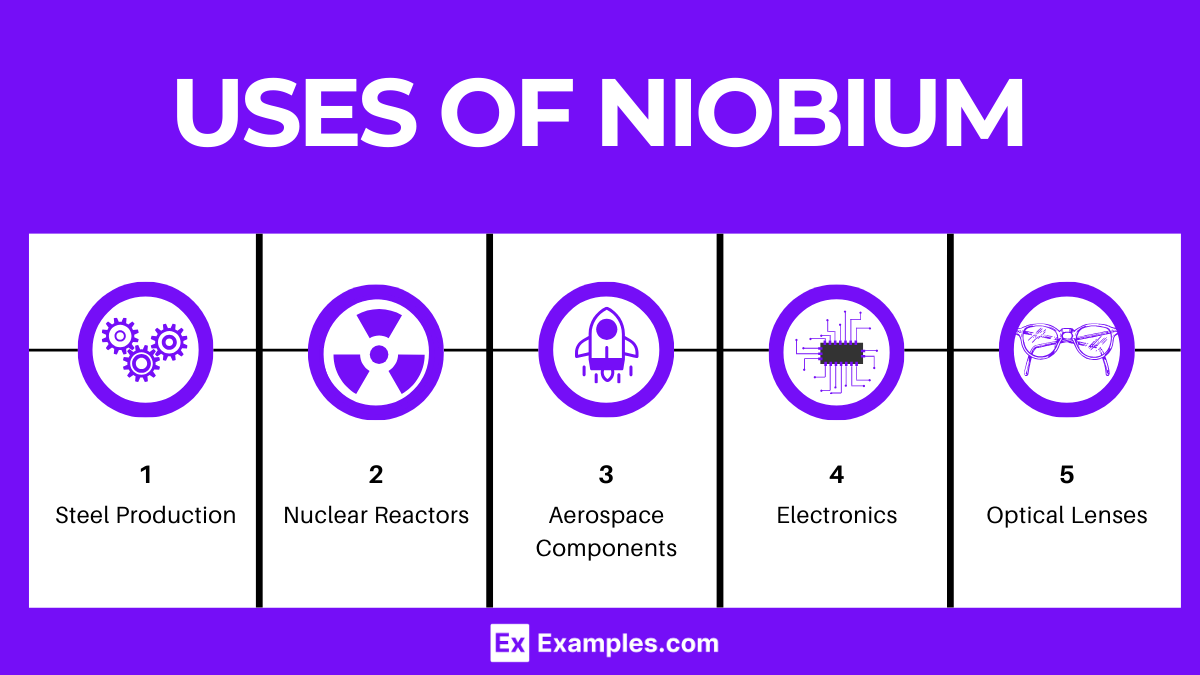
One of niobium’s most prized qualities is its remarkable strength at high temperatures. Unlike many metals that lose their structural integrity when subjected to intense heat, niobium maintains its rigidity and robustness. This characteristic is particularly critical in environments where materials are pushed to their thermal limits, such as within jet engines, rocket nozzles, and industrial furnaces. When alloyed with other metals, niobium forms superalloys that exhibit superior creep resistance—the tendency of a material to deform permanently under mechanical stress when exposed to high levels of heat over extended periods. These superalloys allow for higher operating temperatures in critical components, directly translating to enhanced efficiency and performance in complex machinery. Furthermore, niobium boasts a relatively high melting point (2,477 °C or 4,491 °F), contributing to its stability in extreme thermal conditions, which is crucial for applications requiring endurance and reliability under stress.
Superconductivity and Chemical Inertness
Beyond its mechanical strength, niobium possesses another truly remarkable property: superconductivity. Below a critical temperature, niobium becomes a superconductor, meaning it can conduct electricity with zero resistance. It has the highest critical temperature among elemental superconductors at atmospheric pressure (9.2 K or -263.95 °C), making it a foundational material for superconducting technologies. This property is not merely an academic curiosity; it has profound implications for energy efficiency and the generation of incredibly strong magnetic fields.
Furthermore, niobium exhibits excellent chemical inertness. It is highly resistant to corrosion from a wide range of acids and other corrosive agents, even at elevated temperatures. This inertness, coupled with its non-toxicity, makes it an ideal material for applications where purity, stability, and resistance to degradation are paramount, particularly in medical implants and certain chemical processing equipment. Its ability to form a stable, protective oxide layer contributes significantly to this corrosion resistance, ensuring longevity and reliability in harsh chemical environments.
Powering the Skies: Niobium in Aerospace and Defense
The aerospace and defense industries are relentless in their pursuit of materials that offer superior performance under extreme conditions. For these sectors, every gram saved, every degree of heat resisted, and every increment of strength gained translates directly into enhanced safety, fuel efficiency, and operational capability. Niobium, with its unique blend of properties, has become an indispensable element in crafting the next generation of aircraft and spacecraft.
Enhancing Jet Engines and Turbines
The development of modern jet engines has been fundamentally linked to advancements in high-temperature materials, and niobium plays a starring role in this narrative. Within a jet engine, turbine blades and other critical components are subjected to immense centrifugal forces and temperatures that can exceed 1,700 °C. Niobium-containing superalloys, particularly nickel-based alloys like Inconel 718 and Mar-M 247, are extensively used in these hot sections. The addition of niobium to these alloys significantly improves their strength, creep resistance, and fatigue life at elevated temperatures. This allows engines to operate at higher combustion temperatures, leading to greater thrust, improved fuel efficiency, and reduced emissions—factors that are vital for both commercial aviation and military aircraft. Without materials like niobium, the performance benchmarks achieved by contemporary jet propulsion systems would simply not be attainable.
Structural Components for Extreme Environments
Beyond engine internals, niobium’s properties also make it suitable for various structural components that face extreme environmental challenges. In rockets and spacecraft, where materials must withstand the vacuum of space, extreme temperature fluctuations, and corrosive propellants, niobium alloys provide the necessary robustness and reliability. For instance, in re-entry vehicles, parts of the heat shield or structural elements might incorporate niobium to manage thermal stress. In military applications, its use extends to guided missiles, where high-temperature resistance and strength are critical for maintaining aerodynamic integrity and performance during high-speed flight. The ability of niobium to form stable compounds and alloys with other refractory metals further broadens its utility, allowing engineers to tailor material properties precisely for specific, demanding applications within the defense sector, from armor plating to advanced sensor housings.
The Future of Energy and Data: Niobium in Superconductors and Electronics
The superconducting property of niobium is not merely a scientific curiosity; it is a foundational technology driving major advancements in energy, medical imaging, and particle physics. Its ability to conduct electricity with zero loss has opened doors to revolutionary applications that are transforming our understanding of the universe and improving human health.
Advancing MRI Technology and Particle Accelerators
Perhaps the most widespread and life-changing application of niobium’s superconductivity is in medical diagnostics, specifically Magnetic Resonance Imaging (MRI) scanners. The powerful magnetic fields required for MRI are generated by superconducting coils made primarily from niobium-titanium (NbTi) or niobium-tin (Nb3Sn) alloys. These coils, when cooled to cryogenic temperatures, can carry enormous currents without resistance, creating stable and intense magnetic fields that enable highly detailed images of the body’s soft tissues. This technology is non-invasive and provides invaluable diagnostic information for countless medical conditions.

Similarly, in fundamental physics research, niobium is critical for particle accelerators like the Large Hadron Collider (LHC) at CERN. Here, vast quantities of niobium-titanium and niobium-tin wires form the superconducting magnets that guide and accelerate particles to nearly the speed of light. These powerful magnets are essential for creating the conditions necessary to probe the most basic constituents of matter and uncover the universe’s deepest secrets. The precision and strength of these niobium-based magnets are unparalleled, making them indispensable tools for scientific discovery.
High-Performance Electronics and Capacitors
While its role in superconductors is dominant, niobium also finds niche applications in high-performance electronics, particularly in specialized capacitors. Niobium-oxide capacitors are a more recent alternative to tantalum capacitors, offering comparable or superior performance in certain metrics, such as higher energy density and improved stability. These capacitors are crucial components in miniature electronic devices, including smartphones, laptops, and automotive electronics, where space is at a premium and reliable energy storage and filtering are essential. The stable dielectric properties of niobium oxide make these capacitors highly efficient and durable, contributing to the miniaturization and enhanced functionality of modern electronic gadgets. Its use here helps reduce component size and improve reliability, pushing the boundaries of what portable technology can achieve.
Revolutionizing Healthcare and Everyday Life: Diverse Applications
Beyond its high-profile roles in aerospace and superconductivity, niobium’s versatility extends into numerous other sectors, impacting healthcare, manufacturing, and even environmental sustainability. Its unique combination of properties makes it an ideal candidate for applications that demand both high performance and specific material characteristics.
Biocompatibility in Medical Devices
Niobium’s excellent biocompatibility—its ability to exist in harmony with living tissue without causing adverse reactions—makes it a highly valued material in the medical field. It is a preferred choice for certain medical implants, including pacemakers, prosthetic devices, and surgical instruments. Its non-toxic nature and resistance to corrosion in bodily fluids ensure the long-term safety and functionality of these devices within the human body. This biological inertness is critical for patient well-being and the longevity of implanted technology, minimizing the risk of rejection or inflammation. Furthermore, its strength and ductility allow for the fabrication of complex, durable shapes required for sophisticated medical interventions.
Precision Optics and High-Strength Steel Alloys
In the realm of optics, niobium oxide is used to create high-quality optical coatings on lenses for cameras, eyeglasses, and scientific instruments. These coatings improve light transmission, reduce glare, and enhance the overall optical performance, contributing to clearer images and more efficient optical systems. Its high refractive index and excellent adhesion properties make it an ideal choice for multi-layer optical stacks.
Niobium also plays a crucial role in metallurgy, particularly in the production of high-strength, low-alloy (HSLA) steels. Even small additions of niobium (typically less than 0.1%) significantly enhance the strength, toughness, and weldability of steel. This microalloying effect creates finer grain structures and precipitates that impede dislocation movement, resulting in materials that are both stronger and more ductile. HSLA steels are extensively used in structural applications, automotive components, pipelines, and bridges, where weight reduction and improved safety are paramount. This application underscores niobium’s ability to impart significant performance benefits even in trace amounts.
Catalytic Converters and Sustainable Technologies
Niobium is also finding its place in environmental technologies. Niobium-based catalysts are being developed for various industrial processes, including those aimed at reducing pollutants and improving energy efficiency. For example, niobium compounds can be used in catalytic converters to reduce harmful emissions from internal combustion engines, offering a potential alternative or supplement to more expensive platinum-group metals. Its catalytic properties are also being explored for sustainable chemical synthesis and hydrogen production, which are critical for developing cleaner energy solutions and reducing the environmental footprint of industrial activities. This emerging role highlights niobium’s potential as a facilitator for green technology and sustainable development.
The Road Ahead: Niobium’s Evolving Role in Emerging Technologies
As technological innovation continues at an unprecedented pace, the demand for advanced materials with unique properties will only grow. Niobium, with its versatile characteristics, is poised to play an even greater role in shaping the technologies of tomorrow, from next-generation energy storage to the cutting edge of quantum computing.
Next-Generation Batteries and Energy Storage
The global shift towards renewable energy and electric vehicles necessitates significant advancements in energy storage solutions. Niobium is being actively researched for its potential in improving battery technology, particularly in anode materials for lithium-ion batteries. Niobium pentoxide (Nb2O5) offers the promise of faster charging and discharging rates, as well as enhanced stability and longevity compared to traditional graphite anodes. This could lead to electric vehicles that charge in minutes rather than hours and grid-scale energy storage systems that are more efficient and reliable. Research into niobium-based supercapacitors also holds potential for high-power applications requiring rapid energy delivery and capture, further solidifying its role in the future of sustainable energy.
Quantum Computing and Advanced Materials Research
Looking further into the future, niobium is emerging as a material of interest in the nascent field of quantum computing. Its superconducting properties are crucial for creating the ultracold environments and superconducting circuits necessary for building quantum processors. Superconducting qubits, which are the fundamental building blocks of many quantum computers, often rely on thin films or junctions involving niobium. As quantum computing progresses from experimental stages to practical applications, the demand for high-purity, precisely engineered niobium components is expected to increase significantly.
Furthermore, ongoing advanced materials research continues to uncover new ways to leverage niobium’s properties. This includes developing novel niobium alloys with even greater strength-to-weight ratios, exploring its potential in additive manufacturing (3D printing) of complex components, and investigating its role in smart materials and sensor technologies. The continuous innovation in material science ensures that niobium will remain at the forefront of technological development, underpinning a wide array of future innovations that are currently only on the horizon.
In conclusion, niobium is far more than just another element on the periodic table. It is a critical enabler of high technology, silently powering everything from medical miracles and global communication networks to aerospace marvels and the very future of energy. Its unique blend of strength, superconductivity, and biocompatibility ensures its continued relevance and growing importance in an increasingly interconnected and technologically driven world. As we push the boundaries of what’s possible, niobium will undoubtedly remain an unsung hero, an essential component in the ongoing march of human innovation.
aViewFromTheCave is a participant in the Amazon Services LLC Associates Program, an affiliate advertising program designed to provide a means for sites to earn advertising fees by advertising and linking to Amazon.com. Amazon, the Amazon logo, AmazonSupply, and the AmazonSupply logo are trademarks of Amazon.com, Inc. or its affiliates. As an Amazon Associate we earn affiliate commissions from qualifying purchases.