
The Great War, spanning from 1914 to 1918, is often remembered for the harrowing stalemate of trench warfare. However, beneath the tactical deadlock lay an unprecedented explosion of engineering and scientific discovery. World War I served as a violent laboratory where 19th-century tactics met 20th-century technology, forever changing the trajectory of hardware, software logic, and global communication.
In the tech niche, we often focus on the “next big thing,” but many of our current gadgets—from the GPS in our smartphones to the encrypted messaging apps we use daily—have their DNA rooted in the rapid-fire prototyping of the early 1900s. This article explores the transformative technologies of World War I and how they laid the groundwork for the modern digital and mechanical landscape.

1. Mechanized Warfare: The Evolution of the Tank and Heavy Machinery
Before 1914, the “internal combustion engine” was a luxury novelty. By 1918, it was the beating heart of the modern military-industrial complex. The need to break the “no man’s land” deadlock led to the birth of the tank, a technological marvel that combined armor, propulsion, and firepower into a single mobile unit.
The Birth of the “Landship”
The development of the tank began under the secretive “Landship Committee,” championed by Winston Churchill. The goal was to create a machine capable of navigating craters and crushing barbed wire. The first prototype, “Little Willie,” was a proof of concept for the continuous track system. While initially slow and prone to mechanical failure, the iteration process—much like modern software beta testing—led to the Mark I. This machine utilized a rhomboid shape to climb obstacles, representing a massive leap in mechanical engineering and load-bearing design.
Impact on Modern Robotics and Industrial Automation
The engineering hurdles overcome during the development of WWI tanks directly influenced the heavy machinery and robotics industries of today. The Caterpillar track system, refined for the mud of the Somme, became the standard for modern construction equipment. Furthermore, the concept of a “mobile autonomous unit” paved the way for the early theory of robotics. Today’s unmanned ground vehicles (UGVs) used in logistics and defense are the direct descendants of these first heavy-metal prototypes.
2. The Skies as a New Frontier: Aviation and Propulsion Tech
At the start of the war, airplanes were flimsy structures of wood and fabric, used primarily for scouting. By the end, they were sophisticated metal-framed machines capable of high-speed maneuvers and strategic bombing. The “tech stack” of aviation saw more growth in four years than it had in the previous decade.
The Interrupter Gear: A Masterclass in Synchronization
One of the most significant “hardware hacks” of the war was the synchronization gear, or interrupter gear. Early pilots struggled to shoot forward without destroying their own wooden propellers. Dutch engineer Anthony Fokker perfected a mechanical linkage that allowed a machine gun to fire only when the propeller blade was not in front of the muzzle. This was a complex timing problem solved through mechanical logic—essentially an analog precursor to the precision timing seen in modern CPU cycles.
Reconnaissance and the Precursor to Geospatial Data
Before satellites and drones, there were aerial cameras. World War I saw the first systematic use of aerial photography to map enemy positions. British and French engineers developed high-resolution (for the time) cameras that could be mounted to the side of cockpits. This was the birth of “intelligence, surveillance, and reconnaissance” (ISR). The data gathered from these flights had to be processed, analyzed, and mapped—a workflow that mirrors the modern data science pipeline used in Geographic Information Systems (GIS) and Google Earth today.
3. Breaking the Silence: Wireless Communication and Signal Processing
Communication technology underwent a digital revolution of sorts during the war. The reliance on physical telegraph wires was a major vulnerability; if a shell cut the wire, the unit was silenced. This necessitated the rapid advancement of “wireless” technology.
Wireless Telegraphy and the Vacuum Tube
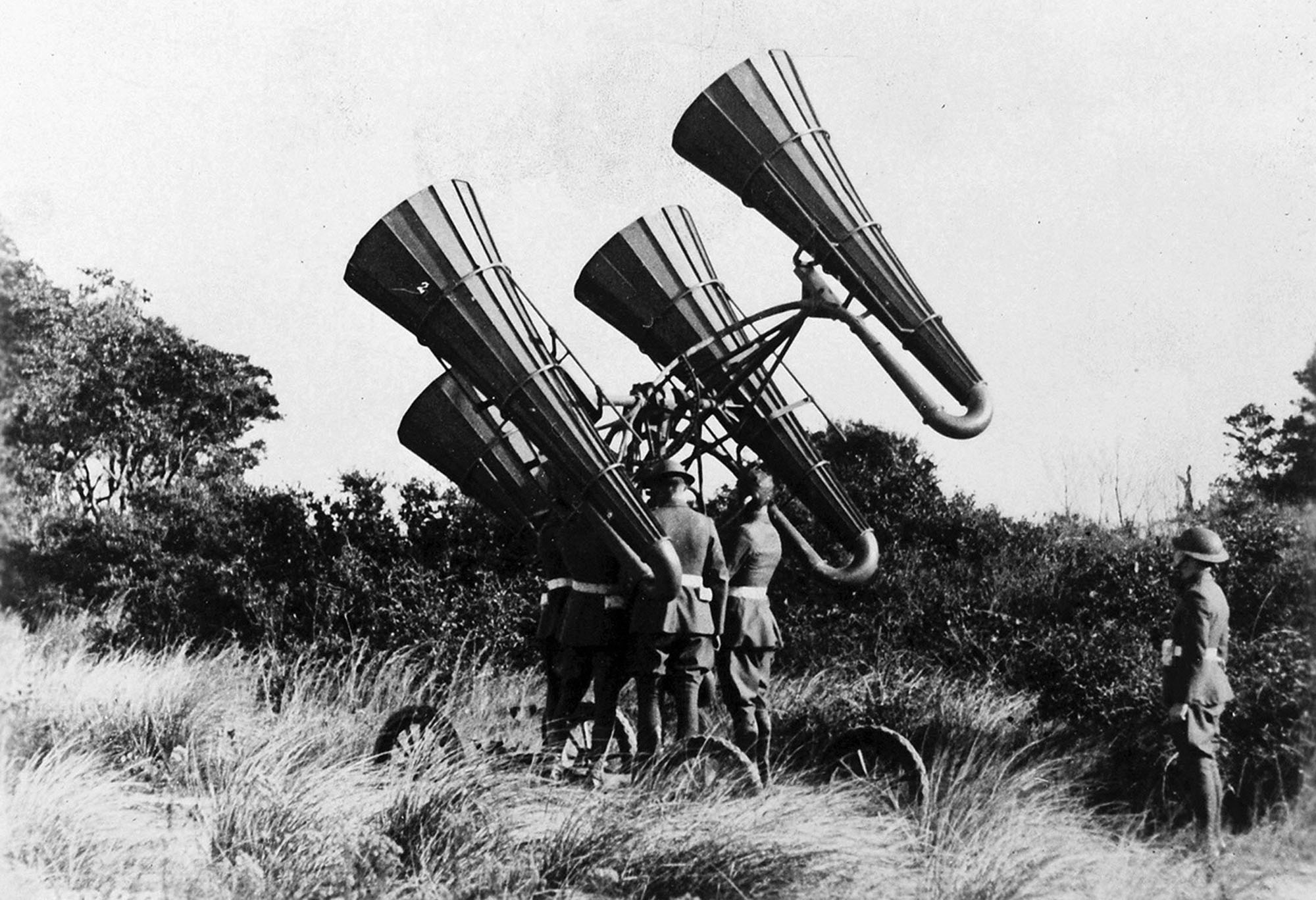
While radio (wireless telegraphy) existed before the war, the equipment was bulky and unreliable. The exigencies of the battlefield forced engineers to miniaturize components and improve signal clarity. The development of the vacuum tube (thermionic valve) was the breakthrough moment. It allowed for the amplification of radio signals, making voice transmission (radiotelephony) possible from ground to air. In the world of tech history, the vacuum tube is the “great-grandfather” of the transistor, the foundational component of every modern computer.
The Roots of Encryption and Digital Security
As wireless communication grew, so did the need for privacy. World War I saw an arms race in cryptography. The use of trench codes and the development of early rotor machines for encryption laid the groundwork for modern cybersecurity. The logic used to break these codes—identifying patterns in data packets—is fundamentally the same logic used by modern AI-driven security tools to detect anomalies in network traffic. The war proved that information was just as valuable a resource as fuel or ammunition.
4. Subsurface Technology: Sonar and Naval Engineering
The battle for the Atlantic was fought with technology that the world could not see. The German U-boat (submarine) was a technological disruptor that threatened to starve the Allied nations by sinking merchant ships. To counter this, “underwater tech” had to be invented from scratch.
Hydrophones and Passive Acoustic Sensing
The first solution to the submarine threat was the hydrophone—an underwater microphone designed to “listen” for the mechanical thrum of a U-boat engine. This was the first major application of acoustic signal processing. Engineers had to learn how to filter out “noise” (waves, marine life) to find the “signal” (the enemy). This distinction between signal and noise remains a core principle in modern data analytics and audio engineering.
From ASDIC to Modern Sonar
By 1918, the Allies had developed ASDIC (later known as Sonar), which moved from passive listening to active detection by emitting sound pulses and measuring the echo. This technology didn’t just win naval battles; it revolutionized our understanding of the ocean floor. Today, the same principles of echolocation and pulse-echo timing are used in everything from medical ultrasounds to the LiDAR sensors found in self-driving cars.
5. Chemical Engineering and the Dawn of Medical Tech
While much of WWI tech was dedicated to destruction, the period also saw massive leaps in “Life Tech”—biochemical engineering and medical devices that saved millions of lives in the century that followed.
The Mobile X-Ray: “The Little Curies”
Marie Curie, a pioneer in radioactivity, recognized that surgeons needed to see bullets and shrapnel inside wounded soldiers to operate effectively. she developed “Petites Curies”—mobile X-ray units powered by car engines. This was one of the first instances of “point-of-care” diagnostic technology. It transitioned the X-ray from a laboratory curiosity to a portable, essential tool of modern medicine, leading directly to the mobile diagnostic apps and portable imaging devices we see in modern healthcare.
Synthetic Materials and Mass Production
The war created a shortage of natural resources like rubber and silk, leading to the rise of synthetic chemistry. Scientists worked to develop synthetic rubber and early plastics to keep the war machine running. This period catalyzed the polymers industry, which eventually gave us the plastic casings for our laptops and the synthetic fibers in our wearable tech. The ability to “program” matter at a molecular level to achieve specific physical properties is a direct legacy of this era’s material science.
Conclusion: The Legacy of Wartime R&D
World War I was a tragedy of immense proportions, but from a purely technological perspective, it was a catalyst of extreme efficiency. It proved that when resources are pooled and the “need to innovate” becomes a matter of national survival, the pace of technological change can accelerate by orders of magnitude.
The transition from horses to tanks, from carrier pigeons to radio, and from manual mapping to aerial surveillance set the stage for the 20th century’s digital explosion. Today, as we look at AI, quantum computing, and space exploration, we are still standing on the shoulders of the engineers who, under the pressure of the Great War, figured out how to make machines fly, communicate through the air, and see through the dark. The “tech trends” of 1914 were the building blocks of the digital world we inhabit today.
aViewFromTheCave is a participant in the Amazon Services LLC Associates Program, an affiliate advertising program designed to provide a means for sites to earn advertising fees by advertising and linking to Amazon.com. Amazon, the Amazon logo, AmazonSupply, and the AmazonSupply logo are trademarks of Amazon.com, Inc. or its affiliates. As an Amazon Associate we earn affiliate commissions from qualifying purchases.