
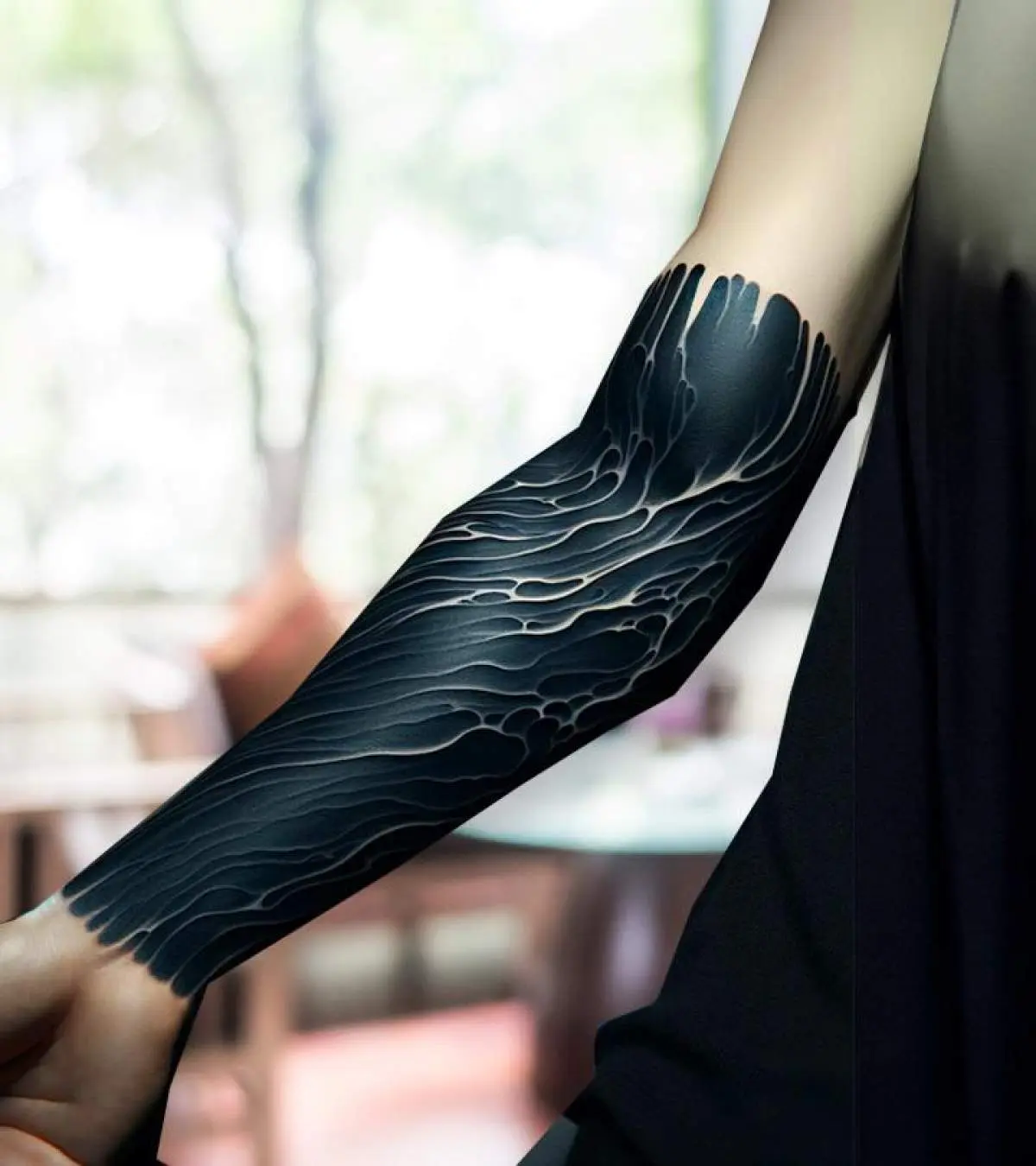
Blackout tattooing represents a profound and visually striking form of body art, demanding not only artistic skill but also a deep technical understanding of equipment and methodology. Achieving a solid, consistent, and long-lasting blackout requires precise application of ink, which is directly influenced by the choice and configuration of the tattoo needle. This exploration delves into the technical aspects of needle selection, machine compatibility, and advanced application techniques crucial for mastering the blackout process.
The Engineering of Blackout Needles: Tapers, Materials, and Configurations
The tattoo needle, far from being a simple pin, is a meticulously engineered instrument designed for specific tasks. For blackout tattoos, the primary goal is maximum ink saturation and an even, deep black field. This objective drives specific considerations regarding needle taper, material, and most critically, configuration.

Taper Specifications and Ink Flow
Needle taper refers to the length of the sharpened point of each individual needle. Tapers are categorized as short, medium, long, or extra-long.
- Short Taper (ST): Typically 1.5mm. These needles penetrate less deeply and are excellent for packing a lot of ink quickly into the upper layers of the skin. For blackouts, a short taper can be highly effective in saturating large areas, as it creates a larger puncture wound, allowing more ink to enter with each pass. The downside is potential for increased trauma if not handled expertly.
- Medium Taper (MT): Around 2.0mm. A versatile option, providing a good balance between ink saturation and skin trauma. Many artists find medium tapers a reliable choice for various applications, including large-scale filling where consistent depth is key.
- Long Taper (LT) & Extra-Long Taper (XLT): 2.5mm and 3.5mm+ respectively. These are designed for precise lines and intricate detail work, as they cause less trauma and allow for smoother penetration. While they offer superior precision, they are less efficient for high-volume ink packing required for blackouts, as they carry less ink and create smaller entry points.
For blackout work, the emphasis is on efficient, even ink deposition. Therefore, needles with short to medium tapers are generally preferred. They allow for denser ink packing, reducing the number of passes required to achieve a saturated black, which in turn minimizes overall skin trauma and healing time.
Material Science: Surgical-Grade Stainless Steel
Tattoo needles are exclusively manufactured from surgical-grade 316L stainless steel. This material is chosen for its superior properties:
- Biocompatibility: It is non-reactive with human tissue, minimizing allergic reactions or adverse effects.
- Corrosion Resistance: Essential for maintaining sterility and structural integrity, especially when exposed to various inks and skin fluids.
- Sharpness and Durability: The steel can be honed to an exceptionally sharp point and maintains this sharpness through repeated skin penetrations during a tattoo session. The precise manufacturing processes ensure each needle tip is perfectly formed and consistent across batches.
- Sterilization: The material can withstand gamma ray sterilization processes without degradation, ensuring each needle is delivered in a sterile, ready-to-use condition.
The consistency and quality of the stainless steel directly impact the tattooing process. Substandard materials can lead to dull needles, uneven ink deposition, and increased skin trauma, all of which are detrimental to a successful blackout.
Needle Configurations: The Workhorses of Blackout
The arrangement of individual needles within a grouping is critical for different tattooing techniques. For blackout work, the following configurations are paramount:
- Magnum (M1 or M2): Magnum needles are the undisputed champions for packing color and shading large areas.
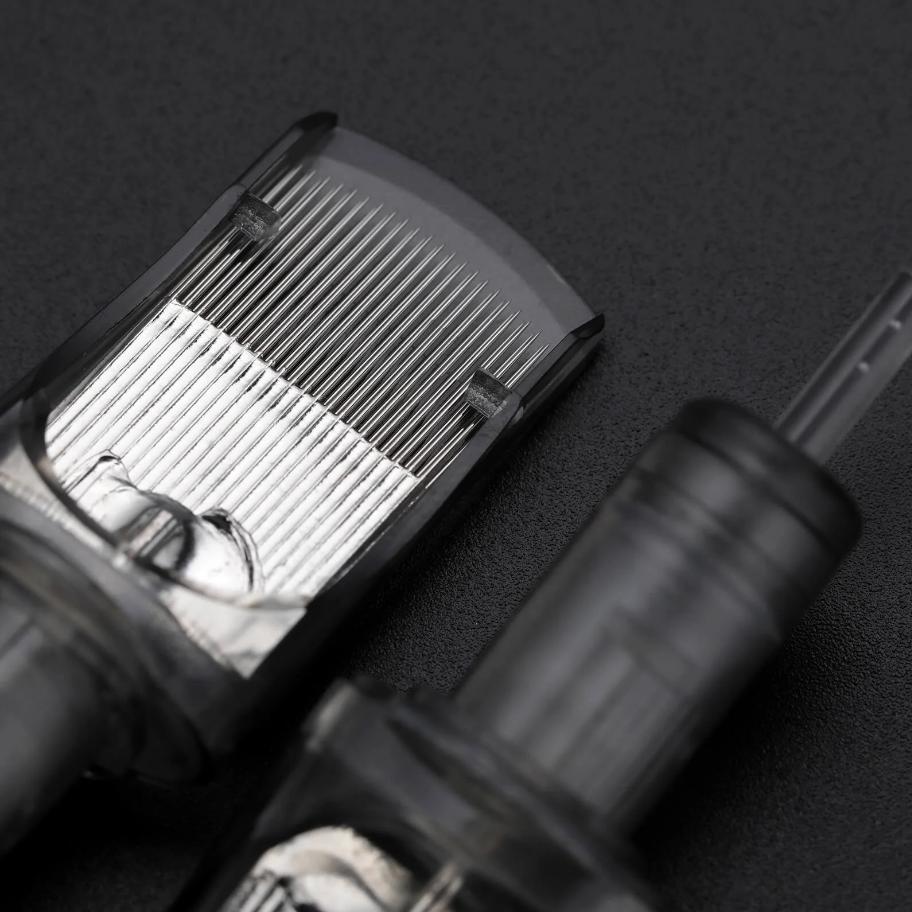
- Weaved Magnum (M1): These consist of two rows of needles that are offset, creating a wider coverage area with fewer passes. They are the most common choice for blackouts due to their efficiency in laying down solid color evenly. The offset arrangement allows for softer edges and consistent saturation without harsh lines. Sizes range from 7M1 up to 49M1 or larger, with larger groupings being ideal for very extensive blackout areas.
- Stacked Magnum (M2): These needles are tightly packed in two rows, directly on top of each other. While also good for packing, they can be more aggressive than M1s and are often used for very dense color packing or covering existing tattoos where maximum pigment deposition is needed. The tighter configuration can make them slightly less forgiving than M1s, requiring a very steady hand to avoid excessive trauma.
- Soft Edge Magnum (SEM): Similar to weaved magnums but with the outer needles slightly shorter or less dense, creating a softer edge. While primarily used for blending and shading, a large SEM can still be effective for blackout if the artist is skilled in working the edges and overlaps to ensure full saturation.
- Round Shaders (RS): These are round groupings of needles, with the tips slightly splayed. While primarily used for shading smaller areas or doing thick lines, larger RS groupings (e.g., 14RS, 18RS) can be used for smaller blackout sections or for detailed fill-in work where a magnum might be too large. They offer a good balance of saturation and control.
For the most efficient and least traumatic blackout, large weaved magnums (M1) are the go-to. Their wide spread allows for quick, even coverage, minimizing passes and ensuring a uniform black field with proper technique. The specific size will depend on the area being tattooed, with larger areas benefiting from larger groupings.
Machine Synergy: Pairing Needles with Tattoo Technology
The performance of a needle is inextricably linked to the tattoo machine it’s paired with. The machine’s stroke, motor power, and give all influence how effectively the chosen needle configuration applies ink for a blackout.
Understanding Machine Types and Their Impact
- Rotary Machines: Modern rotary machines are highly versatile and increasingly favored for their consistency, low vibration, and quiet operation. They deliver a consistent, direct drive, making them excellent for packing color. When paired with large magnums, a powerful rotary machine can deliver smooth, even passes, leading to uniform black saturation. Key technical considerations include stroke length (typically 3.5mm to 4.5mm for packing), motor torque (to drive large needle groupings without bogging down), and voltage settings.
- Coil Machines: Traditional coil machines offer a distinct feel and “hit.” For blackout work, a well-tuned “shader” coil machine, typically set up with a slower speed and longer contact screw throw, can be very effective. The characteristic “thump” of a coil machine can effectively drive large magnum groupings into the skin, packing ink densely. However, coil machines require more expertise in tuning and can be heavier, leading to artist fatigue over long blackout sessions.
Regardless of machine type, ensuring adequate power is crucial. Blackout work involves driving large needle groupings into the skin repeatedly. A machine with insufficient power or an unstable power supply will struggle to maintain consistent needle depth and speed, leading to patchy results and increased skin trauma. Digital power supplies with precise voltage control are essential for fine-tuning machine performance for optimal ink saturation.
Needle Throw and Depth
The “throw” or “excursion” of the needle refers to how far the needle extends from the tube tip. For blackout work, a slightly longer throw can be advantageous. It allows the artist to clearly see the needle entering the skin and ensures consistent ink flow. However, excessive throw can increase wobble and skin trauma.
- Consistent Depth: Maintaining a consistent needle depth (typically 1.5mm to 2mm into the dermis) is paramount for blackouts. Too shallow, and the ink will fade rapidly; too deep, and it can cause blowouts and excessive scarring. Modern tattoo machines, especially rotaries with adjustable stroke and consistent drive, assist greatly in maintaining this crucial depth. Many machines also offer adjustable “give” or dampening systems that can be tailored for packing, providing a softer or harder hit as needed.
The Art and Science of Ink Saturation: Technical Application for Blackouts
Beyond needle and machine selection, the technical application technique is the final variable in achieving a flawless blackout. This involves careful consideration of speed, angle, and layering.
Speed and Angle for Optimal Saturation
- Machine Speed (Voltage): For blackout work, a moderate to high machine speed is generally preferred. Too slow, and the needle can drag, causing trauma and inconsistent ink delivery. Too fast, and the machine may skip, leading to patchy results. Finding the sweet spot, often in the 7-9 volt range for rotaries (depending on the machine), allows the needles to rapidly penetrate and deposit ink efficiently.
- Hand Speed: The speed at which the artist moves their hand across the skin must be synchronized with the machine’s speed. For dense packing, a slower, deliberate hand speed ensures that the needles have enough time to fully deposit ink into each puncture before the machine moves on. Too fast a hand speed will result in inadequate saturation.
- Angle of Attack: Holding the machine at a consistent angle, typically between 45 to 75 degrees, is vital. This ensures even penetration of all needles within a grouping. A too-steep or too-shallow angle can cause uneven ink distribution and an inconsistent black finish.
Layering and Overlapping Techniques
Achieving a truly solid blackout often requires multiple passes and careful layering.
- First Pass (Base Layer): Using a large magnum, apply a uniform base layer of ink across the area. This pass should aim for consistent, moderate saturation.
- Second Pass (Refinement): Once the first pass is complete, and the skin has had a moment to settle, a second pass can be applied. This pass focuses on filling any lighter spots or inconsistencies from the first pass. This may involve slightly altering the direction of the passes (e.g., perpendicular to the first pass) to ensure comprehensive coverage.
- Stretch and Wipe: Proper skin stretching is fundamental for all tattooing but particularly crucial for blackouts. Stretching creates a smooth, taut canvas, allowing needles to penetrate consistently. Regularly wiping the excess ink and blood allows the artist to clearly see the progress and identify areas that require more saturation.
- Healing Process Considerations: A technically perfect blackout also accounts for the healing process. Overworking the skin in pursuit of immediate “perfect black” can lead to excessive trauma, scabbing, and ultimately, a faded or scarred result. Understanding when to stop and allow the skin to heal is a critical part of the technical application. Some blackouts benefit from a touch-up session after healing to achieve absolute uniformity.
Advancements in Needle Technology and Sterilization
The tattoo industry continues to see incremental advancements in needle technology, primarily focused on enhancing safety, performance, and artist convenience.
Cartridge Systems and Membrane Technology
The widespread adoption of needle cartridge systems has revolutionized tattoo hygiene and workflow.
- Sterile Barrier: Cartridges incorporate a safety membrane that prevents blood, ink, and other fluids from flowing back into the tattoo machine, thereby preventing cross-contamination. This is a significant leap in digital security for the procedure.
- Quick Change: Cartridges allow for rapid needle changes, streamlining the tattooing process and making it more efficient for artists, especially during complex pieces or long sessions.
- Precision Manufacturing: Modern cartridges are produced with incredibly tight tolerances, ensuring that needles are perfectly aligned and consistent, which is paramount for smooth ink delivery and minimizing skin trauma.
Environmental and Ergonomic Considerations
While not directly impacting needle performance, advancements in manufacturing also consider environmental impact (e.g., recyclable plastics for cartridges) and ergonomics. Lighter, well-balanced machines, combined with high-performance cartridges, reduce artist fatigue, allowing for more consistent application over extended periods.
Troubleshooting Common Technical Challenges in Blackout Tattooing
Even with the right equipment, blackout tattooing can present technical hurdles.
Patchy Saturation
- Cause: Inconsistent hand speed, insufficient machine power, wrong needle grouping for the area, or inadequate stretching.
- Solution: Ensure consistent hand speed synchronized with machine voltage. Re-evaluate needle size and configuration (larger magnums for larger areas). Improve skin stretching techniques. Consider a machine with more torque if struggling to drive large groupings.
Excessive Trauma or Blowouts
- Cause: Too deep penetration, overworking a single area, too aggressive a needle taper, or incorrect machine speed/hit.
- Solution: Adjust needle depth, ensure consistent and controlled passes, consider a slightly longer taper (medium) if short tapers are causing too much trauma, or adjust machine “give” to a softer setting.
Inconsistent Healing
- Cause: Overworking the skin, poor aftercare, or underlying skin conditions.
- Solution: Emphasize proper aftercare instructions. Avoid excessive passes in a single session. Recognize the limits of the skin’s endurance.
Mastering the blackout tattoo is a testament to an artist’s technical proficiency. By understanding the intricate engineering of needles, their synergy with modern tattoo machines, and the scientific principles behind ink saturation, artists can consistently achieve the deep, uniform black that defines this powerful aesthetic. The continuous evolution of tattoo technology, particularly in needle and machine design, further empowers artists to push the boundaries of this demanding art form.
aViewFromTheCave is a participant in the Amazon Services LLC Associates Program, an affiliate advertising program designed to provide a means for sites to earn advertising fees by advertising and linking to Amazon.com. Amazon, the Amazon logo, AmazonSupply, and the AmazonSupply logo are trademarks of Amazon.com, Inc. or its affiliates. As an Amazon Associate we earn affiliate commissions from qualifying purchases.