
For most individuals, a vehicle represents the second-largest financial investment they will make, trailing only behind the purchase of a home. Yet, unlike real estate—which ideally appreciates over time—a car is a depreciating asset. Understanding the answer to the question “what is my car worth” is not merely a matter of curiosity; it is a fundamental aspect of personal finance and strategic asset management. Whether you are looking to sell, trade in for a newer model, or simply calculate your net worth, accurately assessing the market value of your vehicle is crucial for making informed financial decisions.
In this comprehensive guide, we will analyze the financial variables that dictate automotive value, the tools used to measure equity, and the strategic steps you can take to protect your investment.
The Mechanics of Automotive Depreciation: Why Your Asset Loses Value
Depreciation is the single largest cost of car ownership, often exceeding the cost of fuel, insurance, or maintenance. To understand what your car is worth, you must first understand the rate at which its value erodes.
The Immediate Impact of New Car Purchase
The moment a new vehicle is driven off the dealership lot, it typically loses between 10% and 20% of its value. This is a phenomenon known as “instant depreciation.” From a financial perspective, this occurs because the vehicle transitions from a “new” commodity to a “used” one. The premium paid for the “new” status—including the manufacturer’s warranty and the pristine condition—evaporates immediately upon title transfer. Over the first twelve months, a car can lose up to 30% of its total value, making the initial years of ownership the most expensive from an equity standpoint.
Brand Equity and Resale Stability
Not all vehicles depreciate at the same rate. Brand equity plays a significant role in determining long-term value. Certain manufacturers, known for reliability and low cost of ownership (such as Toyota, Honda, or Subaru), tend to see their vehicles retain a higher percentage of their original MSRP. Conversely, luxury vehicles often suffer from steeper depreciation curves because their maintenance costs are higher and the pool of potential used-car buyers is smaller. Investors in automotive assets should look at “residual value” forecasts before purchasing to mitigate future financial loss.
Essential Financial Tools for Determining Market Value
In the modern digital economy, determining “what my car is worth” no longer requires a trip to a local appraiser. Several sophisticated financial tools and databases provide real-time market data based on millions of transactions.
Algorithmic Pricing Models: KBB and Edmunds
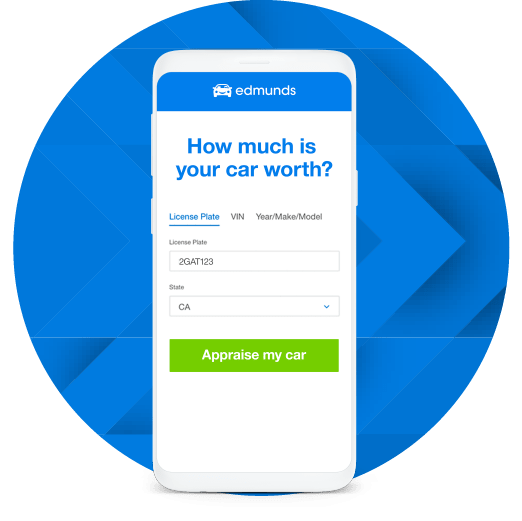
Kelly Blue Book (KBB) and Edmunds are the industry standards for consumer-facing valuations. These platforms utilize complex algorithms that factor in historical sales data, current auction results, and regional demand. When using these tools, it is important to distinguish between “Trade-In Value” and “Private Party Value.”
- Trade-In Value: This is the amount a dealer will offer you. It is lower because the dealer must account for reconditioning costs and a profit margin.
- Private Party Value: This is what you can expect to receive if you sell the car yourself to another individual. While higher, it requires more effort and involves more financial risk.
Real-World Transaction Data: J.D. Power and Black Book
While KBB is popular among consumers, professionals in the banking and insurance sectors often rely on J.D. Power (formerly NADA) and Black Book. These tools are often more conservative and reflect wholesale pricing—the price cars fetch at dealer-only auctions. For a car owner, checking these values provides a “floor” for your car’s worth. If you are underwater on a car loan (meaning you owe more than the car is worth), these are the figures your lender will be looking at when considering refinancing or total-loss insurance payouts.
Key Variables That Influence Your Car’s Financial Worth
Beyond the make and model, several specific variables act as levers that can either pull your car’s value up or push it down. Understanding these allows you to time your exit from the asset effectively.

The Role of Odometer Readings in Asset Devaluation
Mileage is the most significant variable in the valuation equation. In the eyes of a financial appraiser, high mileage is synonymous with an increased risk of mechanical failure. There are certain “psychological barriers” in the used car market—most notably the 30,000, 60,000, and 100,000-mile marks. Crossing these thresholds often leads to a disproportionate drop in value. If you are looking to maximize your ROI, selling your vehicle just before it hits a major mileage milestone can save you thousands of dollars in depreciation.
Regional Market Demand and Seasonal Trends
The value of your car is heavily influenced by geography and timing. A rear-wheel-drive convertible will command a higher price in Florida during the spring than it will in Maine during the winter. Similarly, four-wheel-drive SUVs see a spike in value in northern climates just before the first snowfall. Understanding these micro-economic trends allows you to list your vehicle at a time when demand—and therefore price—is at its peak.
Strategic Maintenance: Protecting Your Financial Investment
While you cannot stop depreciation entirely, you can slow it down. Strategic maintenance is an investment in the future resale value of the car.
Documentation as a Value-Add
A vehicle with a complete, verifiable service history is worth significantly more than an identical vehicle without records. From a financial perspective, documentation serves as “risk mitigation” for the buyer. When you can prove that oil changes, brake services, and major interval maintenance were performed on time, you justify a premium price. Keeping a digital or physical folder of every receipt is one of the simplest ways to ensure you get top dollar when it comes time to liquidate the asset.
Cosmetic vs. Mechanical Integrity
While mechanical health is paramount, the “curb appeal” of a vehicle dictates the first impression and the final negotiation. Small investments in cosmetic upkeep—such as professional detailing, paintless dent repair, or fixing a cracked windshield—often yield a 2x or 3x return on investment. If a car looks neglected, a buyer will assume it has been mechanically neglected as well, leading to “low-ball” offers that can decimate your expected return.
The Final Transaction: Optimizing Your ROI
Once you have determined “what my car is worth,” the final step is choosing the most financially advantageous way to divest.
Private Sale vs. Dealership Trade-In: The Tax Advantage Factor
The decision between selling privately and trading in at a dealership is a classic cost-benefit analysis. A private sale will almost always net you a higher gross sale price. However, you must factor in the “opportunity cost” of your time and the marketing expenses involved.
Furthermore, many jurisdictions offer a “trade-in tax credit.” For example, if you are buying a $30,000 car and trading in your old car for $10,000, you only pay sales tax on the $20,000 difference. In a state with 8% sales tax, that is an $800 savings. When calculating your car’s worth, you must include these tax implications to find the true “net” value of the transaction.
Timing the Market for Maximum Liquidity
Liquidity refers to how quickly an asset can be converted into cash without affecting its price. If you need money urgently, your car’s worth is essentially its “instant cash offer” value from platforms like Carvana or local wholesalers. If you have the luxury of time, you can hold out for a buyer willing to pay the full market value. Monitoring the “Days to Turn” (how long it takes for a specific model to sell in your area) can give you an idea of how liquid your automotive asset currently is.

Conclusion
Understanding “what my car is worth” is a vital component of holistic financial planning. A vehicle is not just a mode of transportation; it is a significant piece of your financial portfolio that requires active management. By monitoring depreciation trends, utilizing professional valuation tools, maintaining the asset’s condition, and understanding the tax implications of a sale, you can minimize the “cost of ownership” and maximize the capital you carry forward into your next investment. In the world of personal finance, knowledge of asset value is the key to maintaining a healthy balance sheet.
aViewFromTheCave is a participant in the Amazon Services LLC Associates Program, an affiliate advertising program designed to provide a means for sites to earn advertising fees by advertising and linking to Amazon.com. Amazon, the Amazon logo, AmazonSupply, and the AmazonSupply logo are trademarks of Amazon.com, Inc. or its affiliates. As an Amazon Associate we earn affiliate commissions from qualifying purchases.