
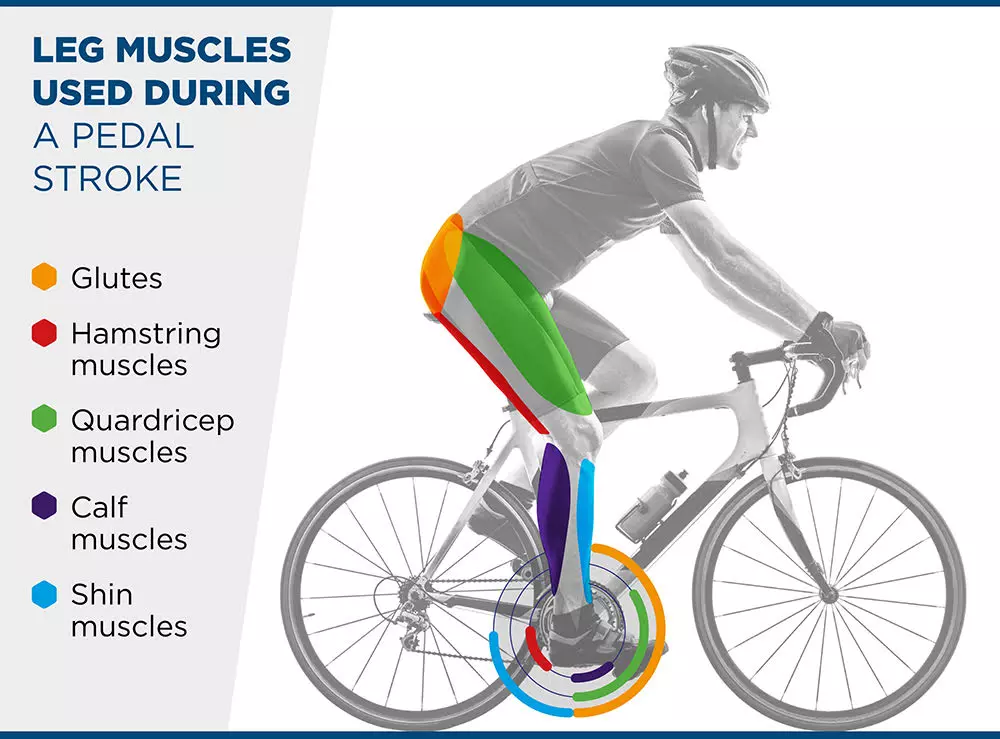
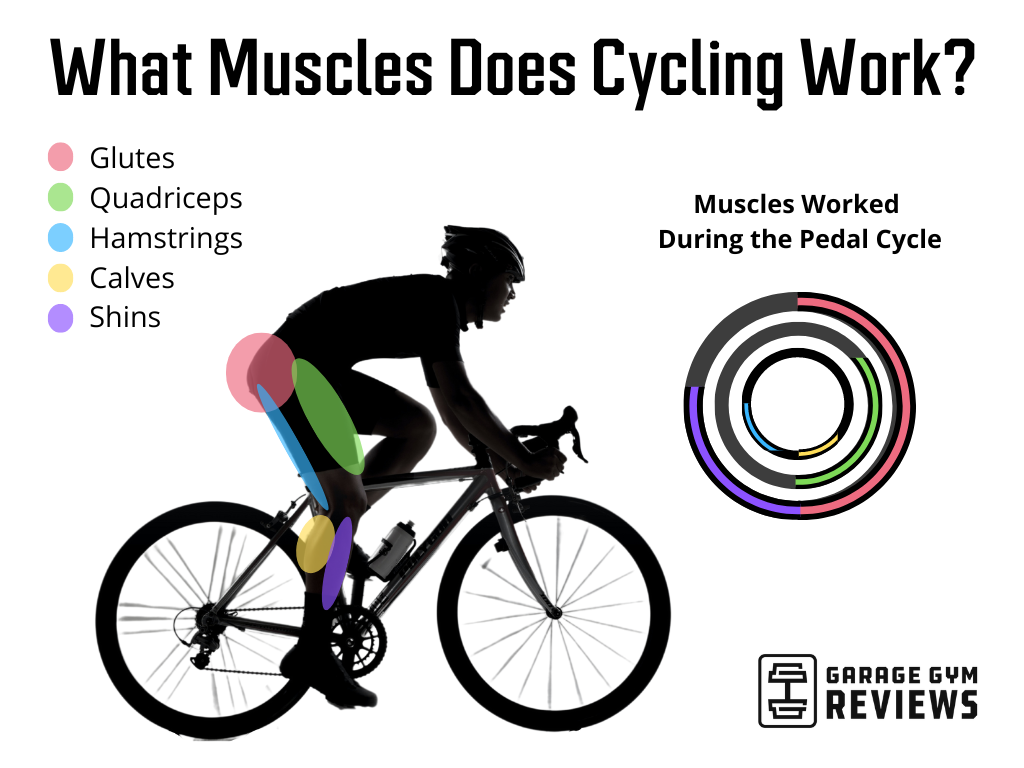
The question of “what muscles do cycling work” was once answered through simple observation and basic physiology. We knew the quadriceps pushed the pedals down, the hamstrings pulled them back up, and the glutes provided the power for climbs. However, in the era of the “connected athlete,” the answer has become significantly more sophisticated. Today, the intersection of cycling and technology—ranging from AI-driven biometrics to electromagnetic resistance trainers—has transformed our understanding of muscle recruitment from a general theory into a precise, data-driven science.
For the modern cyclist, whether a competitive professional or a data-conscious hobbyist, understanding muscle activation is no longer about feeling the “burn.” It is about interpreting the data streams provided by high-tech sensors, power meters, and virtual training ecosystems to optimize every pedal stroke.
The Digital Anatomy: Leveraging Biometric Sensors to Map Muscle Recruitment
The evolution of cycling technology has moved the laboratory into the living room. Historically, analyzing which muscles were firing during a sprint required bulky medical equipment. Today, wearable technology and integrated bike sensors provide real-time insights into the body’s mechanical output.
EMG Wearables and Real-Time Muscle Feedback
Surface Electromyography (sEMG) is the vanguard of muscle-specific cycling tech. Companies have integrated sEMG sensors into “smart bib shorts” and wearable patches that measure the electrical activity produced by skeletal muscles. These devices allow cyclists to see exactly when their vastus lateralis (outer quad) is dominating the stroke versus when the gluteus maximus takes over during a steep incline. By visualizing this data on a smartphone or head unit, riders can adjust their technique mid-ride to engage underutilized muscles, effectively “re-programming” their nervous system for better efficiency.
The Role of AI in Torque Analysis and Pedal Smoothness
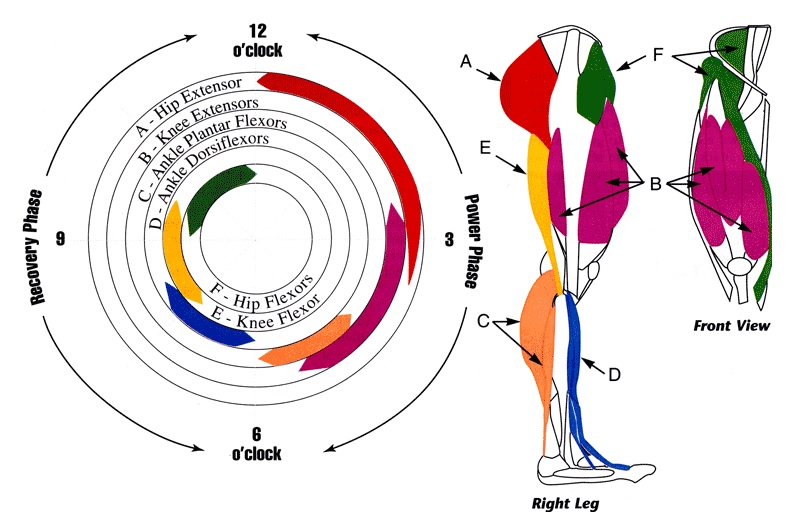
Modern power meters have evolved beyond measuring total wattage. High-end systems now offer “Torque Effectiveness” and “Pedal Smoothness” metrics. Through complex algorithms, these tools analyze the 360-degree rotation of the crank arm. This tech identifies “dead spots” in the pedal stroke—the points where muscle engagement drops off. AI-driven software then interprets this data to suggest whether a rider needs to focus on hip flexor activation during the upstroke or if their calves are over-compensating during the “push” phase, ensuring a holistic muscular workload.
Virtual Ecosystems: How Software Platforms Simulate Muscle-Specific Resistance
The rise of platforms like Zwift, Wahoo SYSTM, and Rouvy has fundamentally changed how we engage our muscular system. These are not merely video games; they are sophisticated physics engines that manipulate hardware to simulate real-world demands on the human body.
Smart Trainers and Electromagnetic Resistance
At the heart of the virtual cycling revolution is the “Smart Trainer.” Using electromagnetic resistance, these devices receive signals from software to simulate gradients. When a virtual road tilts upward to a 10% grade, the trainer increases resistance instantaneously. This forces a shift in muscle recruitment: from the high-cadence, aerobic twitch of the quadriceps on flat ground to the high-torque, anaerobic recruitment of the glutes and lower back during a climb. The technology ensures that the “work” being done matches the visual stimuli, providing a comprehensive muscular workout that mirrors the outdoors.
Gamification of Hypertrophy: Sprinting and Interval Tech
Software platforms use “Gamification” to push cyclists into high-intensity zones that trigger muscle hypertrophy (growth). During a virtual race, a “Power Up” or a sprint finish forces the user to engage fast-twitch muscle fibers in the calves and quads. The tech tracks these peak power bursts, often categorized as “Neuromuscular Power” in training apps. By analyzing these data peaks, the software can determine a rider’s “Power Duration Curve,” telling them exactly how long their muscles can sustain a specific output before failure—a level of insight that was impossible before the integration of cloud computing and cycling.
Wearable Tech and the Metabolism of Motion
While the legs do the primary work, cycling is a full-body endeavor. Modern wearable technology—beyond the bike-mounted computer—now tracks how the rest of the body supports the primary movers.
Tracking Secondary Muscle Stabilization via Accelerometers
Devices like the Apple Watch, Garmin Fenix, and Whoop strap utilize multi-axis accelerometers and gyroscopes to monitor body posture. While the quads are the engines, the core (abdominals and erector spinae) acts as the chassis. Tech-driven insights now highlight “form breakdown.” For instance, if a wearable detects excessive lateral hip movement (sway), it indicates that the core muscles are fatiguing and failing to stabilize the pelvis. This data is crucial for preventing the lower back pain often associated with long-distance cycling, as it alerts the user to re-engage their stabilizers.
Integrating Heart Rate Variability (HRV) with Muscle Fatigue
One of the most significant tech trends in fitness is the use of Heart Rate Variability (HRV) to measure recovery. Technology like the Whoop sensor or Oura ring doesn’t just look at what muscles were worked; it looks at how the nervous system is recovering from that work. If your quads are structurally repaired but your HRV is low, your “central drive”—the signal from your brain to your muscles—is dampened. This holistic tech approach prevents overtraining, ensuring that when you do work your muscles, they are physiologically prepared to handle the load.
The Future of Ergonomics: AI-Driven Bike Fitting and Performance Optimization
Even the strongest muscles are inefficient if the “machine” is poorly calibrated. The technology of bike fitting has moved from manual measurements to 3D motion capture and predictive analytics.
3D Motion Capture for Pelvic Stability
Professional fitting services now use infrared cameras and 3D motion capture (such as Retül technology) to track a cyclist’s joints within a millimeter of accuracy. This tech identifies how a saddle height adjustment can shift the workload from the knees to the hips. By optimizing the “stack and reach” of the bike, the software ensures that the glutes—the largest muscle group in the body—are in the optimal length-tension relationship to produce maximum power. This tech-heavy approach ensures that cycling “works” the muscles intended, rather than putting undue stress on the joints and ligaments.
Predictive Analytics in Injury Prevention
The next frontier in cycling tech is predictive modeling. By aggregating months of data on power output, cadence, and muscle oxygenation (measured via NIRS sensors like Moxy), AI can predict when a cyclist is at risk of an overuse injury. For example, if the data shows a gradual shift in power balance to the left leg, the software can flag a potential strain in the right calf or quad before the rider even feels pain. This proactive tech intervention keeps the muscular system functioning at its peak without the setbacks of traditional “train-until-it-hurts” methodologies.
Conclusion: The Synergistic Future of Man and Machine
What muscles does cycling work? Through the lens of modern technology, we see that it works a complex, interconnected web of primary movers, stabilizers, and metabolic systems. But more importantly, technology has given us the “eyes” to see how those muscles are working in real-time.
We are no longer limited to the generalities of anatomy books. Through sEMG wearables, smart trainers, 3D motion capture, and AI-driven recovery trackers, we can precisely quantify the contribution of every muscle fiber. As these technologies continue to converge, the distinction between the cyclist and the data will blur, leading to a future where every pedal stroke is optimized by an invisible digital coach, ensuring that the work we put in yields the maximum possible return in strength, speed, and longevity.
aViewFromTheCave is a participant in the Amazon Services LLC Associates Program, an affiliate advertising program designed to provide a means for sites to earn advertising fees by advertising and linking to Amazon.com. Amazon, the Amazon logo, AmazonSupply, and the AmazonSupply logo are trademarks of Amazon.com, Inc. or its affiliates. As an Amazon Associate we earn affiliate commissions from qualifying purchases.