
For the vast majority of households, a vehicle represents the second-largest financial investment after a home. Yet, unlike real estate, which historically appreciates over time, a car is a depreciating asset that requires a sophisticated understanding of market dynamics to manage effectively. When a consumer asks, “what much is my car worth,” they are not just looking for a number; they are seeking to understand the liquidity of their asset and the equity they hold within a complex, fluctuating market. Understanding vehicle valuation is a critical pillar of personal finance that influences insurance premiums, loan refinancing, trade-in power, and overall net worth.
Understanding the Factors That Influence Vehicle Depreciation and Resale Value
Depreciation is the most significant “hidden” cost of vehicle ownership. From a financial perspective, a new vehicle can lose between 15% and 20% of its value in the first year alone. By the five-year mark, many vehicles have lost 60% of their original purchase price. However, this rate is not uniform across all makes and models. To accurately assess what a car is worth, one must dissect the variables that accelerate or mitigate this downward curve.
Mileage and Age: The Primary Value Drivers
The odometer is the most direct indicator of a vehicle’s remaining life span and, consequently, its financial value. In the secondary market, vehicles are often categorized into mileage brackets (e.g., under 30,000 miles, under 60,000 miles, and over 100,000 miles). Each time a vehicle crosses one of these thresholds, its valuation takes a psychological and mathematical hit. Age works in tandem with mileage; a ten-year-old car with low mileage may still suffer from “dry rot” and rubber component degradation, while a three-year-old car with high mileage suggests heavy mechanical wear. Balancing these two factors is the first step in any valuation.
Condition and Maintenance Records: The “Paper Trail” of Value
In personal finance, transparency is currency. A vehicle that possesses a meticulous folder of service receipts is objectively worth more than an identical model with no history. Regular oil changes, brake services, and timing belt replacements—documented by date and mileage—signal to a buyer or a dealership that the asset has been “de-risked.” Conversely, cosmetic issues like door dings, stained upholstery, or a “smoke” odor act as immediate red flags that trigger steep deductions in valuation.
Brand Reputation and Market Demand
Not all brands are created equal in the eyes of the secondary market. Brands known for long-term reliability and low cost of ownership, such as Toyota or Honda, typically command higher residual values than luxury European brands that may face expensive out-of-warranty repairs. Furthermore, market demand shifts based on cultural and economic trends. For instance, as fuel prices rise, the valuation of high-displacement SUVs may soften, while the equity in hybrid and electric vehicles strengthens.
Essential Tools and Methodologies for Determining Current Market Value
Determining the worth of a car is no longer a matter of guesswork or relying on a single “Blue Book.” Modern financial planning requires a multi-faceted approach, utilizing various digital platforms and understanding the different “types” of value assigned to a single vehicle.
Utilizing Digital Valuation Platforms
Professional-grade valuation tools have become democratized. To get a baseline, an owner should consult three primary sources:
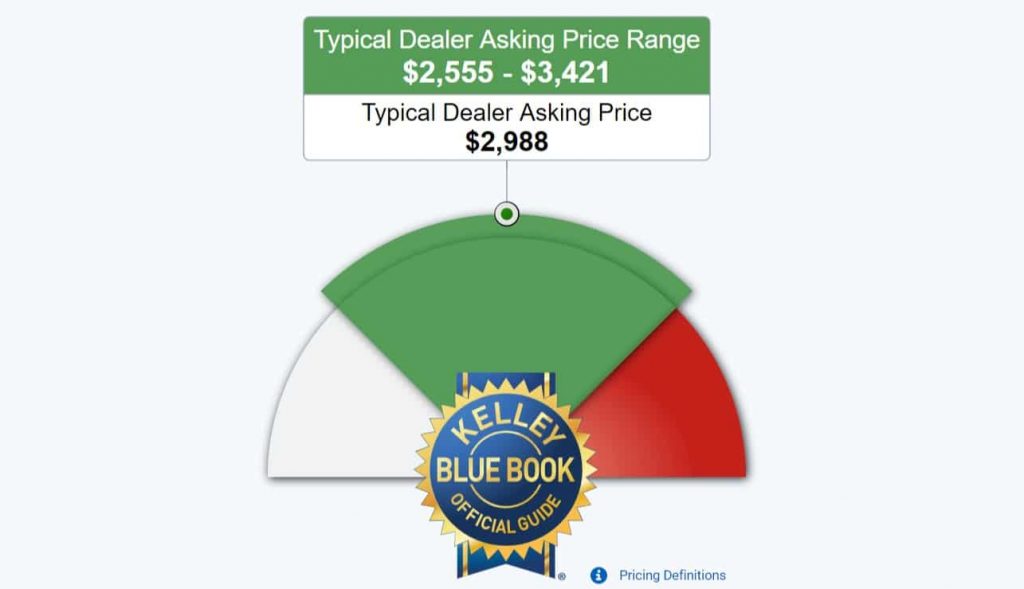
- Kelley Blue Book (KBB): The industry standard for consumer-facing valuations. It provides a range based on condition and intended sale method.
- NADAguides (J.D. Power): Often used by credit unions and banks to determine loan-to-value ratios. This is often the most “conservative” and data-driven figure.
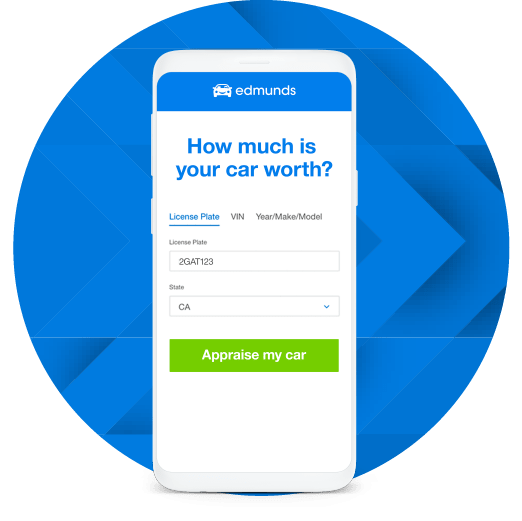
- Edmunds: Known for its “True Market Value” (TMV) algorithm, which accounts for what others in your specific geographic area are actually paying.
The Role of Local Market Trends and Regional Pricing
The value of an asset is intrinsically tied to its location. A rear-wheel-drive convertible will command a premium in Southern California or Florida but may see its value plummet in the snowy corridors of the Northeast. Similarly, four-wheel-drive trucks are high-liquidity assets in rural or mountainous regions. When researching “what much is my car worth,” it is vital to use localized data. Aggregators like Autotrader and CarGurus allow owners to see the “asking price” of similar vehicles within a 50-mile radius, providing a real-time snapshot of local competition.
Private Party vs. Trade-In vs. Instant Cash Offers
One must distinguish between “paper value” and “liquid value.”
- Trade-In Value: This is the lowest figure, as the dealership must account for reconditioning costs and a profit margin. However, it offers the highest convenience and potential tax advantages.
- Private Party Value: This is typically 10% to 15% higher than trade-in value. It represents the “fair market value” but requires significant effort in marketing, vetting buyers, and handling paperwork.
- Instant Cash Offers (ICO): Platforms like Carvana or Vroom provide a “strike price”—a guaranteed amount they will pay to buy the car immediately. This serves as a “floor” for your car’s valuation; you should never accept a trade-in offer lower than your best ICO.
Strategic Timing: When Is the Best Moment to Sell or Trade Your Vehicle?
Maximizing the return on a vehicle requires an understanding of market cycles. Just as an investor times the sale of a stock, a car owner should time the exit of their vehicle to capture peak equity.
Seasonal Fluctuations in the Automotive Market
The automotive market follows a predictable seasonal rhythm. Spring is traditionally the strongest time to sell; tax refunds provide buyers with down payments, and the improving weather encourages “window shopping.” Conversely, December is often the worst time to sell a car privately, as consumer capital is tied up in holiday spending, though it can be an excellent time to trade in a vehicle as dealerships scramble to meet year-end sales quotas.
Economic Indicators and Interest Rate Impacts
The broader economy plays a massive role in vehicle worth. In an environment of high interest rates, the monthly payment on a used car loan increases, which effectively lowers the price a buyer is willing or able to pay for your car. Furthermore, supply chain disruptions—such as the global semiconductor shortage—can cause used car values to skyrocket unexpectedly. Monitoring the “Used Vehicle Value Index” can provide insights into whether it is a “seller’s market” or a “buyer’s market.”
The Sweet Spot of the Ownership Lifecycle
From a financial optimization standpoint, there is a “sweet spot” for selling. This is typically just before a major scheduled maintenance milestone (like a 60,000-mile service) or just before the manufacturer’s powertrain warranty expires. Selling a car with 58,000 miles is often significantly more profitable than selling the same car with 62,000 miles, as the “out-of-warranty” status introduces a psychological barrier for many buyers.
How to Maximize Your Return: Enhancing Your Car’s Worth Before the Sale
Before listing a vehicle or taking it to a dealership, several low-cost, high-ROI actions can be taken to bridge the gap between “Fair” and “Excellent” condition ratings, which can translate to thousands of dollars in equity.
High-ROI Repairs and Cosmetic Enhancements
Not all repairs are worth the investment. Replacing a transmission before a sale is rarely financially sound, as you will likely not recoup the full cost. However, fixing a cracked windshield, replacing burnt-out bulbs, or ensuring the tires have adequate tread can prevent a buyer from “nickel-and-diming” the offer. Small cosmetic fixes, like “PDR” (Paintless Dent Repair) for minor dings, often pay for themselves threefold in the final sale price.
The Power of Professional Detailing
A clean car sells for more. This is a fundamental rule of behavioral economics. A professional detail—including engine bay cleaning, carpet steam-cleaning, and paint buffing—costs a few hundred dollars but creates a “halo effect.” It suggests to the buyer that if the owner cared enough to keep the car this clean, they likely cared enough to keep the mechanicals in top shape.
Curating a Transparent Ownership History
To maximize value, prepare a “Seller’s Packet.” This should include a clean title, a recent vehicle history report (like Carfax or AutoCheck), and a printed summary of all maintenance performed. In a private sale, being able to prove that the “check engine light” was never ignored and that the car has never been in an accident allows you to firm up your asking price and resist low-ball offers.
Navigating the Financial Transaction: Turning Value into Liquidity
Once the value is determined and the vehicle is prepared, the final stage is the transaction itself. This is where the theoretical “worth” of the car becomes actual capital.
Negotiation Tactics for Personal Finance Optimization
Whether dealing with a private buyer or a dealership, the goal is to protect your equity. If trading in, always keep the “trade-in value” and the “new car price” as two separate negotiations. Dealerships often try to blend these numbers to obscure the actual value they are giving you for your asset. By knowing your car’s “bottom line” through ICO research, you enter the negotiation from a position of strength.
Understanding Tax Implications and Trade-In Credits
A crucial aspect of car worth that many overlook is the “tax shield.” In many jurisdictions, if you trade in a car worth $20,000 against a new car worth $50,000, you only pay sales tax on the $30,000 difference. If your local sales tax is 8%, that trade-in just saved you $1,600 in taxes. This means a private sale would need to net you at least $21,601 to be more financially beneficial than the $20,000 trade-in offer. Always calculate the “net-of-tax” value when deciding how to liquidate the asset.
In conclusion, answering “what much is my car worth” is an exercise in market analysis, timing, and presentation. By treating a vehicle not just as a mode of transportation, but as a significant component of a financial portfolio, owners can minimize the sting of depreciation and maximize the liquidity of their asset when it comes time to move on to the next investment.
aViewFromTheCave is a participant in the Amazon Services LLC Associates Program, an affiliate advertising program designed to provide a means for sites to earn advertising fees by advertising and linking to Amazon.com. Amazon, the Amazon logo, AmazonSupply, and the AmazonSupply logo are trademarks of Amazon.com, Inc. or its affiliates. As an Amazon Associate we earn affiliate commissions from qualifying purchases.