
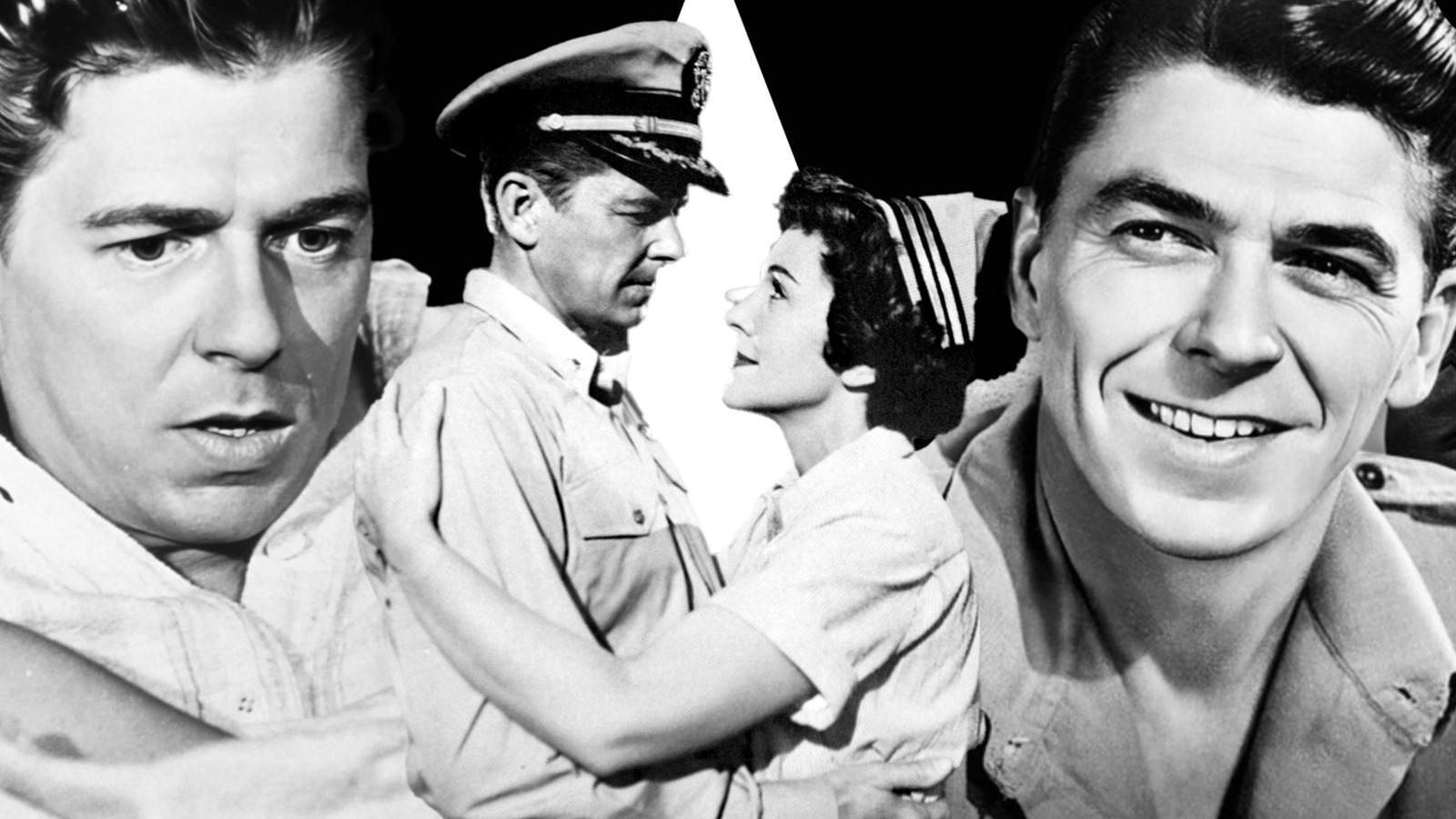
When the name Ronald Reagan is invoked, the immediate imagery that springs to mind for many is that of a commanding political figure: a two-term U.S. President, the “Great Communicator,” a symbol of American resolve and optimism. Yet, beneath the veneer of presidential gravitas lies a career that meticulously crafted this very public persona long before he ever stepped into the Oval Office. For three decades, Ronald Reagan was a fixture in Hollywood, starring in over 50 films. To simply list “what movies Ronald Reagan was in” is to miss the profound strategic impact his time in front of the camera had on the development of one of history’s most potent personal brands. His acting career was not a diversion but a comprehensive workshop, where he honed the communication skills, cultivated the public image, and developed the narrative dexterity that would eventually define his political brand.

This exploration delves into how Ronald Reagan’s journey through the studios of Hollywood served as an intricate blueprint for his later success, demonstrating the critical interplay between early professional experiences and the construction of an enduring personal brand. His filmography offers a fascinating case study in how a performer can leverage their craft to build an identity, influence public perception, and ultimately, transition from the silver screen to the global stage, armed with a brand meticulously forged under the Klieg lights.
Crafting the Persona: Early Roles and Public Image
Reagan’s cinematic journey began in 1937, and for years, he consistently appeared in films that, while rarely blockbusters, were instrumental in shaping a specific public image. These early roles were not just assignments; they were building blocks for the “Reagan brand.”
The All-American Everyman
Many of Reagan’s early roles cast him as the quintessential “good guy.” He often portrayed the dependable friend, the earnest hero, the honest lawman, or the relatable athlete. Characters like George Gipp in “Knute Rockne, All American” (1940) or Drake McHugh in “King’s Row” (1942) showcased qualities of integrity, resilience, and an inherent moral compass. These roles resonated with audiences, cultivating an image of trustworthiness, sincerity, and accessibility. In branding terms, Reagan consistently embodied the “Everyman” or “Innocent” archetype – characters that evoke empathy, inspire confidence, and project an approachable, wholesome identity. This consistent portrayal ingrained in the public consciousness a sense of his inherent decency and reliability, a critical foundation for any brand seeking widespread appeal and trust. It wasn’t about being flashy or avant-garde; it was about being dependably, reassuringly American.
Voice and Charisma: The Emergence of the “Great Communicator”
Beyond the specific characteristics of his roles, Reagan’s natural charisma and distinctive voice were undeniable assets. His performances, whether in light comedies or dramatic pieces, consistently highlighted his ability to connect with an audience. His delivery was clear, articulate, and imbued with an earnestness that felt genuine. Acting, by its very nature, is a masterclass in communication: delivering lines with conviction, conveying emotion, and holding an audience’s attention. Reagan’s decades in front of the camera provided him with unparalleled training in public speaking and persuasive communication. He learned to project authority, warmth, and sincerity, transforming memorized scripts into believable narratives. This honing of his communication skills laid the groundwork for his later political moniker, “The Great Communicator,” demonstrating how the mechanics of performance are directly transferable to the art of public address and brand messaging. His voice, in particular, became a signature element of his brand, conveying both strength and reassurance.
Brand Evolution: From Silver Screen to Spokesman
Reagan’s brand wasn’t static; it evolved strategically through various phases of his career, each step building upon the last, cementing his public persona and expanding its reach beyond mere entertainment. His transition from actor to public figure was a masterclass in brand diversification and leveraging existing equity.
Leveraging Stardom for Influence
A pivotal moment in Reagan’s brand evolution came not from a film role but from his leadership within the Screen Actors Guild (SAG). Serving as SAG president for multiple terms (1947–1952 and 1959–1960), Reagan transitioned from being merely a celebrity to a respected leader and negotiator. This was his first significant executive role, where he blended his established celebrity status with the responsibilities of union leadership. He engaged in complex collective bargaining, navigated internal politics, and publicly advocated for actors’ rights, particularly during the challenging McCarthy era. This experience allowed him to apply his personal brand — rooted in integrity and communication — to collective action and public advocacy. It expanded the scope of his brand from “entertainer” to “leader,” proving his capacity for real-world governance and strategic thinking, an essential bridge to his future political aspirations. He was no longer just portraying a leader; he was one.
General Electric and the Corporate Stage
Perhaps one of the most underappreciated chapters in Reagan’s brand development was his tenure as a television host and corporate spokesman for General Electric. From 1954 to 1962, he hosted “General Electric Theater” and, more importantly, toured GE plants across the country, giving speeches, meeting employees, and engaging with communities. This was a deliberate and calculated shift. He moved from embodying fictional characters to becoming a real-world brand ambassador, articulating corporate values and American ideals. In this role, Reagan delivered what became known as “The Speech” — an evolving address where he refined his conservative political philosophy. He wasn’t selling movies or products; he was selling ideas and a vision. This period was crucial for developing his oratorical style, connecting directly with a broad cross-section of the American public, and perfecting the “Morning in America” narrative long before it became a presidential campaign slogan. It allowed him to test and refine his political brand messaging in a non-political, corporate context, proving his ability to communicate complex ideas accessibly and persuasively to a mass audience.

The Brand Legacy: Applying Hollywood Lessons to Politics
Reagan’s success as a politician wasn’t just serendipitous; it was the direct result of applying lessons learned and skills honed during his Hollywood career, showcasing how foundational brand elements can be strategically repurposed for entirely new arenas.
The Narrative Imperative
Decades in filmmaking taught Reagan the profound power of storytelling and narrative arcs. Every good film has a protagonist, an antagonist, a conflict, and a resolution. Reagan instinctively understood how to translate this into political communication. He didn’t just present policies; he wove compelling narratives around them. He framed economic challenges as “big government” vs. “individual freedom,” casting himself as the hero leading the nation to recovery. The “Morning in America” campaign narrative was a prime example: a simple, emotionally resonant story of national renewal and optimism, directly appealing to American identity and aspiration. His ability to distill complex issues into clear, relatable stories was a direct inheritance from his screenwriting and acting background, demonstrating the universal appeal of a well-crafted narrative in brand messaging. This storytelling prowess allowed him to simplify, inspire, and mobilize.
Authenticity and Relatability in the Political Arena
Despite his background as a glamorous Hollywood actor, Reagan successfully projected an image of genuine conviction and approachability. His acting career had taught him how to perform authenticity, to embody characters so convincingly that audiences believed in their sincerity. When he entered politics, this skill enabled him to connect with diverse audiences, making his political brand widely appealing. He seemed like “one of us,” a man who understood the struggles and hopes of everyday Americans, even as he delivered profound political statements. The consistency of his personal brand — that of an optimistic, trustworthy, and principled leader — across different stages of his career was remarkable. This perceived authenticity, honed through years of portraying genuine characters, was a cornerstone of his political brand, allowing him to bridge the gap between celebrity and statesmanship.
Case Study: “Knute Rockne, All American” and Brand Messaging
Certain moments or roles in an actor’s career can become indelible brand touchstones, transcending the original context to imbue a public figure with lasting symbolic meaning. For Reagan, “Knute Rockne, All American” provided one such powerful association.
A Defining Role and its Echoes
In the 1940 film “Knute Rockne, All American,” Reagan played George Gipp, a talented Notre Dame football player who dies prematurely. Gipp’s famous line to his coach, Rockne (played by Pat O’Brien), “Win one for the Gipper,” became an iconic phrase in American culture, symbolizing courage, perseverance, and sacrifice. For Reagan, portraying “the Gipper” was more than just a role; it became an integral part of his burgeoning personal brand. Decades later, as a politician, he frequently invoked “the Gipper” to rally supporters, inspire hope, and signify a commitment to winning against odds. This specific role and its resonant message offered a shorthand for his core values: loyalty, fighting spirit, and ultimate victory. It demonstrated how a single, powerful narrative element from one’s past can be strategically recycled and woven into a larger personal brand narrative, adding layers of depth and recognition.
The Power of Iconic Imagery
Reagan’s on-screen image, particularly from such memorable roles, contributed to a broader cultural iconography that he masterfully leveraged in his political campaigns. The public knew his face, his voice, and the types of characters he embodied. This pre-existing relationship with the audience meant he didn’t have to build recognition from scratch; he merely had to pivot the existing narrative. The “Gipper” became a symbol not just of a football player, but of Reagan himself: a fighter, a leader, a man who would inspire others to victory. This strategic recall of iconic elements from his acting career helped to reinforce and amplify his political brand identity, creating a cohesive and compelling public persona that spanned decades and vastly different professional landscapes.
Conclusion
To truly understand the multifaceted brand of Ronald Reagan, one must look beyond the political podium and delve into the cinematic world he inhabited for three decades. His acting career was not merely a prelude to his political life, but a foundational, strategic exercise in personal branding. The roles he played, the communication skills he honed, and the public trust he cultivated through film directly contributed to the powerful, enduring brand he presented to the nation and the world as President.
Understanding “what movies Ronald Reagan was in” is therefore not just a trivial pursuit for film buffs; it is a critical lens through which to appreciate the strategic development of one of America’s most enduring political brands. His journey from Hollywood actor to the leader of the free world serves as a compelling case study in how early career experiences, when thoughtfully managed and strategically leveraged, can lay the groundwork for unparalleled long-term personal brand success, proving that sometimes, the most influential leaders are those who first mastered the art of playing a role.
aViewFromTheCave is a participant in the Amazon Services LLC Associates Program, an affiliate advertising program designed to provide a means for sites to earn advertising fees by advertising and linking to Amazon.com. Amazon, the Amazon logo, AmazonSupply, and the AmazonSupply logo are trademarks of Amazon.com, Inc. or its affiliates. As an Amazon Associate we earn affiliate commissions from qualifying purchases.