
The year 2025 is positioned to be a watershed moment for the global film industry, serving as the first true test of the “new normal” in a post-strike, post-pandemic economic landscape. For investors, studio executives, and financial analysts, the 2025 slate is not merely a list of titles; it is a complex portfolio of high-stakes assets designed to stabilize corporate balance sheets and prove the continued viability of the theatrical window. As we look at what movies come out in 2025, the narrative shifts from simple entertainment to a rigorous evaluation of capital allocation, risk management, and the evolving ROI of intellectual property (IP).
The Capital Intensity of 2025: Budgeting for the Next Decade of Cinema
The financial health of major studios—including Disney, Warner Bros. Discovery, Sony, and Universal—is intrinsically tied to the performance of their 2025 releases. This year represents a significant concentration of capital, with billions of dollars in production and marketing spend hitting the market simultaneously.
The Return of the Mega-Budget Franchise
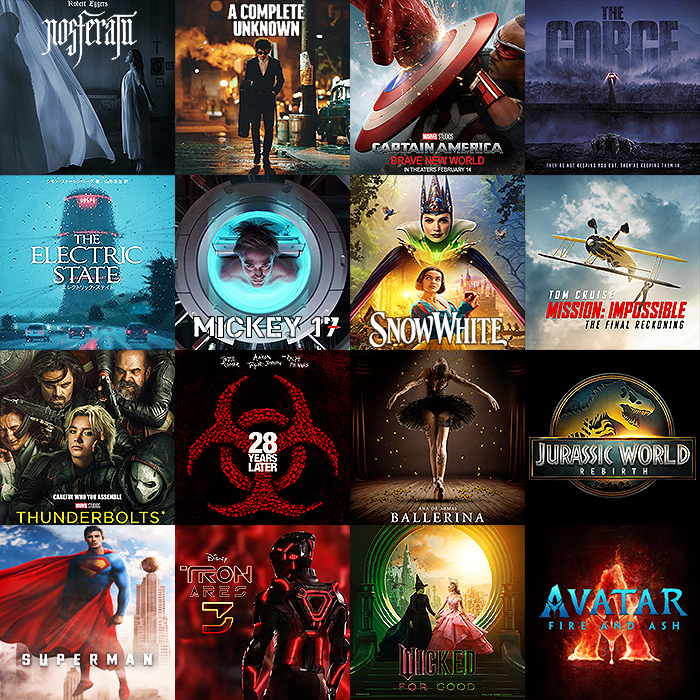
In 2025, we will see the culmination of multi-year investment cycles. Projects like James Cameron’s Avatar: Fire and Ash and James Gunn’s Superman represent the upper echelon of production budgets, often exceeding $200 million before marketing costs. From a business finance perspective, these are not just films; they are foundational assets. A film like Avatar 3 is expected to act as a cash flow engine for Disney, supporting not only theatrical revenue but also theme park integration and long-term streaming licensing value. The financial strategy here is built on the “tentpole model,” where a single massive success offsets the losses or marginal gains of smaller experimental projects.
Risk Management and Mid-Budget Viability
While the blockbusters command the headlines, the 2025 slate also shows a strategic pivot toward mid-budget films with high “cult” potential or genre-specific appeal. Films like Bong Joon-ho’s Mickey 17 and the highly anticipated 28 Years Later represent a more calculated risk. Studios are increasingly looking for “high-alpha” projects—films that cost between $50 million and $80 million but have the potential to deliver 5x to 10x returns on investment. This diversification of the production portfolio is a direct response to the volatility of the superhero genre and a move toward sustainable business models that don’t rely solely on billion-dollar hits.
Revenue Projections and the Resurgence of the Global Box Office
The revenue model for 2025 is heavily predicated on the recovery of the theatrical window as a primary driver of high-margin income. After years of experimentation with day-and-date streaming releases, the financial consensus has returned to the “theatrical first” approach to maximize the lifetime value (LTV) of a film asset.
Tentpole Expectations: From DCU Reboots to Disney Sequels
The 2025 box office will be anchored by several key releases that carry massive financial expectations. Warner Bros. Discovery is betting the future of its DC brand on Superman (July 2025). Success here is vital for the company’s stock valuation, as it signals the viability of a multi-year content roadmap. Similarly, Disney’s The Fantastic Four: First Steps and Zootopia 2 are designed to recapture the family demographic, which remains the most lucrative segment of the theatrical market. Financial analysts are projecting that the 2025 summer window could rival the pre-2019 era in terms of total gross revenue, provided these high-cost assets meet their critical and commercial benchmarks.
The International Market Factor and Currency Fluctuations
A critical component of the 2025 financial forecast is the performance of films in international markets, particularly China, India, and South Korea. For a film to achieve profitability on a $250 million budget, it typically requires a 2.5x “break-even” multiple, much of which must come from overseas territories. However, studios must navigate volatile currency exchange rates and varying theatrical take rates (the percentage of ticket sales the studio keeps). In 2025, the financial success of titles like Jurassic World Rebirth and Mission: Impossible – Dead Reckoning Part Two (re-titled for 2025) will depend heavily on their ability to over-index in the EMEA and APAC regions, balancing the slowing growth in the domestic North American market.
The Institutional Shift: How Studio Mergers and Financial Restructuring Shape the 2025 Slate

The movies coming out in 2025 are being released into a corporate environment defined by consolidation and aggressive cost-cutting. The financial stability of the companies behind these films is as much a part of the story as the films themselves.
Consolidation and the Pursuit of EBITDA
The ongoing rumors and actualizations of mergers—such as the potential shifts within Paramount Global and the continued integration of Warner Bros. Discovery—directly impact which movies get the “green light” for 2025. Institutional investors are no longer valuing studios based solely on subscriber counts for their streaming platforms; they are looking at EBITDA (Earnings Before Interest, Taxes, Depreciation, and Amortization) and free cash flow. This has led to a “clearing of the decks,” where underperforming projects were canceled in 2023 and 2024 to ensure the 2025 slate is comprised of the most financially viable IP.
The Impact of Labor Agreements on Production Costs
The 2025 slate is the first to be fully produced under the new labor contracts following the SAG-AFTRA and WGA strikes. From a business finance perspective, this means higher baseline production costs due to increased residuals, pension contributions, and wage floors. To maintain margins, studios have had to find efficiencies elsewhere, leading to a more streamlined production process and a greater reliance on tax incentives in regions like Georgia, the UK, and Eastern Europe. Investors are closely watching how these increased costs will impact the net profit margins of the 2025 theatrical releases.
Investing in the IP Economy: The Financial Longevity of the 2025 Franchise Model
In the modern film industry, a movie is no longer a one-off product; it is the “top of the funnel” for a broader ecosystem of consumer spending. The 2025 calendar is a masterclass in IP monetization.
Merchandising, Licensing, and Ancillary Revenue
Films like The Michael Jackson Biopic (Michael) and Snow White are designed to trigger massive ancillary revenue streams. For Michael, the potential in music catalog licensing and biographical merchandising is immense. For Disney’s live-action remakes, the theatrical release serves as a massive advertisement for consumer products and theme park attractions. Financial models for these films often account for the fact that theatrical revenue might only represent 40% of the total profit over a five-year period, with the remainder coming from digital sales, licensing, and physical goods.
The Role of Premium VOD and Streaming Windows
The financial architecture of a 2025 release includes a sophisticated “windowing” strategy. By utilizing a 45-to-90-day exclusive theatrical window, studios can maximize high-margin ticket sales before transitioning to Premium Video on Demand (PVOD). PVOD has become a high-growth revenue stream, allowing studios to capture “lazy” or “homebound” dollars at a premium price point ($19.99 – $24.99 per rental) with minimal distribution costs. This secondary window significantly de-risks the initial investment, providing a safety net for films that might underperform in theaters but find a dedicated audience at home.
The Macro-Economic Outlook for Cinema Investors in 2025
As we evaluate what movies come out in 2025, we must consider the broader economic environment. Inflation, interest rates, and consumer discretionary spending habits will ultimately dictate the success of the year’s slate.
Consumer Discretionary Spending and Ticket Pricing
In an era of persistent inflation, the “cost of a night out” has become a significant factor in the box office equation. Studios and theater chains (like AMC and Cinemark) are increasingly leaning into premium experiences—IMAX, Dolby Cinema, and “ScreenX”—to justify higher ticket prices. In 2025, the financial success of the industry will depend on its ability to convince consumers that the theatrical experience offers a value proposition that cannot be replicated by home streaming. This “eventization” of cinema is a deliberate business strategy to protect margins in a high-cost environment.

2025 as a Pivot Year for Media Stocks
For those looking at the media and entertainment sector as an investment opportunity, 2025 is the year of “show me the money.” After years of heavy spending on streaming infrastructure, the 2025 theatrical slate must prove that it can still generate the massive cash inflows required to pay down corporate debt and fund future innovation. If the 2025 movies—led by Avatar, Superman, and Jurassic World—deliver as expected, it will likely lead to a re-rating of media stocks, shifting the narrative from “legacy decline” to “multichannel growth.”
In conclusion, the 2025 film slate represents a sophisticated intersection of creative ambition and cold financial reality. Every major release is a calculated move on a global chessboard, aimed at securing market share and ensuring long-term corporate solvency. For the business-minded observer, 2025 will be less about the stories on the screen and more about the strength of the balance sheets they support.
aViewFromTheCave is a participant in the Amazon Services LLC Associates Program, an affiliate advertising program designed to provide a means for sites to earn advertising fees by advertising and linking to Amazon.com. Amazon, the Amazon logo, AmazonSupply, and the AmazonSupply logo are trademarks of Amazon.com, Inc. or its affiliates. As an Amazon Associate we earn affiliate commissions from qualifying purchases.