
The year 2019 stands as a pivotal monument in the history of the entertainment industry. While audiences remember it as the year of Avengers: Endgame, Joker, and Parasite, financial analysts and business historians view it as the “High Water Mark” of the traditional theatrical era. It was a year defined by unprecedented capital concentration, the aggressive consolidation of market share, and a fundamental shift in how intellectual property (IP) is monetized across global markets.
From a fiscal perspective, 2019 was an anomaly of success. It was the year that the global box office hit an all-time high of $42.5 billion, driven by a slate of releases that seemed engineered for maximum return on investment (ROI). However, beneath the surface of these record-breaking figures, the financial landscape was undergoing a seismic transformation—moving away from one-off ticket sales toward the recurring revenue models of the “Streaming Wars.”
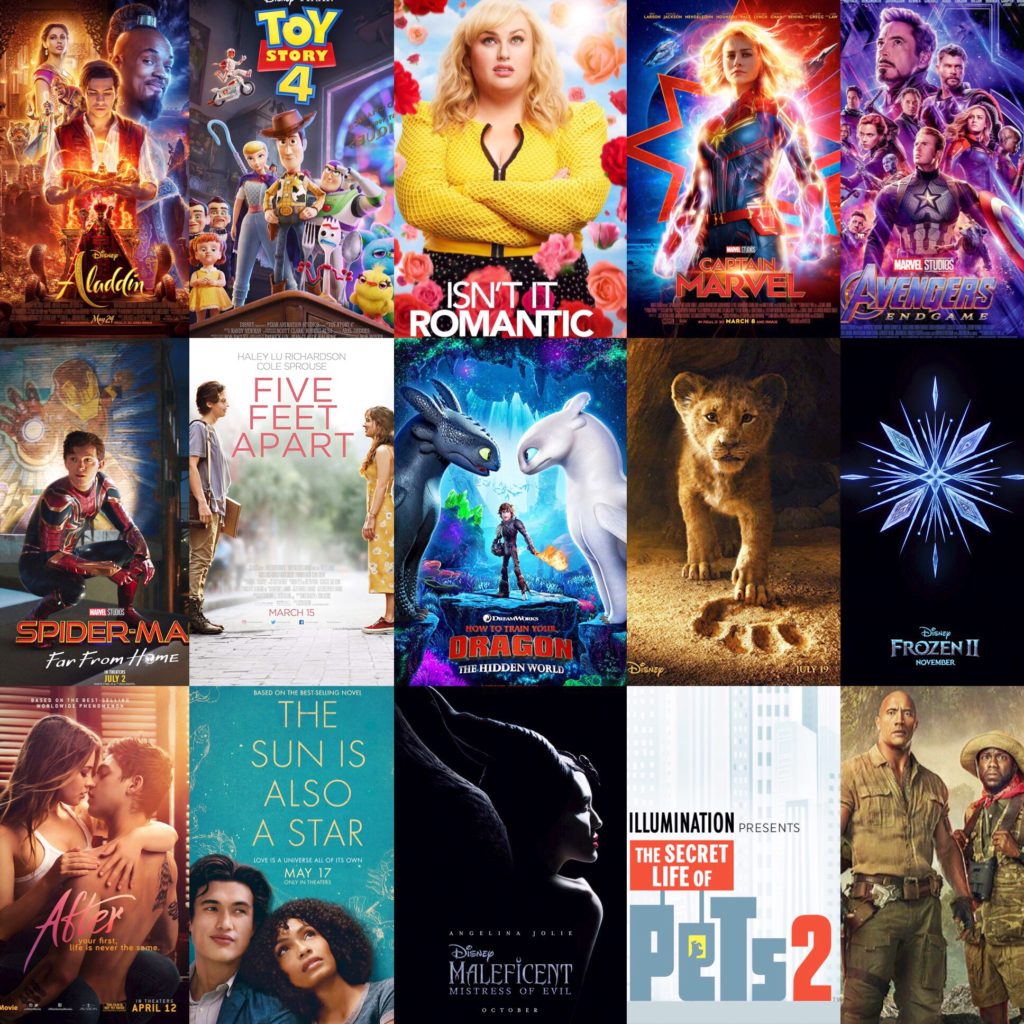
Analyzing the Record-Breaking Revenue of 2019
To understand the financial magnitude of 2019, one must look at the sheer density of “Unicorn” performances. In a typical year, a single film surpassing the billion-dollar mark is considered a landmark achievement for a studio. In 2019, an astounding nine films crossed this threshold. This concentration of wealth at the top of the charts signaled a new era of “Blockbuster Economics,” where a handful of mega-franchises accounted for a disproportionate share of the industry’s total revenue.
The Rise of the Billion-Dollar Club
The list of 2019’s billion-dollar earners—Avengers: Endgame, The Lion King, Frozen II, Spider-Man: Far From Home, Captain Marvel, Joker, Star Wars: The Rise of Skywalker, Toy Story 4, and Aladdin—reveals a specific financial strategy: the mitigation of risk through established IP. For investors and studios, 2019 proved that the safest harbor for capital was the “reimagining” or “continuation” of existing brands.
Avengers: Endgame served as the ultimate case study in long-term financial planning. With a production and marketing spend exceeding $500 million, the film was a high-stakes gamble that yielded a staggering $2.79 billion global return. This wasn’t just a movie release; it was the maturation of a decade-long investment strategy by Disney, proving that narrative interconnectedness could drive exponential financial growth.
Global Market Dynamics: China’s Role in Financial Success
The 2019 fiscal year also highlighted the critical importance of the Chinese market in a film’s profit-and-loss statement. For many of the year’s top earners, the difference between a “modest hit” and a “global phenomenon” was determined by the Chinese box office. Avengers: Endgame pulled over $600 million from China alone, while movies like Fast & Furious Presents: Hobbs & Shaw relied heavily on international territories to offset high production costs. This dependency created a complex financial environment where studios had to balance domestic American sensibilities with the regulatory and cultural requirements of the Chinese market to ensure a positive ROI.
The Economics of Streaming: The Shift to Recurring Revenue
While the box office was booming, 2019 also marked the beginning of a massive capital pivot. In November 2019, the launches of Disney+ and Apple TV+ signaled that the industry’s most powerful players were no longer satisfied with the “transactional” model of cinema. Instead, they were investing billions in “subscription” models, valuing long-term customer lifetime value (LTV) over opening weekend numbers.
The Launch of Disney+ and Content Capital Expenditure
The financial commitment required to launch Disney+ in 2019 was immense. Disney effectively forewent billions in licensing revenue (by pulling its content from Netflix) to build its own ecosystem. This was a classic “growth over profit” strategy. By utilizing its 2019 theatrical hits as “loss leaders” to drive platform sign-ups, Disney redefined the movie as a marketing tool for a broader digital ecosystem.
The financial success of The Mandalorian, which debuted alongside the service in late 2019, proved that high-budget, cinematic-quality content could be used as a primary lever for subscriber acquisition. This forced a massive increase in industry-wide capital expenditure (CapEx), as every major media company began over-leveraging their balance sheets to produce “prestige” content for their respective platforms.

Netflix’s High-Stakes Investment in Prestige Cinema
In response to the looming competition, 2019 saw Netflix double down on its strategy of high-budget original films to retain its market lead. The release of Martin Scorsese’s The Irishman was a significant financial outlier. With a budget estimated at $159 million, the film had almost no chance of recouping its costs through a traditional theatrical release.
However, through the lens of Netflix’s business model, the investment was a success. It served as a “brand equity” play, signaling to top-tier talent that Netflix was the new home for creative freedom and large-scale funding. This year solidified the idea that in the modern economy, a movie’s value isn’t just in its box office receipts, but in its ability to reduce “churn” and attract new monthly recurring revenue (MRR).
Investment and ROI: Blockbuster Budgets vs. Independent Profitability
The financial story of 2019 is often dominated by Disney, but the year also provided crucial data points on the viability of mid-to-low budget filmmaking in an increasingly polarized market. Investors in 2019 were faced with a choice: participate in the high-cost, high-reward world of franchises, or find “niche” profitability in specialized content.
The Marvel Factor: Efficiency in Franchise Financing
Despite the massive budgets associated with the Marvel Cinematic Universe (MCU) in 2019, the “efficiency” of these films was remarkable. When analyzing the cost-to-revenue ratio, Captain Marvel and Spider-Man: Far From Home provided remarkably consistent margins. For a studio, these films represent a “de-risked” asset class. The predictability of their performance allows for more aggressive debt financing and more accurate forecasting, which in turn stabilizes the parent company’s stock price.
The Mid-Budget Dilemma: Assessing Risk in an IP-Driven Market
2019 was also a year of harsh financial lessons for mid-budget films. Movies that lacked a pre-existing “hook” or brand identity struggled to find an audience, leading to several high-profile write-offs. However, Joker provided a counter-narrative. Produced on a relatively modest budget of $55 million (compared to its superhero peers), Joker went on to gross over $1 billion.
From a pure ROI percentage, Joker was one of the most successful financial ventures of the decade. It proved that “R-rated,” character-driven dramas could achieve blockbuster-level margins if they leveraged a high-value brand (Batman/DC) while keeping production overhead low. This “efficient frontier” of filmmaking—high-concept IP with controlled costs—became the new “Holy Grail” for studio executives looking to maximize shareholder value.
Legacy of 2019: The Financial Foundations of Modern Entertainment
As we look back, 2019 was the final year of a specific kind of economic stability. It was a year of massive mergers and the solidification of “Big Tech” in the entertainment space. The decisions made by CFOs and boardrooms in 2019 continue to dictate the financial health of the media industry today.
Consolidation Trends: The Disney-Fox Merger
The most significant financial event of the year wasn’t a movie release, but the closing of the $71.3 billion acquisition of 21st Century Fox by Disney. This merger was a defensive and offensive financial maneuver. It allowed Disney to consolidate a massive library of assets to fuel its streaming ambitions while eliminating a major competitor in the theatrical space. The consolidation of 2019 set the stage for a “Winner-Take-All” market, where only a few “Mega-Caps” have the capital reserves to compete for global attention.

Future Outlook: How 2019 Set the Economic Stage
The financial success of 2019 created a high benchmark that has been difficult to replicate. It established the “Billion-Dollar Standard” as the only metric for success in the eyes of many investors, which has arguably led to the current environment of “sequel fatigue” and escalating budgets.
Furthermore, the pivot to streaming that began in 2019 shifted the industry’s focus from “profitability” to “scale.” We are only now, years later, seeing a return to a focus on “bottom-line” profits as the cost of debt increases and the “easy money” era of streaming growth comes to an end. 2019 remains the definitive case study in how the movie industry can generate massive wealth, and how that wealth is redirected to build the digital infrastructures of the future.
In conclusion, “what movies came out in 2019” is more than a list of titles; it is a map of a global financial peak. It was the year that proved movies could still be the most powerful cultural products on earth, provided you had the capital, the brand, and the distribution tech to capture a global audience. For the savvy investor or business professional, 2019 remains the blueprint for the modern business of entertainment.
aViewFromTheCave is a participant in the Amazon Services LLC Associates Program, an affiliate advertising program designed to provide a means for sites to earn advertising fees by advertising and linking to Amazon.com. Amazon, the Amazon logo, AmazonSupply, and the AmazonSupply logo are trademarks of Amazon.com, Inc. or its affiliates. As an Amazon Associate we earn affiliate commissions from qualifying purchases.