
The year 2011 stands as a watershed moment in the intersection of cinema and technology. While audiences flocked to theaters to witness the conclusion of the Harry Potter saga or the birth of new Marvel icons, a quieter revolution was occurring behind the lens and inside the servers of Hollywood’s elite production houses. This was the year that digital cinematography finally challenged the supremacy of 35mm film, when performance capture technology achieved a new level of emotional nuance, and when the infrastructure of how we consume media began its irreversible shift toward the cloud. To understand the movies that came out in 2011, one must look past the actors and scripts to the silicon and software that brought them to life.

The Visual Effects Revolution: Motion Capture and CGI Maturity
In 2011, the “Uncanny Valley”—that unsettling feeling when a digital character looks almost, but not quite, human—began to bridge. The technological breakthroughs seen in this year’s releases set a new standard for how digital characters interact with live-action environments, moving beyond mere spectacle into the realm of genuine acting.
Rise of the Planet of the Apes and the Andy Serkis Factor
Perhaps no film in 2011 represented a greater leap in production tech than Rise of the Planet of the Apes. While previous iterations of the franchise relied on heavy prosthetics, Weta Digital utilized cutting-edge performance capture technology to translate Andy Serkis’s movements into the character of Caesar.
The tech behind this was revolutionary: for the first time, performance capture was taken out of a controlled “volume” (a specialized studio) and onto live-action sets. This required the development of new infrared camera rigs and wireless data transmission systems that could operate in sunlight and complex outdoor environments. The software algorithms used to render Caesar’s fur, skin tension, and eye moisture represented a massive increase in computational demand, signaling a shift toward more physics-based rendering (PBR) in the industry.
Harry Potter and the Deathly Hallows – Part 2: The Art of Digital World-Building
The technical challenge of the final Harry Potter installment was one of scale and atmospheric rendering. To create the Battle of Hogwarts, VFX houses like Double Negative and Framestore had to manage thousands of digital assets simultaneously. This required a sophisticated pipeline for “instancing”—a technique where the computer renders thousands of complex objects (like individual bricks or digital crowd members) without crashing the system. The digital pyrotechnics and particle simulations used for the protective shield over the castle showcased advancements in fluid dynamics software, allowing for more realistic interactions between light, smoke, and magical energy.
The Digital Projection Pivot: The Death of 35mm
2011 marked the beginning of the end for physical film distribution. It was the year that the industry’s “Digital Transition” hit a fever pitch, fundamentally changing how movies were delivered to theaters and how they were captured on set.
Hugo and the Technical Revival of 3D
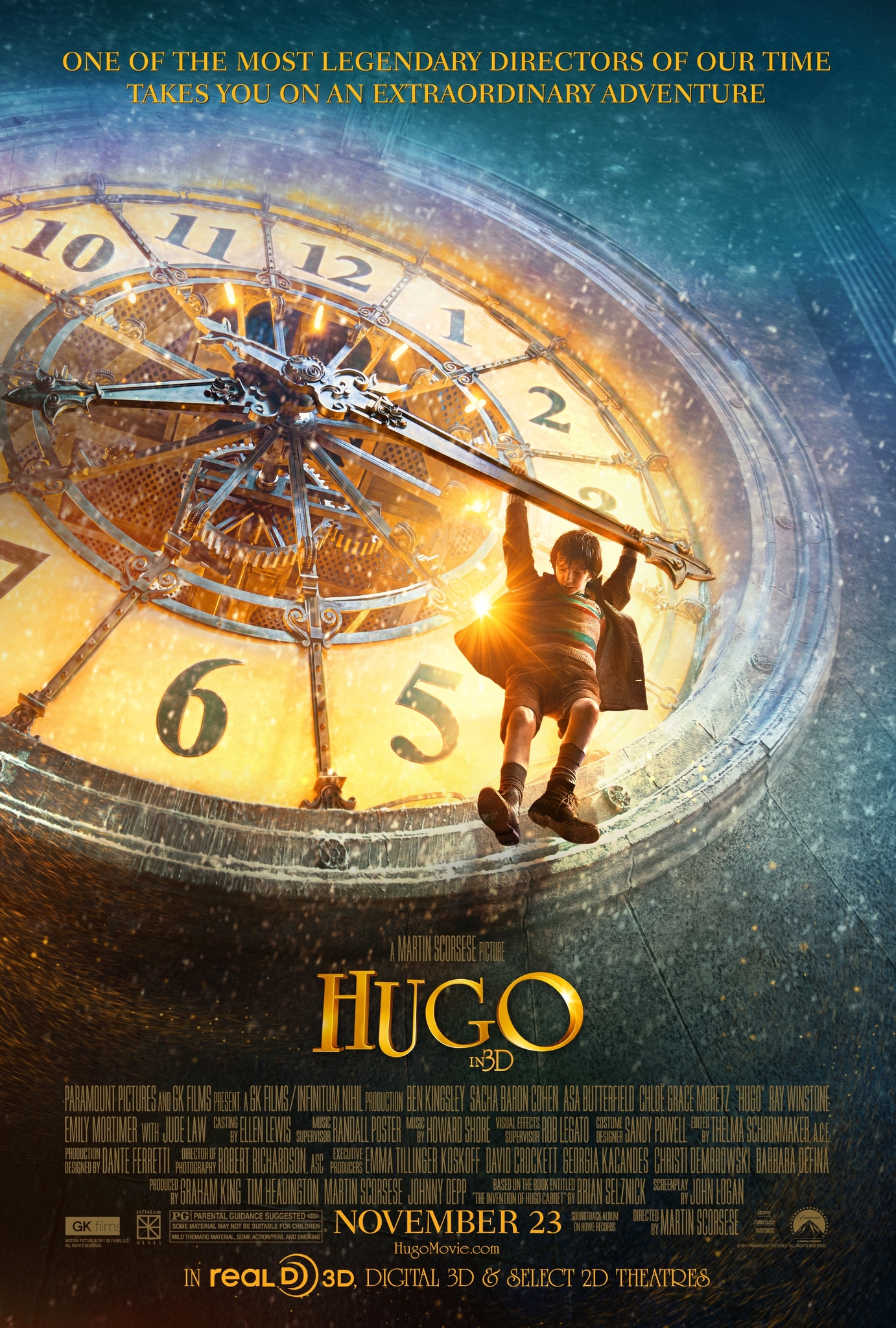
Martin Scorsese’s Hugo was not just a love letter to the history of cinema; it was a technical masterpiece that utilized the most advanced 3D technology of its time. Unlike many films of the era that were “converted” to 3D in post-production, Hugo was filmed natively using the Fusion Camera System.
The tech involved two Arri Alexa cameras mounted on a sophisticated rig that mimicked human stereoscopic vision. The precision required to align these sensors was extreme, involving real-time metadata tracking to ensure that the depth cues didn’t cause “brain strain” for the audience. Hugo proved that 3D, when treated as a technical tool rather than a gimmick, could enhance the spatial depth of a digital frame, pushing the limits of what digital sensors could capture in low-light, “steampunk” environments.
The Infrastructure Shift: From Reels to DCPs
Behind the scenes, 2011 was a logistical turning point. The industry moved rapidly away from heavy, expensive 35mm film reels toward Digital Cinema Packages (DCPs). A DCP is essentially a highly encrypted hard drive containing the movie in a specialized format (JPEG 2000).
This transition required theaters worldwide to invest in expensive digital projectors and high-speed servers. From a tech perspective, this allowed for “lossless” quality—the 100th screening of a movie looked exactly the same as the first, with no scratches or jitter. It also introduced the concept of digital keys (KDM), a security technology that prevents theaters from playing a movie before its release date, marking a major milestone in digital rights management (DRM).
Distribution Disruption: The Dawn of the Streaming Age
While 2011 was a big year for the box office, it was an even bigger year for the software platforms that would eventually disrupt the theater experience entirely. The tech stack of home entertainment was being rewritten in real-time.
Netflix, the Qwikster Debacle, and the Cloud Pivot
In 2011, Netflix made a move that was widely criticized at the time but proved to be technologically prophetic: they attempted to split their DVD-by-mail service from their streaming service (under the ill-fated name “Qwikster”). While the branding failed, the underlying tech strategy was clear. Netflix was moving its entire infrastructure to Amazon Web Services (AWS), betting that the future of movies lay in cloud computing and adaptive bitrate streaming.
This tech allowed movies released in 2011 to be “transcoded” into hundreds of different versions, ensuring that a user on a slow DSL connection and a user on a high-speed fiber line could both watch the same film without constant buffering. This year represented the moment when “streaming” moved from a tech hobbyist’s curiosity to a mainstream utility.
Digital Rights Management and the War on Piracy
With the rise of high-speed internet in 2011, the tech industry faced a massive challenge: how to protect high-definition content. This was the era of the “Digital Copy,” where Blu-rays began coming with a code for a downloadable version of the movie. The technology behind UltraViolet (a digital rights cloud) launched in late 2011, attempting to create a centralized locker for a consumer’s digital movie collection. Though the platform eventually faded, it pioneered the concept of “buy once, play anywhere” tech that modern platforms like Movies Anywhere still use today.
Cinematic Hardware and Production Tech: Behind the Lens
The physical tools used to create 2011’s films were undergoing a radical transformation. The “look” of movies changed as digital sensors finally began to match—and in some cases, exceed—the dynamic range of traditional film stock.
The Arri Alexa and the Shift to 4K
2011 was the year the Arri Alexa camera became the industry standard. Used on films like Drive and Hugo, the Alexa’s ALEV III sensor was a marvel of semiconductor engineering. It provided a “filmic” look that previous digital cameras lacked, handling highlights and shadows with a grace that convinced even the most old-school cinematographers to ditch the film lab.
Simultaneously, the “Red Epic” camera was making waves, being used by Peter Jackson to film The Hobbit (which was in production during 2011). These cameras pushed the boundaries of data management; a single day of shooting could generate terabytes of RAW data, necessitating the rise of “Digital Imaging Technicians” (DITs) on set—a new role dedicated to managing the tech pipeline from camera to edit suite.
Sound Engineering and the Rise of Immersive Audio
Technology in 2011 wasn’t just about what we saw, but what we heard. This year saw significant advancements in object-based audio mixing. While Dolby Atmos wouldn’t officially launch until 2012, the groundwork was laid in 2011 with the refinement of 7.1 surround sound as the standard for major releases like Transformers: Dark of the Moon. The software used to mix these films allowed sound designers to treat noises as “objects” in a three-dimensional space, rather than just sounds coming from a specific speaker. This required massive leaps in digital signal processing (DSP) and paved the way for the immersive “spatial audio” experiences we have today on mobile devices and home theaters.

Conclusion: The Legacy of 2011’s Tech
Looking back, the movies of 2011 represent a bridge between two eras. We saw the end of the most successful film franchise in history (Harry Potter) and the rise of a technology-dependent cinematic universe (the MCU). But more importantly, we saw the maturation of the digital tools that define modern life.
From the sophisticated AI and physics engines used to render Caesar in Rise of the Planet of the Apes to the cloud infrastructure that allowed us to begin moving away from physical discs, 2011 was the year cinema fully embraced its digital destiny. The movies of that year were not just stories; they were proof-of-concepts for a future where technology and imagination are indistinguishable. As we look at today’s AI-generated visuals and 8K streaming, we can trace the code back to the innovations that took center stage in 2011.
aViewFromTheCave is a participant in the Amazon Services LLC Associates Program, an affiliate advertising program designed to provide a means for sites to earn advertising fees by advertising and linking to Amazon.com. Amazon, the Amazon logo, AmazonSupply, and the AmazonSupply logo are trademarks of Amazon.com, Inc. or its affiliates. As an Amazon Associate we earn affiliate commissions from qualifying purchases.