
Navigating the landscape of homeownership is one of the most significant financial milestones an individual can undertake. However, before the first open house or the first conversation with a real estate agent, there is a fundamental question that dictates the entire process: what mortgage can I actually get approved for? Understanding the mechanics of mortgage approval is not merely about knowing a single number; it is a complex calculation involving your credit profile, your income stability, your existing debt obligations, and the current economic environment.
Lenders do not view borrowers through a single lens. Instead, they use a multifaceted risk assessment model to determine how much money they are willing to lend and at what cost. To successfully position yourself for an approval that meets your homebuying goals, you must dissect the specific criteria financial institutions use to judge your creditworthiness.
The Financial Pillars of Mortgage Approval
When a lender evaluates an application, they are essentially trying to predict the future. They want to know the statistical likelihood that you will repay the loan in full over 15 to 30 years. To do this, they lean heavily on three primary pillars: your credit score, your debt-to-income ratio (DTI), and your employment history.
The Role of Your Credit Score
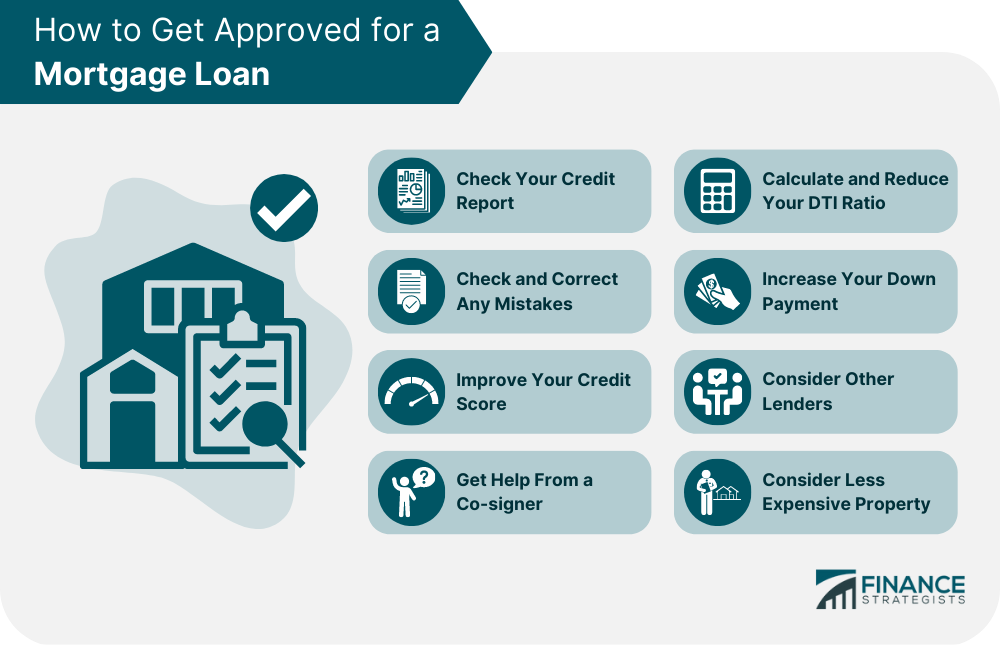
Your credit score is arguably the most influential factor in determining not just if you are approved, but the interest rate you will pay. Most lenders use the FICO score model specifically tailored for mortgage lending. While you might see a score on a credit card app, mortgage lenders often look at a “tri-merge” report, pulling data from Equifax, Experian, and TransUnion.
Generally, a score of 740 or higher is considered “top-tier,” granting access to the lowest interest rates and most favorable terms. If your score sits between 620 and 700, you may still qualify for conventional financing, but you will likely face higher premiums on private mortgage insurance (PMI) and interest rates. For those with scores below 620, conventional loans become difficult to secure, often necessitating a pivot toward government-backed options like FHA loans.
Decoding the Debt-to-Income (DTI) Ratio
Even with a perfect credit score, you can be denied a mortgage if your monthly obligations are too high relative to your earnings. The Debt-to-Income ratio is the percentage of your gross monthly income that goes toward paying debts. Lenders look at two types of DTI:
-
Front-End Ratio: This is the percentage of your income that would go strictly toward your new mortgage payment (including principal, interest, taxes, and insurance).
-
Back-End Ratio: This includes your prospective mortgage payment plus all other monthly debts, such as car loans, student loans, and minimum credit card payments.
For most conventional loans, lenders prefer a back-end DTI of 36% or less, though some programs allow for up to 43% or even 50% in specific circumstances with “compensating factors” like high cash reserves.
Income Stability and Employment History
Lenders crave consistency. They typically require a two-year history of stable employment, ideally within the same field. If you are a W-2 employee, this is straightforward to verify via pay stubs and tax returns. However, if you are self-employed or a 1099 contractor, the scrutiny is higher. Lenders will usually average your net income from the last two years of tax returns. It is important to note that if you take heavy deductions to lower your tax liability, you are also lowering the income the lender uses to calculate your mortgage approval limit.
Understanding Loan Programs and Their Specific Requirements
The type of mortgage you apply for significantly changes the approval criteria. There is no one-size-fits-all loan; rather, there are several “buckets” that cater to different financial profiles.
Conventional Loans
Conventional loans are the most common type of mortgage and are not insured by the federal government. They typically follow guidelines set by Fannie Mae or Freddie Mac. These loans usually require a minimum credit score of 620. While the “20% down payment” is a common myth, you can often get approved for a conventional loan with as little as 3% down. However, if you put down less than 20%, you will be required to pay Private Mortgage Insurance (PMI), which protects the lender in case of default.
FHA Loans (Federal Housing Administration)
FHA loans are designed for borrowers who might have lower credit scores or smaller down payments. You can be approved with a credit score as low as 580 with a 3.5% down payment. In some cases, if you can provide a 10% down payment, scores as low as 500 may be considered. The trade-off is that FHA loans require an Upfront Mortgage Insurance Premium (UFMIP) and monthly Mortgage Insurance Premiums (MIP) that often last for the life of the loan.
VA Loans (Department of Veterans Affairs)
For active-duty service members, veterans, and eligible surviving spouses, VA loans offer some of the most powerful financial benefits in the market. They often require 0% down and have no monthly mortgage insurance. While the VA itself does not set a minimum credit score, most participating lenders look for a score of 620 or higher.
USDA Loans (United States Department of Agriculture)
Geared toward low-to-moderate-income buyers in designated rural and suburban areas, USDA loans also offer 0% down payment options. To qualify, the property must be located in an eligible area, and the household income must fall below certain limits defined by the county.
The Down Payment and Closing Cost Equation
Your approval limit is not just about what the bank says you can afford; it is also about what you have in the bank. Liquidity is a vital component of the approval process.
Sourcing Your Down Payment
Lenders require a “paper trail” for your down payment. If you have been saving systematically in a bank account, verification is simple. However, if you receive a “gift” from a family member, you will need a gift letter stating that the funds do not need to be repaid. Large, unexplained deposits into your bank accounts in the months leading up to an application can trigger red flags, as lenders want to ensure you haven’t taken out an undisclosed personal loan to cover the down payment.
The Reality of Closing Costs
Many first-time buyers focus exclusively on the down payment and forget about closing costs. These typically range from 2% to 5% of the home’s purchase price. They cover appraisal fees, title insurance, attorney fees, and escrowed taxes. When determining what mortgage you can get approved for, the lender will check if you have enough “cash to close” without exhausting every penny you own. Most lenders prefer to see “reserves”—extra months of mortgage payments sitting in your account after the deal is done—to ensure you can handle unexpected financial shocks.
Pre-Approval vs. Pre-Qualification
In the journey toward homeownership, the terms “pre-qualification” and “pre-approval” are often used interchangeably, but they represent very different levels of commitment from a lender.
Pre-Qualification: The Soft Estimate
A pre-qualification is a preliminary assessment based on unverified information you provide to a lender. It gives you a “ballpark” figure of what you might be able to borrow. While useful for early planning, it carries little weight in a competitive real estate market because the lender hasn’t yet verified your income or scrutinized your credit report.
Pre-Approval: The Golden Ticket
A pre-approval is a much more rigorous process. You submit your W-2s, tax returns, bank statements, and authorize a hard credit pull. The lender’s underwriting system (or a human underwriter) reviews these documents and issues a conditional commitment for a specific loan amount. A pre-approval letter tells sellers that you are a serious, vetted buyer. It also provides you with a definitive ceiling for your house hunt, preventing the heartbreak of falling in love with a property that sits outside your financial reach.
Strategies to Increase Your Borrowing Power
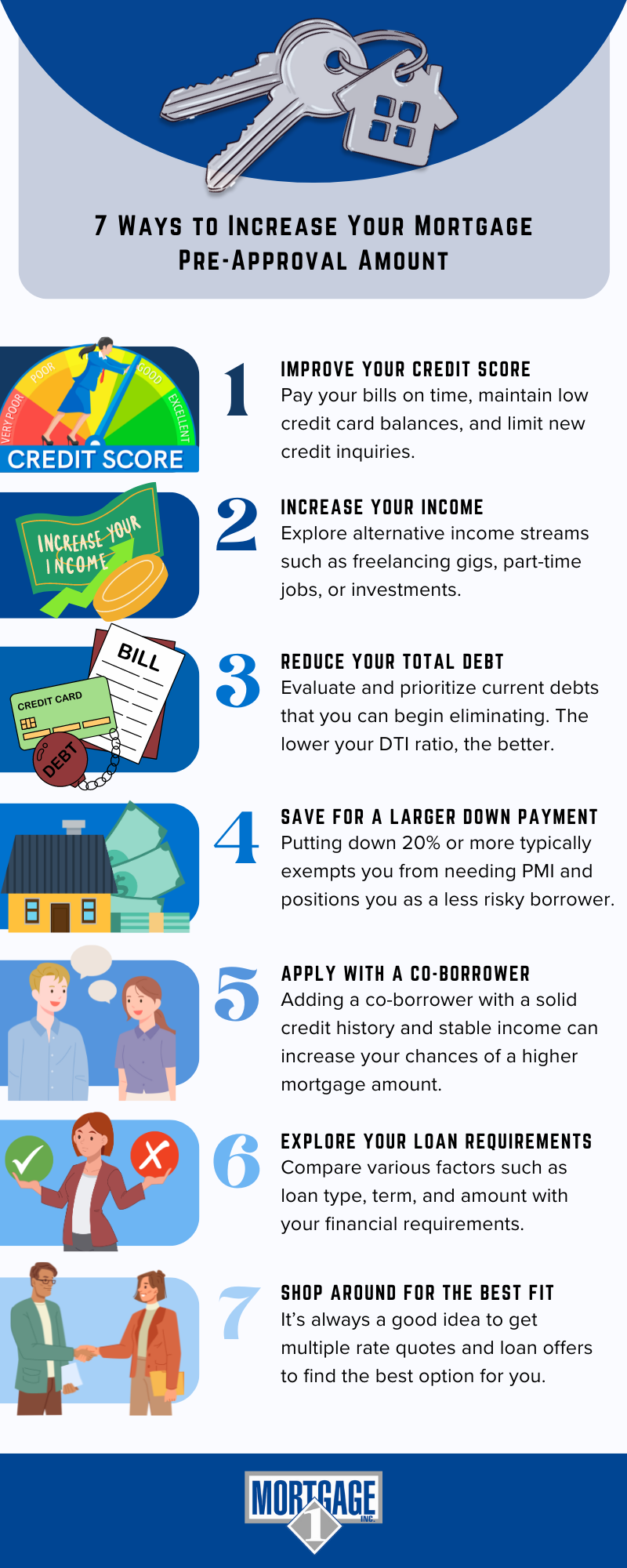
If you find that your current approval limit is lower than you hoped, there are several strategic moves you can make to improve your standing in the eyes of a lender.
Debt Consolidation and Reduction
Since the DTI ratio is a primary driver of approval, reducing your monthly debt obligations can significantly boost your loan limit. For every $100 in monthly debt you eliminate (like a small car loan or a credit card balance), you may be able to increase your mortgage borrowing power by tens of thousands of dollars. Focus on paying off high-interest revolving debt first, as this also helps improve your credit utilization ratio, potentially bumping up your credit score.
Increasing the Down Payment
A larger down payment does two things: it reduces the total loan amount (lowering your monthly payment and DTI) and it reduces the lender’s risk. Moving from a 3% down payment to 10% can sometimes be the difference between an approval and a denial for a borrower on the edge of the credit score requirements.
Finding a Co-Borrower
If your individual income is insufficient for the loan amount you need, adding a co-borrower (such as a spouse or partner) allows the lender to consider both incomes. However, keep in mind that the lender will usually use the lower of the two borrowers’ middle credit scores when determining the interest rate.
Timing the Market and Interest Rates
While you cannot control the Federal Reserve, you can control when you lock in a rate. In a rising interest rate environment, your purchasing power diminishes. A 1% increase in interest rates can reduce your buying power by roughly 10%. Understanding the relationship between current market yields and your monthly budget is essential for timing your entry into the market.
Ultimately, the mortgage you can get approved for is a reflection of your current financial health and your historical reliability as a borrower. By auditing your credit, managing your debt-to-income ratio, and choosing the right loan program, you can maximize your chances of securing a mortgage that is both affordable and sustainable for the long term.
aViewFromTheCave is a participant in the Amazon Services LLC Associates Program, an affiliate advertising program designed to provide a means for sites to earn advertising fees by advertising and linking to Amazon.com. Amazon, the Amazon logo, AmazonSupply, and the AmazonSupply logo are trademarks of Amazon.com, Inc. or its affiliates. As an Amazon Associate we earn affiliate commissions from qualifying purchases.