
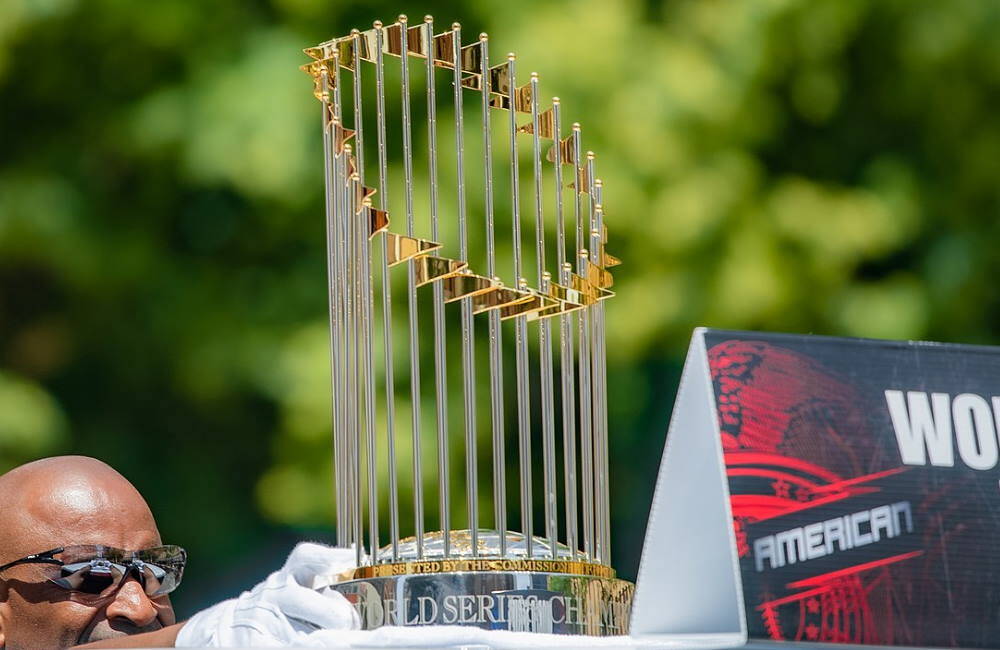
In the high-stakes ecosystem of Major League Baseball (MLB), the Commissioner’s Trophy represents the pinnacle of athletic achievement. However, behind the champagne celebrations and victory parades lies a complex financial architecture. For some franchises, the pursuit of that elusive first championship is not just a quest for glory, but a precarious balancing act of payroll management, market valuation, and long-term capital investment.
As it stands, five active MLB franchises have never won a World Series: the San Diego Padres, Milwaukee Brewers, Seattle Mariners, Colorado Rockies, and Tampa Bay Rays. While fans measure these droughts in decades and missed opportunities, economists and investors view them through the lens of asset appreciation, revenue sharing, and the “marginal revenue product” of a championship ring. This article examines the financial profiles of these “title-less” teams and explores how the business of baseball operates when the ultimate ROI—a world championship—remains unachieved.

1. The Economics of the Championship Void: Revenue and Market Stagnation
For a professional sports franchise, a championship is the ultimate marketing catalyst. It triggers a massive influx of “bandwagon” revenue, including spikes in merchandise sales, season ticket renewals, and premium seating demand. For the five teams yet to hoist the trophy, the absence of this “championship bounce” creates a unique set of fiscal challenges.
Revenue Disparities and Market Size
The financial health of an MLB team is inextricably linked to its designated market area (DMA). The Tampa Bay Rays and Milwaukee Brewers, for instance, operate in significantly smaller markets than the New York Yankees or Los Angeles Dodgers. Without the historical prestige of a World Series title to bolster national brand recognition, these teams rely heavily on MLB’s revenue-sharing system.
In a small market, the lack of a championship can lead to a “revenue ceiling.” Without a trophy to leverage, these teams often struggle to negotiate top-tier local television contracts, which are the lifeblood of modern sports finance. When a team like the Seattle Mariners—the only franchise to never even appear in a World Series—negotiates with Regional Sports Networks (RSNs), they must sell hope and a “winning culture” rather than a proven track record of dominance.
The “Wait ‘Til Next Year” Financial Model
Interestingly, some teams have turned their championship droughts into a sustainable, albeit frustrating, business model. By cultivating a “lovable loser” or “perennial underdog” identity, franchises can maintain a loyal, localized customer base that prioritizes the ballpark experience over the final score. The Colorado Rockies are a prime example. Despite a lack of hardware, Coors Field consistently ranks high in attendance. From a business perspective, the Rockies have mastered the art of “stadium-as-a-destination,” where the secondary revenue streams—concessions, parking, and hospitality—remain robust regardless of the team’s standing in the NL West.
2. Payroll vs. Performance: The High Cost of Chasing the First Ring
The financial philosophy of the five title-less teams varies wildly, illustrating the different ways “Moneyball” and “Big Spender” tactics are applied in the search for a maiden title.
The San Diego Padres: A High-Risk Investment Strategy
In recent years, the San Diego Padres have become a fascinating case study in aggressive capital expenditure. Under ownership led by the late Peter Seidler, the Padres abandoned the “small-market” mindset, authorizing massive contracts for stars like Manny Machado and Fernando Tatis Jr. This strategy is a gamble on “concentration of talent” as a means to break a drought.
From a financial standpoint, this is a high-leverage move. By exceeding the Competitive Balance Tax (CBT) thresholds, the Padres are betting that the increased brand value and postseason revenue of a potential championship will outweigh the millions paid in luxury tax penalties. It is a “World Series or Bust” investment pivot that stands in stark contrast to the more conservative approaches of their peers.
Small Market Efficiency: The Tampa Bay Rays Model
At the opposite end of the spectrum is the Tampa Bay Rays. The Rays are arguably the most efficient organization in professional sports. Operating with one of the lowest payrolls in the league, they consistently reach the postseason by utilizing advanced data analytics and a “churn-and-burn” roster strategy—trading expensive veterans for high-upside prospects before they reach their peak earning years.

Financially, the Rays represent the “Value Investing” approach to baseball. They maximize their Return on Investment (ROI) by finding undervalued assets. However, this model has a significant drawback: it often fails to build the long-term star power necessary to sustain a massive, national fanbase. While profitable, the Rays’ model highlights the difficulty of winning a championship when your payroll is a fraction of your competitors’.
3. Asset Valuation and the “Ring” Premium
Despite the lack of a World Series trophy, the valuations of these five franchises have skyrocketed over the last two decades. This raises a critical question in sports finance: how much is a championship actually worth to the bottom line?
The Seattle Mariners: Profitability Without the Pennant
The Seattle Mariners are a financial anomaly. Despite being the only team to never play in a World Series, they were recently ranked as one of the most profitable teams in MLB. This is largely due to their ownership of a majority stake in ROOT Sports Northwest, their local RSN.
The Mariners prove that in the modern era, a team can be a “Unicorn” investment—gaining value through media rights and real estate developments (like the “Pyramid” area surrounding T-Mobile Park) even without on-field success. For an investor, the Mariners represent a stable utility stock; they provide consistent dividends and steady growth, even if they never hit the “jackpot” of a championship run.
The “Championship Premium” in Franchise Sales
When a team finally breaks a long drought—as the Texas Rangers did in 2023—the immediate impact on the franchise’s valuation is substantial. Sports bankers estimate that a World Series win can add 10% to 15% to a team’s total valuation overnight. This “Championship Premium” comes from the ability to raise ticket prices, secure higher-tier corporate sponsorships, and increase the “scarcity value” of the brand. For the Padres or the Brewers, the first title isn’t just a trophy; it is a massive appreciation of the underlying asset.
4. The Macroeconomic Hurdles to a Maiden Title
To understand why these five teams remain without a title, one must look at the broader financial structure of Major League Baseball. Unlike the NFL, which has a hard salary cap, MLB’s system favors teams with deeper pockets and larger media markets.
The Luxury Tax and the Competitive Gap
The Competitive Balance Tax (CBT) is intended to curb runaway spending, but for teams like the Milwaukee Brewers, it often acts as a soft ceiling. Small-market owners are often unwilling or unable to sustain the losses associated with “buying” a championship. The “Money” aspect of the drought is often a reflection of the “Capital Gap.” If a team cannot afford to miss on a $300 million contract, they are forced to be perfect in their scouting and player development—a feat that is statistically improbable over the long term.
Stadium Financing and Municipal Investment
The financial path to a championship often starts with the stadium. The Tampa Bay Rays have long cited their outdated venue, Tropicana Field, as the primary anchor on their revenue potential. A new, state-of-the-art stadium provides “clean” revenue streams (naming rights, luxury suites) that are not subject to the same revenue-sharing percentages as ticket sales. For the Rays and the Athletics (who are also in a period of transition), the “Money” hurdle to a championship is literally the brick and mortar of their home field.
5. Conclusion: The Future ROI of the “Never-Wons”
While the fans of the Mariners, Padres, Brewers, Rockies, and Rays wait for their moment in the sun, the business of these teams continues to evolve. Each franchise is navigating a different financial path toward that first ring. Whether it is the Padres’ “All-In” capital expenditure, the Rays’ “Lean Startup” efficiency, or the Mariners’ “Media Giant” stability, the goal remains the same.
In the world of sports finance, a championship is the ultimate “liquidity event.” It validates the years of scouting, the millions spent on player development, and the billions invested in infrastructure. Until that day comes, these five franchises remain fascinating studies in how to manage a multi-billion dollar asset in the absence of the industry’s highest honor. The lack of a trophy may be a hole in the trophy case, but as the rising valuations of these teams suggest, it hasn’t stopped the “Money” of baseball from flowing in their direction. For an investor or a business analyst, the story of the MLB teams without a championship is not one of failure, but of the persistent, expensive, and high-stakes pursuit of a market-shifting breakthrough.
aViewFromTheCave is a participant in the Amazon Services LLC Associates Program, an affiliate advertising program designed to provide a means for sites to earn advertising fees by advertising and linking to Amazon.com. Amazon, the Amazon logo, AmazonSupply, and the AmazonSupply logo are trademarks of Amazon.com, Inc. or its affiliates. As an Amazon Associate we earn affiliate commissions from qualifying purchases.