
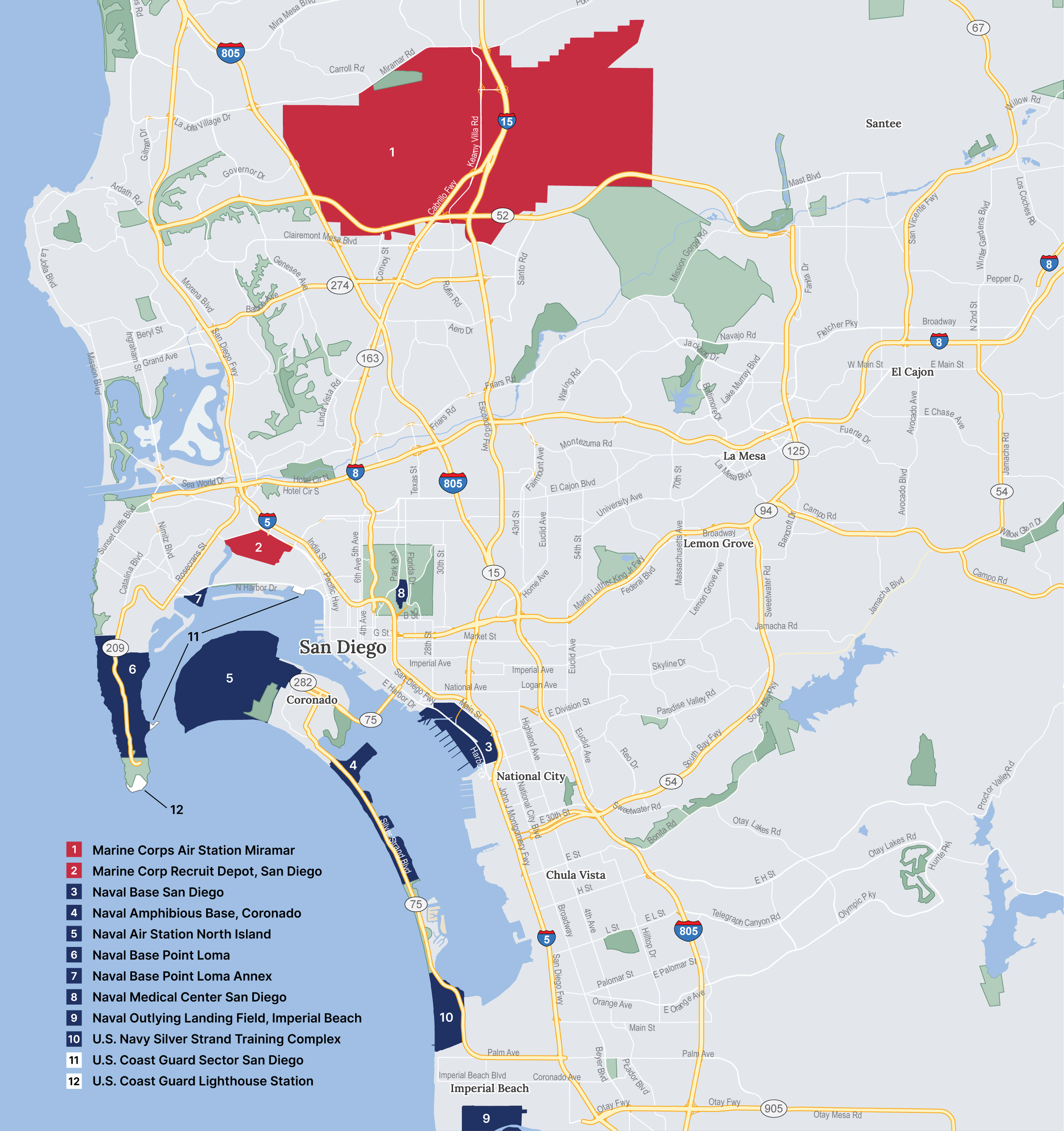
San Diego has long been defined by its symbiotic relationship with the United States Armed Forces. When discussing what military base is in San Diego, the answer is rarely singular. The region serves as a massive logistical, training, and operational hub that anchors the local economy. From a business and financial perspective, understanding this landscape is crucial, as the defense sector represents one of the most significant pillars of the Southern California financial ecosystem. For investors, entrepreneurs, and those tracking regional economic health, the military presence in San Diego functions as a persistent economic engine that drives market stability and long-term asset growth.
The Economic Engine of the San Diego Defense Sector
The defense industry in San Diego is more than just a collection of bases; it is a diversified financial ecosystem that supports thousands of jobs, drives real estate demand, and fuels a robust ecosystem of government contractors.
Defense Spending and Regional GDP
The Department of Defense (DoD) is the largest employer in San Diego. When we analyze the financial stability of the region, we must look at the direct and indirect spending associated with the various installations. Military installations contribute billions to the local Gross Regional Product (GRP). This spending isn’t confined to federal payroll; it extends to the massive procurement contracts awarded to local engineering firms, software developers, and logistics providers.
Real Estate and Infrastructure Investment
The presence of major military installations creates a distinct floor for the San Diego housing market. With a constant influx of active-duty personnel, civilian contractors, and their families, the demand for housing—both rental and residential—remains persistently high. For real estate investors, proximity to base hubs like Naval Base San Diego or Marine Corps Air Station Miramar is a key metric in assessing risk-adjusted returns. The “military-base economy” provides a hedge against cyclical downturns that might otherwise impact the commercial and residential sectors.
Key Hubs and Their Financial Footprints
To understand the scope of the military’s footprint, one must differentiate between the primary commands. While they operate under the umbrella of the DoD, their roles in the local economy vary significantly.
Naval Base San Diego: The Surface Fleet Hub
Naval Base San Diego is the principal homeport of the Pacific Fleet. It is a critical node in the global supply chain, and its presence ensures that hundreds of millions of dollars in maintenance, repair, and overhaul (MRO) contracts are funneled through the region annually. Local shipyards—often working in tandem with the Navy—rely on these base-driven requirements to sustain high-value manufacturing jobs.
Marine Corps Air Station Miramar: Aviation and Logistics
Miramar is not just an aviation base; it serves as a central hub for training and technology testing. The financial significance here lies in the specialized labor force it attracts. High-skilled aerospace engineers and aviation technicians populate the area, creating a high-income demographic that influences local tax bases and consumer spending patterns.
Naval Base Point Loma and Coronado: Specialized Operations
These locations house specialized warfare training and submarine support. The impact here is felt in the high-end technology sector. The specialized nature of these bases requires deep integration with private-sector research and development, particularly in marine robotics, underwater acoustics, and advanced communication systems.
The Intersection of Defense and Local Entrepreneurship

The “Military-to-Civilian” pipeline is a major driver of small business growth in San Diego. Many veterans leaving active duty choose to stay in the region, bringing with them unique expertise in leadership, logistics, and technical project management.
Small Business Contracting Opportunities
For entrepreneurs, the “Defense Industrial Base” is a primary customer. San Diego has a flourishing sector of Small Business Innovation Research (SBIR) grant recipients. These firms leverage the proximity to bases to prototype and test new technologies. Whether it is in cybersecurity, additive manufacturing, or autonomous systems, being located in a “military-centric” city provides a competitive advantage. Local business owners often find that aligning their services with the needs of the regional bases—such as catering to civilian base logistics or providing IT solutions for DoD contractors—creates a recurring revenue stream that is highly resistant to standard market volatility.
Venture Capital and Defense Tech
We are currently witnessing a massive influx of venture capital into “Defense Tech.” San Diego is increasingly positioning itself as a premier destination for startups looking to modernize the military’s digital infrastructure. Investors are looking closely at how companies operating near these bases can iterate faster by being closer to the end-user (the service members). This shift has turned the local military presence into a magnet for capital investment that goes beyond traditional government contract work.
Managing Financial Exposure to the Defense Market
For investors looking to capitalize on San Diego’s defense-heavy economy, it is essential to distinguish between direct exposure and secondary impacts.
Portfolio Diversification Strategies
Investing in San Diego assets—whether it be commercial real estate, logistics-focused private equity, or defense-oriented tech stocks—requires an understanding of the federal budget cycle. While military spending is historically stable, it is not immune to legislative shifts in Washington D.C. A diversified approach involves balancing defense-heavy assets with the broader tech and life sciences sectors that define the non-military portion of the San Diego economy.
Assessing Regional Risk
The biggest risk to an economy anchored by military bases is, ironically, the potential for Base Realignment and Closure (BRAC) processes. However, due to the strategic significance of the San Diego coastline as a pivot point for Indo-Pacific operations, the probability of major contraction is historically low. This “strategic permanence” is what makes San Diego a uniquely attractive region for capital deployment. Investors and business owners view this permanence as a form of insurance, ensuring that the base population will remain a reliable consumer base for the next several decades.
The Future Outlook: Technology and Sustainability
As the military modernizes, so too does the local economy. There is an increasing focus on energy security, renewable energy microgrids, and digital transformation within these facilities.
Energy Security and Infrastructure Projects
Bases like Miramar are pioneers in energy efficiency and microgrid development. This creates a secondary market for engineering and construction firms that specialize in sustainable infrastructure. Companies that can provide energy resilience for military installations are finding that their local contracts are acting as “proof of concept” for broader, global commercial applications.

Digital Transformation and Cyber Security
The military’s reliance on data and secure communications is driving massive demand for cybersecurity talent in San Diego. The intersection of this need with the local talent pool is fueling the growth of the regional tech industry. The “military base” influence is now evolving from a traditional, industrial-based economy to a digital-services economy. This evolution is vital for investors who are looking for long-term growth trends. By observing the digital requirements of the local naval and marine commands, forward-thinking investors can identify which sub-sectors of cybersecurity and AI are receiving the most sustained federal support.
Ultimately, the question of “what military base is in San Diego” is best answered by recognizing that these facilities are not mere outposts. They are the bedrock of a complex, sophisticated, and resilient financial landscape. For anyone operating within the San Diego economic sphere, aligning one’s financial strategy with the realities of the defense industrial base is not just a smart play—it is a prerequisite for long-term success in one of the most stable and prosperous regions in the country.
aViewFromTheCave is a participant in the Amazon Services LLC Associates Program, an affiliate advertising program designed to provide a means for sites to earn advertising fees by advertising and linking to Amazon.com. Amazon, the Amazon logo, AmazonSupply, and the AmazonSupply logo are trademarks of Amazon.com, Inc. or its affiliates. As an Amazon Associate we earn affiliate commissions from qualifying purchases.