
Microsoft Corporation, a titan of the digital age, has profoundly shaped the technological landscape for decades. From its humble beginnings as a software company focused on programming languages and operating systems, Microsoft has evolved into a sprawling global enterprise whose influence permeates nearly every aspect of modern computing and digital interaction. To truly grasp “what Microsoft does” is to understand its vast ecosystem of products, services, and groundbreaking innovations that drive productivity, entertainment, enterprise, and the very infrastructure of the internet. At its core, Microsoft designs, develops, manufactures, licenses, supports, and sells computer software, consumer electronics, personal computers, and related services, but its ambition stretches far beyond these fundamental descriptions into artificial intelligence, cloud computing, mixed reality, and beyond.
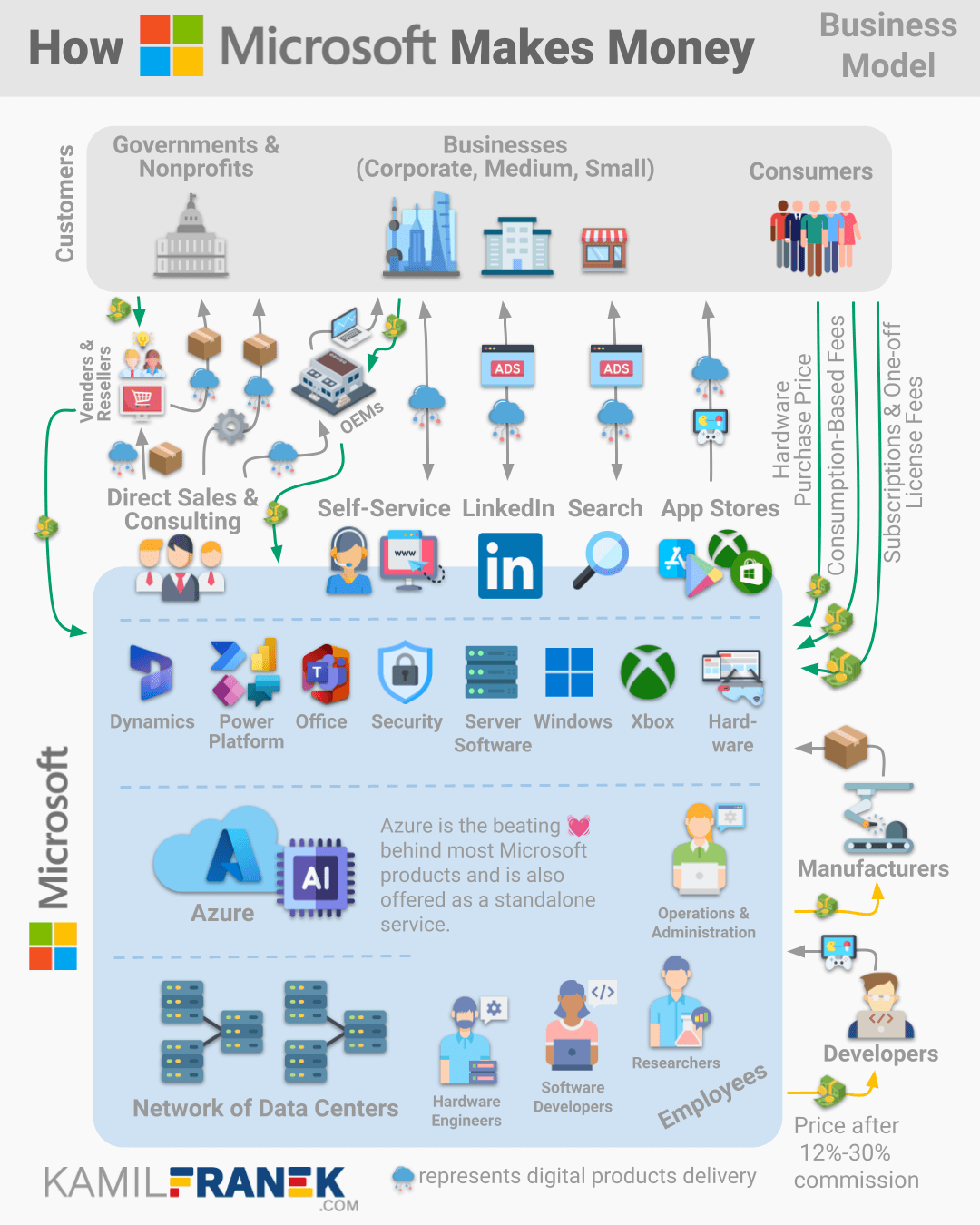
The Core Pillars: Operating Systems and Productivity Suites
At the heart of Microsoft’s enduring legacy and widespread impact are its foundational software products that have become ubiquitous in homes and offices worldwide. These core offerings established Microsoft as a household name and continue to be central to its strategy.
Windows: The Ubiquitous Computing Platform
Windows is arguably Microsoft’s most significant contribution to the world of personal computing. Since its introduction in 1985, Windows has evolved through numerous iterations to become the most widely used desktop operating system globally. It provides the graphical user interface that allows billions of people to interact with their computers, run applications, and connect to the internet. More than just an interface, Windows serves as a robust platform for software development, gaming, and various professional tasks. Its continuous development focuses on enhancing security, improving user experience, and integrating modern technologies like touch interfaces, voice commands, and cloud connectivity. Windows remains a critical revenue stream and a strategic anchor for Microsoft’s broader ecosystem, ensuring compatibility and functionality across a vast array of hardware from diverse manufacturers.
Microsoft Office: Empowering Global Productivity
Complementing Windows, the Microsoft Office suite of productivity applications has become the global standard for office work and personal organization. Word, Excel, PowerPoint, and Outlook are practically synonymous with document creation, data analysis, presentations, and email communication. These applications, initially sold as standalone software, transitioned seamlessly into a subscription-based model with Microsoft 365 (formerly Office 365), transforming them into a cloud-integrated service. This shift allows for real-time collaboration, automatic updates, and access from multiple devices, including web browsers and mobile apps. Microsoft Office’s continued evolution focuses on enhancing collaboration features, integrating AI-powered insights, and ensuring seamless productivity across various platforms and work environments. Its reach extends from individual users to small businesses and massive enterprises, providing essential tools for daily operations.
Evolving Desktop and Mobile Experiences
While Windows remains dominant on desktops, Microsoft has continuously explored and innovated across various form factors. From the Surface line of devices—which blends tablet portability with laptop productivity—to its ventures into mobile operating systems (like Windows Phone, though discontinued), Microsoft consistently pushes the boundaries of hardware and software integration. The company’s efforts are geared towards creating cohesive and intuitive experiences that adapt to how people work and live, whether it’s on a desktop, laptop, tablet, or increasingly, through touch, pen, and voice interactions. These efforts extend to ensuring seamless transitions and data synchronization across devices, making the Microsoft ecosystem a truly integrated experience for its users.
Cloud Computing Dominance: Microsoft Azure
One of Microsoft’s most strategic and successful pivots in the 21st century has been its aggressive expansion into cloud computing. Microsoft Azure, its comprehensive cloud platform, has emerged as a formidable competitor to industry leaders, fundamentally reshaping how businesses store data, host applications, and deploy services.
Infrastructure as a Service (IaaS) and Platform as a Service (PaaS)
Azure offers a vast array of cloud services, broadly categorized into IaaS and PaaS. With IaaS, businesses can rent virtual machines, storage, and networking components, allowing them to scale their infrastructure up or down as needed without the overhead of physical hardware. This provides unprecedented flexibility and cost efficiency. PaaS offerings, on the other hand, provide developers with a complete environment to build, deploy, and manage applications without worrying about the underlying infrastructure. This accelerates development cycles and fosters innovation. Azure’s comprehensive suite includes compute, networking, databases, analytics, machine learning, and Internet of Things (IoT) services, making it a one-stop shop for diverse cloud computing needs.
AI, Machine Learning, and Data Analytics on Azure
Azure is a powerhouse for artificial intelligence and machine learning. It provides a rich set of tools and services that allow developers and data scientists to build, train, and deploy AI models at scale. Azure Machine Learning, Cognitive Services (pre-built AI APIs for vision, speech, language, etc.), and AI infrastructure leverage Microsoft’s vast research and development in AI to empower businesses with intelligent capabilities. Furthermore, Azure’s robust data analytics services, including Azure Synapse Analytics, Power BI, and Azure Databricks, enable organizations to derive actionable insights from their data, driving better decision-making and business outcomes. This integration of AI and data analytics into the cloud platform is critical for businesses seeking to gain a competitive edge in the digital economy.
Hybrid Cloud Strategies and Enterprise Solutions
Microsoft’s understanding of enterprise needs has positioned Azure as a leader in hybrid cloud solutions. Many large organizations require a blend of on-premises infrastructure and public cloud resources. Azure Stack allows companies to run Azure services in their own data centers, providing consistency across environments and meeting strict regulatory or latency requirements. This hybrid approach offers flexibility, control, and seamless integration between on-premises and cloud resources. Microsoft also offers a wide range of enterprise-grade security, compliance, and management tools within Azure, catering to the complex demands of large corporations and government agencies. This focus on enterprise solutions, combined with its strong existing customer base, has solidified Azure’s position in the cloud market.
Gaming and Entertainment: Xbox Ecosystem
Beyond productivity and enterprise, Microsoft has carved out a significant niche in the entertainment industry, particularly through its Xbox brand. The Xbox ecosystem represents a comprehensive approach to gaming, blending hardware, software, and services.
Console Hardware and Game Development

The Xbox line of gaming consoles—starting with the original Xbox in 2001 and progressing through Xbox 360, Xbox One, and the latest Xbox Series X and S—has been a cornerstone of Microsoft’s entertainment strategy. These consoles provide powerful hardware optimized for immersive gaming experiences, supporting high-resolution graphics, fast loading times, and advanced audio. Alongside console development, Microsoft owns and operates several prominent game development studios, collectively known as Xbox Game Studios. These studios are responsible for creating exclusive titles that drive console sales and populate the Xbox gaming library, including popular franchises like Halo, Forza, and Gears of War.
Xbox Game Pass: Subscription Model Innovation
A significant innovation in the gaming industry driven by Microsoft is Xbox Game Pass. This subscription service offers players access to a vast library of games for a monthly fee, including new first-party titles on day one of their release. Game Pass has been widely praised for its value proposition, transforming how consumers access and play games. It has diversified Microsoft’s revenue streams in gaming, moving beyond singular console and game sales to a more recurring service-based model. This model fosters a vibrant community and encourages players to try a wider variety of games than they might typically purchase individually.
Cloud Gaming and Community Building
Microsoft is at the forefront of cloud gaming with Xbox Cloud Gaming (xCloud), which allows players to stream games directly to various devices, including phones, tablets, and PCs, without the need for a dedicated console. This technology promises to make high-quality gaming accessible to a broader audience, regardless of their hardware. Furthermore, the Xbox ecosystem extends to Xbox Live, a robust online service that enables multiplayer gaming, social interaction, and digital content distribution. This focus on community building and providing diverse ways to access games underscores Microsoft’s commitment to evolving the gaming experience.
Enterprise Software and Business Solutions
Microsoft’s expertise in software extends deep into the enterprise sector, providing comprehensive solutions that streamline business operations, enhance collaboration, and protect critical data.
Dynamics 365: CRM and ERP Reinvented
Dynamics 365 is Microsoft’s integrated suite of business applications designed to manage customer relationships (CRM) and enterprise resource planning (ERP). It combines functionalities from traditional ERP and CRM systems into modular, cloud-based applications that help businesses manage sales, marketing, customer service, field service, finance, operations, and supply chain. Dynamics 365 leverages AI and machine learning to provide intelligent insights, automate processes, and connect various aspects of a business, offering a unified platform for digital transformation. This suite is particularly valuable for organizations looking to modernize their operations and gain a holistic view of their customers and internal processes.
Microsoft Teams: The Modern Workplace Hub
Microsoft Teams has become an indispensable tool for collaboration, especially in the era of remote and hybrid work. It integrates chat, video conferencing, file storage, and application integration into a single platform. Teams allows colleagues to communicate in real-time, share documents, conduct virtual meetings, and collaborate on projects seamlessly. Its tight integration with Microsoft 365 applications like Word, Excel, and PowerPoint further enhances productivity, enabling co-authoring and easy sharing of content. Teams is not just a communication tool; it acts as a central hub for the modern workplace, fostering connectivity and efficiency across geographically dispersed teams.
Cybersecurity and Data Protection Offerings
Recognizing the escalating threat landscape, Microsoft offers a comprehensive portfolio of cybersecurity and data protection solutions. These services span identity and access management (Azure Active Directory), threat protection (Microsoft Defender for Endpoint, Microsoft Sentinel), information protection (Azure Information Protection), and security management. Leveraging vast threat intelligence and AI, Microsoft’s security offerings help organizations detect, prevent, and respond to cyber threats, secure their cloud and on-premises environments, and ensure compliance with regulatory requirements. This commitment to security is paramount, protecting not only Microsoft’s own platforms but also providing crucial defense mechanisms for its enterprise customers.
Emerging Technologies and Future Directions
Microsoft is not content to rest on its past achievements; it continuously invests heavily in research and development to explore and pioneer the next wave of technological innovations.
Artificial Intelligence Across the Portfolio
Artificial intelligence is a pervasive element across nearly all of Microsoft’s current and future endeavors. From enhancing search results in Bing, powering intelligent features in Office applications, and providing predictive analytics in Azure, to enabling advanced functionalities in Dynamics 365 and Xbox, AI is a core competency. Microsoft’s research into foundational AI models, natural language processing, computer vision, and machine learning is driving advancements that aim to make technology more intuitive, powerful, and accessible. The company is committed to ethical AI development, ensuring that these powerful tools are used responsibly and for the benefit of humanity.
Mixed Reality and the Metaverse Vision
Microsoft is a significant player in the mixed reality (MR) space with its HoloLens platform. HoloLens devices overlay digital information onto the real world, creating immersive experiences for professionals in fields like manufacturing, healthcare, and education. This technology is foundational to Microsoft’s broader vision of the metaverse – a persistent, interconnected digital world. Through platforms like Mesh for Microsoft Teams, the company is developing capabilities that allow users to interact with 3D avatars in shared virtual spaces, blurring the lines between physical and digital collaboration. This push into mixed reality and the metaverse represents a long-term bet on how people will interact with technology and each other in the coming decades.

Quantum Computing and Sustainable Tech Initiatives
Looking even further into the future, Microsoft is investing in quantum computing, a revolutionary paradigm that promises to solve complex problems intractable for classical computers. Its Azure Quantum platform provides access to quantum hardware and software development kits, empowering researchers and developers to explore this cutting-edge field. Beyond raw processing power, Microsoft is deeply committed to sustainability. The company aims to be carbon negative, water positive, and zero waste by 2030, leveraging its technological expertise to develop sustainable solutions and help its customers achieve their own environmental goals. This includes designing energy-efficient data centers and developing AI tools for environmental monitoring and management.
In conclusion, “what Microsoft does” is a multifaceted and continuously evolving narrative. From providing the operating systems and productivity tools that underpin daily life and work, to powering the global digital economy with its cloud services, entertaining millions with its gaming ecosystem, and leading the charge in emerging fields like AI and mixed reality, Microsoft remains a pivotal force in technology. Its enduring commitment to innovation, coupled with a vast and diverse portfolio, ensures its continued relevance and profound impact on how humanity interacts with and benefits from technology in the 21st century and beyond.
aViewFromTheCave is a participant in the Amazon Services LLC Associates Program, an affiliate advertising program designed to provide a means for sites to earn advertising fees by advertising and linking to Amazon.com. Amazon, the Amazon logo, AmazonSupply, and the AmazonSupply logo are trademarks of Amazon.com, Inc. or its affiliates. As an Amazon Associate we earn affiliate commissions from qualifying purchases.