
Navigating the complexities of mental health and its impact on one’s ability to maintain gainful employment is a significant challenge. For individuals grappling with severe mental disorders, securing disability benefits often becomes a crucial financial lifeline, providing essential support when work becomes impossible. Understanding which mental disorders qualify for these benefits, and the financial criteria involved, is paramount for anyone seeking this vital safety net. This article delves into the intersection of mental health and financial security, exploring the requirements, common qualifying conditions, and the strategic financial planning aspects of applying for and receiving disability benefits.
Understanding Disability Benefits: A Financial Lifeline
Disability benefits are designed to provide financial assistance to individuals who are unable to work due to a severe medical condition, including mental disorders. These programs are not merely about healthcare; they are fundamentally about financial sustainability and preventing economic hardship when an individual’s earning capacity is compromised. For many, these benefits transition from being a last resort to a primary source of income, demanding a strategic approach to personal finance.
The Landscape of Disability Support: Your Financial Pillars
In many countries, disability support systems are multifaceted. For instance, in the United States, two primary federal programs exist: Social Security Disability Insurance (SSDI) and Supplemental Security Income (SSI). SSDI is an insurance program, meaning eligibility is typically based on your work history and the Social Security taxes you’ve paid over time—akin to an investment in your future financial security. If you’ve contributed sufficiently, you’ve earned the right to this financial protection. SSI, on the other hand, is a needs-based program, providing financial assistance to disabled individuals with limited income and resources, regardless of work history. Both programs offer a pathway to financial stability for those whose mental health prevents them from working, but their financial underpinnings differ significantly. Understanding which program applies to your financial history and current economic situation is the first critical step. Other countries may have similar contributory and non-contributory schemes, each with its own financial eligibility criteria.
Financial Implications of Mental Health Challenges: The Cost of Impairment
The financial toll of severe mental disorders extends far beyond medical expenses. These conditions can profoundly impact an individual’s ability to maintain consistent employment, leading to reduced income, job loss, and long-term unemployment. Symptoms such as severe anxiety, cognitive disorganization, lack of motivation, or social withdrawal can make attending work regularly, focusing on tasks, or interacting with colleagues nearly impossible. This isn’t just about an individual’s well-being; it’s about their entire financial ecosystem—from paying rent and buying food to managing debts and planning for the future. Disability benefits, in this context, serve as a critical mechanism to offset these lost earnings, offering a minimum level of financial stability and preventing individuals from falling into extreme poverty. It allows recipients to cover basic living expenses, maintain housing, and access necessary medical care, thereby preserving a modicum of financial dignity.
Key Criteria for Mental Disorder Disability Qualification
Qualifying for disability benefits due to a mental disorder is not simply a matter of receiving a diagnosis. The process is rigorous and requires demonstrating that your condition is severe enough to prevent you from engaging in substantial gainful activity (SGA)—a financial threshold set by disability administrations. This means your mental health condition must significantly limit your ability to work and earn a living.
The Severity Standard: Beyond Diagnosis, Towards Financial Incapacity
A formal diagnosis from a psychiatrist or psychologist is the starting point, but it is rarely sufficient on its own. The core requirement is demonstrating that your mental disorder results in “marked and severe functional limitations” that preclude you from performing any substantial work. This means showing how your condition affects your cognitive functions (e.g., concentration, memory, executive functioning), social interactions, personal care, and ability to adapt to work environments. For example, while many individuals experience depression, to qualify for disability, your depression must be so severe and persistent that it leaves you unable to reliably show up for work, complete tasks, or interact appropriately with supervisors and peers. This inability to perform basic work functions directly translates to an inability to generate income, making disability benefits a financial necessity.
Documenting Your Financial and Functional Limitations: The Evidence Trail
The cornerstone of a successful disability claim is comprehensive medical documentation that clearly illustrates the severity of your condition and its disabling effects. This includes detailed psychiatric evaluations, psychological testing, therapy notes, hospital records, and medication lists. It’s also vital to provide statements from treating physicians and therapists that specifically address your functional limitations—how your condition impacts your ability to perform work-related activities.
Beyond medical records, you might need to provide evidence of your work history, vocational assessments, and even statements from former employers or colleagues illustrating the difficulties you faced at work due to your mental health. This evidence paints a financial picture, demonstrating your diminished earning capacity and the necessity of financial support. The more thoroughly you can document how your mental disorder affects your ability to sustain employment and earn income, the stronger your financial case for benefits.
The Role of Work History and Earnings: Your Financial Investment
For programs like SSDI, your work history and past earnings are crucial financial prerequisites. You must have worked a sufficient number of years and paid Social Security taxes to be “insured” for benefits. This means your eligibility is tied to your financial contributions to the system over your working life. The number of “work credits” you need depends on your age when you become disabled. For SSI, while work history isn’t a factor, your current income and assets are strictly scrutinized to ensure you meet the program’s financial need requirements. Understanding these financial thresholds and how they apply to your specific situation is essential for determining which type of disability benefit you may qualify for.
Common Mental Disorders That May Qualify
While every case is assessed individually, certain categories of mental disorders are frequently cited in successful disability claims due to their profound impact on an individual’s ability to work and manage their finances.
Mood Disorders and Their Financial Impact
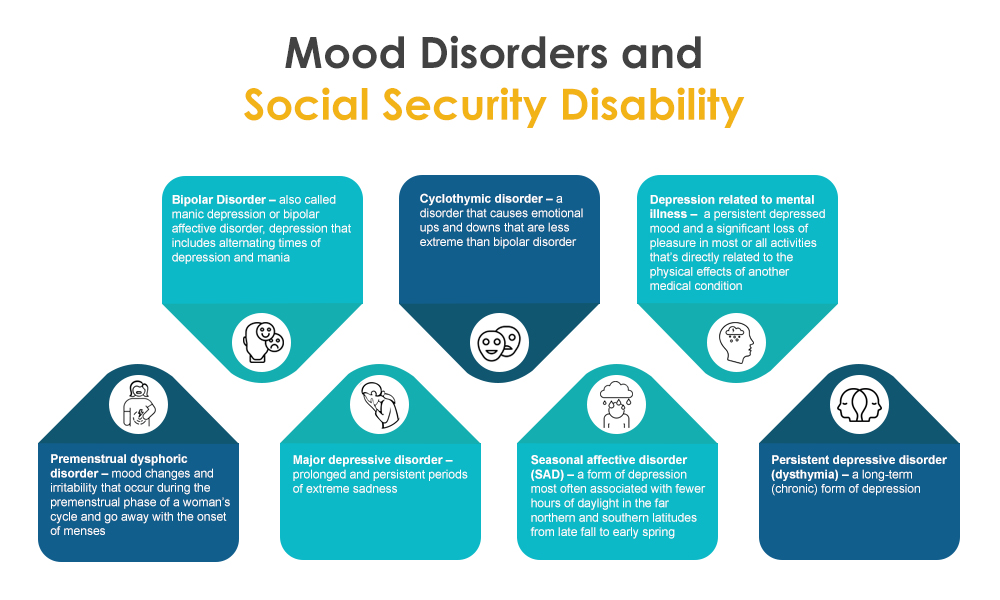
Conditions like Major Depressive Disorder (MDD) and Bipolar Disorder are among the most common mental disorders for which individuals seek disability. Severe, recurrent episodes of depression can lead to profound fatigue, anhedonia (inability to experience pleasure), difficulty concentrating, and suicidal ideation, making consistent work attendance and productivity impossible. Bipolar disorder, characterized by extreme mood swings between manic and depressive states, can cause erratic behavior, impulsive financial decisions during mania, and severe impairment during depressive phases, severely disrupting employment and financial stability.
Anxiety Disorders and Vocational Barriers
Severe Anxiety Disorders, including Generalized Anxiety Disorder (GAD), Panic Disorder, Social Anxiety Disorder, and Post-Traumatic Stress Disorder (PTSD), can be profoundly disabling. Constant worry, panic attacks, phobias, and hyper-vigilance can prevent individuals from leaving their homes, interacting with others, or focusing on work tasks. PTSD, in particular, can manifest with flashbacks, nightmares, and avoidance behaviors that make it impossible to hold down a job or function in a professional environment, directly impacting income generation.

Psychotic Disorders and Cognitive Impairment
Schizophrenia, Schizoaffective Disorder, and other psychotic disorders often involve severe disorganization of thought, delusions, hallucinations, and significant cognitive deficits. These symptoms dramatically impair an individual’s ability to communicate, maintain personal hygiene, follow instructions, and interact appropriately, making any form of gainful employment incredibly challenging, if not impossible. The long-term financial support provided by disability benefits is often critical for these individuals.
Neurodevelopmental and Personality Disorders
While not always qualifying, severe cases of Autism Spectrum Disorder (ASD), particularly those with significant intellectual or communication impairments, can qualify if they prevent substantial gainful activity. Similarly, severe Attention-Deficit/Hyperactivity Disorder (ADHD) that significantly impairs executive functions (planning, organization, impulse control) to a disabling degree can qualify. Certain Personality Disorders, such as Borderline Personality Disorder (BPD), when they lead to severe, recurrent instability in relationships, self-image, and emotional regulation, making sustained employment impossible, may also qualify.
Other Conditions
Other mental health conditions, such as severe Eating Disorders (anorexia nervosa, bulimia nervosa) when they lead to extreme physical and psychological debilitation, and certain Substance Use Disorders (if co-occurring with other qualifying mental disorders and demonstrating severe impairment not solely due to substance use), can also be considered for disability benefits. The key remains demonstrating how the specific symptoms of these conditions directly and severely impede the ability to work and earn income.
Navigating the Application Process: A Financial Strategy
Applying for disability benefits is a long, arduous process, often taking months or even years. Approaching it strategically, with a clear understanding of the financial implications and requirements, can significantly improve your chances of success.
Preparing Your Financial and Medical Evidence: Building Your Case
Your application is essentially a financial and medical dossier demonstrating your inability to work. Gather all relevant medical records, including psychiatric evaluations, therapy notes, hospitalizations, and medication history. Crucially, obtain detailed statements from your treating physicians and therapists that clearly outline your diagnosis, treatment plan, prognosis, and, most importantly, specific functional limitations that prevent you from working. This documentation directly supports your claim that your condition impacts your financial capacity. For SSDI, ensure your work history records are accurate. For SSI, be prepared to provide detailed financial statements of all income and assets.
The Importance of Professional Guidance: An Investment in Your Future
Given the complexity and high denial rates of initial applications, many applicants choose to hire a disability advocate or attorney. While this may seem like an additional financial burden, it can be a wise investment. These professionals are experts in disability law and understand what information disability administrations require. Most operate on a contingency basis, meaning they only get paid if you win your case, and their fees are capped by law, often deducted directly from your past-due benefits. This arrangement minimizes upfront financial risk while maximizing your chances of securing the benefits you desperately need.
Understanding Potential Financial Benefits and Limitations
If approved, disability benefits provide regular financial support. However, it’s crucial to understand how these benefits are calculated and any potential limitations. SSDI amounts are based on your average lifetime earnings, while SSI amounts are standardized but subject to reduction if you have other sources of income or resources. There can also be waiting periods before benefits begin, necessitating careful financial planning during this interim. Additionally, there are limits on how much you can earn from work while receiving benefits (SGA thresholds), and exceeding these limits can lead to the cessation of your financial support.
Long-Term Financial Planning with Disability Benefits
Receiving disability benefits is a significant milestone, but it’s not the end of your financial journey. It marks a shift from earning potential to managing a fixed income, requiring thoughtful long-term financial planning to ensure stability and quality of life.
Budgeting and Managing Disability Income: A New Financial Normal
Upon approval, the immediate financial task is to establish a realistic budget. Disability benefits, while crucial, may be less than your previous income, necessitating adjustments to your spending habits. Prioritize essential expenses like housing, food, utilities, and medical care. Seek out financial literacy resources or counseling tailored to individuals on fixed incomes. Understanding how to stretch your disability income, manage debt, and avoid common financial pitfalls is paramount to maintaining your financial well-being over the long term.
Exploring Work Incentives and Return-to-Work Programs: Bridging to Future Earnings
For those whose conditions may improve or who wish to attempt a return to work, disability programs often offer “work incentives” or “return-to-work programs” (e.g., Ticket to Work in the U.S.). These programs allow beneficiaries to try working without immediately losing their benefits or Medicare/Medicaid coverage. This provides a crucial financial safety net, encouraging a gradual transition back into the workforce and potentially rebuilding earning capacity without the fear of losing essential financial support. Understanding these programs can be a bridge to future financial independence.
Protecting Your Financial Future: ABLE Accounts and Trusts
For individuals with long-term disabilities, specific financial tools exist to help save money without jeopardizing needs-based benefits like SSI. ABLE (Achieving a Better Life Experience) accounts allow eligible individuals to save money in a tax-advantaged account without it counting against SSI asset limits, enabling savings for qualified disability expenses. Similarly, Special Needs Trusts can hold assets for the benefit of a disabled individual without impacting their eligibility for public benefits. These tools are vital for protecting assets and ensuring long-term financial security for those who rely on disability benefits.
Securing disability benefits for a mental disorder is a complex but often necessary step towards financial stability for those severely impacted. It requires a thorough understanding of the specific criteria, meticulous documentation, and strategic navigation of the application process. By viewing this journey through a financial lens, individuals can better prepare their case, secure the support they need, and build a sustainable financial future, even in the face of significant mental health challenges. It’s not just about a diagnosis; it’s about proving a profound financial incapacity, and taking proactive steps to safeguard your financial well-being.
aViewFromTheCave is a participant in the Amazon Services LLC Associates Program, an affiliate advertising program designed to provide a means for sites to earn advertising fees by advertising and linking to Amazon.com. Amazon, the Amazon logo, AmazonSupply, and the AmazonSupply logo are trademarks of Amazon.com, Inc. or its affiliates. As an Amazon Associate we earn affiliate commissions from qualifying purchases.