
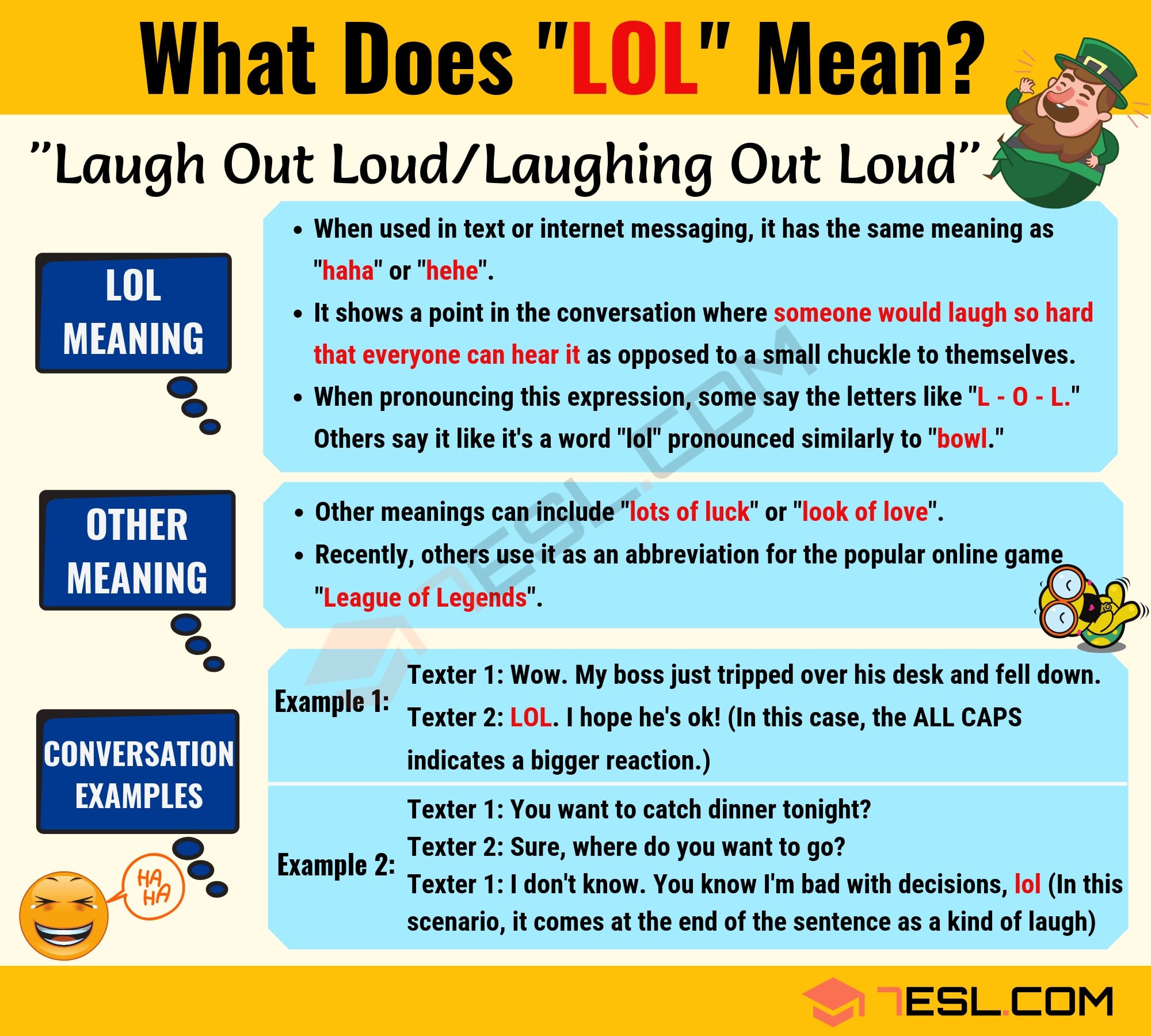
In the vast and ever-evolving landscape of digital communication, acronyms have emerged as fundamental building blocks, enabling rapid exchange and conveying complex sentiments with remarkable brevity. Among these, “LOL,” or “Laughing Out Loud,” stands as a veritable titan – a ubiquitous shorthand that has transcended its origins to become one of the most recognized and frequently used expressions in the online world. More than just an abbreviation for amusement, “LOL” encapsulates a rich history of technological adaptation, reflects subtle shifts in social interaction, and continues to influence how we connect, express, and interpret emotion across digital platforms. Understanding “LOL” is not merely about knowing what the letters stand for; it’s about grasping a critical component of modern digital literacy and appreciating its profound impact on how technology facilitates human interaction. This article delves into the technological journey and societal implications of “LOL,” unpacking its evolution, multifaceted meanings, and enduring relevance in our interconnected age.
The Genesis of “LOL”: From Usenet to Ubiquity
The birth and proliferation of “LOL” are inextricably linked to the early days of networked communication, a period characterized by technological constraints and a nascent understanding of digital social dynamics. As technology evolved, so too did the linguistic tools users employed to navigate these new frontiers.
Early Digital Communication and Acronym Necessity
Before the advent of high-speed internet, graphical user interfaces, and rich media, early digital communication was a text-centric, often rudimentary affair. Platforms like Usenet newsgroups, IRC (Internet Relay Chat), and early email systems operated with bandwidth limitations, character counts, and a general emphasis on textual efficiency. In this environment, every character counted, and the need to convey emotion, tone, or reaction quickly without elaborate descriptions became paramount. Users sought ways to compress common reactions into easily typable, recognizable forms. This necessity spurred the creation of a vast lexicon of internet acronyms. Expressing genuine laughter, a complex human emotion, through text alone was challenging; without auditory cues or visual feedback, irony could be missed, and lightheartedness could be misinterpreted. “LOL” provided an elegant solution, offering an immediate signal of amusement, levity, or agreement. It was efficient, clear, and perfectly suited to the technological constraints of its time.
The Evolution of Online Jargon
“LOL” did not emerge in a vacuum; it was part of a broader linguistic movement within the digital realm. It took its place alongside other foundational internet acronyms, each serving a specific purpose in bridging the gap between spoken conversation and written text. “BRB” (Be Right Back) addressed the temporary absence from a chat. “BTW” (By The Way) allowed for parenthetical information. “IMHO” (In My Humble Opinion) tempered a statement with a touch of humility or subjectivity. These acronyms formed a shorthand, a common vernacular that quickly became a hallmark of online communication. They were the digital equivalent of non-verbal cues in face-to-face interactions, providing context and emotional nuance that pure textual content often lacked. The collaborative and community-driven nature of early online platforms fostered this shared language, cementing these acronyms into the fabric of internet culture, often learned implicitly through observation and participation rather than explicit instruction.
Cultural Diffusion and Mainstream Adoption
What began as niche jargon within specific tech communities eventually broke out into the mainstream. As the internet moved from specialist domains into homes and workplaces, bringing with it email, instant messaging, and eventually social media, so too did its linguistic innovations. “LOL” proved particularly sticky due to its universal relatability and versatility. It became a bridge, allowing those new to digital communication to quickly assimilate into online social norms. Pop culture references, media depictions of internet users, and the sheer pervasiveness of online chat platforms accelerated its adoption. By the early 2000s, “LOL” was no longer confined to the digital sphere; it began to seep into spoken language, often pronounced as a word itself, or used ironically in face-to-face conversations. This journey from a utilitarian abbreviation to a mainstream cultural touchstone highlights the profound way technology shapes language, demonstrating how innovations born out of digital necessity can fundamentally alter societal communication patterns.
The Multifaceted Meanings and Modern Applications of “LOL”
While “LOL” literally translates to “Laughing Out Loud,” its contemporary usage has expanded far beyond this initial definition, revealing a rich tapestry of nuanced meanings and applications in digital dialogue. Its flexibility makes it a powerful, albeit sometimes ambiguous, tool in our online interactions.
Beyond Literal Laughter
In its most straightforward application, “LOL” genuinely signals amusement, much like a hearty chuckle in an in-person conversation. However, its evolution has seen it adopt a multitude of additional roles. It frequently acts as a social lubricant, akin to a polite nod or a friendly smile, indicating that the sender is approachable, lighthearted, or simply acknowledging a message. It can function as an intensifier, emphasizing a point (“That was a terrible meeting, lol”). It can also serve as a filler, much like “um” or “like” in spoken language, providing a pause or softening a statement. Perhaps most interestingly, “LOL” is often used ironically or sarcastically, signaling a lack of actual amusement, or to express awkwardness or discomfort in a self-deprecating way. This semantic drift highlights how digital shorthand can accrue complex layers of meaning, often divorcing itself from its original, literal intent to serve broader communicative functions.
Contextual Nuances: The Subtleties of Digital Expression
The interpretation of “LOL” is heavily reliant on context, the specific digital environment, and the relationship between sender and receiver. A “LOL” from a close friend in a casual chat might signify genuine mirth, while the same “LOL” from a distant acquaintance in a professional email could be read as dismissive or even passive-aggressive. The tone of the preceding or succeeding text, the broader topic of conversation, and the established communication style between individuals all play a crucial role in deciphering its intent. For instance, “I’m so tired lol” likely signals exhaustion with a touch of exasperated humor, whereas “You messed up, lol” could be interpreted as a subtle jab or an attempt to soften criticism. Understanding these subtle contextual cues is a critical component of digital literacy, allowing users to navigate the complexities of online interactions and avoid misinterpretations that can lead to miscommunication or strained relationships.
Generational Divides and Evolving Usage
Like all forms of language, the usage of “LOL” is not static; it evolves, particularly across different demographic groups. Younger generations, who have grown up entirely immersed in digital communication, often employ “LOL” with a more fluid and less literal understanding. For some, it might be a habitual punctuation mark, signifying nothing more than an acknowledgment. For others, it might carry a strong ironic undertone, used to comment on something absurd or to express a reaction that isn’t true laughter but something closer to a wry smirk. There’s also a noticeable shift towards alternative expressions of digital amusement, such as “LMAO” (Laughing My Ass Off), “ROFL” (Rolling On The Floor Laughing), or simply using reaction emojis, especially the “face with tears of joy” emoji, which was crowned Oxford Dictionaries’ Word of the Year in 2015. This generational divergence highlights the dynamic nature of digital slang and the continuous innovation in how users leverage technology to convey emotion and meaning in increasingly nuanced ways.
“LOL” in Professional and Personal Digital Spaces: Navigating the Etiquette
The pervasive nature of “LOL” means it pops up in nearly every digital communication channel. However, its appropriateness and effectiveness vary significantly depending on the context, underscoring the importance of digital etiquette in both professional and personal realms.
Corporate Communication: When is “LOL” Acceptable?

In professional digital environments, the use of “LOL” is often a delicate balance. While excessive formality can sometimes feel stiff or unapproachable, overly casual language can undermine credibility. Generally, in formal corporate communications – such as official emails to clients, superiors, or external partners – “LOL” is best avoided. It can be perceived as unprofessional, flippant, or even disrespectful. However, in internal team chats, more relaxed Slack channels, or informal emails among close colleagues, a well-placed “LOL” can humanize interactions, lighten the mood, or acknowledge a shared joke, fostering team cohesion and a more friendly work environment. The key is understanding the corporate culture, the specific audience, and the desired tone. A senior manager might use it to appear approachable, while a junior employee might risk being seen as immature. Ultimately, discretion and an awareness of the communication norms within a particular organization are paramount.
Personal Interactions: Building Rapport and Expressing Emotion
In personal digital interactions – texting with friends, chatting with family, or engaging on social media with peers – “LOL” shines as a versatile tool for building rapport and expressing a wide range of emotions. It helps convey warmth, understanding, and shared amusement, reinforcing social bonds. It can soften potentially sensitive remarks, inject humor into mundane conversations, or simply affirm that you are engaged and receptive. For instance, responding to a friend’s relatable complaint with “lol, I know exactly what you mean” signals empathy and solidarity. In these informal settings, the rules are far more flexible, and users are often more forgiving of varying interpretations. “LOL” becomes part of a personal linguistic shorthand, understood implicitly within specific social circles, contributing to a sense of intimacy and connection that pure, unadorned text might struggle to achieve.
The Pitfalls of Misinterpretation: Avoiding Digital Communication Blunders
Despite its widespread use, “LOL” is not immune to misinterpretation, and misusing it can lead to communication blunders. Because its meaning is so context-dependent, a “LOL” intended as lighthearted could be perceived as sarcastic, dismissive, or even mocking if the recipient is not privy to the sender’s tone or intent. This is especially true in cross-cultural communications, where humor and digital etiquette can vary widely. For example, using “LOL” after delivering bad news might be intended to lighten a somber mood but could easily be seen as insensitive. Furthermore, the absence of an “LOL” where one might be expected can also send unintended signals of seriousness or irritation. Navigating these pitfalls requires thoughtful consideration before sending, sometimes even re-reading a message from the recipient’s perspective. The ongoing challenge in digital communication remains the absence of non-verbal cues, making tools like “LOL” powerful but also inherently susceptible to subjective interpretation, demanding a conscious effort from users to communicate clearly and empathetically.
The Technological Impact: How “LOL” Shapes Platforms and User Experience
The prominence of “LOL” is not just a linguistic phenomenon; it has tangible implications for technology itself, influencing the design of communication platforms, the development of artificial intelligence, and the evolution of digital expression.
The Rise of Emojis and Stickers: Visualizing Emotion Beyond Text
The success of “LOL” in conveying emotion through text laid foundational groundwork for the explosion of visual communication tools like emojis and stickers. While “LOL” offered a textual shorthand for laughter, emojis like (face with tears of joy) or (rolling on the floor laughing) provide a more direct, universally recognizable visual representation. These graphical elements don’t just complement text acronyms; they sometimes compete with them, offering a richer, more immediate emotional impact. The prevalence of “LOL” helped highlight the innate human need to express emotion digitally, prompting platform designers to integrate more sophisticated and varied ways for users to do so. This technological response acknowledges that text alone, even with acronyms, sometimes falls short in conveying the full spectrum of human feeling, pushing the boundaries of what digital interfaces can offer in terms of emotional expression.
AI and Natural Language Processing: Understanding Internet Slang
The widespread use of “LOL” and other internet slang presents a unique challenge and opportunity for artificial intelligence and Natural Language Processing (NLP). For AI models to genuinely understand and interact with human language, they must be able to interpret informal, context-dependent expressions like “LOL.” This requires training AI algorithms on vast datasets of real-world digital conversations, teaching them to discern the nuances of irony, sarcasm, and emotional intent behind such seemingly simple acronyms. Developing AI that can differentiate between a literal “LOL” and an ironic one, or understand its function as a filler versus genuine amusement, is crucial for creating more sophisticated chatbots, sentiment analysis tools, and even advanced search engines. The existence of “LOL” pushes the boundaries of AI research, forcing models to move beyond literal word meanings to grasp the complex social and emotional layers embedded within human communication.
The Future of Digital Lexicon: What’s Next After “LOL”?
“LOL” has enjoyed remarkable longevity, but the digital lexicon is constantly evolving. The continuous innovation in communication technologies and social platforms guarantees that new forms of expression will emerge. While “LOL” might never truly disappear, its dominance could wane as new acronyms, visual shorthand, or entirely novel methods of conveying emotion gain traction. We’ve seen trends like “poggers,” “rizz,” or “cheugy” emerge and fade, demonstrating the rapid lifecycle of internet slang. The future might bring even more compressed forms of communication, perhaps entirely visual or even integrated directly into virtual and augmented reality environments. The journey of “LOL” serves as a powerful case study for how technology drives linguistic innovation, suggesting that future digital lexicons will continue to prioritize efficiency, expressiveness, and context-awareness, constantly adapting to the latest technological affordances and social needs.
The Broader Implications: “LOL” as a Mirror of Digital Society
Beyond its linguistic and technological aspects, “LOL” serves as a fascinating sociological marker, reflecting broader trends in how digital platforms influence human interaction and community formation.
Bridging the Digital-Analog Divide
One of the most significant impacts of “LOL” is its infiltration into spoken language. What began as a textual abbreviation now frequently appears in verbal conversations, often pronounced as a word or used as an interjection. This phenomenon illustrates how digital communication doesn’t merely run parallel to face-to-face interaction; it actively shapes and integrates with it. The digital-analog divide, once a clear line between online and offline behavior, has blurred considerably, with internet culture permeating everyday life. “LOL” is a prime example of how the tools and expressions forged in the crucible of digital technology have become so ingrained that they transcend their original medium, becoming part of a universal communicative toolkit that enhances, rather than merely replicates, traditional forms of interaction.
The Speed of Information and Communication Compression
The necessity that gave birth to “LOL” – the need for rapid, efficient communication – has only intensified in the age of instant messaging and hyper-connectivity. “LOL” epitomizes the ongoing trend towards communication compression, where vast amounts of information and emotion are condensed into minimal characters or gestures. This drive for brevity is a direct response to the sheer volume and speed of information flow in our digital lives. In a world where attention spans are fragmented and messages compete for immediate engagement, conciseness is key. “LOL” allows users to react, acknowledge, and express without investing significant time or character count, streamlining conversations and keeping pace with the rapid fire nature of modern digital exchanges. It is a testament to the human ingenuity in adapting language to technological demands.
Fostering Connection and Community Online
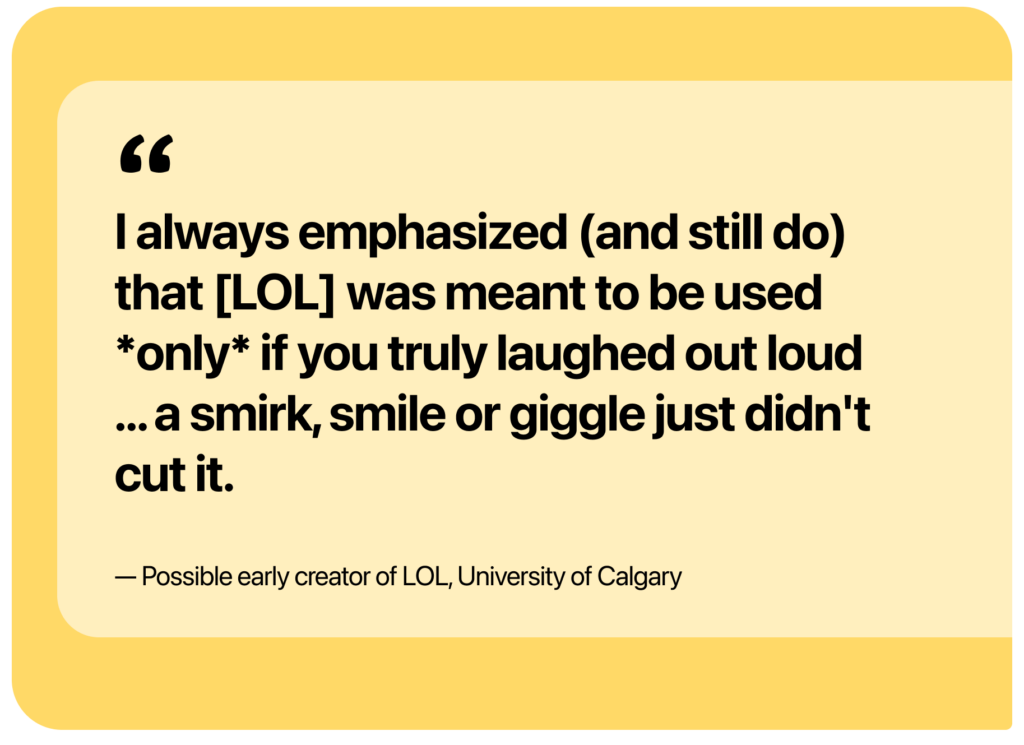
Perhaps the most profound implication of “LOL” is its role in fostering connection and building community. By providing a shared, recognizable signal of humor and camaraderie, “LOL” contributes to a sense of belonging among digital users. It helps to define an in-group, creating a common understanding and shared emotional landscape. When someone uses “LOL,” they’re often not just laughing; they’re signaling shared experience, mutual understanding, and a willingness to engage in a lighthearted manner. This shared linguistic shorthand helps to break down barriers, create rapport, and cultivate the informal, often playful, atmosphere that characterizes much of online social interaction. In this sense, “LOL” is more than just an acronym; it’s a social glue, reinforcing the bonds that form within the vast and diverse communities inhabiting our digital world.
In conclusion, “LOL” is far more than a simple abbreviation; it is a profound testament to the adaptability of language in the face of technological innovation. From its utilitarian origins in early text-based interfaces to its multifaceted roles in contemporary digital dialogue, “LOL” has mirrored and shaped the evolution of online communication. It underscores the challenges and triumphs of conveying emotion and intent without traditional non-verbal cues, influenced the very design of our communication platforms, and continues to be a rich subject for linguistic and sociological inquiry. As technology continues its relentless march forward, pushing the boundaries of how we connect and interact, understanding the journey and implications of “LOL” offers invaluable insight into the dynamic interplay between human language, technological progress, and the ever-evolving landscape of digital society.
aViewFromTheCave is a participant in the Amazon Services LLC Associates Program, an affiliate advertising program designed to provide a means for sites to earn advertising fees by advertising and linking to Amazon.com. Amazon, the Amazon logo, AmazonSupply, and the AmazonSupply logo are trademarks of Amazon.com, Inc. or its affiliates. As an Amazon Associate we earn affiliate commissions from qualifying purchases.