
For the modern investor, the question of whether a market is open is more complex than a simple glance at a calendar. In an era of decentralized finance, 24/7 cryptocurrency exchanges, and globalized equity markets spanning every time zone, the “opening bell” is a rolling event that follows the sun. Understanding which markets are open today—and more importantly, how those operating hours influence liquidity, volatility, and opportunity—is a foundational skill for anyone managing personal wealth or professional portfolios.
To navigate the financial world effectively, one must look at the global landscape as a continuous cycle of liquidity. While local holidays and regional time zones dictate the schedule for traditional exchanges like the New York Stock Exchange (NYSE) or the London Stock Exchange (LSE), other markets, such as Foreign Exchange (Forex) and digital assets, operate on entirely different frameworks.
The Global Equity Cycle: From East to West
Traditional equity markets operate on a fixed schedule, typically Monday through Friday, excluding public holidays. The trading day is generally divided into three major sessions: the Asian session, the European session, and the North American session.
The North American Powerhouses
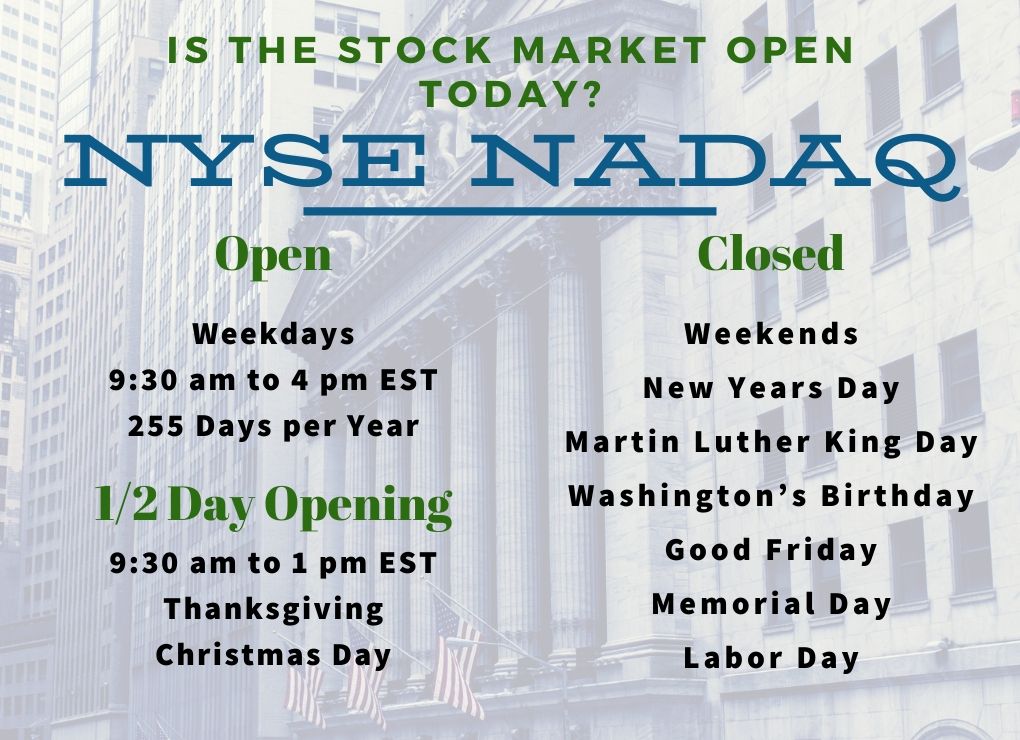
In the United States, the primary markets are the New York Stock Exchange (NYSE) and the NASDAQ. Both operate on a standard schedule of 9:30 AM to 4:00 PM Eastern Time (ET). For investors based in other time zones, these hours are the anchor of the financial world. Pre-market trading often begins as early as 4:00 AM ET, and after-hours trading can extend until 8:00 PM ET. While these extended sessions offer flexibility, they are characterized by lower volume and higher spreads, making them riskier for the average retail investor.
In Canada, the Toronto Stock Exchange (TSX) mirrors the US schedule, operating from 9:30 AM to 4:00 PM ET. This synchronization is vital for the cross-listed companies that dominate the energy and banking sectors across the North American border.
The European Hubs
As the North American markets close, the attention often shifts toward the next day’s opening in Europe. The London Stock Exchange (LSE) is one of the most significant hubs globally, operating from 8:00 AM to 4:30 PM GMT. Other major European players, such as the Euronext Paris and the Frankfurt Stock Exchange (DAX), operate on similar schedules, generally opening at 9:00 AM and closing at 5:30 PM Central European Time (CET).
European markets are particularly important for global macro investors because they bridge the gap between the Asian close and the American open. The “overlap” period—when both London and New York are trading simultaneously—is often the most liquid and volatile period of the day.
The Asian-Pacific Session
The trading day technically begins in the East. The Tokyo Stock Exchange (TSE) in Japan, the Hong Kong Stock Exchange (HKEX), and the Shanghai Stock Exchange in China are the primary movers here. Unlike Western markets, many Asian exchanges include a scheduled lunch break. For example, the TSE typically trades from 9:00 AM to 11:30 AM, pauses for an hour, and resumes from 12:30 PM to 3:00 PM JST.
The 24-Hour Markets: Forex and Cryptocurrency
While stock markets have clear “off” switches, the world of currency and digital assets rarely sleeps. If you are asking if markets are open today and it happens to be a Tuesday at 2:00 AM, the answer for these specific asset classes is almost always “yes.”
The Foreign Exchange (Forex) Cycle
The Forex market is the largest and most liquid financial market in the world. It does not operate through a centralized exchange; instead, it is a decentralized network of banks, brokers, and financial institutions. Consequently, Forex is open 24 hours a day, five days a week.
The cycle begins on Sunday evening (around 5:00 PM ET) when the Asian markets open and continues uninterrupted until Friday afternoon (5:00 PM ET) when the New York market closes. During this 120-hour window, there is always a major financial center open somewhere in the world. This constant availability allows investors to react to geopolitical events or economic data in real-time, regardless of the hour.
The Rise of 24/7 Cryptocurrency Markets
Cryptocurrency has redefined the concept of market hours. Unlike any other asset class in history, the crypto market is open 24 hours a day, seven days a week, 365 days a year. There are no holiday closures, no weekend breaks, and no “closing prices” in the traditional sense.
For the personal investor, this creates a unique environment of constant opportunity and constant risk. While traditional investors might use the weekend to decompress and analyze their portfolios, crypto traders must remain vigilant, as major price swings can occur on a Sunday morning or a Christmas afternoon. The lack of an opening or closing bell means that “daily” performance is often measured using a rolling 24-hour window or a standardized UTC midnight cutoff.

Understanding Market Holidays and Early Closures
When determining if markets are open today, the most common hurdle is the bank holiday. Each country has its own cultural and national holidays that result in exchange closures.
Major US Market Holidays
The US markets observe several key holidays where trading is suspended. These include:
-
New Year’s Day
-
Martin Luther King, Jr. Day
-
Presidents’ Day
-
Good Friday
-
Memorial Day
-
Juneteenth National Independence Day
-
Independence Day (July 4th)
-
Labor Day
-
Thanksgiving Day
-
Christmas Day
On some occasions, such as the day after Thanksgiving or the day before Independence Day, the markets may observe an “early close,” typically at 1:00 PM ET. For an investor, these dates are crucial because they affect settlement cycles—the time it takes for a trade to be finalized and funds to be transferred.
The Ripple Effect of Regional Closures
A market closure in one country can have a significant impact on others. For instance, if the US markets are closed for Thanksgiving, liquidity in global equity markets often dries up significantly. Since US investors provide a massive portion of global capital, their absence leads to lower trading volumes in London, Tokyo, and beyond. This “thin” market can lead to erratic price movements, as it takes fewer trades to move the needle.
Conversely, some markets remain open during local holidays but experience “bank holidays” where the underlying banking systems are closed. In these cases, you might be able to trade a stock, but you may not be able to move the resulting cash into your personal bank account until the following business day.
Fixed Income, Commodities, and Futures
Beyond stocks and currencies, other financial instruments have their own specific “open” hours that are vital for business finance and hedging strategies.
The Bond Market
The bond market (Fixed Income) generally follows the schedule of the equity markets but is more sensitive to government holidays. In the US, the Securities Industry and Financial Markets Association (SIFMA) recommends holiday schedules for bond trading. Interestingly, the bond market occasionally closes on days when the stock market remains open, such as Columbus Day (Indigenous Peoples’ Day) or Veterans Day. This can lead to unique trading conditions where stocks are active but the “risk-free rate” benchmarks (like Treasury yields) are not moving.
Commodities and Futures
Commodities like gold, oil, and agricultural products are primarily traded through futures contracts. Exchanges like the Chicago Mercantile Exchange (CME) operate nearly 24 hours a day during the work week. Most futures contracts begin trading on Sunday evening and close on Friday afternoon, with brief daily breaks (usually an hour) to facilitate system maintenance and clearing.
For businesses that rely on these commodities—such as airlines hedging fuel costs or manufacturers securing raw materials—these extended hours are essential for managing price risk in a global supply chain.
Tools and Strategies for Navigating Market Hours
Staying informed about market status is not just about knowing the time; it is about strategic planning. Successful investors use several tools to ensure they are never caught off guard by a market closure or a sudden spike in volatility at the open.
The Economic Calendar
A professional-grade economic calendar is the most important tool for any investor. These calendars list not only the market holidays for every major country but also the release times for critical economic indicators like Non-Farm Payrolls (NFP), Consumer Price Index (CPI) data, and central bank interest rate decisions. Knowing that the market is “open” is only half the battle; knowing when the most impactful data will be released during those open hours is what separates a novice from a professional.
Automation and Limit Orders
Because human beings cannot monitor markets 24/7—especially those operating in distant time zones—automation is key. Using limit orders allows an investor to set a specific price at which they wish to buy or sell, regardless of whether they are awake or the market is currently in its primary session. This is particularly useful for trading international stocks or cryptocurrencies where the most favorable price action might occur at 3:00 AM local time.
Assessing “Market Quality”
Just because a market is open does not mean it is a good time to trade. Market quality is defined by liquidity (how easily you can enter and exit a position) and the spread (the difference between the buy and sell price). The first and last 30 minutes of the trading day are often the most volatile as institutional investors “rebalance” their positions. For long-term personal finance goals, it is often wiser to avoid these periods of high noise and focus on the more stable “mid-day” sessions.
In conclusion, the question “what markets are open today” is the gateway to understanding the global flow of capital. By mastering the schedules of equity exchanges, the nuances of 24-hour Forex and crypto markets, and the impact of regional holidays, an investor can better position themselves to capture opportunities and mitigate the risks of a world that never truly stops trading. Whether you are managing a side hustle in day trading or overseeing a corporate treasury, the clock is just as important as the ticker symbol.
aViewFromTheCave is a participant in the Amazon Services LLC Associates Program, an affiliate advertising program designed to provide a means for sites to earn advertising fees by advertising and linking to Amazon.com. Amazon, the Amazon logo, AmazonSupply, and the AmazonSupply logo are trademarks of Amazon.com, Inc. or its affiliates. As an Amazon Associate we earn affiliate commissions from qualifying purchases.