
In the highly competitive world of the global confectionery market, few products have managed to achieve the cult-like status and immediate brand recognition of Warheads. While many candies rely on sweetness, comfort, or indulgence to capture market share, Warheads took a diametrically opposite approach: physical discomfort. Since its rise to prominence in the early 1990s, the brand has become synonymous with “extreme” sourness, carving out a niche that has remained remarkably resilient against shifting consumer tastes.
What makes Warheads sour is not merely a chemical combination of organic acids; it is a masterclass in brand positioning, sensory marketing, and the psychology of the “challenge.” By examining the brand’s strategic evolution, we can understand how a specialized product transformed a painful sensory experience into a multi-million dollar corporate identity.

The Identity of Intensity: How Warheads Defined the Extreme Candy Category
The story of Warheads is a study in precise market positioning. Originally invented in Taiwan in 1975 and later imported to the United States in the 1990s by Foreign Candy Company (and currently owned by Impact Confections), the brand entered a market saturated with traditional sweets. To survive, it needed more than just a flavor profile—it needed a personality.
The “Challenge” Culture Before Social Media
Long before “TikTok Challenges” became a staple of digital marketing, Warheads utilized the concept of gamified consumption. The brand’s identity was built on the idea that eating the candy was an achievement. By marketing the product as “The Original Mega Sour,” the brand successfully turned a simple snack into a rite of passage for its primary demographic: children and teenagers.
This strategic pivot changed the consumer’s relationship with the product. One does not simply eat a Warhead for pleasure; one survives it. This “survival” aspect fostered a peer-to-peer marketing loop where children would dare one another to keep the candy in their mouths for the full duration of the sour coating. From a brand strategy perspective, this turned every consumer into a brand ambassador, creating organic word-of-mouth long before the digital age.
Visual Identity and Wally Warhead
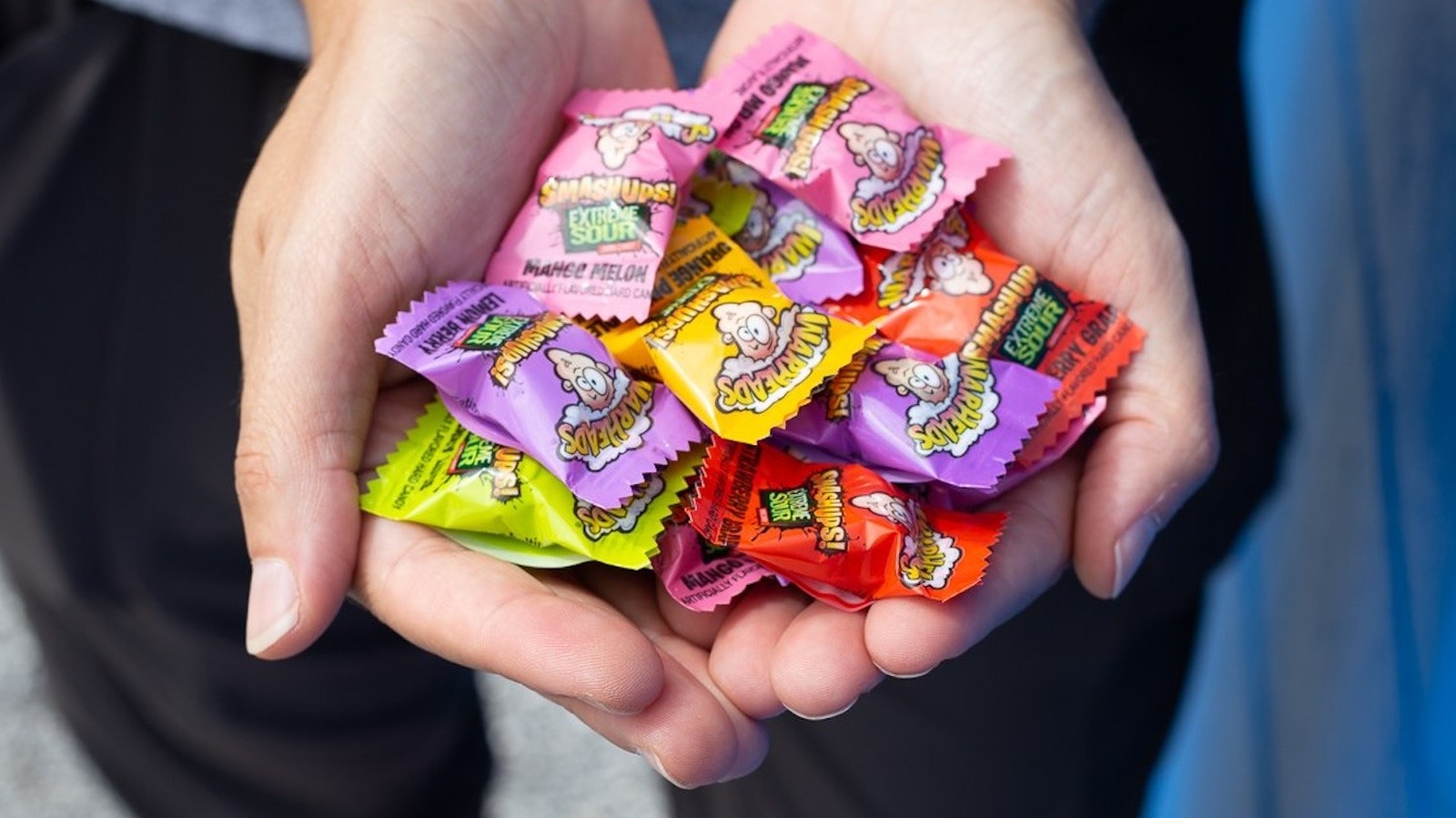
A brand is only as strong as its visual cues, and the Warheads logo—featuring “Wally Warhead,” a mascot with puckered lips and a literal mushroom cloud exploding from his head—is an iconic piece of corporate identity. The imagery communicates the brand promise instantly: an explosive, mind-altering sensory experience.
The use of bright, neon-adjacent colors (electric blue, toxic green, radiant yellow) serves as a visual warning and an invitation. In retail environments, this distinct “hazard” aesthetic allowed Warheads to stand out on crowded shelves, signaling to the target audience that this was the “extreme” option they were looking for.
Engineering the Experience: The Product as a Brand Promise
At the heart of any successful brand is a product that delivers on its promise. For Warheads, that promise is a level of acidity that pushes the boundaries of the human palate. The “sour” in Warheads is a deliberate chemical formulation designed to trigger a specific neurological and physical response.
Malic Acid and the Sensory Hook
The primary agent responsible for the initial “explosion” of sourness is malic acid. While many sour candies use citric acid (found in lemons), Warheads utilizes a high concentration of malic acid in the exterior coating. From a brand perspective, the choice of malic acid is strategic. It has a high “up-front” intensity that hits the tongue immediately, providing the instant gratification (or shock) that the brand advertises.
This chemical formulation is the brand’s “secret sauce.” By layering the acids—often starting with malic acid and transitioning into citric and ascorbic acids—the product provides a tiered experience. This complexity ensures that the brand isn’t just a “one-note” gimmick, but a structured sensory event that keeps the consumer engaged from the first second to the final sweet center.
The Three Stages of Consumption: A Narrative Experience
A key element of the Warheads brand strategy is the “narrative” of the eating experience. Most candies provide a linear flavor profile. Warheads, however, offers a three-act structure:
- The Shock: The initial 30 seconds of extreme malic acid intensity.
- The Transition: The subsiding of the sourness as the coating dissolves.
- The Reward: The mild, sweet hard candy underneath.
This structure mimics the “hero’s journey.” By providing a sweet reward at the end of a difficult experience, the brand creates a positive reinforcement loop. Consumers feel a sense of accomplishment once they reach the sweet center, which psychologically links the brand to feelings of resilience and success.
Market Penetration and the Cult of Nostalgia
The longevity of Warheads can be attributed to its ability to transition from a 1990s fad to a “legacy brand.” In branding, this transition is notoriously difficult to navigate, as many “extreme” products of that era have long since faded into obscurity.
Capturing the Youth Demographic in the 90s
In the 1990s, “extreme” was the dominant cultural currency. From the X-Games to Mountain Dew, brands were racing to see who could be the most intense. Warheads capitalized on this trend perfectly. By aligning their marketing with the burgeoning “alternative” culture of the decade, they secured a dominant position among Gen X and Millennial youth.
The brand’s distribution strategy was also vital. By focusing on convenience stores and “impulse buy” zones near schools, they ensured the product was accessible exactly where their target demographic spent their time and pocket money.
Transitioning to Legacy Status
As the original fans of Warheads aged into adulthood, the brand successfully leveraged nostalgia. Impact Confections recognized that while children remain the primary drivers of candy sales, there is a significant secondary market for adults seeking a “nostalgia hit.”
By maintaining the original packaging design and flavor profiles, the brand has retained its “authentic” status. In an era where many brands constantly “rebrand” and lose their soul, Warheads’ commitment to its original, aggressive identity has allowed it to become a staple of the “retro” candy movement. This has opened up new revenue streams, including presence in specialty gift shops and inclusion in “90s-themed” subscription boxes.
Strategic Diversification: Beyond the Hard Candy
A brand that remains static eventually dies. While the core “Extreme Sour” hard candy remains the flagship, the Warheads brand has undergone a sophisticated diversification strategy to maintain its relevance in a changing marketplace.
Licensing and Cross-Category Partnerships
One of the most effective ways Warheads has expanded its brand equity is through licensing. By partnering with other manufacturers, the Warheads name has been applied to everything from soda and ice cream to taffy and even “sour spray.”
Each of these brand extensions follows the core brand guideline: it must be sour. By diversifying the format but keeping the attribute (sourness) constant, the brand has been able to enter different aisles of the grocery store without diluting its identity. The Warheads soda line, for example, allows the brand to compete in the beverage space by offering a flavor profile that traditional soda giants like Coke or Pepsi rarely touch.
Maintaining Brand Consistency Across Segments
The danger of diversification is “brand dilution”—the loss of what makes a product special. Warheads avoids this by ensuring that every licensed product adheres to a “Sour Scale.” Whether it is a chewy cube or a liquid spray, the product is ranked by its intensity.
This transparency helps manage consumer expectations and reinforces the brand’s authority in the sour space. It tells the consumer: “We are the experts in sour, and we will tell you exactly how intense this experience will be.” This level of brand consistency builds trust, ensuring that a customer who likes the hard candy will be willing to try the brand’s other ventures.

Conclusion: The Endurance of the Sour Brand
What makes Warheads sour is more than just chemistry; it is a meticulously maintained brand ecosystem that thrives on intensity, challenge, and consistency. By leaning into an experience that most brands would consider a “negative” (pain/discomfort), Warheads carved out a unique space in the market that it has occupied for decades.
The brand’s success serves as a powerful case study for modern marketers. It demonstrates that you do not need to appeal to everyone to be successful. By identifying a specific emotional and sensory niche—the “extreme” challenge—and building a visual and corporate identity around it, Warheads has turned a simple sour coating into a global icon. As long as there are children looking for a dare and adults looking for a nostalgic jolt, the mushroom cloud of Wally Warhead will continue to be a symbol of sour supremacy in the confectionery world.
aViewFromTheCave is a participant in the Amazon Services LLC Associates Program, an affiliate advertising program designed to provide a means for sites to earn advertising fees by advertising and linking to Amazon.com. Amazon, the Amazon logo, AmazonSupply, and the AmazonSupply logo are trademarks of Amazon.com, Inc. or its affiliates. As an Amazon Associate we earn affiliate commissions from qualifying purchases.