
The S&P 500, a cornerstone of the financial world, is more than just a number; it’s a dynamic representation of the U.S. equity market’s largest and most influential companies. For investors, analysts, and anyone interested in the pulse of the American economy, understanding what constitutes this iconic index is crucial. It’s not simply a random collection of businesses, but a carefully curated basket that aims to reflect broad market performance and provide a benchmark for investment strategies. Delving into the composition of the S&P 500 reveals a sophisticated process driven by specific criteria, ongoing rebalancing, and a commitment to representing the diverse landscape of American commerce.
The Pillars of Inclusion: Criteria for Entry
The S&P 500 is not an open club; entry is governed by a rigorous set of rules designed to ensure the index remains a relevant and representative barometer of large-cap U.S. equities. These criteria, overseen by S&P Dow Jones Indices, are multifaceted, touching upon market capitalization, liquidity, profitability, and domicile.
Market Capitalization: The Size Matters Test
At its core, inclusion in the S&P 500 is contingent on a company’s market capitalization, which is the total value of its outstanding shares. This is calculated by multiplying the current share price by the number of shares in circulation. S&P Dow Jones Indices sets a minimum market capitalization threshold, which is periodically reviewed and adjusted to reflect market conditions. As of early 2024, this threshold is substantial, meaning only companies with a significant market presence can even be considered. This criterion ensures that the index primarily focuses on established, large-cap companies, which are generally considered more stable and influential in the overall market.
The rationale behind a high market capitalization requirement is to capture the economic weight of the most significant players. Smaller companies, while potentially innovative and growth-oriented, may not have the same systemic impact on the broader market. By focusing on large-caps, the S&P 500 provides a reliable gauge of the performance of the dominant forces in American industry.
Liquidity: The Ease of Trading
Beyond sheer size, a company’s stock must be readily tradable. This is where liquidity comes into play. S&P Dow Jones Indices assesses liquidity through several metrics, including the trading volume of the company’s shares. A high average daily trading volume indicates that there is sufficient buyer and seller interest to allow investors to enter and exit positions without significantly impacting the stock price.
Furthermore, the “float” of a company’s shares – the number of shares available for public trading, excluding those held by insiders or governments – is also a critical liquidity indicator. A larger float generally translates to better liquidity. This focus on liquidity is vital for the index’s integrity. If a constituent stock is illiquid, it can become difficult for index funds and ETFs to accurately track the index, and it can also lead to price dislocations that don’t reflect underlying fundamentals.
Profitability: A Track Record of Earnings
For a company to be considered a leader in the U.S. economy, it needs to demonstrate a sustained ability to generate profits. The S&P 500 index committee looks for companies with a positive earnings history. Specifically, there’s a requirement for a company to have reported positive earnings in its most recent quarter and for the sum of its earnings over the past four consecutive quarters to also be positive.
This profitability requirement serves as a quality filter. It helps to weed out companies that may have a high market capitalization due to speculation or other factors, but lack a solid foundation of financial success. A track record of profitability suggests that a company has a viable business model and is generating value for its shareholders, aligning with the index’s goal of representing established economic powerhouses.
Domicile and Public Float: U.S. Roots and Broad Ownership
To be included in the S&P 500, a company must be domiciled in the United States. This means its principal place of business and incorporation must be within the U.S. This criterion ensures that the index truly reflects the performance of the American corporate landscape.
Additionally, the index requires a significant portion of a company’s shares to be publicly owned and available for trading. This “public float” requirement, typically set at a minimum percentage of outstanding shares, is designed to prevent companies where a single entity or small group holds a controlling stake from dominating the index and potentially distorting its performance. This promotes a more diversified ownership structure, in line with the index’s broad market representation objective.
The Art of Index Management: Selection and Rebalancing
The criteria for inclusion are just the first step. The S&P 500 is not a static entity; it is actively managed by a dedicated committee that makes decisions about which companies enter and which are removed. This ongoing oversight is essential to maintaining the index’s relevance and accuracy.
The Index Committee: Guardians of the Benchmark
The S&P 500 Index Committee is the ultimate decision-maker for index composition. This committee is composed of senior members of S&P Dow Jones Indices and is responsible for reviewing potential additions and deletions based on the established criteria. Their decisions are guided by the principle of maintaining the S&P 500 as a leading indicator of the U.S. equity market.
The committee considers a broad range of factors, not just the quantitative metrics. They assess a company’s industry group, its impact on the economy, and its overall significance to investors. Their role is to ensure that the index accurately reflects the current state of the U.S. equity market and continues to serve as a reliable benchmark for investment performance.
Quarterly Rebalancing and Event-Driven Adjustments
The S&P 500 undergoes a regular quarterly rebalancing, typically in March, June, September, and December. During these rebalancing periods, the committee reviews the index constituents to ensure they still meet the inclusion criteria. Companies that have fallen below the market capitalization threshold, experienced a significant decline in liquidity, or undergone mergers or acquisitions may be removed. Conversely, companies that have grown and met the entry requirements may be added.
Beyond the scheduled quarterly reviews, the committee also makes adjustments on an “as-needed” basis. These event-driven changes can occur if a company is acquired, undergoes a significant corporate restructuring, or faces delisting from a major stock exchange. Such dynamic adjustments are crucial for the index to remain an accurate reflection of the market. For example, if a dominant company in a particular sector is acquired, its removal might necessitate the addition of another company from that sector to maintain sector balance.
The Weighting Mechanism: Market Capitalization Dominance
Once a company is included in the S&P 500, its influence within the index is determined by its market capitalization. The S&P 500 is a market-capitalization-weighted index, meaning that companies with larger market capitalizations have a greater impact on the index’s performance than companies with smaller market capitalizations.
Understanding Market-Cap Weighting
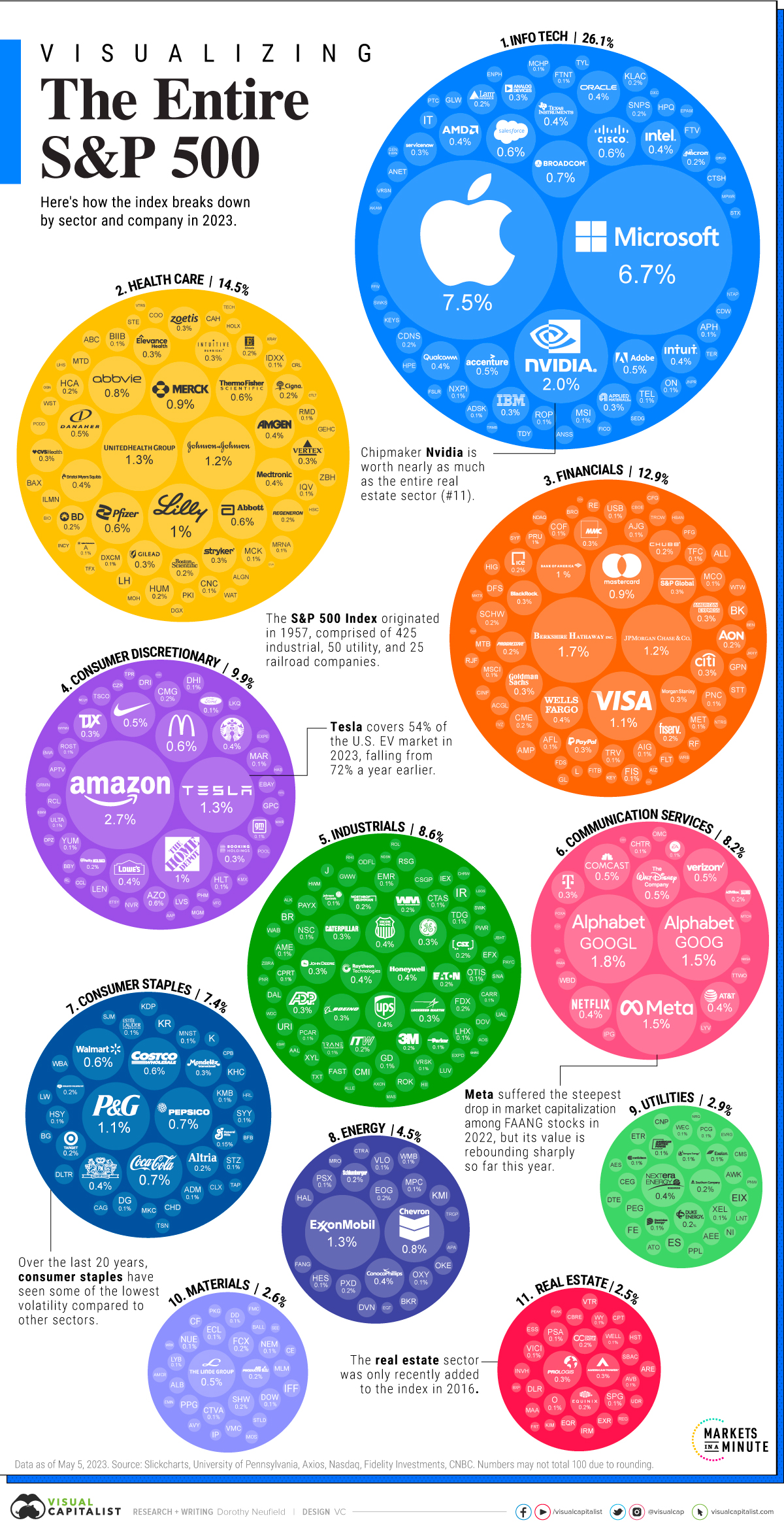
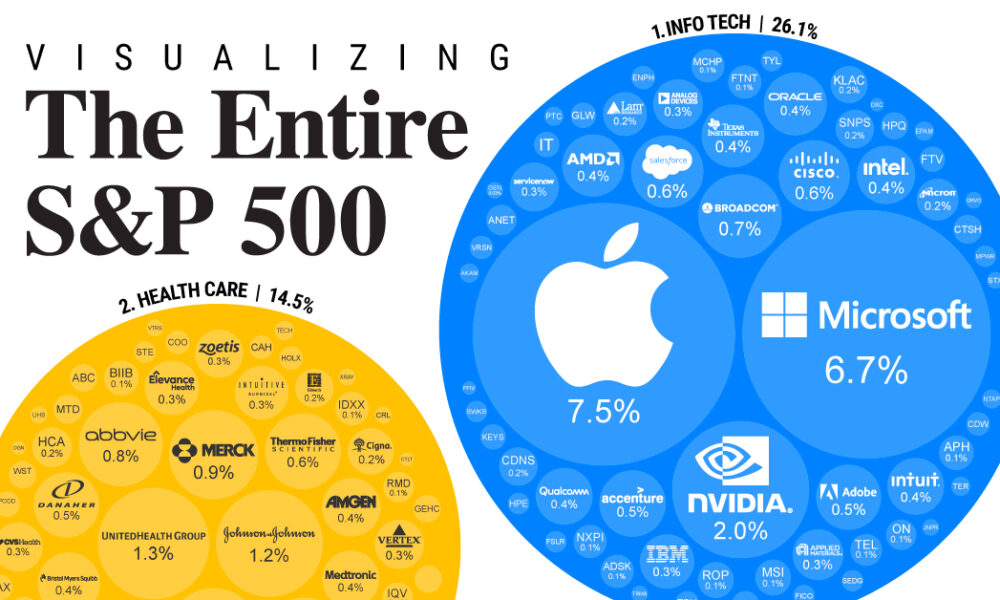
In a market-capitalization-weighted index, the percentage of the index that a particular stock represents is directly proportional to its market value relative to the total market value of all the companies in the index. For instance, if Apple Inc. has a market capitalization of $3 trillion and the total market capitalization of all S&P 500 companies is $40 trillion, then Apple would represent 7.5% of the S&P 500 index.
This weighting methodology is prevalent because it aligns with the idea of capturing the economic significance of companies. The larger a company is, the more it contributes to the overall economic output and market sentiment. Therefore, the performance of larger companies has a more pronounced effect on the index’s movements, mirroring their impact on the broader economy.
Implications for Investors
The market-capitalization weighting of the S&P 500 has significant implications for investors. Exchange-Traded Funds (ETFs) and mutual funds that track the S&P 500 will inherently invest more heavily in larger companies. This means that the performance of these funds is closely tied to the performance of the mega-cap stocks within the index.
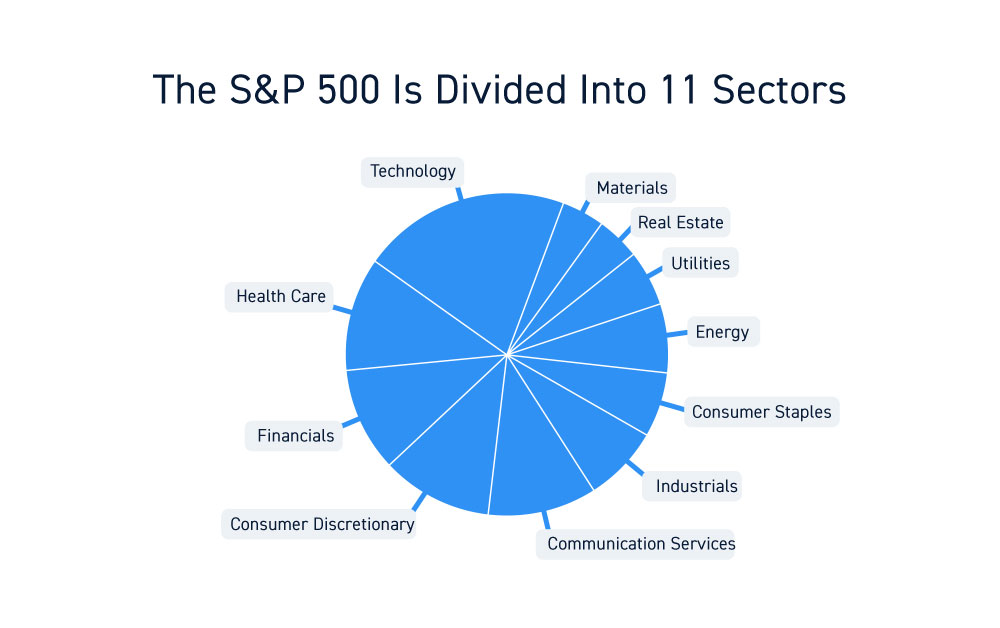
This weighting can also lead to a concentration of the index in specific sectors. If technology companies, for example, experience substantial growth and their market capitalizations surge, the technology sector can come to represent a larger portion of the S&P 500. Investors should be aware of this concentration and how it might affect their portfolio’s diversification and risk exposure. While the S&P 500 aims for broad representation, the weighting mechanism naturally amplifies the influence of its largest constituents.
In conclusion, the S&P 500 is a meticulously constructed and actively managed index that serves as a vital benchmark for the U.S. equity market. Its composition is determined by stringent criteria related to market capitalization, liquidity, profitability, and domicile. An expert committee oversees its selection and rebalancing, ensuring its relevance. The market-capitalization weighting mechanism then dictates the influence of each constituent, making it a powerful representation of the largest and most impactful companies in the American economy. Understanding these underlying principles is fundamental for any investor seeking to navigate the world of equity markets.
aViewFromTheCave is a participant in the Amazon Services LLC Associates Program, an affiliate advertising program designed to provide a means for sites to earn advertising fees by advertising and linking to Amazon.com. Amazon, the Amazon logo, AmazonSupply, and the AmazonSupply logo are trademarks of Amazon.com, Inc. or its affiliates. As an Amazon Associate we earn affiliate commissions from qualifying purchases.