
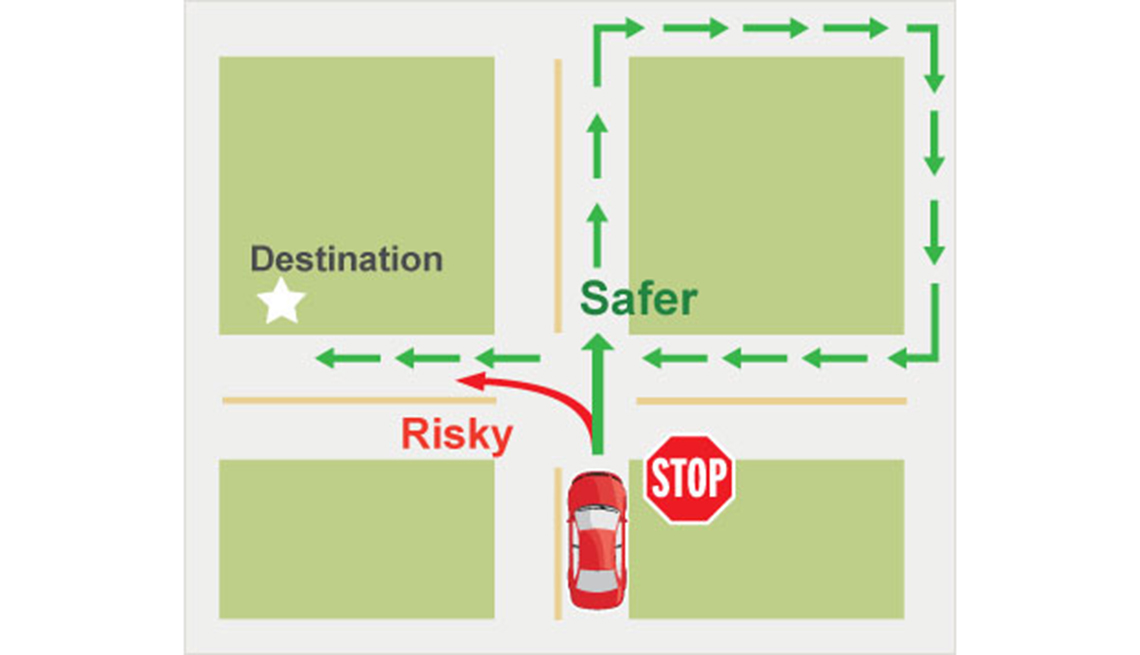
Left turns across oncoming traffic represent one of the riskiest maneuvers a driver undertakes, contributing disproportionately to severe accidents at intersections. While human error is often cited, a deeper technological analysis reveals a complex interplay of inherent human perceptual limitations, current vehicle technology constraints, and the immense potential of emerging intelligent systems to mitigate these dangers. From an advanced technology perspective, understanding these dangers illuminates pathways towards safer roads.
The Perceptual and Cognitive Challenges: A Human-Machine Interface Perspective
At its core, the danger of a left turn stems from a profound challenge in human information processing and decision-making under time pressure. Unlike the precise, repeatable actions of machines, human perception is inherently subjective and fallible.
The “Gap Judgment” Conundrum
Accurately judging the speed and distance of oncoming traffic is paramount for a safe left turn, yet it is one of the most difficult tasks for the human brain. Optical illusions, varying vehicle sizes, and differing ambient light conditions can distort a driver’s perception of an approaching vehicle’s true velocity and proximity. This “gap judgment” involves complex calculations that human cognitive systems perform imperfectly, often leading to misjudgments of available time and space. Furthermore, the human visual system struggles with depth perception, especially when objects are moving quickly or are at a distance, making it difficult to precisely determine if a gap is truly sufficient. Modern vehicle sensors, by contrast, utilize radar, LiDAR, and high-resolution cameras to provide objective, precise measurements of speed, distance, and trajectory, far exceeding the capabilities of the human eye.
Attention Overload and Distraction in Complex Environments
A left turn across traffic is a multi-variable problem that demands peak cognitive load. Drivers must simultaneously monitor oncoming lanes, pedestrian crossings, cyclists, traffic signals, road signs, and potential conflicts from other turning vehicles. This intense demand on a driver’s finite attention span makes them susceptible to cognitive overload. Any internal or external distraction—be it a passenger conversation, a ringing phone (even hands-free), or interaction with an in-car infotainment system—can fragment this attention, diverting critical processing power away from the immediate task of assessing traffic. While advanced digital cockpits offer convenience, their poorly designed interfaces can inadvertently introduce new vectors for visual and cognitive distraction, exacerbating the inherent dangers of complex maneuvers like left turns.
Blind Spots and Limited Field of View
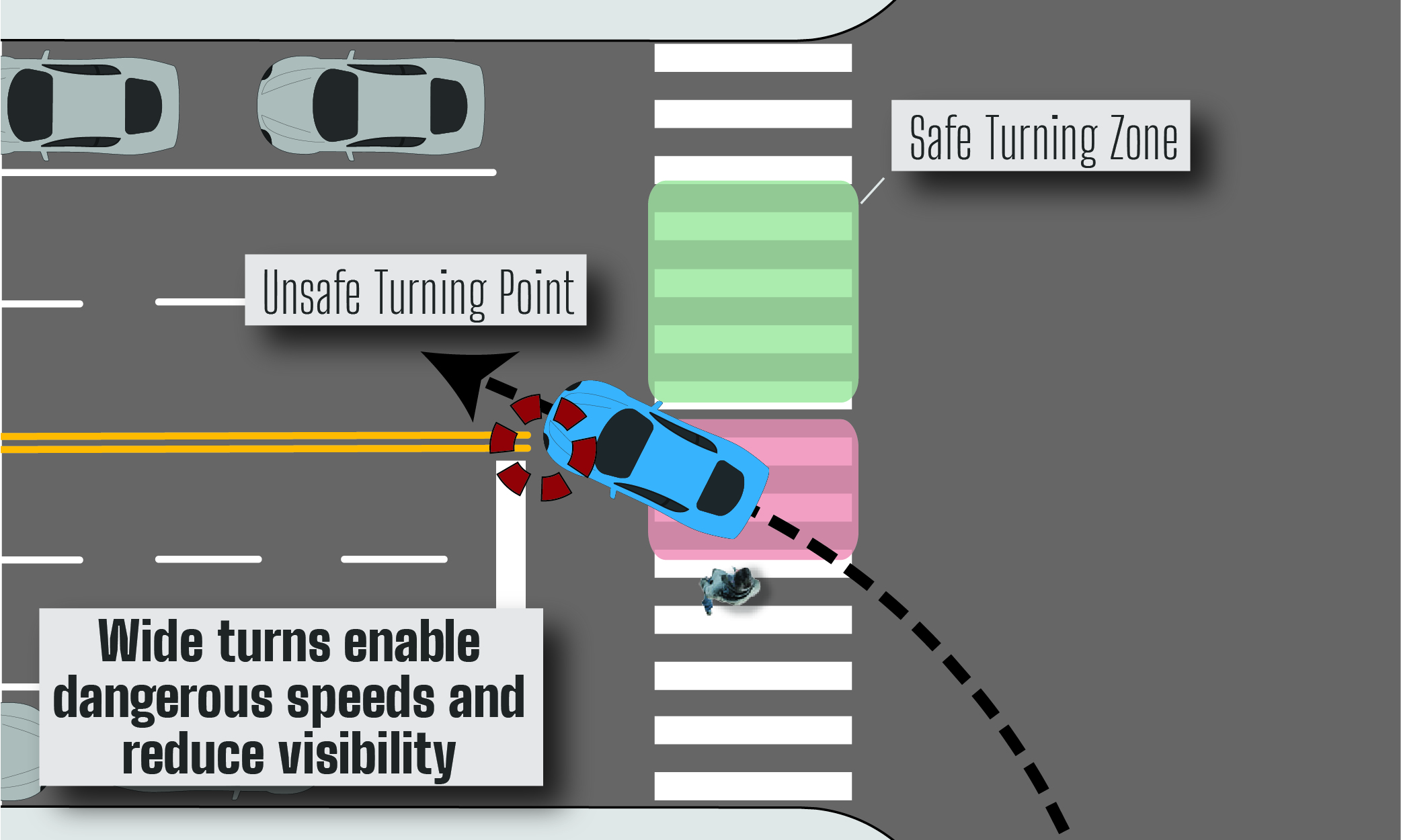
Even with modern vehicle design, physical limitations contribute to blind spots that hinder a driver’s comprehensive view of an intersection. A-pillars, rear-view mirrors, and even the vehicle’s interior structure can obscure critical areas where pedestrians, cyclists, or smaller vehicles might be present. While human drivers can physically turn their heads, this action is imperfect and takes valuable time. Technological solutions like wide-angle cameras and digital mirrors offer an expanded field of view, but their integration and the driver’s reliance on them introduce new considerations for training and user interface design. Moreover, adverse weather conditions such as heavy rain, fog, or glaring sunlight can severely compromise human visibility, whereas sophisticated sensor arrays (radar, LiDAR) are less susceptible to these environmental factors, maintaining a more consistent level of environmental awareness.
The Role of Current Vehicle Technology: Assistance and Limitations
Contemporary vehicle technology has made significant strides in driver assistance, yet it often falls short of fully addressing the nuanced complexities of left turns across traffic. These systems are powerful tools but are not infallible, particularly in highly dynamic and unpredictable scenarios.
Advanced Driver-Assistance Systems (ADAS): Aiding but Not Replacing Judgment
Current ADAS features like Blind Spot Monitoring (BSM), Rear Cross-Traffic Alert (RCTA), and Forward Collision Warning (FCW) are designed to augment driver awareness. BSM uses radar or ultrasonic sensors to detect vehicles in adjacent lanes that are not visible in mirrors, while RCTA warns drivers of approaching vehicles when backing out of a parking spot. FCW systems utilize radar and cameras to detect potential front-end collisions. While these systems provide valuable warnings, they are typically calibrated for specific collision vectors (e.g., rear-ending a stopped car, side swipe) and may not fully encompass the multi-directional threats of a complex left turn. For instance, an RCTA system might only activate at low speeds or when reversing, making it less effective for dynamic, forward-moving left turns. The decision-making—when to turn, how fast to accelerate, and what gap is safe—still rests predominantly with the human driver, who may ignore or misinterpret the alerts.
Illumination and Visibility Technologies: Enhancing Night Driving
Modern headlight technologies, including adaptive LED systems, high-intensity discharge (HID) lamps, and even laser headlights, significantly improve nighttime visibility. Adaptive headlights can swivel to illuminate curves, and high beams can automatically dip for oncoming traffic. These advancements undoubtedly reduce some risks associated with reduced visibility during dark hours. However, they do not resolve the core perceptual challenges of judging speed and distance in complex daytime left-turn scenarios. Glare from the sun, particularly at dawn or dusk, can still overwhelm even advanced optical systems and human eyes, temporarily blinding a driver and masking oncoming vehicles or pedestrians. The ability of current vehicle technology to dynamically adapt to all types of lighting and atmospheric conditions remains an area of ongoing development.
The Paradox of Infotainment Systems and Driver Distraction
While designed for convenience and connectivity, the proliferation of sophisticated infotainment systems, large touchscreens, and voice-activated controls can inadvertently become a new source of driver distraction. Interacting with these systems—navigating menus, adjusting climate, making calls, or even simply glancing at a digital map—requires visual, manual, and cognitive attention that detracts from the primary task of driving. For a maneuver as critical as a left turn across traffic, even a momentary lapse in focus can have severe consequences. The challenge for vehicle manufacturers is to design intuitive, unobtrusive interfaces that minimize cognitive load, perhaps through haptic feedback or augmented reality displays that keep a driver’s eyes on the road, rather than drawing them inward. The pursuit of connectivity and features must be balanced with the imperative of safety, especially for high-risk driving scenarios.
The Promise and Hurdles of Autonomous Systems in Eliminating Left Turn Hazards
The ultimate technological solution to the dangers of left turns across traffic lies in the realm of autonomous vehicles. These systems leverage an array of sensors and advanced AI to perceive, predict, and execute maneuvers with a level of precision and consistency far beyond human capabilities.
Sensor Fusion and 360-Degree Environmental Awareness
Autonomous vehicles employ a sophisticated “sensor fusion” approach, combining data from multiple modalities: LiDAR (for precise 3D mapping), radar (for speed and distance in all weather), high-resolution cameras (for object classification and lane keeping), and ultrasonic sensors (for close-range detection). This multi-layered perception system provides a comprehensive, 360-degree, objective understanding of the vehicle’s surroundings, effectively eliminating blind spots and overcoming the perceptual limitations of human vision. This allows an autonomous system to precisely track the trajectory and velocity of every object in an intersection, irrespective of light conditions or vehicle size, making the “gap judgment” a quantifiable, solvable problem.
Predictive AI and Deterministic Decision-Making Algorithms
Beyond mere perception, autonomous driving systems utilize advanced artificial intelligence and machine learning algorithms to predict the behavior of other road users (vehicles, pedestrians, cyclists) and calculate the optimal, safest path. These algorithms can process vast amounts of data in milliseconds, identifying safe gaps, determining acceleration rates, and executing turns with precision. Unlike human drivers who rely on intuition and past experiences, AI systems make decisions based on deterministic rules and probabilistic models, minimizing the risk of misjudgment. Path planning and collision avoidance algorithms are continuously refined through simulation and real-world testing, enabling the vehicle to navigate complex intersections safely, even reacting faster than a human could to sudden changes in traffic flow.
Vehicle-to-Everything (V2X) Communication: Eliminating Uncertainty
The future of autonomous driving heavily relies on Vehicle-to-Everything (V2X) communication. This technology allows vehicles to wirelessly communicate with each other (V2V) and with traffic infrastructure (V2I). Imagine a scenario where an autonomous vehicle approaching an intersection receives real-time data from an oncoming vehicle’s sensors, knowing its exact speed, position, and intended maneuver even before it’s visually apparent. V2I communication allows traffic signals to share their current state, upcoming changes, and even the presence of pedestrians or emergency vehicles, creating a fully informed environment. This collaborative awareness eliminates much of the uncertainty that plagues human left turns, enabling optimized, synchronized movements that dramatically enhance safety and efficiency, potentially even eliminating the need for unprotected left turns altogether.
The Remaining Challenges: Complexity and Transition
Despite the immense promise, fully realizing the vision of autonomous left turns faces significant hurdles. Real-world scenarios present “edge cases” – unusual situations, unexpected human behaviors, or extreme weather conditions – that are difficult to program for. The transition period, where autonomous vehicles share the road with human-driven cars, poses a complex challenge in predicting and adapting to unpredictable human actions. Regulatory frameworks, public trust, and ethical considerations surrounding accident responsibility also represent considerable barriers that technology alone cannot solve.
Smart Infrastructure and Adaptive Traffic Management
Beyond individual vehicle technology, intelligent infrastructure plays a critical role in mitigating the dangers of left turns by creating a safer, more predictable environment.
Adaptive Traffic Signals and Intersection Optimization
Traditional traffic signals operate on fixed timing cycles, which can be inefficient and create unnecessary waiting times, often leading drivers to take greater risks. Adaptive traffic signal systems utilize a network of sensors (loop detectors, cameras, radar) to monitor real-time traffic volume, queues, and pedestrian activity. AI algorithms then dynamically adjust signal timings to optimize traffic flow, reduce congestion, and provide safer, longer green light windows for left-turning vehicles when appropriate. In some advanced implementations, these systems can even detect vehicles waiting to turn left and extend their protected green phase, significantly reducing exposure to oncoming traffic.
Advanced Intersection Management Systems
More sophisticated intersection management systems go beyond simple signal timing. These integrated platforms use predictive analytics to anticipate traffic patterns, coordinate multiple intersections, and even prioritize certain vehicle types (e.g., emergency services). By understanding the flow and potential conflicts within an entire intersection, these systems can proactively manage lanes, guide vehicles through complex maneuvers, or even advise drivers on optimal speeds to meet a green light. The ultimate goal is to minimize points of conflict and ensure that left turns, when necessary, occur under the safest possible conditions, potentially by giving dedicated phases or by minimizing the exposure to oncoming traffic.
The Future Landscape: Integrated Solutions for Enhanced Safety
The future of mitigating dangerous left turns lies in a holistic, integrated approach that combines advanced in-vehicle technology with intelligent infrastructure. This convergence promises a paradigm shift in road safety.
Human-Machine Teaming and Augmented Reality
Even with advanced automation, there may be a role for human oversight or intervention. Future systems could involve “human-machine teaming,” where the vehicle assists the driver with augmented reality overlays on the windshield, highlighting safe gaps, projecting oncoming vehicle trajectories, or providing haptic feedback through the steering wheel to guide optimal turn initiation. This approach aims to leverage the strengths of both human intuition and machine precision, making the driver a more informed and capable operator rather than a mere passenger or an overburdened decision-maker.
Data-Driven Safety Improvements and Predictive Analytics
The vast amounts of data collected from connected vehicles and smart infrastructure will fuel continuous improvements in safety. Analyzing real-world accident data, near-miss events, and driver behavior patterns at intersections will allow engineers and urban planners to identify high-risk locations and refine technological interventions. Predictive analytics can be used to model the impact of different traffic management strategies or vehicle-assistance features before deployment, ensuring that new technologies genuinely enhance safety rather than introducing unforeseen risks. This iterative, data-driven approach will be crucial for developing robust and reliable solutions for complex maneuvers like left turns.
Regulatory and Standardized Approaches
For these advanced technologies to be truly effective, particularly V2X communication and autonomous driving features, robust regulatory frameworks and standardized protocols are essential. Interoperability between different vehicle manufacturers and infrastructure systems is critical to creating a seamless, safe environment. Governments and industry bodies must collaborate to establish clear performance standards, testing methodologies, and certification processes to ensure that these sophisticated systems deliver on their promise of enhanced safety, especially for maneuvers as inherently risky as a left turn across traffic. The standardization of communication protocols, sensor data formats, and safety verification procedures will underpin the widespread adoption and effectiveness of these transformative technologies.
aViewFromTheCave is a participant in the Amazon Services LLC Associates Program, an affiliate advertising program designed to provide a means for sites to earn advertising fees by advertising and linking to Amazon.com. Amazon, the Amazon logo, AmazonSupply, and the AmazonSupply logo are trademarks of Amazon.com, Inc. or its affiliates. As an Amazon Associate we earn affiliate commissions from qualifying purchases.