
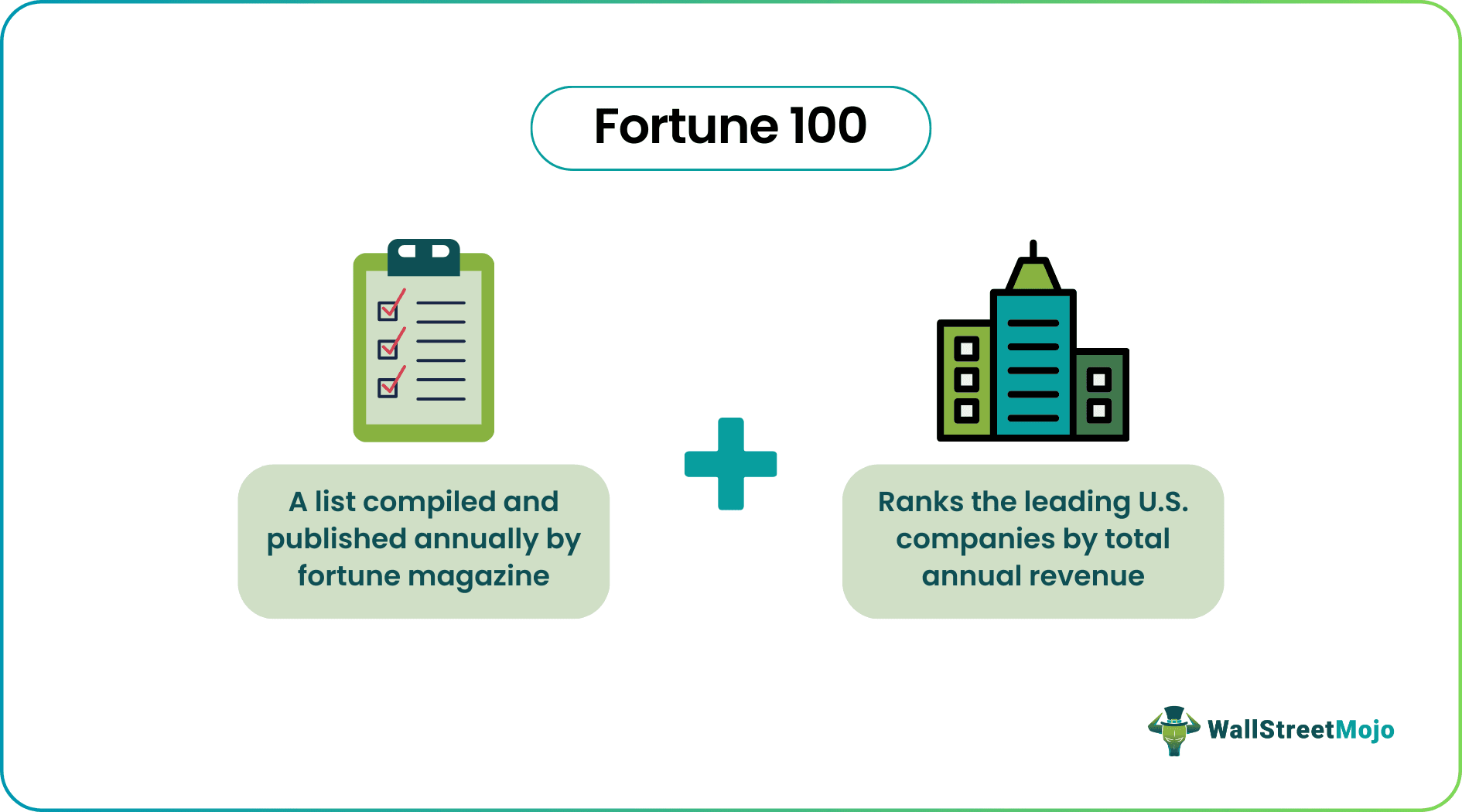
The Fortune 100 is more than just a list of the most recognizable names in business; it is the ultimate benchmark of corporate financial dominance. Compiled annually by Fortune magazine, this list ranks the top 100 corporations in the United States by total revenue. To find a place among these titans, a company must move beyond mere profitability and enter the realm of massive scale, systemic importance, and sustained financial excellence.
Achieving such a status requires a unique combination of historical momentum, aggressive capital allocation, and a fundamental understanding of market dynamics. From retail giants to energy conglomerates and technology-driven financial powerhouses, the companies that inhabit this list share specific financial traits that allow them to generate hundreds of billions of dollars in annual turnover.

The Financial Architecture of Massive Revenue
At its core, the Fortune 100 is a ranking of top-line revenue. While profit margins are critical for long-term survival, the primary gatekeeper for the Fortune 100 is the sheer volume of money flowing through the organization. This requires a financial architecture capable of processing transactions on a global scale.
Diversified Income Streams
A common denominator among Fortune 100 companies is the rejection of the “single-product” model. These organizations are rarely dependent on one stream of income. Instead, they operate as diversified ecosystems. For example, a major retailer in this bracket does not just sell consumer goods; it manages a complex financial services arm, provides logistical solutions for third-party sellers, and may even operate a media or advertising network. This diversification acts as a financial hedge. If one sector of the economy slows down, the company’s other revenue streams provide a buffer, ensuring that the total annual revenue remains high enough to retain its ranking.
Global Market Penetration
Scale is impossible without a footprint that transcends borders. A Fortune 100 company is almost always a multinational entity. By tapping into emerging markets and established economies simultaneously, these companies capture a share of global GDP. This global reach requires sophisticated currency management and a deep understanding of international tax structures. The ability to move capital across borders efficiently allows these firms to reinvest in high-growth regions while maintaining liquidity in their domestic operations.
Economies of Scale and Margin Control
Generating high revenue is only sustainable if the cost of goods sold (COGS) is managed through immense economies of scale. Because Fortune 100 companies purchase materials and services in such high volumes, they command the lowest possible prices from suppliers. This “volume-driven” financial strategy allows them to keep prices competitive—driving more revenue—while still protecting the margins necessary to fund operations. The financial feedback loop is powerful: higher volume leads to lower costs, which leads to more competitive pricing, which captures more market share, further increasing volume.
Strategic Capital Allocation and Growth Engines
Once a company reaches a certain size, organic growth alone is often insufficient to keep pace with the rest of the Fortune 100. The difference between a Fortune 500 company and a Fortune 100 company often lies in how the organization manages its balance sheet and allocates its capital toward aggressive expansion.
Mergers, Acquisitions, and Consolidation
For many companies, the path to the top 100 is paved with strategic acquisitions. Inorganic growth allows a company to instantly add billions in revenue to its top line. Fortune 100 firms are masters of the “buy versus build” mentality. When a new market segment emerges, these giants use their massive cash reserves or high-grade credit to acquire the leading players in that space. This consolidation not only increases revenue but also eliminates competition, further solidifying the company’s financial stronghold.
High-Level R&D Reinvestment
To remain a leader, a company must innovate, but in the Fortune 100, innovation is a massive financial line item. These companies spend billions annually on Research and Development (R&D). This is not just about staying relevant; it is a financial strategy to create “moats.” By investing heavily in proprietary technology, drug patents, or manufacturing processes, they create barriers to entry that smaller firms cannot afford to bypass. This reinvestment ensures that the company remains at the forefront of its industry, securing future revenue streams for decades to come.
Debt Management and Credit Ratings
Operating at the scale of a Fortune 100 company requires constant access to capital markets. These organizations maintain highly sophisticated treasury departments that manage billions in corporate debt. Because of their massive revenue and systemic importance, they often enjoy the highest credit ratings, allowing them to borrow money at significantly lower interest rates than their smaller competitors. This access to “cheap money” allows them to fund massive infrastructure projects, buy back shares to increase shareholder value, or acquire competitors—all while maintaining a healthy debt-to-equity ratio.
Market Dominance and Competitive Moats

The financial success of a Fortune 100 company is inextricably linked to its ability to dominate its market. In the world of high-level finance, this is often referred to as a “moat”—a structural advantage that protects the company from competitors and ensures consistent revenue.
Pricing Power and Brand Equity
While “brand” is often seen as a marketing concept, in the Fortune 100, it is a financial asset. High brand equity grants a company “pricing power”—the ability to raise prices without a corresponding drop in demand. From a financial perspective, this is a dream scenario. It allows for higher margins and provides a cushion against inflation. When a company can dictate terms to the market rather than reacting to them, it secures its position at the top of the revenue food chain.
The Network Effect
Many of the tech-leaning companies in the Fortune 100 rely on the network effect, where the value of their service increases as more people use it. Financially, this creates a “winner-take-all” dynamic. As the user base grows, the cost of acquiring new users drops, and the revenue per user often increases through cross-selling and data monetization. This creates an exponential growth curve that can propel a company from the bottom of the Fortune 500 to the top 100 in a remarkably short period.
Vertical and Horizontal Integration
Fortune 100 companies often own their entire supply chain, a strategy known as vertical integration. By owning the raw materials, the manufacturing plants, the distribution networks, and the retail outlets, they capture profit at every single stage of the value chain. Horizontal integration—where a company acquires competitors at the same level of the supply chain—further increases market share. Together, these strategies ensure that more of the money spent in a specific industry stays within the company’s ecosystem.
Governance, Transparency, and Shareholder Value
Being a Fortune 100 company brings a level of public and regulatory scrutiny that smaller firms do not face. Maintaining this status requires a rigorous commitment to corporate governance and a sophisticated approach to managing shareholder expectations.
The Role of Institutional Investors
The shareholder base of a Fortune 100 company is dominated by institutional investors—pension funds, mutual funds, and sovereign wealth funds. These investors demand stability, transparency, and consistent returns. Consequently, Fortune 100 companies are leaders in financial reporting and transparency. Their quarterly earnings calls are global events that can move entire markets. The need to satisfy these large-scale investors drives a culture of financial discipline and long-term strategic planning.
Regulatory Compliance as a Strategic Asset
While smaller companies may struggle with the cost of regulation, Fortune 100 companies often use their scale to navigate complex regulatory environments. They have the financial resources to employ thousands of legal and compliance experts, ensuring they can operate smoothly across hundreds of different jurisdictions. In some cases, high regulatory barriers actually protect Fortune 100 companies by making it too expensive for smaller, less-capitalized startups to enter the market.
Balancing Dividends and Buybacks
For a company to stay in the good graces of the financial markets, it must effectively return value to its shareholders. This is typically done through a combination of dividends and share buybacks. Dividends provide a steady income stream for investors, making the stock a staple in “widow and orphan” portfolios. Share buybacks reduce the number of shares outstanding, which increases earnings per share (EPS) and often drives the stock price higher. A Fortune 100 company’s ability to generate enough free cash flow to fund these activities while still investing in growth is a hallmark of its financial health.
The Evolution of the Fortune 100: The Future of Wealth
The composition of the Fortune 100 is not static; it reflects the shifting landscape of the global economy. Understanding what makes these companies today involves looking at how the definition of “corporate wealth” is changing.
The Shift from Tangible to Intangible Assets
Historically, the Fortune 100 was dominated by companies with massive physical assets—steel mills, oil refineries, and railroads. Today, the list is increasingly occupied by companies whose value lies in intangible assets like software, patents, and data. From a financial management perspective, this shift has led to higher margins and faster scalability, as digital products do not require the same overhead as physical goods.
Sustainability and ESG Impact
In the modern financial world, Environmental, Social, and Governance (ESG) metrics are becoming critical to a company’s valuation and its inclusion in major investment funds. Fortune 100 companies are now investing billions into sustainability initiatives. While this was once seen as a cost, it is now viewed as a financial necessity to mitigate risk and ensure long-term viability in a world moving toward a green economy.
Resilience in the Face of Volatility
Ultimately, what makes a Fortune 100 company is its resilience. These are the “too big to fail” organizations that have the liquidity and structural strength to survive global recessions, pandemics, and shifts in consumer behavior. Their ability to maintain massive revenue through periods of extreme volatility is what separates them from the rest of the business world. They are the anchors of the global financial system, defining what it means to be a successful enterprise in the 21st century.
aViewFromTheCave is a participant in the Amazon Services LLC Associates Program, an affiliate advertising program designed to provide a means for sites to earn advertising fees by advertising and linking to Amazon.com. Amazon, the Amazon logo, AmazonSupply, and the AmazonSupply logo are trademarks of Amazon.com, Inc. or its affiliates. As an Amazon Associate we earn affiliate commissions from qualifying purchases.