
In an era dominated by digital sensors and smart devices, the Galileo thermometer stands as a testament to enduring scientific principles and elegant analog design. Far from being a mere decorative curio, this fascinating instrument offers a visually captivating display of temperature, rooted in fundamental physics. Its mesmerizing dance of colored glass spheres, rising and falling within a sealed glass tube, prompts a common, yet profound, technical question: what liquid allows for such precise and beautiful temperature readings? This article delves deep into the technological marvel of the Galileo thermometer, dissecting its internal mechanics, the specific properties of its crucial liquid component, and its place as a sophisticated gadget that bridges scientific education with decorative appeal.

The Ingenious Design of Galileo Thermometers
At its core, the Galileo thermometer is an embodiment of thermal expansion and buoyancy principles, elegantly packaged within a seemingly simple device. Understanding the liquid requires first appreciating the overall design and the scientific legacy it carries.
A Legacy of Scientific Innovation
While often attributed directly to Galileo Galilei, the specific design of the modern Galileo thermometer actually draws more directly from the thermoscope, an early temperature-measuring device invented by Galileo in the late 16th century. His groundbreaking work on density and buoyancy laid the theoretical groundwork, demonstrating how an object’s buoyancy in a fluid changes with the fluid’s temperature. The modern interpretation, often called a “Galilean thermometer,” refined this concept by leveraging precisely weighted spheres in a liquid whose density is highly sensitive to temperature changes. It’s a beautiful example of how foundational scientific principles can be iterated upon and engineered into practical, albeit unique, technological gadgets centuries later.
How the Thermometer Works: Buoyancy in Action
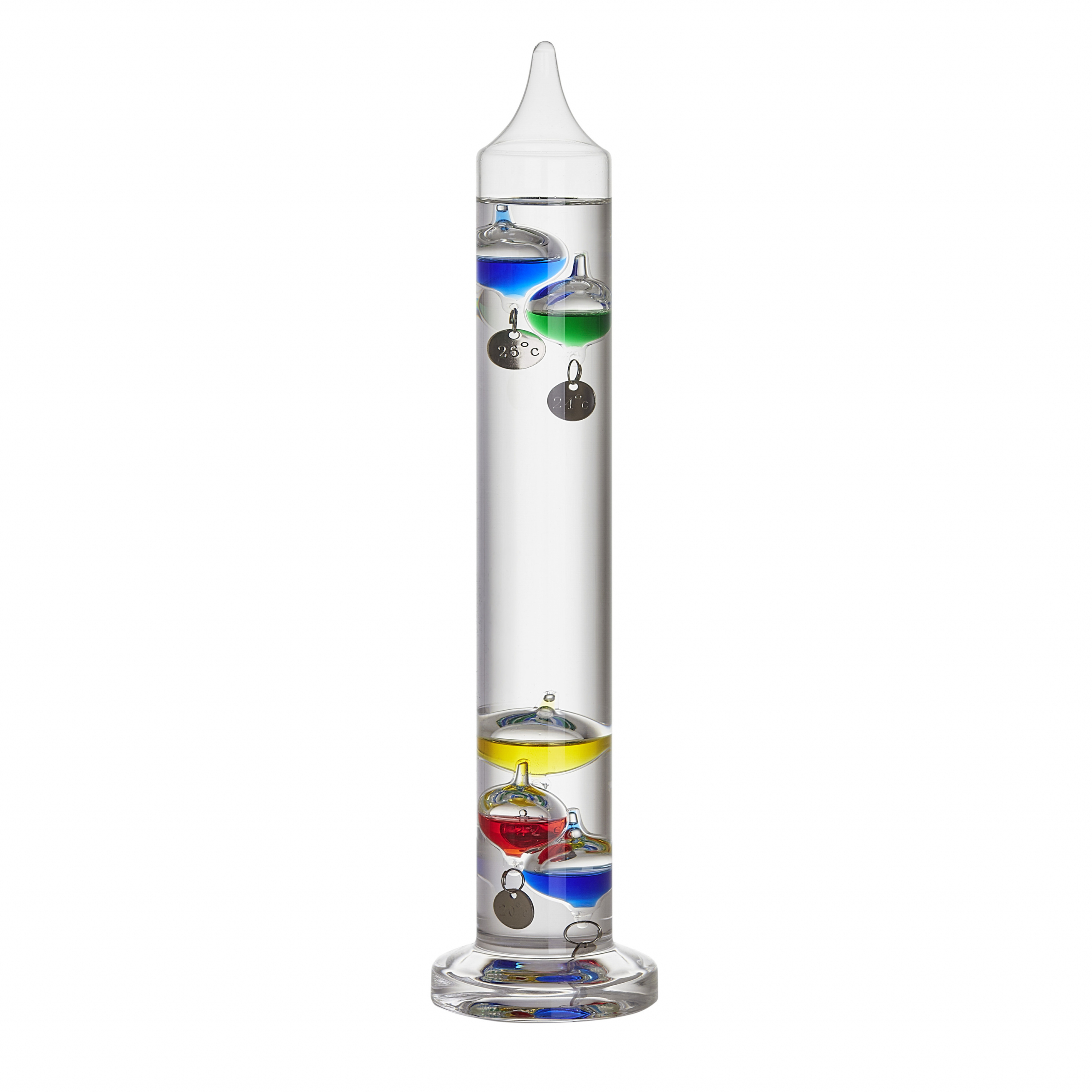
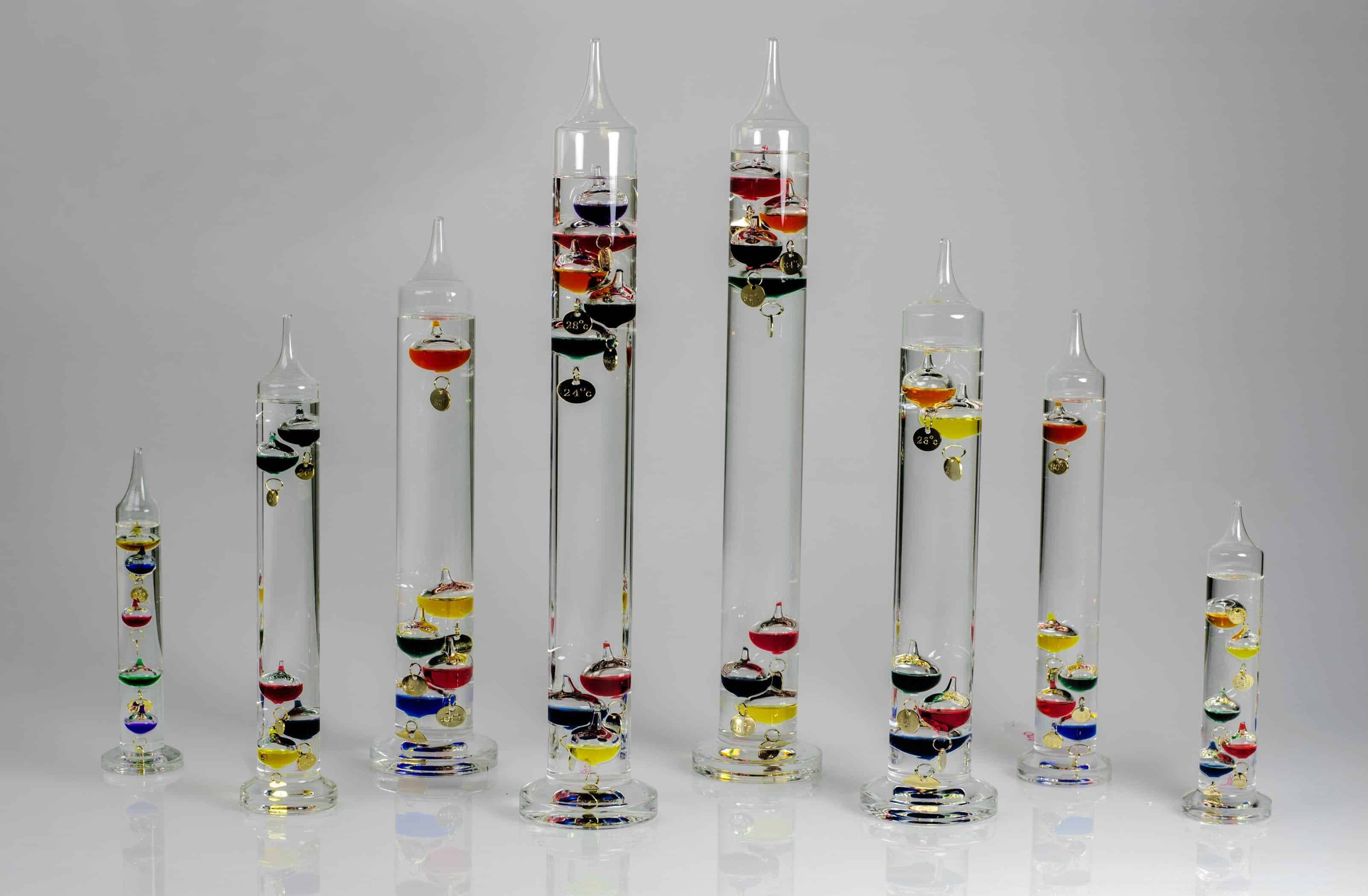
The operational principle is deceptively simple yet brilliantly executed. The tall glass cylinder is filled with a clear liquid, and suspended within it are several glass spheres, each adorned with a small metal tag. These tags are not just decorative; they are carefully weighted to give each sphere a specific, slightly different density. When the ambient temperature changes, the density of the surrounding liquid changes.
- As the liquid heats up, it expands, becoming less dense. Spheres that were previously floating (because they were less dense than the liquid) will now sink if their density becomes greater than the surrounding liquid.
- As the liquid cools down, it contracts, becoming denser. Spheres that had sunk will now rise if their density becomes less than the denser surrounding liquid.
The key to reading the temperature lies in the sphere that is lowest among the floating spheres, or highest among the sunken spheres, depending on the manufacturer’s calibration and design. This delicate balance between the fixed density of the spheres and the variable density of the liquid is the technological heartbeat of the device.
Deconstructing the “Liquid Gold”: What’s Inside?
The entire functionality of a Galileo thermometer hinges on the properties of the liquid within its sealed tube. This liquid is not just any fluid; it is a carefully chosen, engineered medium whose thermal expansion characteristics are central to the thermometer’s accuracy and performance.
The Primary Medium: Distilled Water or Paraffin Hydrocarbons
Contrary to popular belief, the liquid inside a Galileo thermometer is not mercury, nor is it simply colored water. The most common and effective liquids used are either distilled water or a specific type of paraffin hydrocarbon oil (like kerosene or a proprietary mineral oil blend).
- Distilled Water: When used, it is chosen for its purity, which ensures consistent density and thermal expansion properties without interference from dissolved minerals. However, water has a relatively narrow liquid range before freezing or boiling, and its thermal expansion isn’t always linear enough for extremely precise models across a very wide temperature range without complex calibration.
- Paraffin Hydrocarbons (Mineral Oil/Kerosene): These are far more common and preferred for several reasons. They possess a greater and more consistent coefficient of thermal expansion over a wider temperature range compared to water. This means their density changes more predictably and significantly with temperature fluctuations, making them ideal for the sensitive buoyancy mechanics. Additionally, these oils have a lower freezing point and higher boiling point than water, allowing the thermometer to function reliably in a broader spectrum of environmental conditions without freezing or vaporizing. The liquid is often dyed for aesthetic appeal, making it seem more mysterious, but its core function is purely scientific.
The Spheres’ Secret: Calibrated Buoyancy and Density
While the liquid provides the dynamic environment, the glass spheres are equally critical. Each sphere is meticulously calibrated. They are typically made of glass, which itself has a very low coefficient of thermal expansion, meaning its volume (and thus its density) changes negligibly with temperature compared to the liquid. The difference in density between spheres is achieved by adding small, carefully measured weights (often metal tags or calibrated amounts of liquid inside the sphere) to the sphere.
For example, one sphere might be calibrated to have a density of 0.998 g/cm³ at 20°C, while another might be 0.997 g/cm³ at the same temperature. As the surrounding liquid’s density changes, these subtle differences dictate which spheres float and which sink. This precise engineering ensures that each sphere acts as a distinct temperature indicator.
The Role of Temperature in Liquid Density
The fundamental physics at play is the relationship between temperature and density. For most liquids, as temperature increases, the kinetic energy of its molecules increases, causing them to move further apart. This expansion means the same mass of liquid occupies a larger volume, resulting in a decrease in density (density = mass/volume). Conversely, as temperature decreases, molecules move closer, the liquid contracts, and its density increases. The specific liquid chosen for a Galileo thermometer is selected precisely because this temperature-density relationship is well-defined, predictable, and substantial enough to cause the observable movement of the spheres. This makes the instrument a direct, visual representation of a core thermodynamic principle.
Precision and Performance: Engineering the Galileo Thermometer
Beyond the basic principle, the journey from concept to a functioning Galileo thermometer involves significant precision engineering and careful material selection, elevating it from a simple toy to a sophisticated instrument.
Calibrating for Accuracy: The Science Behind Each Sphere
The most critical aspect of manufacturing a Galileo thermometer is the calibration of the individual spheres. This is a highly precise process where the weight of each sphere is adjusted to correspond to a specific temperature point. Manufacturers typically use specialized liquids with known thermal expansion rates and then individually adjust the weight of each sphere (usually by adding or removing a tiny amount of material from the attached metal tag or within the sphere itself) until it precisely floats or sinks at its designated temperature in that liquid. This laborious, often manual, process ensures that when the thermometer is assembled, the spheres accurately reflect the ambient temperature within their specified range. The typical temperature range for these thermometers is usually between 18°C and 26°C (64°F and 78°F), though variations exist.
Manufacturing Challenges and Quality Control
The production of high-quality Galileo thermometers faces several technical challenges. Ensuring the purity and consistency of the internal liquid is paramount; even tiny impurities can alter its density and expansion characteristics. The glass tubing itself must be uniform in diameter to prevent anomalous flow or pressure effects. Sealing the tube hermetically without introducing air bubbles or compromising the liquid’s integrity is another crucial step. Rigorous quality control measures are applied at various stages, from the selection of raw materials to the final calibration and sealing, to guarantee that each thermometer provides accurate and reliable readings over its lifespan. These measures include testing in temperature-controlled environments to verify the spheres’ behavior.
Material Science: Glass, Liquid, and Labels
The materials chosen for a Galileo thermometer are not arbitrary.
- Glass: The outer cylinder and internal spheres are typically made of borosilicate glass, known for its high resistance to thermal shock and chemical inertness. This ensures the thermometer’s durability and prevents any reaction with the internal liquid that could alter its properties.
- Liquid: As discussed, paraffin hydrocarbons are favored for their predictable thermal expansion and stability. The color dyes added are also carefully selected to be stable over time and not react with the base liquid or leach into the spheres.
- Labels/Tags: The small metal tags attached to each sphere, indicating the temperature, are usually made of brass or another non-corrosive metal. Their precise weight, as mentioned, is critical for calibration. The choice of metal also considers its density and resistance to tarnish, ensuring the temperature reading remains clear and accurate for years.
Beyond Novelty: The Educational and Practical Value
While often admired for its aesthetic appeal, the Galileo thermometer holds significant value as both an educational tool and a practical gadget, especially in a world increasingly reliant on black-box digital technology.
A Pedagogical Tool for Physics Principles
For educators and students alike, the Galileo thermometer is an exceptional hands-on demonstration of several core physics concepts:
- Density and Buoyancy: It vividly illustrates Archimedes’ principle and how an object’s buoyancy is determined by the relative densities of the object and the fluid it displaces.
- Thermal Expansion: It provides a clear, visual representation of how liquids expand and contract with temperature changes, leading to density variations.
- Convection: While not its primary function, the liquid inside the tube can subtly demonstrate convection currents as warmer, less dense fluid rises and cooler, denser fluid sinks, though this is harder to observe directly.
Its ability to make abstract scientific principles tangible and observable makes it an invaluable learning aid, sparking curiosity and encouraging exploration of fundamental physical laws.
Decorative Utility and Ambient Temperature Monitoring
Beyond its scientific merits, the Galileo thermometer serves as an elegant piece of home or office décor. Its sleek design, the gentle movement of the colored spheres, and its intrinsic connection to scientific history make it a conversation starter. Functionally, it offers an immediate, albeit approximate, reading of the ambient room temperature. While not as precise as a digital sensor for exact measurements, it provides a quick visual cue for the general temperature range, making it a functional art piece that merges form and function.
The Enduring Appeal in a Digital Age
In a world saturated with digital interfaces, apps, and instant data, the Galileo thermometer offers a refreshing contrast. It is an analog gadget that requires no batteries, no internet connection, and no complex setup. Its operation is purely mechanical and based on immutable physical laws. This simplicity, combined with its visual charm and educational depth, gives it an enduring appeal. It reminds us that technology isn’t just about microchips and software; it’s also about ingenious design, clever engineering, and the elegant application of scientific discovery. For tech enthusiasts, it represents a different facet of technology – one that is timeless, beautiful, and profoundly insightful.
Maintenance and Longevity of Your Galileo Thermometer
As a sealed unit, a Galileo thermometer generally requires minimal maintenance. However, understanding how to care for it can ensure its longevity and continued accurate operation.
Environmental Considerations for Optimal Function
For optimal performance, position your Galileo thermometer in a location where it can accurately measure the ambient air temperature without external interference. Avoid placing it:
- In direct sunlight: This can cause uneven heating, leading to inaccurate readings and potential stress on the glass.
- Near heat sources: Radiators, vents, or other appliances can skew its readings.
- In drafty areas: Consistent drafts can create localized temperature variations around the tube, affecting sphere movement.
- In areas of extreme vibration: While durable, constant vibration is not ideal for any delicate instrument.
Handling and Care Tips
The primary component of the Galileo thermometer is glass, making it susceptible to breakage.
- Handle with care: Always grasp the main cylindrical tube firmly with both hands when moving it.
- Avoid sudden shocks: Dropping or hitting the thermometer can cause the glass to crack or the internal spheres to dislodge or break.
- Cleaning: Use a soft, damp cloth to wipe the exterior of the glass to remove dust or smudges. Avoid harsh chemical cleaners that might affect the glass finish or the integrity of any external markings.
- Temperature Extremes: While the internal liquid is chosen for a wide range, extreme cold (e.g., leaving it outdoors in freezing temperatures) can cause the liquid to freeze and expand, potentially cracking the glass. Similarly, extreme heat could cause excessive expansion. Keep it within typical indoor temperature ranges.
Troubleshooting Common Issues
Due to its simple, sealed design, common issues are rare, but can occur:
- Air Bubbles: Small air bubbles can sometimes form in the liquid, especially after shipping or a sudden change in temperature. Usually, these will dissipate on their own over time. If persistent and large, they might slightly affect accuracy by altering the liquid’s effective density, but this is uncommon.
- Cracked Glass/Leaking Liquid: This is the most serious issue. If the glass cracks, the liquid can leak out, and the thermometer will cease to function. The liquid (paraffin oil) is generally non-toxic but should be cleaned up with soap and water if a spill occurs. A cracked thermometer cannot be repaired and should be safely disposed of.
- Stuck Spheres: Very rarely, a sphere might get stuck due to impurities or physical damage. Gentle tapping might dislodge it, but force should be avoided.
The Galileo thermometer remains a marvel of scientific gadgetry, blending historical principles with elegant execution. The choice of liquid – most often a carefully formulated paraffin hydrocarbon oil – is central to its function, allowing it to translate subtle changes in ambient temperature into a captivating visual dance of buoyant spheres. In a world of increasing digital complexity, this analog gem stands as a testament to intelligent design, offering both educational insight and a timeless aesthetic appeal for any tech enthusiast or science aficionado.
aViewFromTheCave is a participant in the Amazon Services LLC Associates Program, an affiliate advertising program designed to provide a means for sites to earn advertising fees by advertising and linking to Amazon.com. Amazon, the Amazon logo, AmazonSupply, and the AmazonSupply logo are trademarks of Amazon.com, Inc. or its affiliates. As an Amazon Associate we earn affiliate commissions from qualifying purchases.