
The Bible is the most widely translated and distributed book in human history. For centuries, the task of moving its message from the original ancient manuscripts into modern vernaculars was a manual, laborious process undertaken by scribes and linguists. However, in the digital age, the question of what languages the Bible was originally written in has moved beyond the realm of theology and history into the sphere of high-end technology. Today, Natural Language Processing (NLP), Artificial Intelligence (AI), and advanced data imaging are being used to decode the Hebrew, Aramaic, and Greek texts that form the foundation of this ancient library.

Understanding the “base code” of the Bible—the original languages—is no longer just about reading a physical scroll. It is about processing massive datasets of ancient syntax, lexical variations, and historical context through technological frameworks that allow us to see these texts with more clarity than ever before.
The Linguistic Architecture: Analyzing the “Base Code” of Scripture
To understand how technology interfaces with the Bible, one must first understand the technical specifications of the original languages. These languages function as the operating systems upon which the entire narrative of Western literature is built.
Biblical Hebrew: The Foundation of the Old Testament
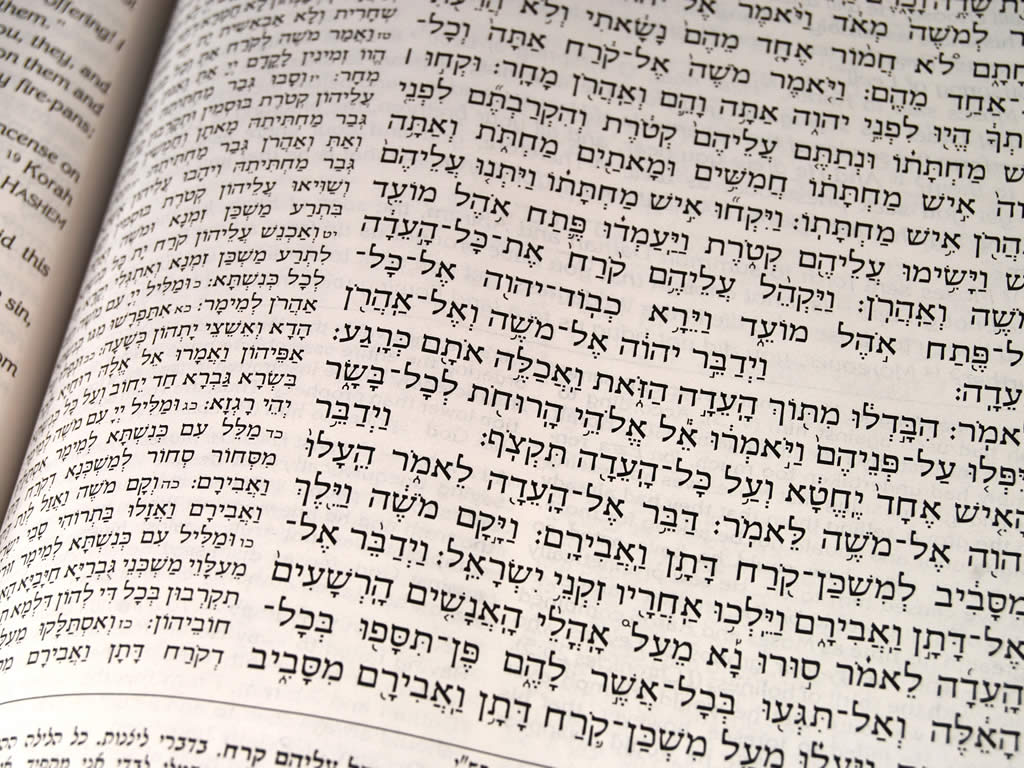
The majority of the Old Testament (the Hebrew Bible) was written in Ancient Hebrew. From a technical perspective, Hebrew is a “root-based” language. Most words are derived from a three-letter consonantal root. For modern AI and computational linguistics, this structure is highly logical. Software developers creating tools for biblical analysis utilize these root systems to build algorithms that can predict the meaning of obscure words based on their structural patterns.
Koine Greek: The Universal Protocol of the Roman World
The New Testament was written in Koine (common) Greek. In the first century, Koine Greek functioned much like the internet does today: it was the universal protocol for communication across the Mediterranean. Unlike the more formal Classical Greek, Koine was precise, utilitarian, and designed for broad transmission. Tech tools today use the highly inflected nature of Greek—where word endings change based on their grammatical function—to create automated parsing engines that help scholars identify the exact intent of a sentence with mathematical precision.
Aramaic: The Rare Code Fragments
While Hebrew and Greek dominate the text, small portions of the Bible (primarily in the books of Daniel and Ezra) were written in Aramaic. Aramaic was the lingua franca of the Near East for centuries and was the language spoken by Jesus. In the world of digital archival, Aramaic represents a unique challenge because it shares an alphabet with Hebrew but uses different syntax and vocabulary, requiring specialized OCR (Optical Character Recognition) training to distinguish between the two in ancient digital scans.
AI and Machine Learning in Ancient Text Restoration
The original manuscripts of the Bible have long since vanished; what we have are thousands of copies (manuscripts) of varying ages. This is where big data and machine learning enter the fold. “Textual Criticism” is the scientific process of comparing these thousands of copies to determine the original wording.
Optical Character Recognition (OCR) for Damaged Manuscripts
One of the greatest hurdles in studying original biblical languages is the state of the physical artifacts. The Dead Sea Scrolls, for instance, consist of thousands of fragments. Technology companies have developed specialized OCR software that can “read” these fragments even when the ink is faded or the parchment is charred. Using multi-spectral imaging—a technology originally developed for satellite reconnaissance—computers can capture light frequencies beyond the human eye’s range, revealing “invisible” Hebrew and Greek text that has been hidden for two millennia.
Neural Networks and Syntax Pattern Recognition
Modern AI models are now being trained on the specific stylistic “fingerprints” of ancient authors. By feeding a neural network thousands of pages of verified Koine Greek, researchers can use the AI to identify anomalies in other texts. This helps in “filling in the blanks” (lacunae) where a manuscript is torn. The AI calculates the most statistically probable word based on the author’s known vocabulary and the grammatical constraints of the language, much like a sophisticated version of predictive text on a smartphone.

The Evolution of Digital Translation Tools
The transition from the “original languages” to a modern smartphone app involves a complex technological pipeline. We have moved far beyond simple word-for-word substitution into dynamic, context-aware digital translation.
From Print to API: How Modern Apps Handle Original Context
Apps like Logos Bible Software or Accordance do not just show the English text; they provide a live link to the original Greek and Hebrew databases. These platforms use complex APIs to pull morphological data in real-time. When a user taps a word, the software executes a query to a relational database that contains every instance of that word in the entire corpus of ancient literature. This allows for a “big data” approach to word studies that would have taken a lifetime to complete in the pre-digital era.
Real-time Interlinear Analysis Tools
An “interlinear” is a tool that displays the original language and the translation side-by-side. In the tech world, this is akin to looking at the “Source Code” and the “Compiled Program” simultaneously. Modern interlinear engines use “tagging” systems. Every single word in the Hebrew and Greek Bible has been assigned a unique ID (often based on Strong’s Concordance or the Louw-Nida Lexicon). This metadata allows software to track how a specific Greek verb evolves in meaning across different chapters, providing a visual map of linguistic data.
Cybersecurity and the Preservation of Digital Scripts
As we digitize the original languages of the Bible, the security and integrity of that data become paramount. If the “source code” of the world’s most influential book were to be corrupted or altered, the impact would be global.
Blockchain for Textual Integrity
There is an emerging interest in using blockchain technology to “hash” the original biblical texts. By creating a decentralized, immutable record of the Hebrew and Greek manuscripts, researchers can ensure that no unauthorized changes are made to the digital versions of these texts. This provides a “digital provenance” that proves the version of the Greek New Testament on your screen is an exact bit-for-bit representation of the recognized scholarly standard (such as the Nestle-Aland edition).
Cloud-Based Repositories and Global Access
The Center for the Study of New Testament Manuscripts (CSNTM) and the Vatican Library have moved toward high-resolution cloud storage for their manuscript collections. This democratization of data means that a researcher in a remote area with a laptop has the same access to original-language manuscripts as a professor at Oxford. These cloud repositories use advanced compression algorithms to store terabytes of high-resolution images, ensuring that even if the physical scrolls are destroyed, the “digital DNA” of the original languages survives.
Future Frontiers: Quantum Computing and Linguistic Reconstruction
The intersection of tech and ancient languages is far from settled. As we move toward the era of quantum computing, the potential for deeper analysis grows exponentially.
Quantum algorithms will eventually be able to simulate the evolution of languages in ways that classical computers cannot. By modeling the “drift” of the Hebrew language over a thousand-year period, tech could potentially reconstruct lost dialects or identify precisely when a specific scroll was written based on subtle linguistic shifts.
Furthermore, the development of “Universal Translators” driven by real-time AI will soon allow users to read the Bible in its original Greek or Hebrew through Augmented Reality (AR) glasses. Imagine looking at a modern English Bible and seeing the original Koine Greek text overlaid on the page, with a digital assistant explaining the nuanced difference between agape and phileo (two different Greek words for love) in real-time.
The question “what languages was the bible originally written in” is no longer a static piece of trivia. Thanks to technology, those languages—Hebrew, Aramaic, and Greek—have become living data. They are the foundation of a massive technological ecosystem that includes AI, blockchain, and advanced imaging, all working together to ensure that ancient wisdom remains accessible, accurate, and secure in a digital world. As we continue to refine these tools, the bridge between the ancient scribe and the modern developer becomes shorter, proving that even the oldest texts can find a home in the newest technology.
aViewFromTheCave is a participant in the Amazon Services LLC Associates Program, an affiliate advertising program designed to provide a means for sites to earn advertising fees by advertising and linking to Amazon.com. Amazon, the Amazon logo, AmazonSupply, and the AmazonSupply logo are trademarks of Amazon.com, Inc. or its affiliates. As an Amazon Associate we earn affiliate commissions from qualifying purchases.