
The question “what language is Vietnam” often surfaces in geographic or cultural contexts, but in the modern era, the answer carries profound implications for the global technology sector. As Southeast Asia emerges as a primary frontier for digital expansion, the Vietnamese language (Tiếng Việt) has transitioned from a regional tongue to a critical technical requirement for software developers, AI researchers, and digital strategists.
Vietnamese is a tonal, Austroasiatic language that uses a Latin-based script known as Chữ Quốc Ngữ. While its alphabet might look familiar to Western tech developers, its implementation within digital frameworks presents unique challenges and opportunities. From the intricacies of Unicode diacritics to the complexities of Natural Language Processing (NLP), understanding the “language of Vietnam” is no longer just a linguistic endeavor—it is a technical necessity for any enterprise looking to capture one of the world’s fastest-growing digital economies.
1. The Linguistic Architecture of Vietnamese in the Digital Age
To understand Vietnamese in a tech context, one must first understand its structural interaction with digital hardware and software. Unlike many of its neighbors in Southeast Asia that use Brahmic or logographic scripts, Vietnam’s adoption of the Latin alphabet provides a unique bridge between Western infrastructure and Eastern linguistic nuances.
From Phonetic Roots to Keyboard Compatibility
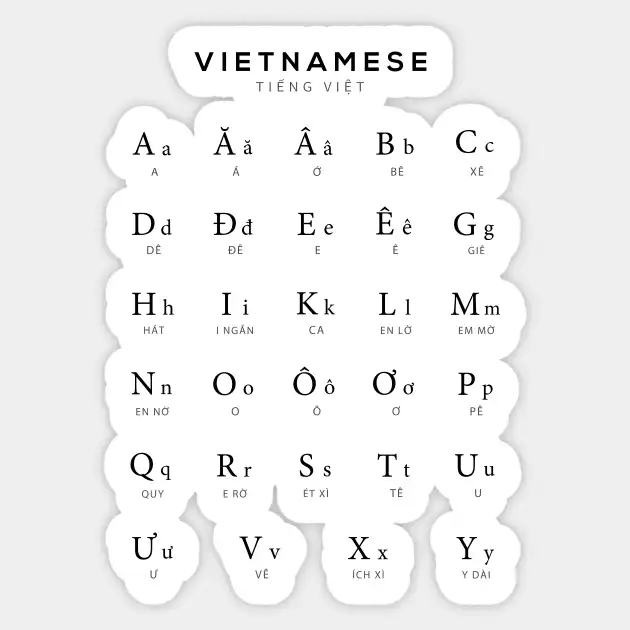
Vietnamese is a highly phonetic language, which theoretically makes it easier to digitize than languages requiring complex Input Method Editors (IMEs) like Chinese or Japanese. However, the presence of six distinct tones and a plethora of diacritical marks (such as the circumflex, breve, and horn) means that a single vowel can have multiple variations. For instance, the letter “a” can be modified into “á,” “à,” “ả,” “ã,” “ạ,” “ă,” “â,” and several other combinations.
In the early days of computing, this created significant hurdles for font rendering and character encoding. Today, the tech industry has moved toward universal standards, but the legacy of these challenges remains in how we design databases and search algorithms that must remain “diacritic-insensitive” while still providing accurate results.
Diacritics and the Challenge of Unicode Standardization
The Unicode Standard was a revolutionary development for the Vietnamese digital landscape. Before its widespread adoption, Vietnamese developers relied on various localized encoding systems like VNI or TCVN3, which often led to “mojibake” (corrupted text) when files were transferred between different systems.
Modern tech stacks now utilize UTF-8, which allows for the seamless integration of Vietnamese characters. However, for software engineers, the challenge lies in “normalization.” Because a character like “ế” can be represented in Unicode as a single precomposed character or as a base “e” followed by combining marks, developers must ensure their software treats these variations identically. This technical nuance is vital for data integrity, particularly in fintech and digital identity systems where a single mismatched character can lead to significant errors.
2. Localizing the User Experience (UX) for the Vietnamese Market
When a global tech brand asks “what language is Vietnam,” they are often looking for the key to localizing their User Interface (UI). Localization in Vietnam goes far beyond simple translation; it involves adapting the technical logic of an application to fit the cultural and linguistic habits of its users.
Complexity in Translation: Tones and Context in Software UI
One of the most significant hurdles in localizing software for the Vietnamese market is the length of the translated text. Vietnamese words are often longer than their English counterparts when written out, or they require more space due to the vertical height of stacked diacritics.
In mobile app development, this creates “layout breakage.” A button that says “Save” in English might require a much longer string in Vietnamese (“Lưu lại”). Professional UX designers must account for these vertical and horizontal expansions, ensuring that the app remains functional and aesthetically pleasing. Furthermore, the tone of the language must be calibrated; Vietnamese uses a complex system of honorifics and pronouns based on age and social standing. A “one-size-fits-all” translation often feels robotic or even disrespectful, prompting tech companies to invest in “hyper-local” content strategies.
Mobile-First Language Design: Optimizing for a Tech-Savvy Demographic
Vietnam is a mobile-first nation, with a massive percentage of the population accessing the internet exclusively via smartphones. This has led to the evolution of specific digital shorthand and input habits. The “Telex” and “VNI” input methods are the two primary ways Vietnamese users type on digital devices.
For tech companies, this means that search bars and auto-suggest features must be optimized for these input methods. A user might type “tieengs” to get “tiếng.” If an app’s search algorithm doesn’t recognize the “Telex” input flow in real-time, the user experience suffers. High-performing apps in the Vietnamese market are those that integrate “fuzzy search” capabilities, allowing users to find what they need even if they omit diacritics for speed.

3. Vietnamese in the Era of Artificial Intelligence and Machine Learning
The most exciting frontier for the Vietnamese language today is within the realm of Artificial Intelligence (AI). As Large Language Models (LLMs) and Voice Recognition technologies become ubiquitous, the technical community is racing to ensure that Vietnamese is not left behind in the “data gap.”
Natural Language Processing (NLP) and the Nuances of Tonality
Natural Language Processing for Vietnamese is notoriously difficult compared to English. The primary reason is that Vietnamese is an “isolating” language where words are not always separated by spaces in the way Western logic suggests. In English, “New York” is two words, but it represents one concept. In Vietnamese, many compound words are separated by spaces, making “tokenization”—the process of breaking text into units for an AI to understand—extremely complex.
Furthermore, the tonal nature of the language presents a massive challenge for speech-to-text and voice assistant technologies (like Siri, Alexa, or Google Assistant). A slight change in pitch can change the meaning of a word from “fish” to “cheek” or “tomb.” Tech firms specializing in AI must use massive datasets of diverse Vietnamese accents (Northern, Central, and Southern) to train models that can accurately parse intent from sound.
Large Language Models (LLMs) and the Quest for Data Inclusivity
The rise of ChatGPT and other LLMs has highlighted a significant issue: the scarcity of high-quality Vietnamese training data. Most global models are trained predominantly on English-centric internet data. When these models are prompted in Vietnamese, they sometimes “hallucinate” or produce translations that lack the cultural nuance of a native speaker.
To combat this, Vietnamese tech giants like VinAI and FPT are developing their own localized LLMs. By focusing on indigenous data sources—such as Vietnamese literature, legal documents, and local news—these companies are creating “Vietnamese-centric” AI. This is a crucial step for the “Money” and “Brand” sectors as well, as localized AI allows for better automated customer service, more accurate legal tech, and sophisticated market sentiment analysis.
4. The Developer Ecosystem: Coding and Communicating in Vietnam
Beyond the language itself, the “language of Vietnam” in the tech world refers to the country’s growing reputation as a global hub for software development and IT outsourcing.
Vietnam as an Emerging Outsourcing Hub: Bridging the English Gap
For years, India and the Philippines were the primary destinations for tech outsourcing. However, Vietnam has rapidly climbed the ranks. The “language” spoken in the Vietnamese tech ecosystem is increasingly a mix of high-level Vietnamese and technical English.
The Vietnamese government has placed a heavy emphasis on STEM education, resulting in a workforce that is highly proficient in coding languages like Python, Java, and C++. While English proficiency is improving, the most successful international partnerships are those where Western companies provide clear technical documentation and utilize local project managers who can translate complex business requirements into the local linguistic context. This “bilingual” approach to development has made Vietnam a preferred partner for companies in Silicon Valley, Japan, and Korea.
Tech Communities and the Evolution of Technical Vernacular
As the tech scene in Ho Chi Minh City and Hanoi matures, a new “tech-slang” is emerging. Vietnamese developers frequently “Vietnamese-ize” English tech terms. Words like “deploy,” “fix bug,” and “code” are integrated into Vietnamese sentences, creating a professional vernacular that is unique to the local industry.
This evolution is supported by vibrant tech communities and forums where developers share insights. For a global brand, engaging with these communities requires more than just translating a manual; it requires participating in the “technical language” of the region. Whether it’s through local hackathons or contributing to open-source projects in Vietnamese, the tech industry is proving that “what language is Vietnam” is a question with an ever-evolving, digital answer.

Conclusion: The Future of Vietnamese in Global Tech
The Vietnamese language is no longer a niche dialect in the global landscape; it is a vital component of the digital fabric of Southeast Asia. For the technology sector, addressing the complexities of the Vietnamese script, the nuances of its UX requirements, and the challenges of its AI integration is not just about inclusivity—it is about market leadership.
As Vietnam continues its trajectory toward becoming a top-tier global tech hub, the language will continue to adapt. From the way we encode characters in a database to the way we train the next generation of AI, Tiếng Việt stands as a testament to how traditional linguistic identity can thrive within the most advanced technological frameworks. For any tech professional, developer, or digital strategist, mastering the technical “language” of Vietnam is an investment in one of the most dynamic markets of the 21st century.
aViewFromTheCave is a participant in the Amazon Services LLC Associates Program, an affiliate advertising program designed to provide a means for sites to earn advertising fees by advertising and linking to Amazon.com. Amazon, the Amazon logo, AmazonSupply, and the AmazonSupply logo are trademarks of Amazon.com, Inc. or its affiliates. As an Amazon Associate we earn affiliate commissions from qualifying purchases.