
When companies look to expand their operations into Eastern Europe, they often encounter a common point of confusion regarding the region’s linguistic profile. The question “What language is Romania?” is frequently asked by business strategists, marketers, and international development teams trying to determine how to position their brand in the Romanian market. From a brand strategy perspective, the answer is not merely “Romanian”; it is about understanding the linguistic intersection of Romance roots and Slavic influence, and how that unique identity shapes consumer behavior and corporate branding efforts.
The Linguistic Foundation of the Romanian Market
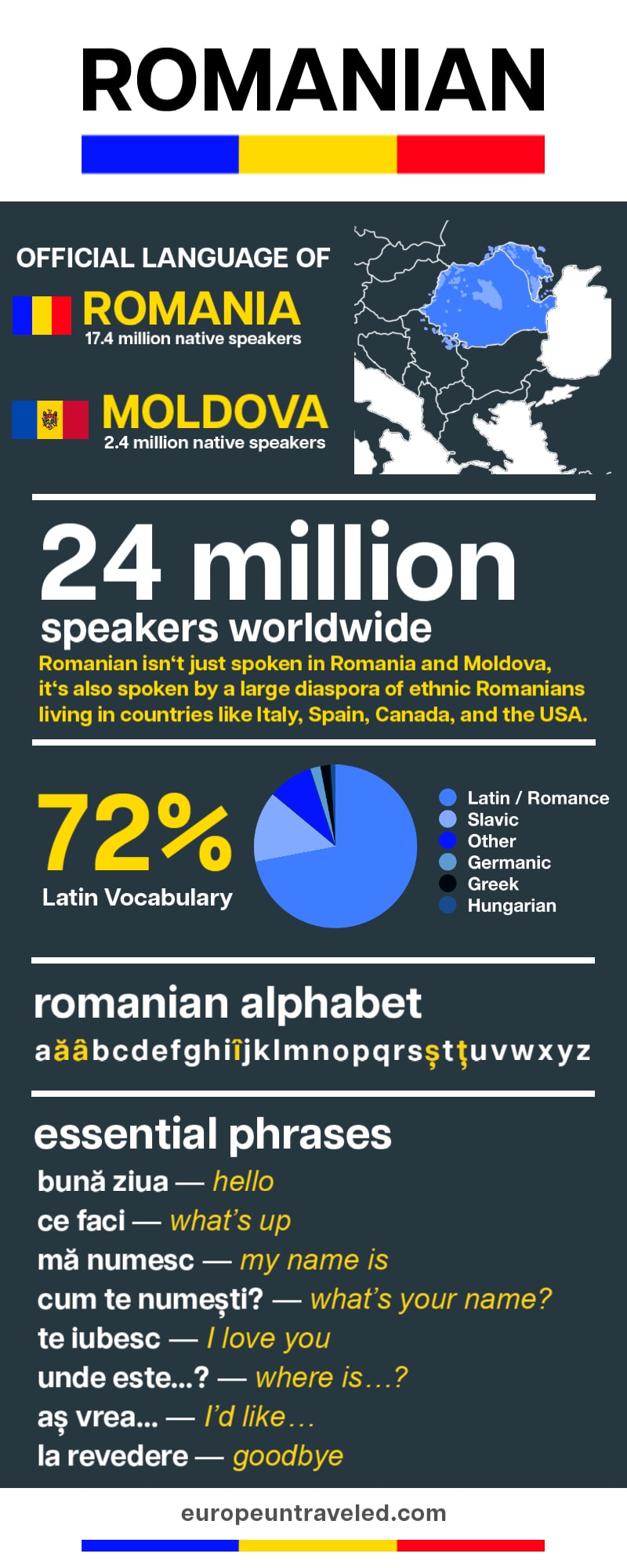
To build a successful brand in Romania, one must first respect the linguistic reality of the territory. Romanian is a Romance language, a linguistic island in a sea of Slavic neighbors. It is the only Eastern Romance language, descended from the Latin spoken by the Roman settlers in the ancient province of Dacia.
Why Linguistics Matters for Corporate Identity
For a global brand, language is the primary vehicle for cultural relevance. Using generic, localized marketing copy that ignores the nuances of the Romanian language can lead to a perception of “brand aloofness.” Romanian consumers are highly sophisticated; they appreciate brands that understand the specific etymology and poetic structures of their mother tongue. When developing a corporate identity for this region, the objective should be to integrate native linguistic patterns into the brand’s voice. This goes beyond simple translation—it requires transcreation that respects the Latin foundation of the language while acknowledging the loanwords acquired through historical contact with neighboring cultures.
The Rise of English as a Business Standard
While Romanian is the official language, the business ecosystem—particularly in sectors like Tech, Finance, and Outsourcing—is heavily dominated by English. In Bucharest, Cluj-Napoca, and Iași, high-level corporate communication is almost exclusively conducted in English. For a brand looking to establish a footprint, this creates a dual-strategy requirement: your high-level corporate branding should be streamlined in English to maintain internal consistency, while your consumer-facing collateral must be localized into high-quality, authentic Romanian to foster emotional resonance and trust.
Branding Strategies for the Romanian Consumer
Entering the Romanian market requires a nuanced approach to branding that balances international prestige with local authenticity. The Romanian consumer is famously discerning, often comparing local experiences against global benchmarks.
The Power of Tone and Cultural Context
When localizing your brand strategy, you must account for the specific “brand personality” that resonates in Romania. The culture values both intellectual rigor and social warmth. Brands that successfully bridge these two worlds tend to perform the best. If your tone is too sterile, you risk appearing as an indifferent multinational corporation; if it is too casual, you may lose the respect of a market that values formality in professional settings.
The most effective brand strategies in this region utilize a “glocal” approach. This means maintaining your global brand pillars—the core values that define your company—while adapting your messaging to align with Romanian idioms, historical references, and modern lifestyle trends.
Visual Identity and Localization
Language is not just about words; it is about how those words look on a digital interface. The Romanian alphabet includes special characters (ă, î, ș, ț, â). Neglecting these characters in your typography or interface design is a cardinal sin in brand strategy. If your digital platform renders these characters incorrectly or defaults to standard English glyphs, you immediately signal to the user that your brand is not fully committed to the market. A robust brand strategy in Romania treats linguistic accuracy as a non-negotiable aspect of the user experience (UX) and User Interface (UI) design.
Navigating the Linguistic Diversity in Digital Marketing
The digital landscape in Romania is highly evolved, with a tech-savvy population that consumes content across multiple languages. This presents both a challenge and a massive opportunity for brands looking to scale.
SEO and Keyword Strategy
From a search engine optimization perspective, the “What language is Romania” inquiry highlights the importance of localized intent. If you are launching an e-commerce platform, you cannot rely solely on English keywords. While a large portion of the tech-savvy demographic searches in English, the broader consumer market searches in Romanian. Your keyword strategy must be bifurcated:
- The Global Layer: English keywords for high-level, technical, or specialized content.
- The Local Layer: Romanian keywords for day-to-day products, services, and local sentiment-driven queries.
By mastering the balance between these two, you ensure that your brand captures both the “aspirational” segment of the market and the “mass-market” audience.
The Role of Social Proof and Community
Romanian social media culture relies heavily on community-driven feedback. When a brand enters the space, it is subject to intense scrutiny in public forums and social media comment sections. Your ability to engage in these spaces using the correct register of the Romanian language is a marker of your brand’s maturity. Brands that use automated, clunky translations in their social media interactions are quickly identified and dismissed. Conversely, brands that employ local community managers who understand the nuances of Romanian slang and professional terminology earn instant credibility and brand loyalty.
Building Long-Term Brand Equity in an Eastern European Hub
Romania is rapidly becoming a center for innovation in the European Union. For brands, this represents an opportunity to move beyond simple market entry and into a position of long-term partnership with the local economy.
Aligning Brand Values with Local Identity
The identity of the Romanian market is shifting toward a hybrid of traditional values and digital-first innovation. Your brand strategy should reflect this growth. If you are positioning your company as an innovator, your branding should celebrate the spirit of Romanian ingenuity—a trait often associated with the country’s strong engineering and software development pedigree.

The Future of Multilingual Branding
As Romania continues to integrate more deeply into the global economy, the lines between languages will continue to blur, but the pride in the Romanian language will remain a constant. The most successful brands will be those that view Romanian not as an obstacle to be translated around, but as a gateway to deeper consumer insight. By investing in professional localization and culturally sensitive branding, you move from being an “outsider” to being a “trusted entity.”
In summary, when you ask “What language is Romania,” you aren’t just asking for a dictionary definition. You are asking about the heartbeat of the market. Understanding that Romanian is a proud, Latin-based language—and that its speakers are highly proficient in navigating an English-dominated global digital sphere—is the first step in creating a brand strategy that survives and thrives. Use this linguistic knowledge to inform your corporate communications, your UX/UI design, and your content marketing efforts. The brands that win in this region are those that prove they aren’t just selling to the Romanian people, but that they have taken the time to learn their language and, by extension, their culture.
aViewFromTheCave is a participant in the Amazon Services LLC Associates Program, an affiliate advertising program designed to provide a means for sites to earn advertising fees by advertising and linking to Amazon.com. Amazon, the Amazon logo, AmazonSupply, and the AmazonSupply logo are trademarks of Amazon.com, Inc. or its affiliates. As an Amazon Associate we earn affiliate commissions from qualifying purchases.