
In the realm of historical leadership and legacy building, few figures command as much enduring brand equity as Cleopatra VII. While popular culture often reduces her to a caricature of romantic allure, a strategic analysis of her reign reveals a sophisticated architect of personal branding and political marketing. At the heart of her success—and her survival—was a revolutionary approach to communication. When we ask, “What language did Cleopatra speak?” we are not merely asking about a linguistic inventory; we are identifying the cornerstone of a masterfully executed brand strategy that allowed a Hellenistic queen to dominate the ancient Mediterranean stage.
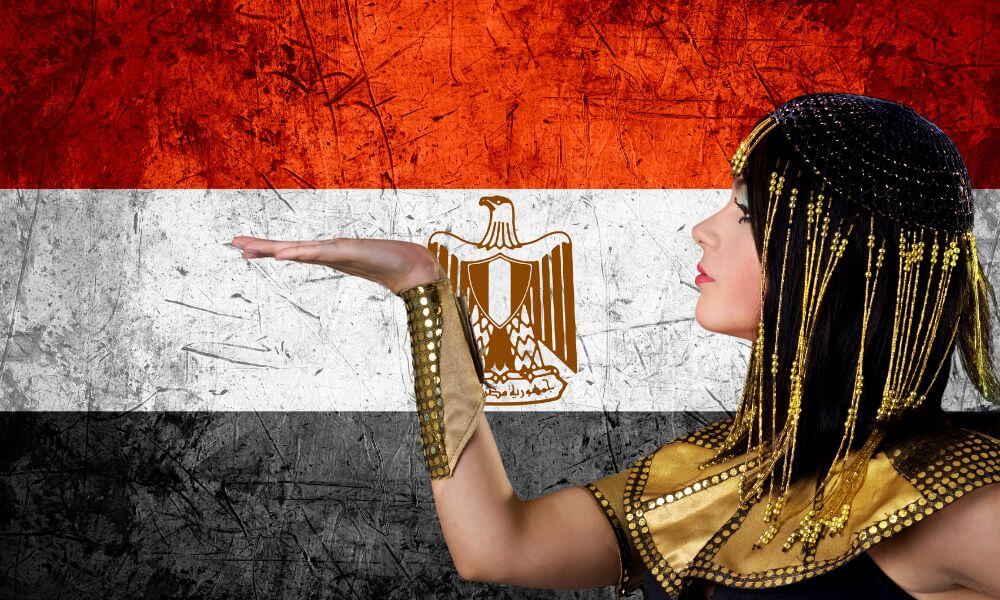
Cleopatra’s brand was built on a foundation of intellectual agility, but her most potent tool was her polyglotism. Unlike her Ptolemaic predecessors, who remained linguistically isolated within their Greek-speaking elite circles, Cleopatra understood that to command a diverse empire, one must master the vernacular of the stakeholders.
The Power of Polyglotism in Personal Branding
In modern brand strategy, localization is the process of adapting a product or content to a specific locale or market. Cleopatra was arguably the first practitioner of “royal localization.” For nearly 300 years, the Ptolemaic dynasty had ruled Egypt as foreigners, speaking Koine Greek and refusing to learn the native Egyptian tongue. This created a massive brand disconnect between the ruling class and the primary consumer base: the Egyptian people.
Breaking the Ptolemaic Barrier
Cleopatra recognized that the linguistic isolation of her ancestors was a significant brand liability. By choosing to learn Egyptian—the first in her line to do so—she performed a radical act of brand repositioning. She was no longer just a Macedonian occupier; she was an Egyptian pharaoh. This wasn’t merely a cultural gesture; it was a calculated move to capture “market share” in the hearts of the powerful Egyptian priesthood and the rural populace.
Her ability to speak the native language allowed her to bypass intermediaries, ensuring that her brand message was delivered with total authenticity. In the world of corporate identity, this is equivalent to a CEO learning the technical language of their R&D department and the colloquialisms of their frontline staff to foster a unified corporate culture.
Linguistic Accessibility as a Trust Factor
Beyond Greek and Egyptian, historical records (most notably Plutarch) suggest Cleopatra spoke at least seven to nine other languages, including those of the Ethiopians, Troglodytes, Hebrews, Arabians, Syrians, Medes, and Parthians. In a brand context, this level of accessibility established her as a “Global Brand.”
Trust is the currency of any brand, and nothing builds trust faster than speaking a partner’s native tongue. By engaging with foreign dignitaries in their own languages, Cleopatra eliminated the friction of translation, projected immense intellectual authority, and created a personalized “user experience” for every diplomat who entered her court.
Strategic Messaging and the Art of Code-Switching
Effective brand strategy requires the ability to maintain a consistent core identity while adapting the presentation to suit different demographics. Cleopatra was a master of code-switching—the practice of alternating between languages or cultural dialects to suit the audience. This allowed her to manage a dual-branded identity: the enlightened Hellenistic monarch for the West (Rome and Greece) and the divine incarnation of Isis for the East (Egypt and the Levant).
Tailoring the Narrative to Diverse Audiences
When Cleopatra communicated with the Roman elite, such as Julius Caesar or Mark Antony, her brand persona was built on Greek sophistication, intellectual prowess, and political pragmatism. She utilized the prestige of Greek culture—the “luxury brand” of the ancient world—to position herself as an equal to Roman power players.
Conversely, when addressing her Egyptian subjects, she leveraged the “heritage brand” of the ancient Pharaohs. She utilized the Egyptian language to align herself with millennia of tradition, presenting herself not as a newcomer, but as the rightful heir to the gods. This dual-track messaging ensured that she was never perceived as “out of touch” by either of her primary target audiences.
The Iconography of the “Egyptianized” Queen
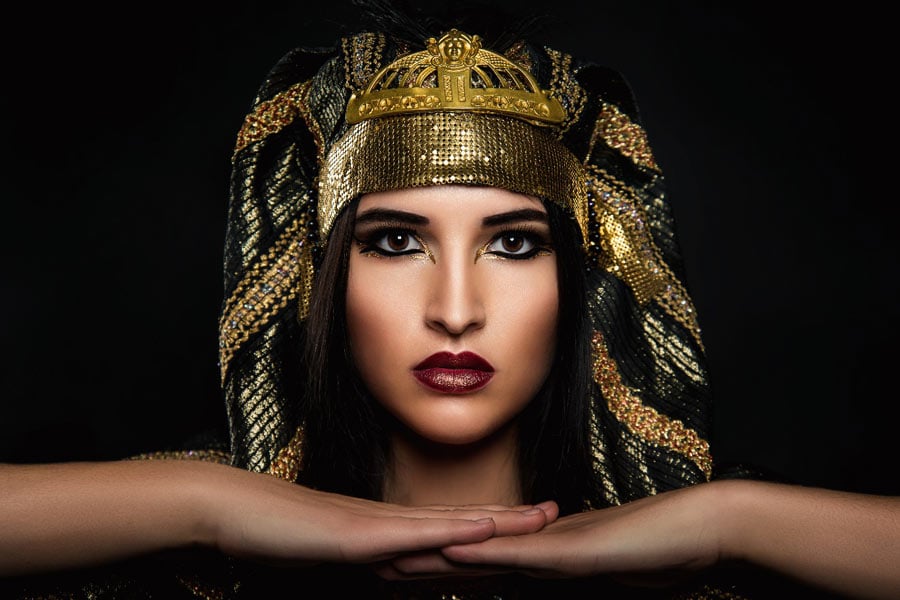
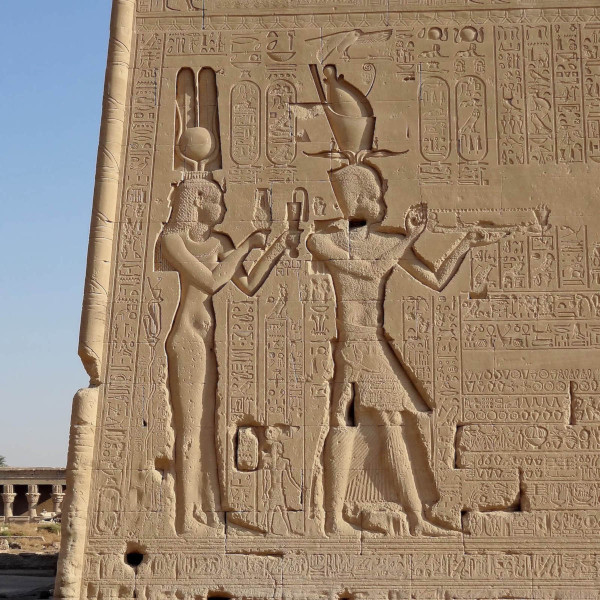
Her linguistic flexibility was mirrored in her visual branding. On coins minted for circulation in Greek cities, she appeared with the features of a Hellenistic queen. In Egyptian temples, she was depicted in the traditional garb of a Pharaoh. This visual and linguistic synergy is a textbook example of multi-channel brand integration. Cleopatra understood that her brand was not a static image but a dynamic narrative that needed to be translated across different cultural “platforms” to maintain its relevance and power.
Establishing Global Authority Through Communication
In the competitive landscape of the first century BCE, the Mediterranean was a crowded marketplace of ambitious leaders and expanding empires. Cleopatra used her linguistic skills to differentiate her brand from other regional monarchs. While others relied on interpreters—who could be bribed, misunderstood, or inefficient—Cleopatra’s direct communication style projected a brand of total control and autonomy.
Diplomacy as a Branding Channel
A brand’s reputation is often forged in the heat of negotiation. For Cleopatra, every diplomatic meeting was an opportunity to strengthen her brand equity. By speaking directly to the Parthian or Arabian ambassadors, she signaled that the Ptolemaic Kingdom was an active, engaged, and formidable player in international affairs.
This direct engagement served as a powerful “Value Proposition.” It suggested that doing business with Cleopatra was more efficient and more reliable than dealing with her rivals. Her brand was one of “Intellectual Dominance,” and her linguistic versatility was the proof of that dominance.
Managing the Brand in a Crisis
During periods of political upheaval, Cleopatra’s ability to communicate across borders was her greatest defensive asset. When she was forced into exile by her brother, Ptolemy XIII, she didn’t just fade away; she used her linguistic and diplomatic networks to raise an army and re-enter the political arena.
A resilient brand is one that can survive a crisis and pivot toward new opportunities. Cleopatra’s “Brand Resilience” was directly tied to her ability to communicate her worth to foreign backers. She wasn’t just selling a kingdom; she was selling her own unique leadership capabilities, articulated in the languages that her potential allies understood best.
The Modern Legacy: Lessons in Brand Adaptability
The study of Cleopatra’s linguistic strategy offers profound insights for modern brand managers and personal brand builders. In an increasingly globalized and digital world, the “languages” we speak may have changed—shifting from Aramaic and Egyptian to Python, SEO, and social media algorithms—but the underlying principles of brand adaptation remain the same.
Authenticity vs. Strategy
One of the most debated aspects of Cleopatra’s brand is whether her linguistic efforts were a sign of genuine cultural appreciation or cold, calculated strategy. In modern branding, this is the “Authenticity Gap.” Consumers are quick to sniff out brands that adopt a cause or a language purely for profit without a genuine commitment.
Cleopatra’s success suggests that for a brand strategy to work, the “localization” must be thorough. She didn’t just learn a few phrases in Egyptian; she immersed herself in the culture, the religion, and the legal traditions. For a modern brand to enter a new market, it must do more than translate its website; it must understand the cultural nuances and “speak” the values of that market.
Cultivating a Trans-Generational Brand Identity
Cleopatra has been dead for over 2,000 years, yet her brand remains one of the most recognizable in human history. This is the ultimate goal of brand strategy: “Long-Term Brand Equity.” By mastering the art of communication, she ensured that her story would be told and retold, albeit often through the biased lenses of her Roman detractors.
The “language” Cleopatra spoke was ultimately the language of power, influence, and survival. She understood that a brand is not what you say about yourself, but the emotional and intellectual space you occupy in the minds of others. By breaking linguistic barriers, she expanded her brand’s reach far beyond the borders of Alexandria, creating a legacy that continues to fascinate the global market today.
In conclusion, the answer to “What language did Cleopatra speak?” is: she spoke whatever language was required to win. She was a strategic communicator who recognized that language is the ultimate tool for brand positioning. In the high-stakes game of ancient geopolitics, her polyglotism was her competitive advantage, allowing her to build a brand that was both deeply local and impressively global. For the modern strategist, Cleopatra remains the definitive case study in how to use communication to build, protect, and immortalize a personal brand.
aViewFromTheCave is a participant in the Amazon Services LLC Associates Program, an affiliate advertising program designed to provide a means for sites to earn advertising fees by advertising and linking to Amazon.com. Amazon, the Amazon logo, AmazonSupply, and the AmazonSupply logo are trademarks of Amazon.com, Inc. or its affiliates. As an Amazon Associate we earn affiliate commissions from qualifying purchases.