
For decades, the towering hero of the Autobots, Optimus Prime, has commanded the respect and admiration of audiences worldwide. More than just a robot, he is a symbol of leadership, courage, and self-sacrifice. Central to his iconic status, however, is his alternate mode: a formidable semi-truck. The specific make and model of this truck have evolved significantly since his inception, reflecting shifts in design, storytelling, and strategic branding within the Transformers franchise. Understanding what kind of truck Optimus Prime transforms into isn’t merely a piece of trivia; it’s an insightful lens into how brand identity is constructed, maintained, and adapted across various media and generations.

The Enduring Brand Identity of Optimus Prime’s Alt-Mode
At the heart of any successful brand lies a consistent and recognizable identity. For Optimus Prime, his truck form is arguably as crucial to his recognition as his distinctive red and blue robot mode. This vehicular manifestation serves as a visual shorthand for his character’s essence: power, reliability, and an unwavering presence.
The Genesis of an Icon: G1 Optimus and the Freightliner COE
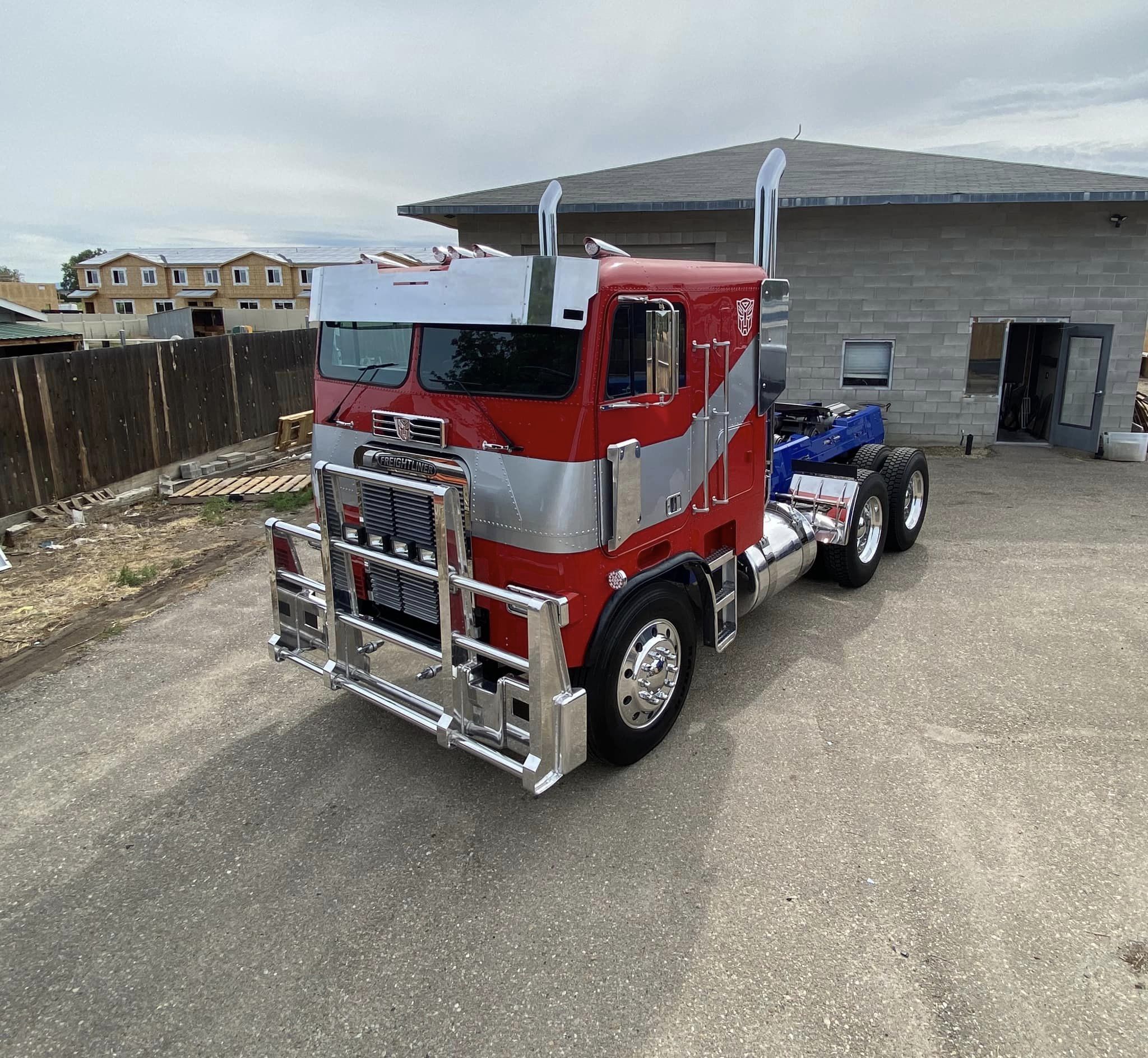
The very first iteration of Optimus Prime, born from the Japanese Diaclone toy line and introduced to Western audiences as part of Hasbro’s Transformers in 1984, transformed into a Freightliner FLA Cab-Over-Engine (COE) semi-trailer truck. This choice was not arbitrary; it was a deliberate branding decision that imbued Optimus with immediate authority and a sense of working-class heroism. The COE design, with its flat front and elevated driver’s cabin, presented a compact yet powerful silhouette, perfectly translating into a robust robot form.
This original Freightliner COE established a visual lexicon that would resonate for generations. Its prominent grille, side exhaust stacks, and visible fuel tanks became quintessential elements of Optimus Prime’s brand. This foundational alt-mode projected an image of a dependable workhorse, a leader who was both grounded and capable of immense power—a brand persona that Hasbro and Takara would meticulously cultivate over the years. The COE design allowed for a cleaner transformation into a humanoid robot, emphasizing structural integrity and a heroic stance.
Consistency Amidst Evolution: Why the Truck Form Matters
While Optimus Prime’s truck form has undergone numerous redesigns, the core essence—that of a powerful, long-haul semi-truck—has largely remained consistent. This consistency is a cornerstone of effective brand management. It allows the brand to evolve and remain relevant without alienating its core audience or losing its fundamental identity. The truck form is not just a mode of transport; it’s a canvas upon which his heroism and purpose are projected.
For fans, the specific type of truck represents different eras and interpretations of the character, yet the underlying message of strength and responsibility remains. From a branding perspective, the truck form is a powerful differentiator, setting Optimus apart from other transforming robots who might take on sports cars or jets. It reinforces his role as a protector, a leader who carries the weight of his people on his metaphorical shoulders, much like a truck carries its cargo. This consistent visual motif helps solidify his archetypal role as the “big rig” hero.
Psychological Impact: Trust, Strength, and Leadership through Design
The design of Optimus Prime’s truck form communicates profound psychological messages. Semi-trucks are associated with long journeys, heavy loads, and the backbone of commerce and industry. These connotations naturally transfer to Optimus Prime’s character brand, reinforcing his leadership qualities, his unwavering commitment to his mission, and his immense strength. The sheer scale and presence of a semi-truck evoke a sense of power and reliability, attributes essential for a leader.
Furthermore, the rugged, utilitarian aesthetic of a truck conveys trustworthiness and a no-nonsense approach to leadership. Unlike sleek, fast sports cars (often favored by Decepticons like Breakdown or Stunticons), Optimus’s vehicle choice subtly communicates a sense of responsibility and a focus on the greater good rather than speed or personal gain. This deliberate design choice in his alt-mode reinforces his entire brand narrative as a principled and dependable protector.
Alt-Modes as Brand Reinforcement: Optimus Prime’s Vehicular Metamorphosis
The evolution of Optimus Prime’s alt-mode is a masterclass in adapting a brand while retaining its core identity. Each new iteration of his truck form isn’t just an aesthetic update; it’s a strategic decision that reflects the prevailing design sensibilities, storytelling ambitions, and market trends of its time.
From Cab-Over to Long-Nose: Adapting to Market and Story Demands
While the Freightliner COE defined the G1 era, subsequent iterations saw Optimus Prime adopt various truck models. For instance, the live-action Michael Bay films ushered in a dramatic shift, transitioning Optimus to a Peterbilt 379 long-nose semi-trailer truck. This was a significant departure from the COE and reflected a desire for a more overtly “American muscle” aesthetic, aligning with the blockbuster action genre. The longer hood provided more visual bulk and a rugged, imposing presence that translated dynamically onto the big screen.
The choice of a long-nose truck for the films was a strategic move to appeal to a broader, more contemporary audience, leveraging the visual impact and perceived power of such vehicles in American culture. It allowed for more complex and visually stunning transformations, with parts shifting and rearranging in intricate detail, enhancing the spectacle that the films aimed to deliver. This evolution demonstrated how a brand can adapt its visual assets to suit different media and target demographics while still being instantly recognizable as the same iconic character.
The Michael Bay Era: Western Star and Peterbilt’s Cinematic Branding
In the Bay films, Optimus Prime’s truck form became a character in itself. Initially a Peterbilt 379, he later transitioned to a custom-built Western Star 4900 Phantom Custom in Transformers: Age of Extinction. These choices were not just about aesthetics; they were about cinematic branding. The vehicles were chosen for their photogenic qualities, their ability to convey immense power, and their capacity to be visually distinct and memorable on screen.
These partnerships with real-world truck manufacturers like Peterbilt and Western Star also offered powerful cross-promotional opportunities, grounding the fantastical elements of the Transformers universe in tangible reality. For the brands involved, it offered unparalleled visibility. For the Transformers brand, it lent an air of authenticity and cutting-edge design, reinforcing Optimus Prime’s status as a formidable leader. The sheer presence of these massive, detailed trucks underscored the “robots in disguise” concept, making the transformations all the more dramatic and impactful.
Maintaining Core Aesthetics Across Iterations
Despite these variations, the core aesthetic cues of Optimus Prime’s truck form have largely endured. The iconic red and blue color scheme, the prominent grille, smokestacks, and general heavy-duty appearance are almost always present. This consistent visual language is crucial for brand recognition. Whether he’s a Freightliner, a Peterbilt, or a Western Star, audiences instantly know it’s Optimus Prime because these fundamental design elements are meticulously preserved or thoughtfully reimagined.
This careful balance between innovation and tradition is a hallmark of successful long-term branding. It allows the franchise to continually reinvent itself for new generations while reassuring existing fans that the essence of their beloved leader remains intact. The truck’s form, therefore, acts as a visual anchor, tying together the disparate iterations of the Transformers universe.
The Strategic Role of Vehicle Partnerships in the Transformers Brand
Beyond aesthetics, the selection of Optimus Prime’s truck mode often involves strategic partnerships with real-world automotive manufacturers. These collaborations are a powerful tool in modern branding, offering mutual benefits for both the entertainment franchise and the vehicle companies.
Authenticity and Realism: Grounding the Fantasy
Partnering with actual truck manufacturers injects a crucial element of realism into the fantastical world of Transformers. By transforming into a recognizable Peterbilt or Freightliner, Optimus Prime feels more grounded, making the “robots in disguise” premise more believable. This authenticity enhances the immersive experience for the audience, blurring the lines between fiction and reality, which is highly valuable for brand engagement. When a viewer sees Optimus Prime transform from a truck they might see on a highway, it creates a stronger connection to the fictional world.
This realism also extends to the toy lines and merchandise. Fans can own a replica toy that not only transforms into Optimus Prime but also accurately represents a real-world truck model, adding another layer of desirability and brand value.
Cross-Promotional Synergy: Automakers and Entertainment Franchises
The collaborations between Hasbro/Paramount and truck manufacturers are prime examples of cross-promotional synergy. For the entertainment franchise, it brings in promotional support, production resources, and a heightened sense of prestige. For the automakers, it offers unparalleled global exposure to a massive, often impressionable, audience. A generation of children, and even adults, now associate specific truck brands with the heroic Optimus Prime.
These partnerships transcend simple product placement; they are integral to the storytelling and visual identity of the brand. When Optimus Prime transforms from a Western Star, it’s not just a generic truck; it’s a specific, powerful, and branded vehicle that adds to the narrative’s texture and visual impact. This mutually beneficial relationship maximizes reach and reinforces brand values for all parties involved.
Fan Engagement: The Debate and Excitement Around New Forms
Each time Optimus Prime’s alt-mode is updated, it generates significant discussion and excitement within the fan community. Debates rage over which truck is “best,” which most accurately represents the character, and how the new design impacts the overall brand. This constant dialogue is invaluable for brand engagement. It keeps the franchise relevant, sparks conversation, and builds a sense of community around the brand.
The anticipation surrounding a new movie or series often includes speculation about Optimus Prime’s vehicle form, demonstrating how deeply intertwined this aspect is with his overall brand identity. The brand strategically leverages this fan interest to maintain momentum and excitement for new releases.
Protecting and Evolving the Optimus Prime Brand
Managing a brand as iconic as Optimus Prime requires a delicate balance between protecting its established legacy and allowing for creative evolution. His truck form is at the epicenter of this challenge.
Intellectual Property and Licensing Considerations
The specific designs of Optimus Prime’s truck forms, whether conceptual or based on real-world vehicles, are integral parts of the Transformers intellectual property. Hasbro and Takara rigorously protect these designs, licensing them out for toys, merchandise, and other media. The agreements with truck manufacturers involve complex licensing arrangements, ensuring that both the character’s design and the real-world vehicle’s brand are respected and properly represented. This meticulous IP management is crucial for maintaining the brand’s value and preventing dilution. Every detail, from the grille design to the placement of exhaust pipes, is carefully considered for its contribution to the overall brand identity and legal protection.
The Balance Between Innovation and Brand Heritage
The journey of Optimus Prime’s truck forms illustrates the ongoing challenge of balancing innovation with brand heritage. While new films and series demand fresh visuals and modern aesthetics, there’s always a strong pull to reference and honor the classic G1 design. The success of Optimus Prime’s evolving alt-modes lies in finding that sweet spot: updating his look to appeal to contemporary audiences while retaining enough core elements to instantly signal “Optimus Prime” to long-time fans.
This balance is achieved by consistently weaving in elements like the red and blue color scheme, the iconic head sculpt emerging from the cab, and the general silhouette of a powerful semi. These elements act as brand anchors, allowing other aspects to flex and change without compromising the fundamental identity.
Future Directions: How New Truck Forms Can Signal Brand Expansion
As the Transformers universe continues to expand, so too will the possibilities for Optimus Prime’s alt-mode. Future truck forms could signify new thematic directions for the brand, adapting to emerging vehicle technologies (e.g., electric semi-trucks) or exploring different cultural interpretations of heavy-duty vehicles. Each new design choice will not just be an aesthetic update; it will be a strategic branding decision, signaling where the franchise is heading and how Optimus Prime, as its central figure, continues to adapt and lead. The choice of a future electric truck, for instance, could position Optimus Prime as a leader in sustainability and innovation, expanding his brand persona beyond traditional notions of strength.
Optimus Prime’s Truck Form as a Global Cultural Touchstone
Ultimately, Optimus Prime’s truck form transcends mere vehicle design; it has become a global cultural touchstone, recognized and celebrated across diverse demographics.
Universal Recognition and Appeal
Few fictional vehicles are as universally recognized as Optimus Prime’s truck. Whether it’s the classic Freightliner COE, the imposing Peterbilt, or the custom Western Star, the image of his alt-mode instantly evokes the spirit of the Transformers. This level of universal recognition is a testament to the power of consistent branding and compelling character design. It’s a visual shorthand that crosses language barriers and cultural divides, making Optimus Prime a truly global brand icon.
Merchandising and Collectibles: The Truck’s Tangible Impact
The truck form is a cornerstone of Transformers merchandising. From intricate action figures that meticulously detail each transformation step to die-cast models and replicas, the truck mode is a tangible piece of the Optimus Prime brand that fans can own and interact with. The accuracy and detail of these truck forms are often critical selling points, appealing to collectors and casual fans alike, further solidifying the importance of this aspect of his identity. The toy line, in particular, thrives on the ability of the character to transform into a recognizable and impressive vehicle.

The Brand Narrative: What the Truck Tells Us About Optimus
In conclusion, the question “what kind of truck is Optimus Prime?” leads us to a deeper understanding of brand strategy, identity, and evolution. His truck form is not just a disguise; it is a fundamental pillar of his brand narrative. It tells us that Optimus Prime is strong, reliable, grounded, and ready to carry the heaviest burdens. It signals leadership, responsibility, and an unwavering commitment to protecting life and freedom. Through careful design, strategic partnerships, and consistent messaging, the various truck forms of Optimus Prime have ensured that he remains one of the most enduring and beloved brand icons in entertainment history, continually transforming to meet new challenges while always staying true to his core identity.
aViewFromTheCave is a participant in the Amazon Services LLC Associates Program, an affiliate advertising program designed to provide a means for sites to earn advertising fees by advertising and linking to Amazon.com. Amazon, the Amazon logo, AmazonSupply, and the AmazonSupply logo are trademarks of Amazon.com, Inc. or its affiliates. As an Amazon Associate we earn affiliate commissions from qualifying purchases.