
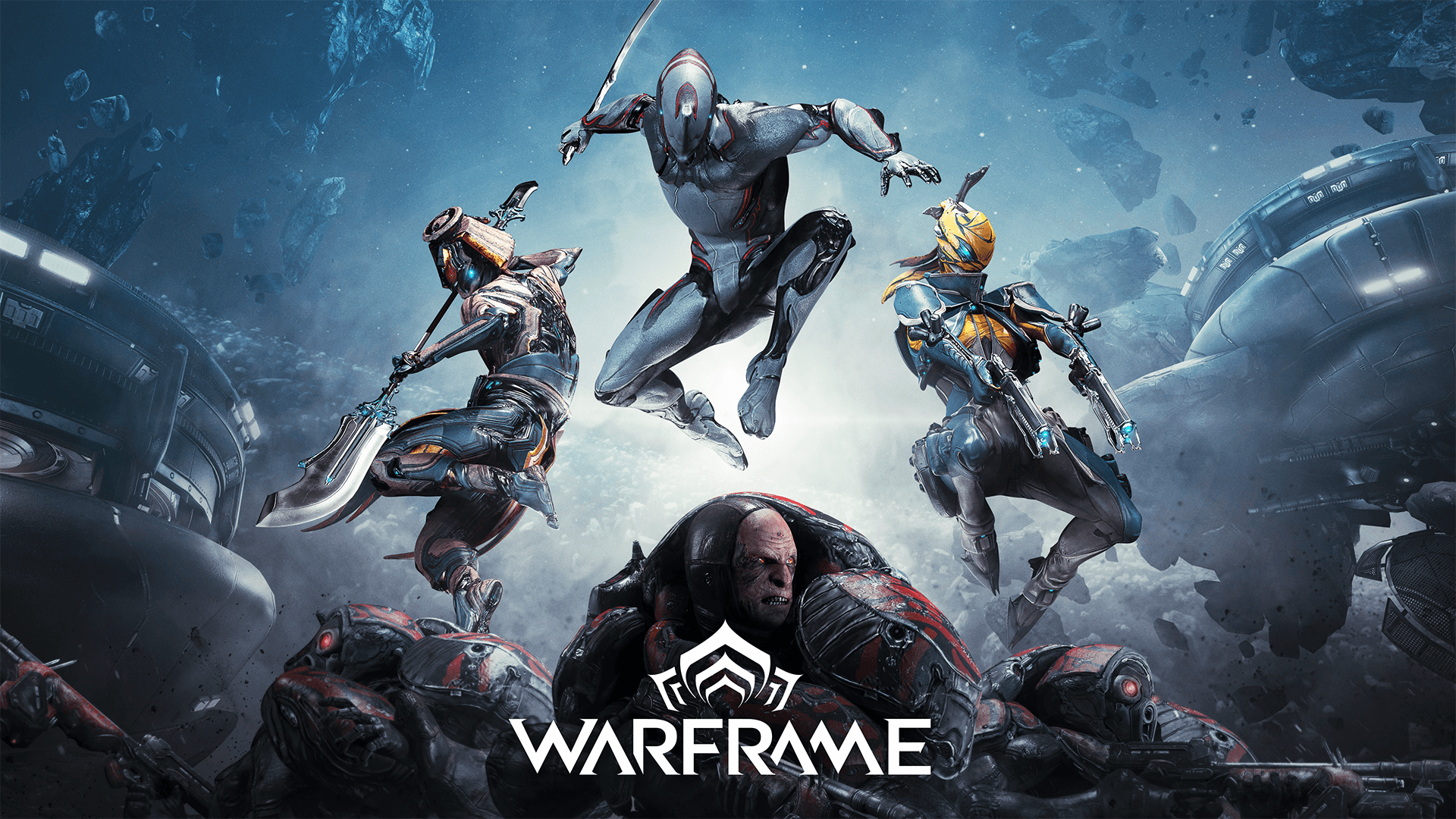
In the landscape of modern software development and digital entertainment, few titles represent the “Games as a Service” (GaaS) model as effectively as Warframe. Developed and published by Digital Extremes, Warframe is often categorized superficially as a “looter-shooter.” However, from a technical and architectural standpoint, it is a complex, multi-layered software ecosystem that has redefined how iterative development works in the cloud-computing era. To understand what kind of game Warframe is, one must look past the space-ninja aesthetics and examine the proprietary technology, the procedural generation frameworks, and the cross-platform infrastructure that sustains its massive digital universe.
The Architecture of an Ever-Evolving Game Engine
At its core, Warframe is a showcase of the “Evolution Engine,” a proprietary piece of software developed by Digital Extremes. Unlike many contemporary titles that rely on third-party solutions like Unreal Engine or Unity, Warframe’s reliance on an in-house engine allows for a level of optimization and specific feature-tuning that is rare in the industry.
The Proprietary Evolution Engine and Rendering Pipeline
The Evolution Engine has undergone a decade of continuous refactoring. Originally designed for the hardware constraints of 2013, the engine has been upgraded to support modern graphical standards, including DirectX 12, Ray Tracing, and advanced volumetric lighting. What makes this technically significant is the engine’s ability to maintain high frame rates across a staggering range of hardware—from high-end RTX-enabled PCs to the relatively modest hardware of the Nintendo Switch and mobile devices.
The rendering pipeline utilizes a “deferred shading” approach, which allows for a high number of dynamic light sources, essential for the game’s fast-paced, particle-heavy combat. For the tech-focused observer, Warframe’s ability to transition from a legacy renderer to a modern, high-fidelity “Enhanced Graphics Engine” without breaking backward compatibility is a masterclass in software maintenance.
Procedural Generation and Tile-Based Environments
One of the defining technical characteristics of Warframe’s gameplay is its use of procedural level generation. Most missions are not “hand-crafted” in the traditional sense; instead, they are constructed using a sophisticated algorithm that snaps together pre-designed “tilesets.”
These tilesets are architectural modules that include logical connection points for doors, vents, and pathways. When a player initiates a mission, the server-side logic generates a unique layout for that specific instance. This ensures that the environment feels fresh even after thousands of hours of play, while minimizing the storage footprint on the user’s hard drive, as the game only needs to store the core tiles rather than thousands of unique maps.
A Masterclass in Multi-Platform Software Integration
As the gaming industry moves toward a unified ecosystem, Warframe stands as a pioneer in cross-platform synchronization. Answering “what kind of game” Warframe is requires acknowledging its status as a platform-agnostic service.
Cross-Play and Cross-Save Implementation
The technical hurdle of implementing Cross-Play and Cross-Save in a decade-old game cannot be overstated. Warframe successfully merged several disparate databases—PC, PlayStation, Xbox, and Nintendo—into a single, unified account system. This required a massive overhaul of the back-end database architecture.
In a traditional setup, user data is siloed by platform. Digital Extremes had to create a “Global Account” layer that sits above the platform-specific IDs. This layer manages the synchronization of thousands of variables: inventory states, quest progress, and complex “Riven” mod statistics. This achievement places Warframe at the forefront of cloud-based gaming infrastructure, ensuring that a player’s progress is persistent regardless of the hardware they use.
Optimization and Mobile Porting
The recent expansion of Warframe into the iOS ecosystem further highlights its technical versatility. Porting a game with such high fidelity to mobile devices required a significant reduction in memory overhead and a redesign of the asset streaming system.
The developers implemented a “dynamic resolution” system that scales the internal rendering resolution in real-time based on GPU load. This allows the software to maintain a consistent target frame rate (30 or 60 FPS) even during intense combat encounters. For tech enthusiasts, the fact that the same C++ codebase powering the PC version is being utilized on ARM-based mobile processors is a testament to the Evolution Engine’s modularity.
The Mechanics of Procedural Gameplay and AI Systems
Beyond the rendering and networking, Warframe is defined by its complex internal systems—specifically its AI behavior and its massive, database-driven progression logic.
Dynamic Scaling and Enemy AI
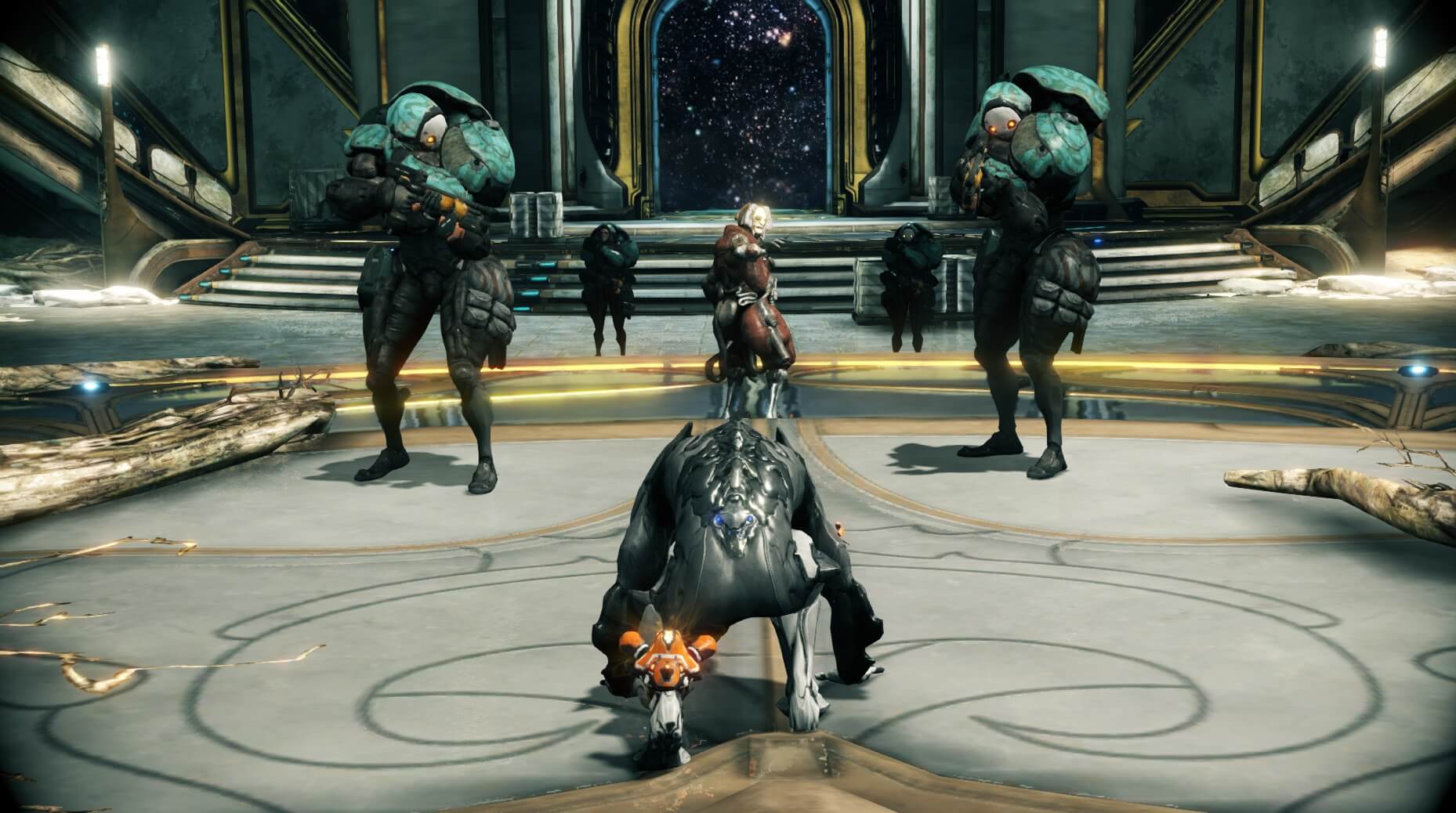
Warframe utilizes a dynamic scaling system for enemy difficulty. As players progress, the software does not simply increase enemy health; it alters the spawn rates and the composition of enemy units based on the “Conclave” or power rating of the player’s equipment.
The AI, while often operating in swarms, utilizes a “director” system. This director manages the flow of combat, deciding when to send in heavy units or specialized “Eximus” enemies to disrupt player patterns. This level of automated balancing is crucial for a game where player power can vary by orders of magnitude. The software must constantly calculate damage values that reach into the millions, requiring high-precision floating-point math to ensure the combat remains responsive and glitch-free.
The Software Loop: Crafting, Inventory, and Progression
Under the hood, Warframe functions as a massive relational database management system (RDBMS). Every item, from the “Warframes” themselves to the thousands of individual “Mods” (cards that alter equipment stats), is a data entry with specific interactions.
The “Modding” system is particularly complex. It is essentially a visual programming interface for the player. By slotting mods, players are modifying the game’s core variables—multi-shot, status chance, or elemental damage combinations. The engine must calculate these interactions in real-time during every frame of combat. If a player shoots a weapon that fires 10 projectiles, each with a 50% chance to trigger an explosion that deals three different types of damage, the backend must process those thousands of calculations instantly without causing “hitch” or latency.
Security and the Infrastructure of a Global Live-Service
Operating a game of this scale requires a robust security and networking infrastructure. Because Warframe features a player-driven economy, the integrity of the software is paramount.
Server Architecture and Peer-to-Peer Networking
Unlike many MMOs that use dedicated servers for every mission, Warframe primarily employs a Peer-to-Peer (P2P) networking model for its 4-player cooperative missions. In this setup, one player acts as the “Host,” and the other three are “Clients.”
From a tech perspective, this is a cost-effective way to scale a game to millions of concurrent players. However, it introduces the challenge of “host migration.” If the host disconnects, the software must quickly transfer the entire state of the mission—enemy locations, loot dropped on the ground, and objective progress—to another player’s machine. Digital Extremes has refined this “state transfer” logic over years to minimize data loss and session crashes, making it one of the most stable P2P implementations in the industry.
Anti-Cheat and Economic Integrity
Because Warframe allows for the trading of premium currency (Platinum), the software must be shielded against memory injection and packet manipulation. The game uses a combination of proprietary anti-cheat measures and server-side validation.
Whenever a mission ends, the client sends a “results” packet to the central server. The server then cross-references this data with the expected loot tables and the time taken to complete the mission. If the data appears anomalous (e.g., a player gaining a million credits in ten seconds), the server flags the account for review. This ensures the stability of the digital economy and prevents the inflation that often plagues other online software environments.
Conclusion: Warframe as a Technological Vanguard
When asking “what kind of game is Warframe,” the answer from a technical perspective is clear: it is a highly optimized, cross-platform, live-service software platform. It is a rare example of a proprietary engine outliving and outperforming many industry-standard tools through constant iteration and architectural foresight.
Through its sophisticated use of procedural generation, its pioneering work in cross-platform database synchronization, and its robust P2P networking model, Warframe has set a high bar for what “software as a service” can achieve. It is not merely a game; it is an ongoing experiment in how to maintain and evolve a complex digital ecosystem over a decade without alienating legacy users or falling behind the technological curve. For developers and tech enthusiasts alike, Warframe serves as a premier case study in scalable architecture and long-term software sustainability.
aViewFromTheCave is a participant in the Amazon Services LLC Associates Program, an affiliate advertising program designed to provide a means for sites to earn advertising fees by advertising and linking to Amazon.com. Amazon, the Amazon logo, AmazonSupply, and the AmazonSupply logo are trademarks of Amazon.com, Inc. or its affiliates. As an Amazon Associate we earn affiliate commissions from qualifying purchases.